Which dog harness for large dogs will stay put without rubbing when your newly adopted rescue backs away from a neighbor's holiday decorations? For a family heading into its first winter with a roughly 75-lb mix, that question matters more than a Black Friday discount. But the weight on the adoption paperwork does not tell you where the harness straps belong.
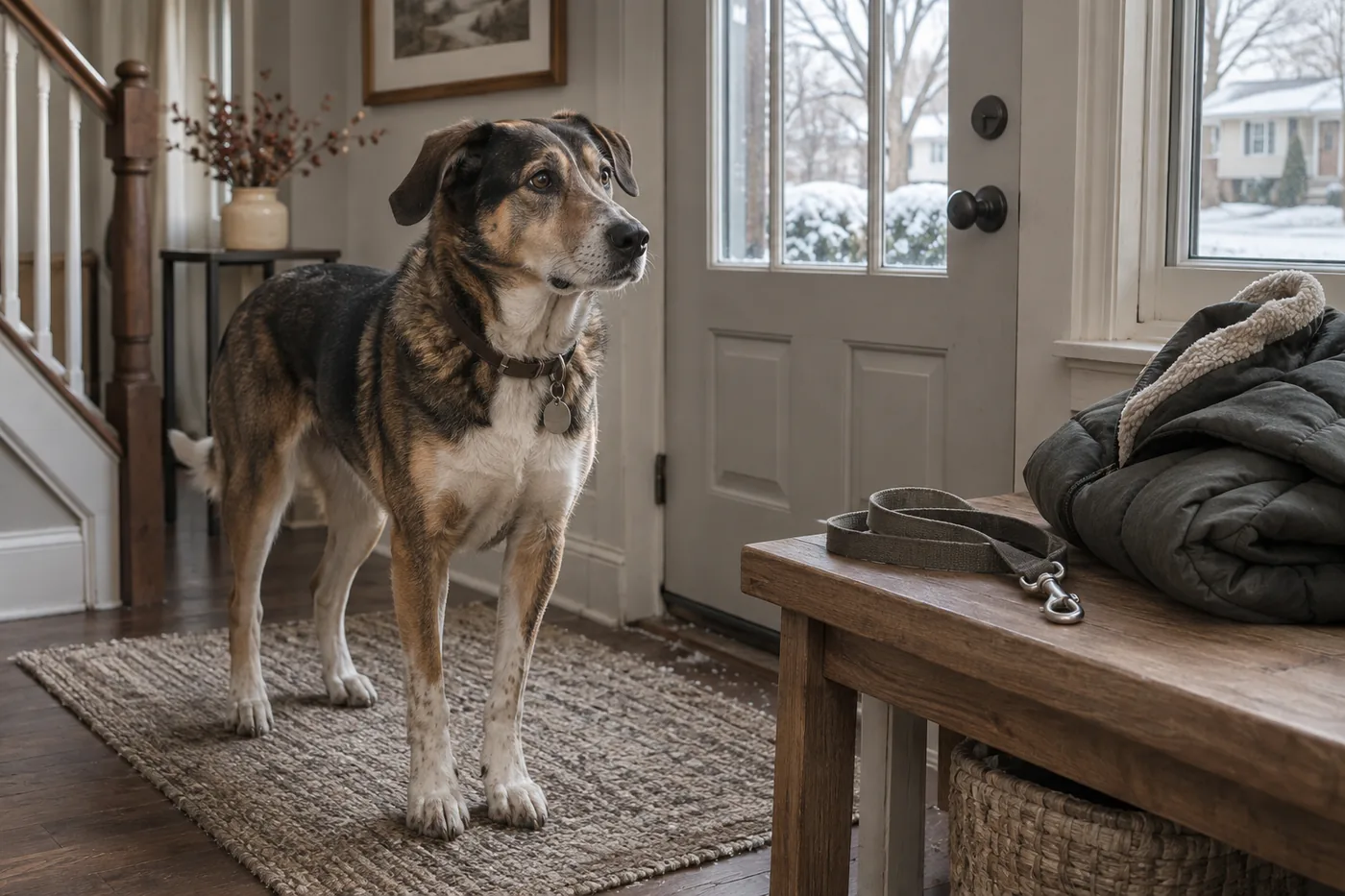 The fit check starts indoors, before the cold-morning walk.
I'd fix the strap placement before buying anything; if the current harness cannot stay positioned, I'd start with the Ruffwear Flagline Dog Harness with Handle. Its adjustable body-harness layout and support panel make it worth fitting for this situation, but the dog's measured girth must match the size chart. So treat it as a replacement only after the checks below, not a cure for pulling or a guarantee against escape.
How we chose
Reviewed Ruffwear's Flagline specifications and size chart, Blue-9's Balance Harness description, and Blue-9's fitting guidance. The three checks were rib-cage sizing, underarm and belly strap placement, and leash-attachment layout; product features are not treated as proof of escape resistance.
Toneandroom picks
Best dog harness for large dogs for winter walks: Top 1
Replacement to fit when the current harness cannot stay positioned after correct adjustment

Ruffwear Flagline Dog Harness with Handle
US maker product page displayed $52.49 sale / $69.99 original, checked 2026-11-28; confirm selected size and checkout charges.
An adjustable body harness with a support panel is worth fitting if repositioning the current harness does not solve migration; suitability depends on measured girth and movement checks.
- Medium girth
- 27–32 in
- L/XL girth
- 32–42 in
- Adjustment
- 6 points
- Leash points
- 3 attachments
- You need a body-harness layout
- You want chest and back clips
- Girth must match the size chart
- Handle load rating unverified
What we considered
Rib-cage fit
Does the measured girth fit this model's chart?
Ruffwear sizes the Flagline by the widest rib-cage circumference. That makes a measured inch range more useful than the dog's approximate weight or an assumed breed size.
Strap placement
Can the body strap stay on the ribs without underarm contact?
Blue-9's fitting guidance identifies both forward and rearward placement problems. A design that cannot sit correctly after adjustment is a stronger reason to replace it than a seasonal discount.
Attachment layout
Are the leash connections and handle appropriate for the walk?
Ruffwear distinguishes its metal back ring from its reinforced webbing loops. The handle adds an assist option, but it does not establish a numerical lifting capacity for a heavy dog.
Part 1Check A: Measure a dog harness for large dogs
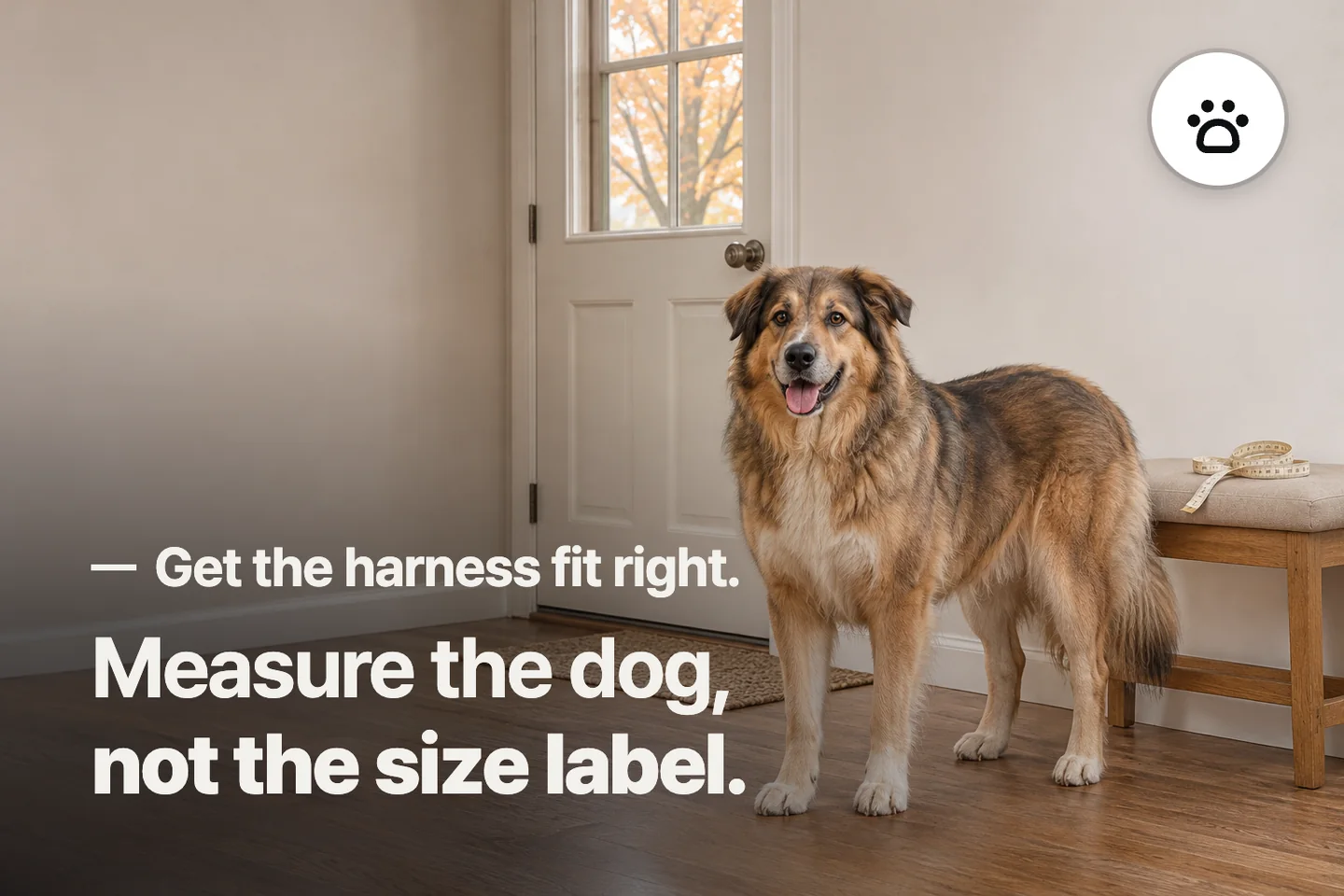
Start with the dog standing comfortably, not leaning into the leash. Ruffwear says to measure around the widest part of the rib cage, so use that circumference rather than guessing from breed mix or body weight. Then compare the result with the chart for the exact harness, not a retailer's generic large-dog label.
The Flagline chart lists Medium at 27–32 in and Large/XLarge at 32–42 in. That means a heavy dog can still fall into Medium, while a broad-chested dog may need the larger range. Ruffwear says to choose the larger size between sizes; the final strap placement still needs checking on the dog.
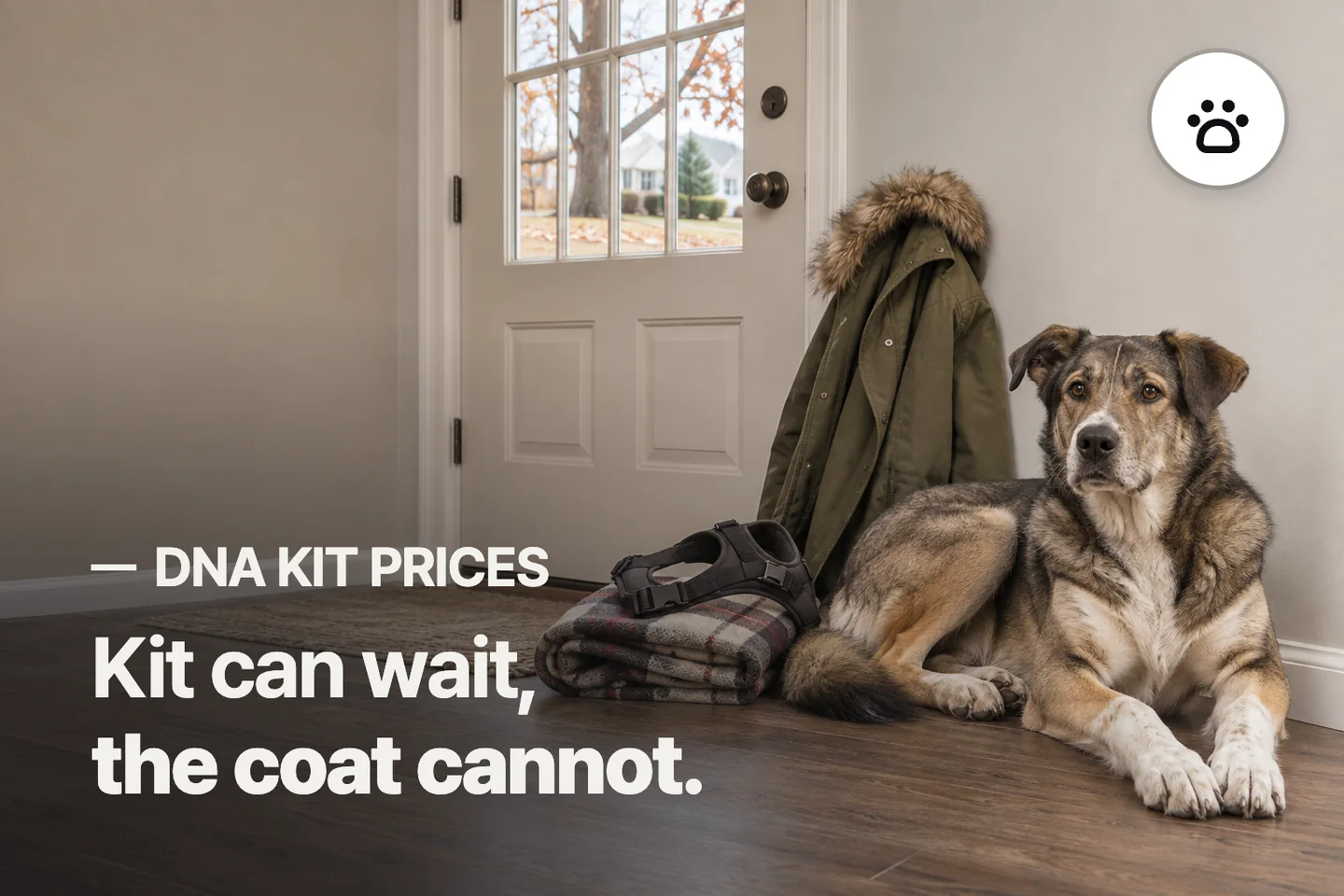
Keep the first measurement separate from the winter-coat decision. Because a coat adds material around the body, repeating the same buckle setting does not establish the same fit. If the harness goes over a coat, repeat the standing and movement checks with that coat on, then readjust when it comes off.
Write down the girth and the size you select. So if the harness later slides, you can distinguish a changed setting from a changed fit instead of tightening everything at once.
A size label starts the fitting process; it does not finish it.
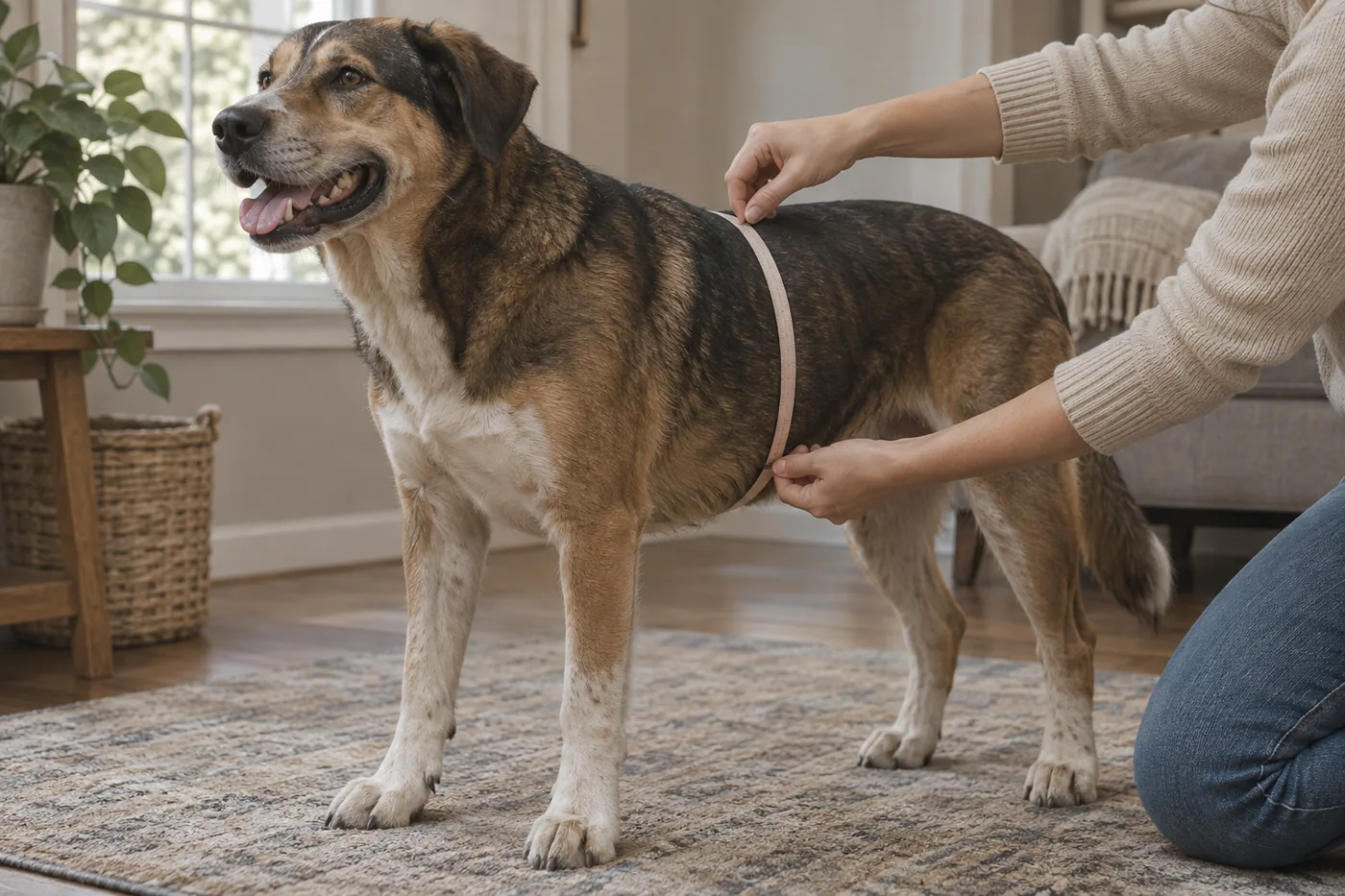 Measure the rib cage while the dog stands naturally.
Part 2Check B: Trace the rubbing before tightening
Blue-9's Balance Harness fitting guide puts the girth strap around the rib cage. It explains that a strap too far forward may chafe the underarms, while one too far back may press on the soft belly. So a strap rubbing behind the front legs needs a placement check, not simply more tension.
Unbuckle the harness and compare its left and right settings. Then refit it according to its own instructions, keeping webbing flat and checking that the body strap stays on the ribs as the dog stands. If the design cannot clear the underarm without moving onto the belly, ask the maker about sizing or a different shape rather than forcing that arrangement.
Blue-9 also places its front leash attachment near the bony part of the chest. Its guide warns that an attachment too high can cause coughing under pulling, while one too low can let the neck loop rotate excessively. That means the neck and body adjustments work together; tightening the body loop cannot correct every problem at the chest.
For the next check, let the dog move calmly indoors or in an enclosed area, watching turns as well as forward steps. Then look again for a panel shifting sideways, a strap entering the underarm, or an opening that moves toward the head. Do not deliberately frighten the dog into backing out to demonstrate the problem.
Blue-9 identifies biting at the straps or refusing to move as possible discomfort signals. So pause the fitting exercise if those appear, rather than treating refusal as proof the dog needs firmer handling. If there is broken skin or pain, stop using the rubbing harness and ask your veterinarian before resuming it.
Part 3Check C: Replace only the part adjustment cannot fix
If the existing harness still migrates after correct adjustment, the Flagline is the replacement I'd investigate first. Ruffwear lists six adjustment points and a padded handle with a load-dispersing chest/belly panel. So there is more to fit than a single belt behind the front legs, although that extra fitting work also takes patience.
Ruffwear lists three leash attachment points: an aluminum back V-ring and reinforced webbing loops on the chest and back. That gives you a chest option for a dog that pulls, but the chest connection is webbing, not another metal ring. Check the clip's seating before the walk.
The maker's page displayed a $52.49 sale price against a $69.99 original price on November 28, 2026. That is a US manufacturer-page snapshot, not an Amazon quote or a confirmed checkout total for your selected size. Confirm size, color, tax, and delivery before comparing the deal.
Would a simpler no pull dog harness solve the same problem? Blue-9 describes the Balance Harness as a six-point-adjustable design with front and back rings, which is useful context for a pulling problem. But pulling and slipping are different checks, so I would not buy another front-clip harness solely because its description says no-pull.
Part 4Check D: Repeat the check before the neighborhood loop
With the dog moving calmly, check that the fitted harness stays centered and the body strap stays where the maker intends. Then repeat with the actual winter layers, because an indoor fit without the coat leaves that question unanswered. Return to adjustment if a buckle setting changes or the harness starts rotating.
Ruffwear describes the Flagline handle as a lift-and-assist feature. But a handle is not a verified lifting capacity: ask Ruffwear for guidance before trying to carry a heavy dog with it. The published girth range establishes sizing, not a suspended-load rating for your rescue.
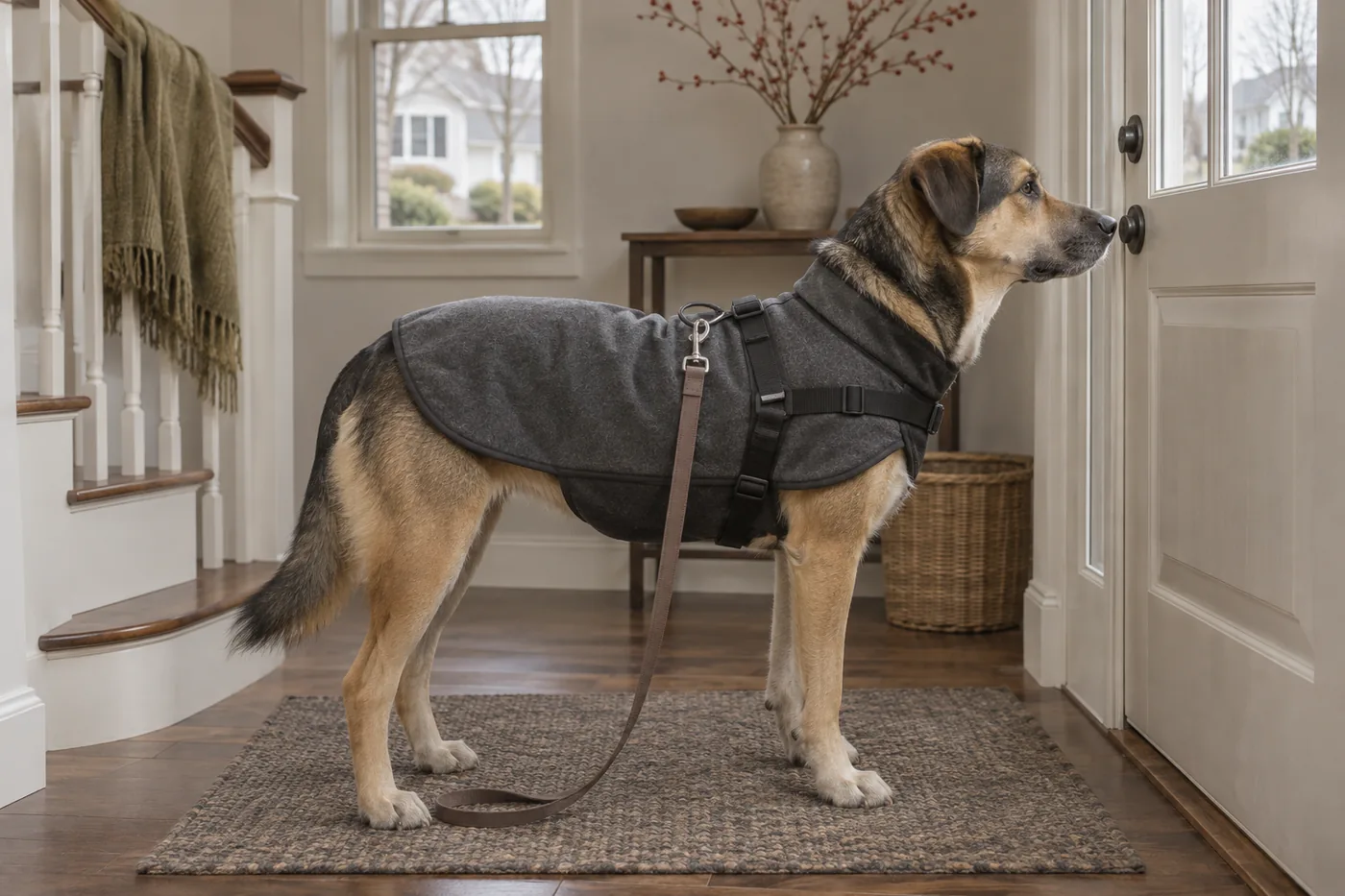 Repeat the movement check with the layers planned for the walk.
For this family, the best dog harness for large dogs is the one that remains correctly positioned without the underarm contact returning. So keep the first outing close to home and recheck the fit before making the route longer. A holiday sale is useful only after the harness passes those everyday checks.
Method: Reviewed Ruffwear's Flagline product details and size chart, plus Blue-9's product description and fitting guidance. Last checked: November 28, 2026.
In one sentence
Correct strap placement before replacing a slipping or rubbing harness.
Ruffwear Flagline Dog Harness with Handle
Check price on AmazonFrequently asked questions
How do I measure a dog harness for large dogs?
Ruffwear directs owners to measure around the widest part of the rib cage. Compare that measurement with the exact model's chart; the Flagline chart lists Medium at 27–32 in and L/XL at 32–42 in, with the larger size advised between sizes.
Will a no pull dog harness stop slipping too?
Not automatically. Blue-9 offers front and back attachment options for managing pulling, but its fitting guidance separately requires a correctly positioned, snug girth strap. Check rotation and strap placement rather than relying on the no-pull label.
What makes the best dog harness for underarm rubbing?
The useful fit is one that keeps the body strap on the rib cage without entering the underarm during movement. Blue-9 warns against placement too far forward or too far back, so a different shape may be necessary if adjustment cannot achieve that position.
Can a dog harness with handle carry a heavy rescue dog?
Ruffwear describes the Flagline handle as a lift-and-assist feature, but the reviewed specifications do not establish a numerical lifting limit for this dog. Ask the manufacturer before attempting to carry the dog by the harness.
Sources
- Ruffwear Flagline Dog Harness with Handle · 2026-11-28
Product page displayed $52.49 sale and $69.99 original; chart: Medium 27–32 in, L/XL 32–42 in. Features: 6 adjustment points, 3 leash attachments, padded assist handle. No numerical lifting capacity used.
- Blue-9 Balance Harness · 2026-11-28
Six-point adjustment and front/back leash rings; page displayed regular price $39.95, not used as a checkout quote or recommended replacement price.
- Blue-9 Balance Harness fitting guidance · 2026-11-28
No numerical clearance measurement taken. Guidance places the girth strap on the rib cage and front attachment near the bony chest; identifies underarm chafing, belly pressure, rotation, and discomfort signals.