“Unlimited Power,” says Sangean's MMR-88 FCC product listing. For a homeowner getting a snowy driveway and two-car garage ready before the first hard freeze, that sounds like a reassuring noaa weather radio purchase during Black Friday shopping. But a charging claim does not tell you whether a warning will sound while the household sleeps.
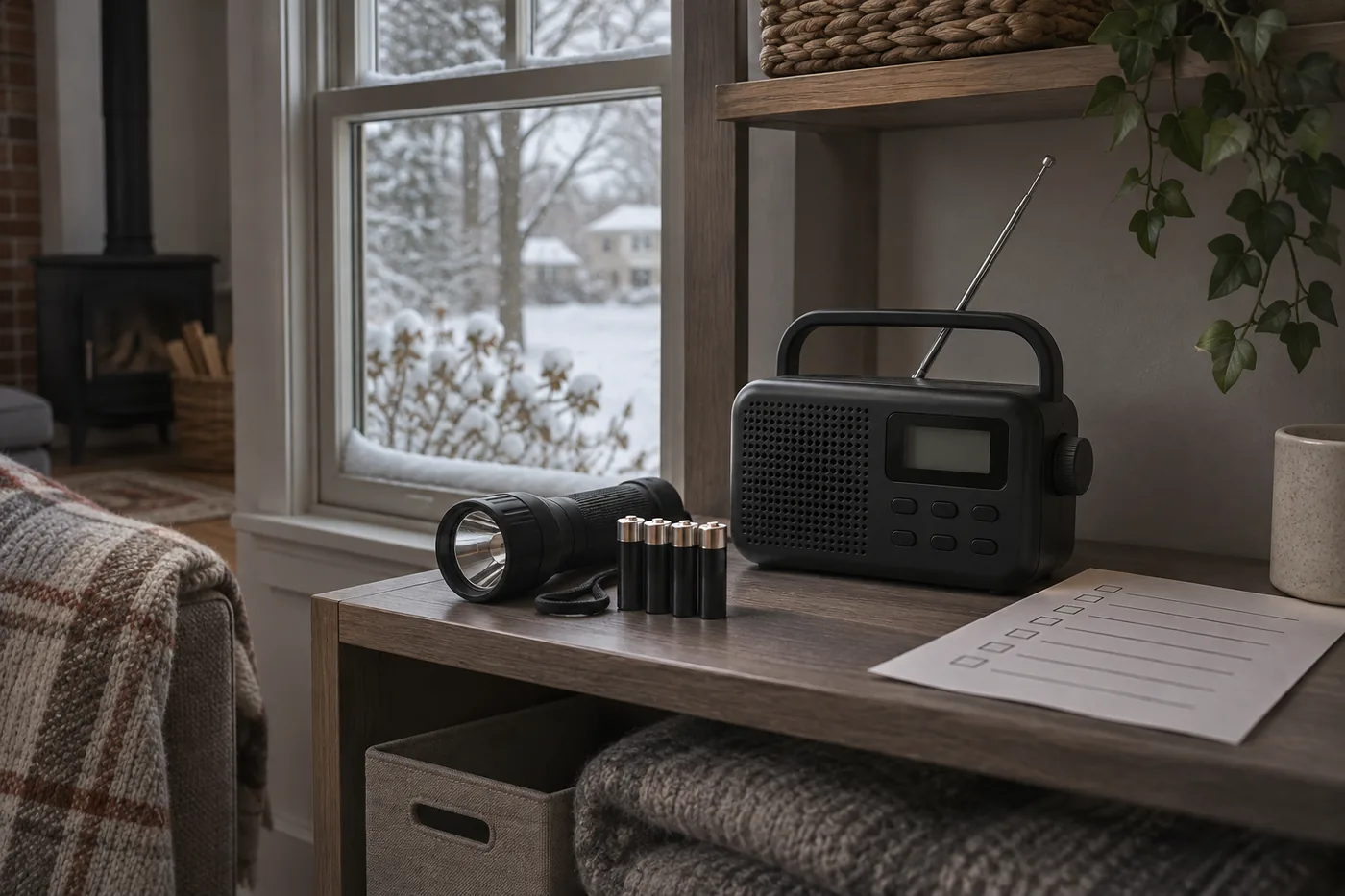 A radio's place in the winter plan starts indoors, before the driveway needs clearing.
I'd choose the Sangean PR-D4W for a shared indoor alert setup, provided its reception and alert controls work as needed in that room. Sangean explicitly lists weather alerts and replaceable D-cell power; the MMR-88 FCC is the manual-charging choice, while the DT-400W is the pocket option. That is a distinction between jobs, not a ranking by discount.
How we chose
Compared Sangean's official product specifications with National Weather Service receiver guidance. Selection follows three checks: outage power supplies, weather-band reception, and documented alert behavior; current retailer prices and a previous-60-day price history were not verified.
Toneandroom picks
Best noaa weather radio for winter outages: Top 3
Scheduled weather updates with manual charging when outlets are unavailable
Sangean MMR-88 FCC
Price varies; check Amazon. Current US price and seller stock unverified; manufacturer page checked 2026-11-24.
Sangean specifies all seven NOAA frequencies and a rechargeable battery with hand-crank and solar replenishment. Choose it for intentional listening, not as a confirmed automatic warning receiver.
- Battery
- 850mAh
- Playtime
- 14 hr
- Charging
- Crank / solar
- Input
- Micro USB
- You want manual charging options
- You switch on weather updates
- Automatic alerts not established
- 14 hr is maker playtime only
A shared indoor weather-alert setup with spare D cells available
Sangean PR-D4W
Price varies; check Amazon. Current US price and seller stock unverified; manufacturer page checked 2026-11-24.
My choice for the shared household location because Sangean explicitly lists built-in weather alerts, replaceable D-cell power, and an included adapter. Reception and alert activation still need checking.
- Battery
- 4 D cells
- Adapter
- Included
- Width
- 9.33 in
- Alerts
- Weather alerts
- You keep spare D cells ready
- You want a shared shelf radio
- Battery duration not published
- SAME filtering not established
An individual wants a pocket weather receiver using stocked AA batteries
Sangean DT-400W
Price varies; check Amazon. Current US price and seller stock unverified; manufacturer US page checked 2026-11-24.
The compact case and replaceable AA batteries suit carrying the receiver between rooms. Sangean also describes an audible NOAA weather-emergency alert, without establishing county filtering on the product page.
- Battery
- 2 AA cells
- Height
- 4.19 in
- Depth
- 0.81 in
- Weight
- 0.23 lb
- You want a pocket-size receiver
- You already stock AA batteries
- Battery duration not published
- Check audible-alert settings
What we considered
Backup power
Can you maintain this radio's power during an outage?
Sangean lists rechargeable power for the MMR-88 FCC, D cells for the PR-D4W, and AA cells for the DT-400W. These are different replenishment plans, so the choice depends on which supplies the household can keep ready.
Local reception
Will the exact model receive weather broadcasts in its intended room?
NWS broadcasts occupy seven VHF frequencies rather than ordinary AM/FM. The selected models list weather reception, but room-specific reception still needs checking before the storm.
Alert behavior
Do you need scheduled listening or unattended warnings?
Sangean describes weather alerts for the PR-D4W and DT-400W, while the MMR-88 FCC page establishes weather reception without confirming automatic alerts. SAME area filtering is a separate function that these pages do not establish.
Part 11. A noaa weather radio needs more than an emergency label
What we found: the useful shopping checks are power, reception, and alert behavior, in that order. The National Weather Service recommends battery backup because storms can interrupt power, with an AC connection where available to preserve batteries. So the starting question is simple: can you keep this particular receiver powered when the outlets stop working?
Reception comes next because an ordinary AM/FM receiver cannot receive NWS broadcasts. NWS specifies seven VHF frequencies, from 162.400 to 162.550 MHz, so a weather-band specification matters more than an emergency-themed label. Check the broadcast in the room where the radio will actually stay, not just beside the front window.
Alerts are the separate question. NWS distinguishes a tone alarm from SAME, or Specific Area Message Encoding, which selects warnings by area. None of these product pages establishes SAME filtering, so county-specific alerts need a separate check before purchase.
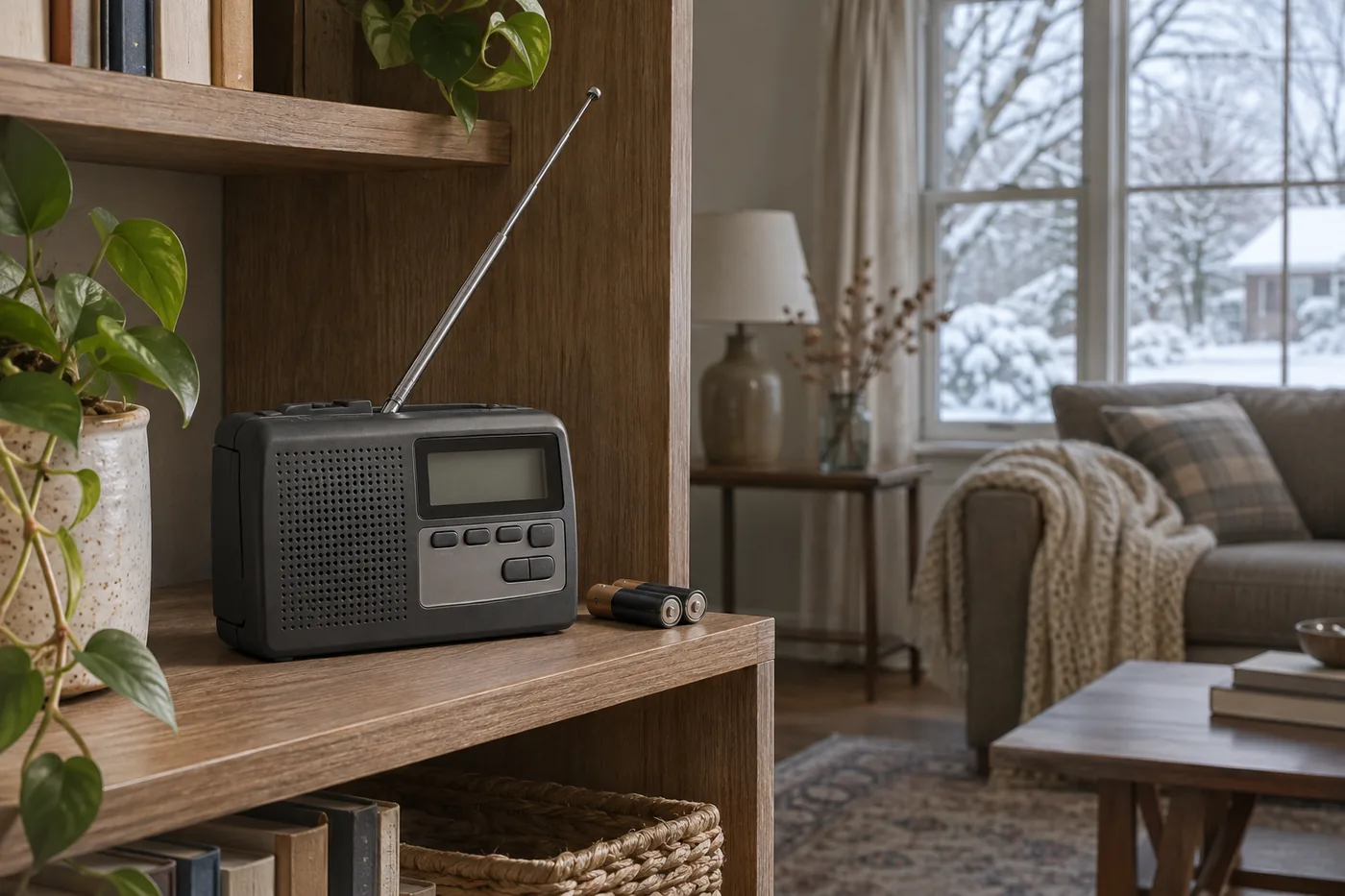 Check reception at the intended shelf, rather than assuming every room receives the same signal.
Weather reception, an audible warning, and county filtering are separate features; one does not prove the others.
Part 22. “Unlimited Power” does not establish automatic warnings
What we found: the Sangean MMR-88 FCC combines a hand crank, solar panel, and Micro USB input with an 850mAh rechargeable battery. Sangean also lists all seven NOAA frequencies, so this exact FCC version fits deliberate weather listening when outlets are unavailable. That is useful flexibility, but the charging options do not establish unattended warning behavior.
Sangean gives a 14-hour playtime figure, not a winter-outage endurance result under a stated alert-monitoring routine. Its page supplies no matching crank schedule, so the number cannot tell you how much turning replaces an evening's listening. Plan around charging and scheduled updates rather than assuming the crank guarantees continuous operation.
The distinction gets sharper at bedtime. Sangean lists a siren and flashlight, but its page does not establish automatic weather alerts for this model. A siren is not proof of a broadcast-triggered alarm, so I would not choose it as the household's sole unattended warning receiver.
For a person who will switch on the radio for updates, those compromises may be acceptable. But if the purchase is supposed to wake someone, the alert specification has to carry that decision, not the solar panel in the listing photo.
Part 33. “Weather Alert” is the more relevant household claim
What we found: Sangean's PR-D4W has built-in weather-alert functionality, an included power adapter, and space for four 1.5V D cells. That makes its power plan straightforward for a shared kitchen or living-room location. Use the adapter while power is available, then keep compatible replacement cells ready for an interruption.
The case measures 9.33 × 5.83 × 1.55 in, so this is a shelf or counter purchase rather than the pocket choice below. Sangean does not publish battery runtime on the checked page, which means there is no supported promise that one battery set covers an extended outage. Battery quantity is not battery endurance.
Before relying on it, use Sangean's setup instructions to enable alerts and confirm operation with the adapter disconnected. That check matters because selecting a weather channel and enabling warning monitoring are not automatically the same action. If county filtering is essential, ask Sangean to confirm the required function rather than treating “Weather Alert” as a SAME specification.
Part 44. A pocket receiver serves the person carrying it
What we found: the Sangean DT-400W runs on two 1.5V AA batteries and measures 2.52 × 4.19 × 0.81 in. Its US product page describes an audible NOAA emergency-alert tone, so it offers more than pocket AM/FM listening. This is the option for someone who wants weather updates close by while moving between rooms.
Sangean includes earphones, which suit individual listening rather than a warning arrangement intended for everyone in the house. But the page does not establish runtime or SAME filtering, so carrying it does not remove the need to check alert settings and keep spare AA cells. Portability changes who has the receiver, not what every alert mode guarantees.
Part 55. The best weather radio deal still needs a price baseline
What we found: the manufacturer pages checked on November 24, 2026, do not establish current US selling prices or retailer inventory. So there is no verified list-price, sale-price, or previous-60-day selling-price comparison here. A purchase-price testimonial on the PR-D4W page is not a current offer.
Swipe sideways to see the full table →
| Outage question | Sangean MMR-88 FCC | Sangean PR-D4W | Sangean DT-400W |
|---|---|---|---|
| Power to prepare | Rechargeable; crank; solar | Four D cells; adapter included | Two AA cells |
| Automatic alert evidence | Not established on page | Built-in weather alerts | Audible NOAA alert described |
| Published battery duration | 14 hr maker playtime | Not listed by the maker | Not listed by the maker |
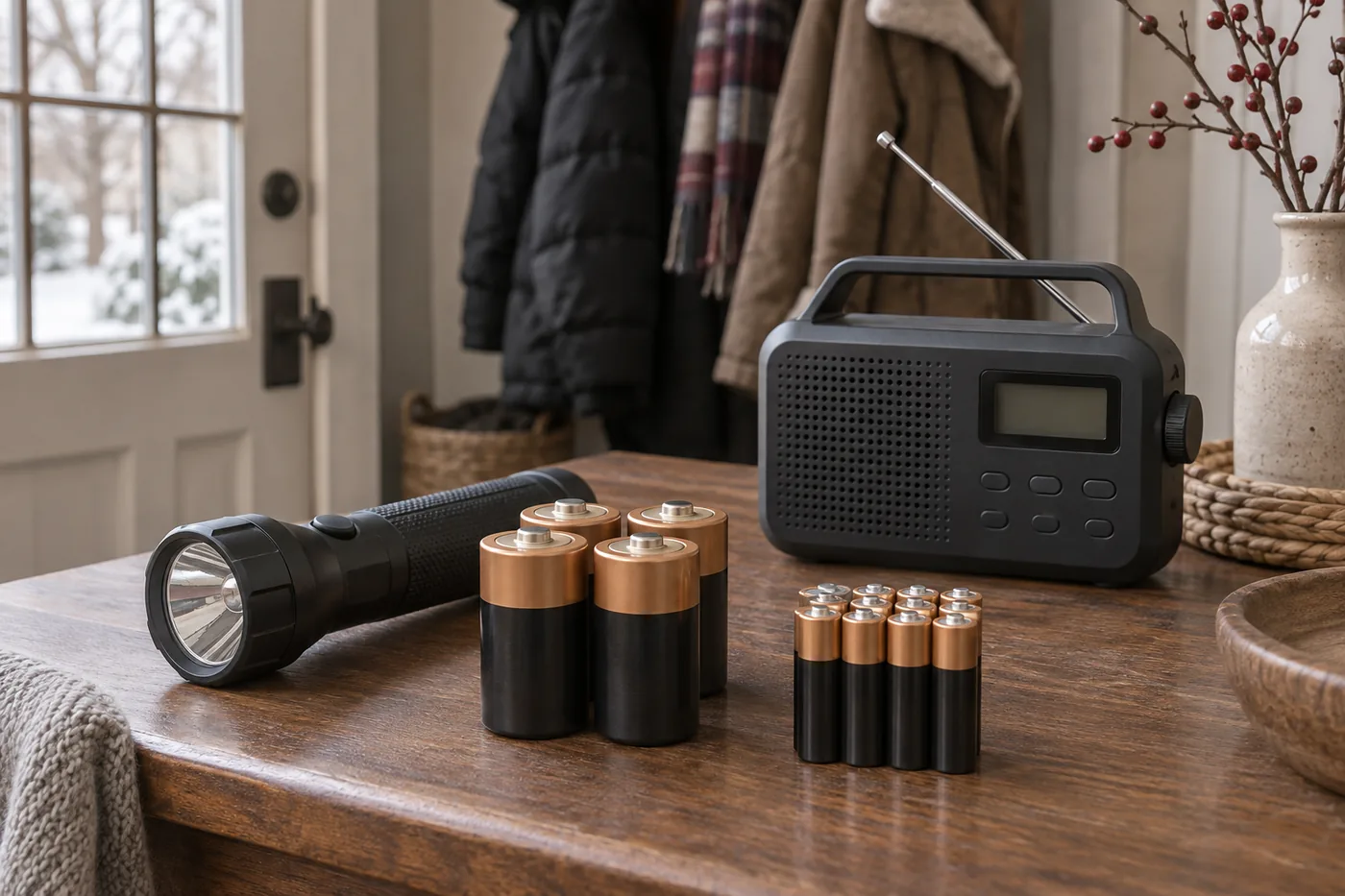 The replacement batteries belong beside the radio before an outage, not on a later shopping list.
Price varies; check Amazon for the exact model and seller before ordering. Without a verified price history, I would pay attention to the required batteries and the documented alert function before a discount badge. If you want a noaa weather radio mainly for overnight warnings, NWS says a standalone weather receiver may be the better fit; these multifunction radios should not be treated as interchangeable substitutes.
Sources and selection: Sangean's product pages and NWS receiver guidance were checked for power options, weather reception, and documented alerts. Manufacturer figures are not outage test results. Last checked November 24, 2026; current retailer prices and stock were not verified.
In one sentence
Choose the power plan and documented alert function before the Black Friday discount.
Sangean MMR-88 FCC
Check price on AmazonSangean PR-D4W
Check price on AmazonSangean DT-400W
Check price on AmazonFrequently asked questions
Can a regular AM/FM weather radio receive NOAA broadcasts?
Only if it also has the weather band. NWS says its broadcasts use seven VHF frequencies from 162.400 to 162.550 MHz, which a simple AM/FM receiver cannot receive.
Does an emergency weather radio with a crank keep running indefinitely?
A crank is a replenishment option, not proof of continuous operation. Sangean lists 14-hour playtime for the MMR-88 FCC but does not provide a matching crank schedule on the checked product page.
Does a weather alert radio filter warnings for my county?
Not automatically. NWS describes SAME area selection as distinct from an alert tone, and these checked product pages do not establish SAME filtering. Confirm that feature with the manufacturer if county selection is essential.
Which is the best weather radio here for a shared room?
I would choose the PR-D4W because Sangean lists weather alerts, four D batteries, and an included adapter. Confirm local reception and alert setup, and do not assume a guaranteed battery duration or county filtering.
Sources
- Sangean MMR-88 FCC · 2026-11-24
Seven NOAA frequencies; 850mAh rechargeable battery; 14 hr playtime; Micro USB input; hand crank and solar panel. Listing contains the quoted phrase Unlimited Power; automatic weather alerts and current US selling price not established.
- Sangean PR-D4W · 2026-11-24
Four 1.5V D cells; included adapter; 9.33 × 5.83 × 1.55 in; built-in weather alerts. Battery runtime not listed; purchase-price testimonial is not a current selling-price baseline.
- Sangean DT-400W · 2026-11-24
Two 1.5V AA cells; 2.52 × 4.19 × 0.81 in; 0.23 lb; earphones included; audible NOAA weather-emergency alert described. Battery duration and SAME filtering not established.
- National Weather Service receiver guidance · 2026-11-24
Seven VHF frequencies from 162.400 to 162.550 MHz; ordinary AM/FM receivers cannot receive them. Distinguishes tone alarms from SAME filtering and recommends battery backup and AC use to preserve batteries; no model endorsement inferred.