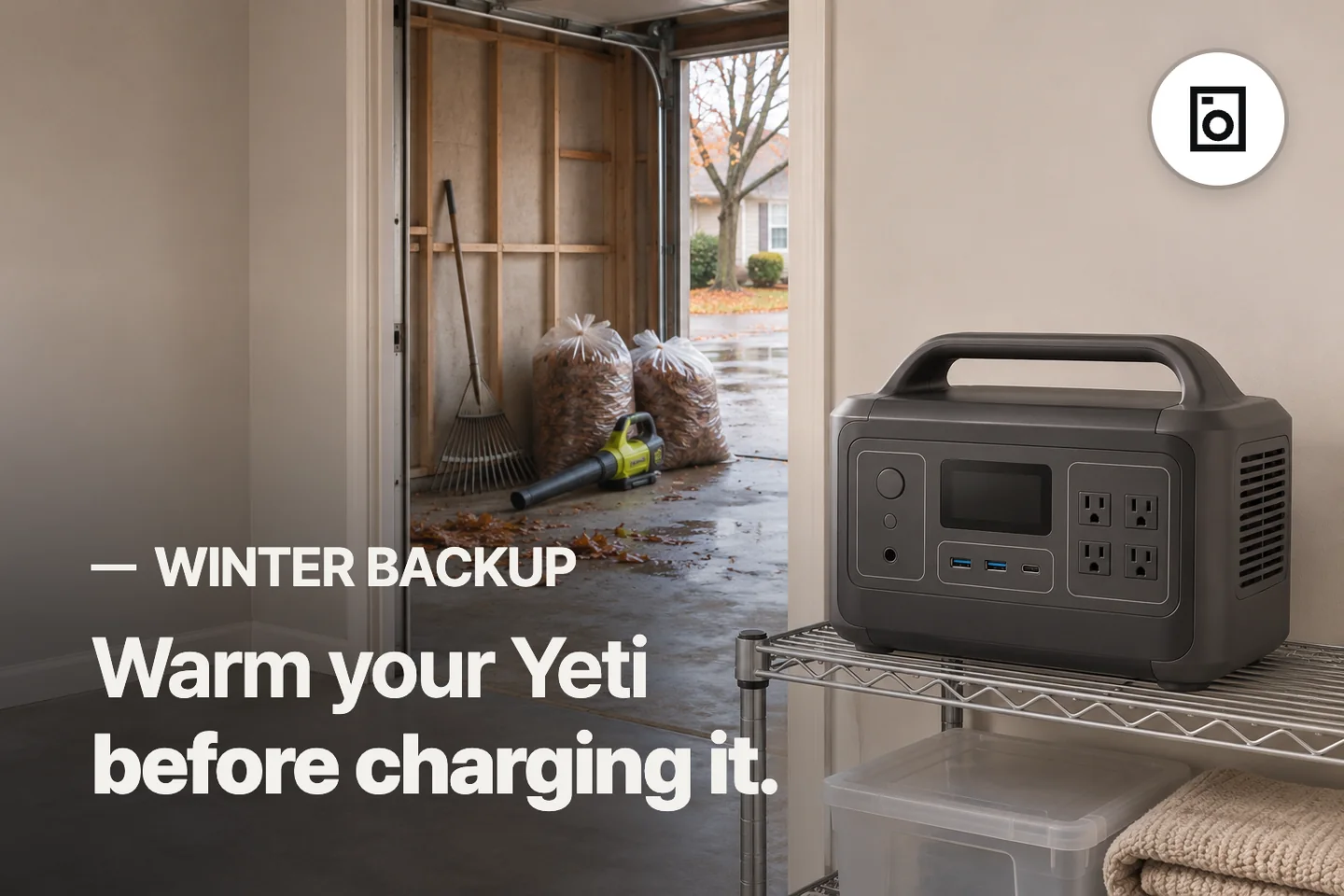
32°F. That's where Goal Zero's general care guide says a cold Yeti stops accepting charge, so a homeowner putting away the leaf blower before a winter storm may find the goal zero generator on the garage shelf refusing power. That number describes the maker's general guidance, not a diagnosis of every Yeti that won't charge.
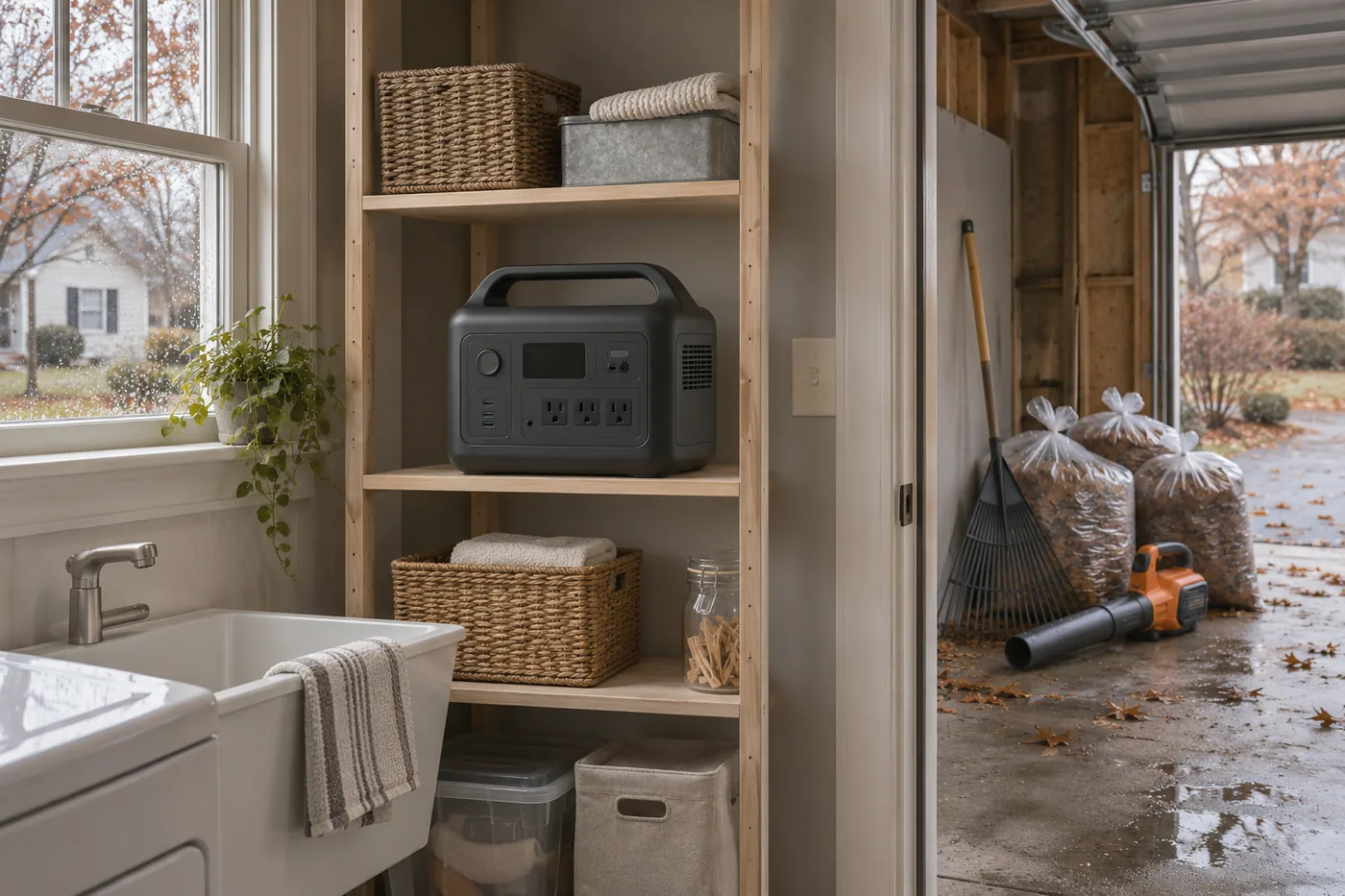 The garage shelf that suits yard equipment may be too cold for charging a battery station.
For an existing Goal Zero Yeti 1500X, I'd start with warmer conditions and its supplied wall charger, not a replacement station. Goal Zero says a COLD warning calls for warming the unit; the useful result is charging that resumes afterward. A shopping cart can wait.
How we chose
Reviewed Goal Zero's care guidance and EPA outage advice, retaining previously checked Yeti X and 1500X details where pages were inaccessible. The troubleshooting sequence uses three checks: the displayed warning, model-appropriate conditions, and observable charging progress. No replacement equipment is selected.
Part 1Read the goal zero generator warning first
The display is the first useful clue because Goal Zero's Yeti X support guidance connects a thermometer icon and HOT or COLD text with temperature thresholds. That makes COLD plus a cold storage location stronger evidence than a charging cable that happens to be plugged in. A blank screen, by itself, proves much less.
Write down the exact model, displayed warning, battery level, and charging-input reading before changing anything. Those observations give support something concrete if warming doesn't help. They also keep a charger fault from being casually labeled a winter problem.
Swipe sideways to see the full table →
| Display or behavior | What it tells you | Next move |
|---|---|---|
| Thermometer with COLD | Goal Zero says warming is needed | Restore suitable conditions before retrying |
| Thermometer with HOT | Goal Zero says cooling is needed | Use the model's cooling guidance instead |
| No input, no temperature warning | Temperature is not established as the cause | Check the approved charger and connections |
| Slow charging near full | Goal Zero describes a slower finish | Watch whether the battery level continues rising |
The model's instructions still come first because a general protection threshold isn't the same thing as an approved operating range. The 1500X page previously listed 32–104°F for operating usage. That specification was recorded on November 20, 2026; the page could not be retrieved for this update, so it isn't a newly confirmed limit or evidence of a change over time.
Treat the warning as a direction to restore suitable conditions, not an obstacle to defeat.
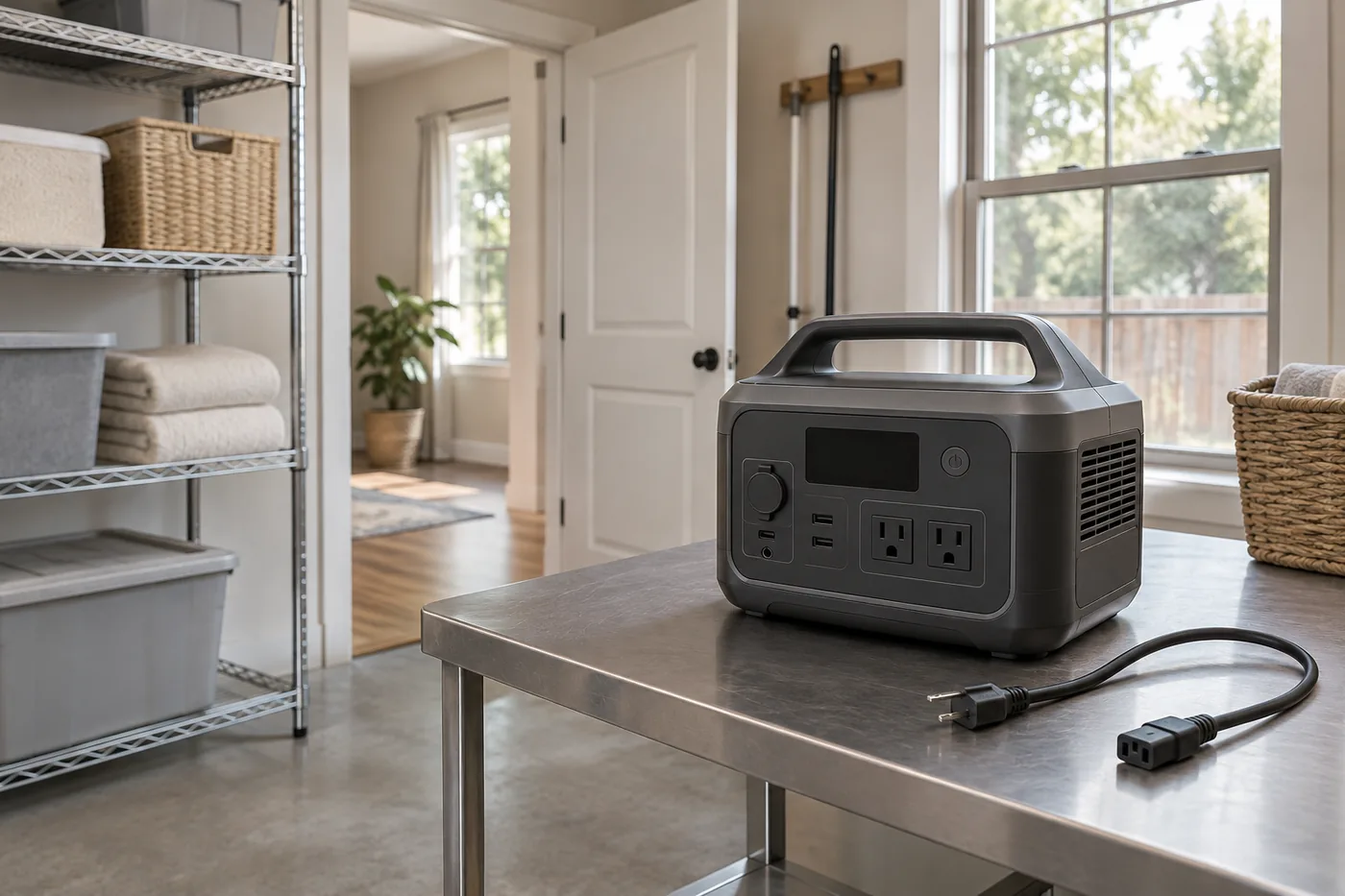 A dry indoor location separates the warming step from the charging check.
Part 2Warm the station before retrying its charger
Goal Zero's response to COLD is warming, so disconnect the charging source and unnecessary loads before moving the station to a dry indoor location within its model's requirements. That doesn't establish a countdown. No fixed warm-up time was given in the temperature-warning guidance retained from the earlier source check.
Let the room warm the station naturally rather than pressing a heater against its case or treating a heating pad as a repair. Goal Zero's care guide also calls for proper ventilation, so this is not a reason to cover the unit while it charges. If moisture appears after bringing it inside, keep it disconnected and ask Goal Zero how to proceed.
Has the COLD warning cleared? That is a useful checkpoint, but the charging check still matters because a warmer room alone doesn't prove that the battery is accepting power. If the warning persists under the correct conditions, contact Goal Zero rather than repeatedly reconnecting the supply.
When conditions are suitable and the warning has cleared, connect the model's approved wall supply to a working outlet and its designated input. For the 1500X, the previously checked specification lists a supplied 120W charger. That figure identifies the original equipment; it isn't a reason to substitute a different supply just because its plug fits.
Look for input power followed by a rising battery level. Those observations establish more than a lit display or a firmly seated connector, so keep watching beyond the moment you plug it in. If input remains absent, check the connections against the model's instructions and send support the warning, model, and charger details.
Part 3Allow charging time before the outage
A restored charging input doesn't mean the station is ready for an overnight outage because the battery still has to refill. Goal Zero's previously checked 1500X page estimated 14 hours with the included supply. That estimate remains dated November 20, 2026, and doesn't include a documented allowance for warming a cold station.
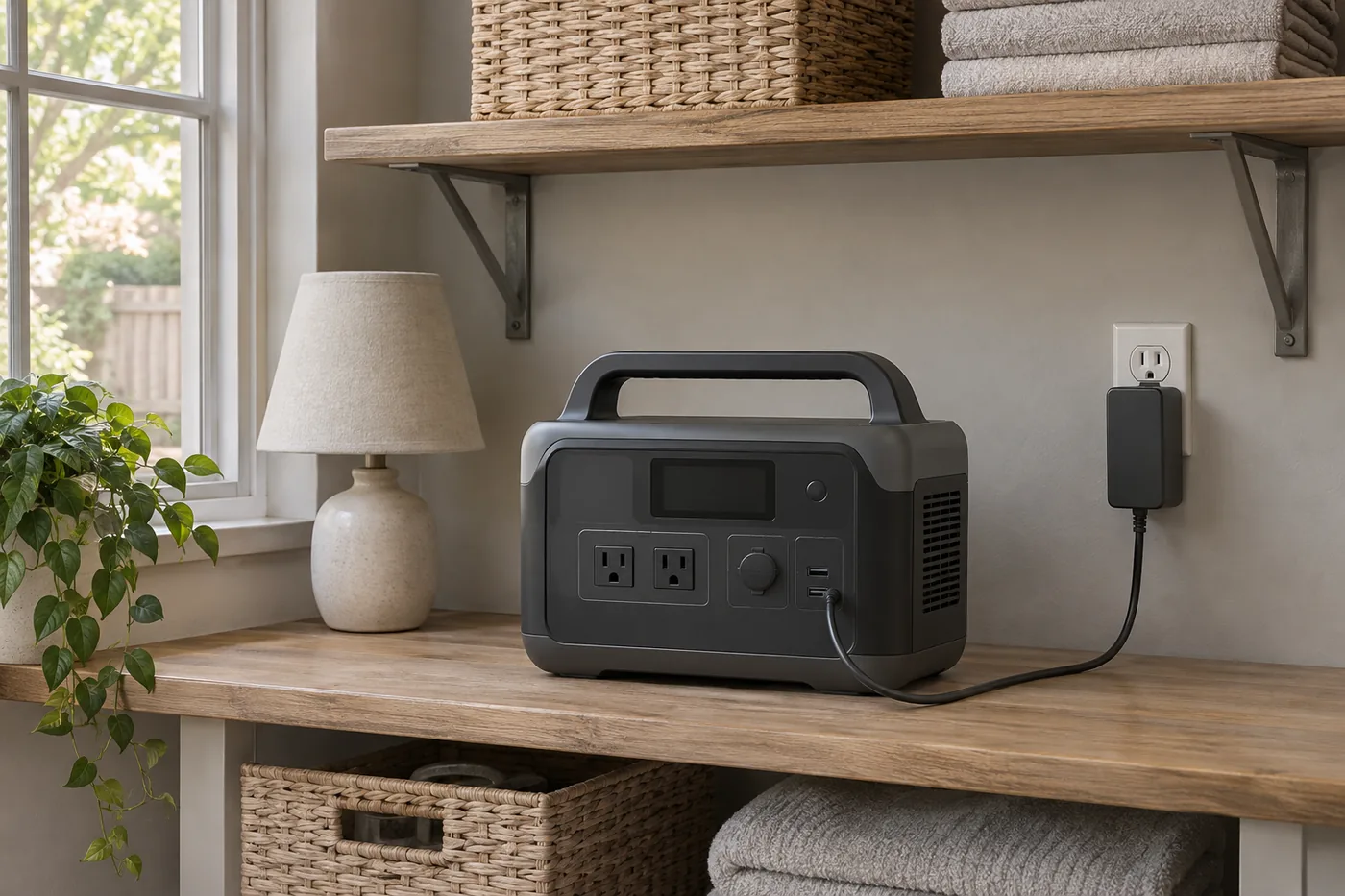 Check both incoming power and the battery level before relying on the station for an outage.
Buying a solar panel doesn't resolve the cold condition described in Goal Zero's care guide because that guidance concerns accepting charge, not just accepting wall power. So I'd restore normal wall charging while grid power is available. No extra purchase is needed for these initial checks.
Keep a record of the charge level before and after the retry because that gives you a useful recovery check without inventing a charging-speed benchmark. A display that shows input but no subsequent progress needs further attention. A reset borrowed from another model isn't a substitute for resolving the warning.
Part 4Keep fuel generators out of this indoor fix
These indoor steps concern a battery-powered Yeti, not a gasoline generator. EPA says fuel-powered portable generators belong outdoors, at least 20 feet from buildings, and must not be used indoors. That distinction matters when an attached garage feels like a convenient compromise.
EPA separately mentions battery-powered generators and solar power stations for small appliances, lights, and fans. That doesn't establish runtime for your particular load, so check the Yeti's model instructions and the appliance requirements separately. A phone charging successfully doesn't prove the station can cover the rest of the house.
After charging recovers, choose winter storage that stays within the exact model's requirements rather than automatically returning the station beside the blower. Goal Zero recommends keeping the Yeti charged and using it periodically. Verify readiness before the storm, while there is still time to resolve a persistent fault.
Sources and method: This guide uses Goal Zero's care guidance and EPA emergency advice, rechecked November 24, 2026. Goal Zero's temperature-warning and 1500X pages were inaccessible during this update; their retained details were checked November 20, 2026. The checks prioritize warning identification, suitable operating conditions, and observable charging recovery.
In one sentence
Check the warning, restore suitable conditions, and confirm that the existing Yeti accepts charge before replacing equipment.
Frequently asked questions
Why does my Goal Zero Yeti display COLD while plugged in?
Goal Zero's Yeti X guidance associates COLD and the thermometer icon with approaching or exceeding temperature thresholds. Restore conditions suitable for the exact model, then check whether the warning clears and charging resumes.
How long does a cold Yeti need to warm up?
The retained Goal Zero temperature-warning guidance gives no fixed warm-up duration. Let the station acclimate naturally within its model's requirements; if the warning persists, ask Goal Zero for model-specific help.
Will a solar panel fix a goal zero generator that will not charge in cold weather?
Goal Zero's care guide describes cold-related refusal to accept charge, rather than a wall-charger-only problem. Restore suitable conditions and check the approved wall supply before buying solar equipment.
Can I move a fuel-powered generator indoors to warm it too?
No. EPA says fuel-powered portable generators must run outdoors, at least 20 feet from buildings, and not indoors. The indoor warming steps here apply to a battery-powered Yeti, not a fuel-burning generator.
Sources
- Goal Zero Yeti care guidance · 2026-11-24
General guidance says cold Yetis stop accepting charge at 32°F. Also describes slower charging near full, ventilation, and keeping the station charged; the general threshold is not substituted for model-specific instructions.
- Goal Zero Yeti X temperature warnings · 2026-11-20
No numeric threshold or fixed warm-up duration supplied. Earlier source check records HOT/COLD thermometer guidance and warming for COLD. Retrieval attempted November 24, 2026, but blocked by a browser challenge; earlier facts and check date retained.
- Goal Zero Yeti 1500X specifications · 2026-11-20
Previously checked operating usage range: 32–104°F; supplied charger: 120W; published full recharge estimate with that supply: 14 hours. Retrieval attempted November 24, 2026, but returned local_rate_limited; original values and check date retained.
- EPA emergencies and indoor air quality · 2026-11-24
Fuel-powered generators must be outdoors at least 20 feet from buildings, not indoors. Separately mentions battery generators and solar power stations for small appliances, lights, and fans.