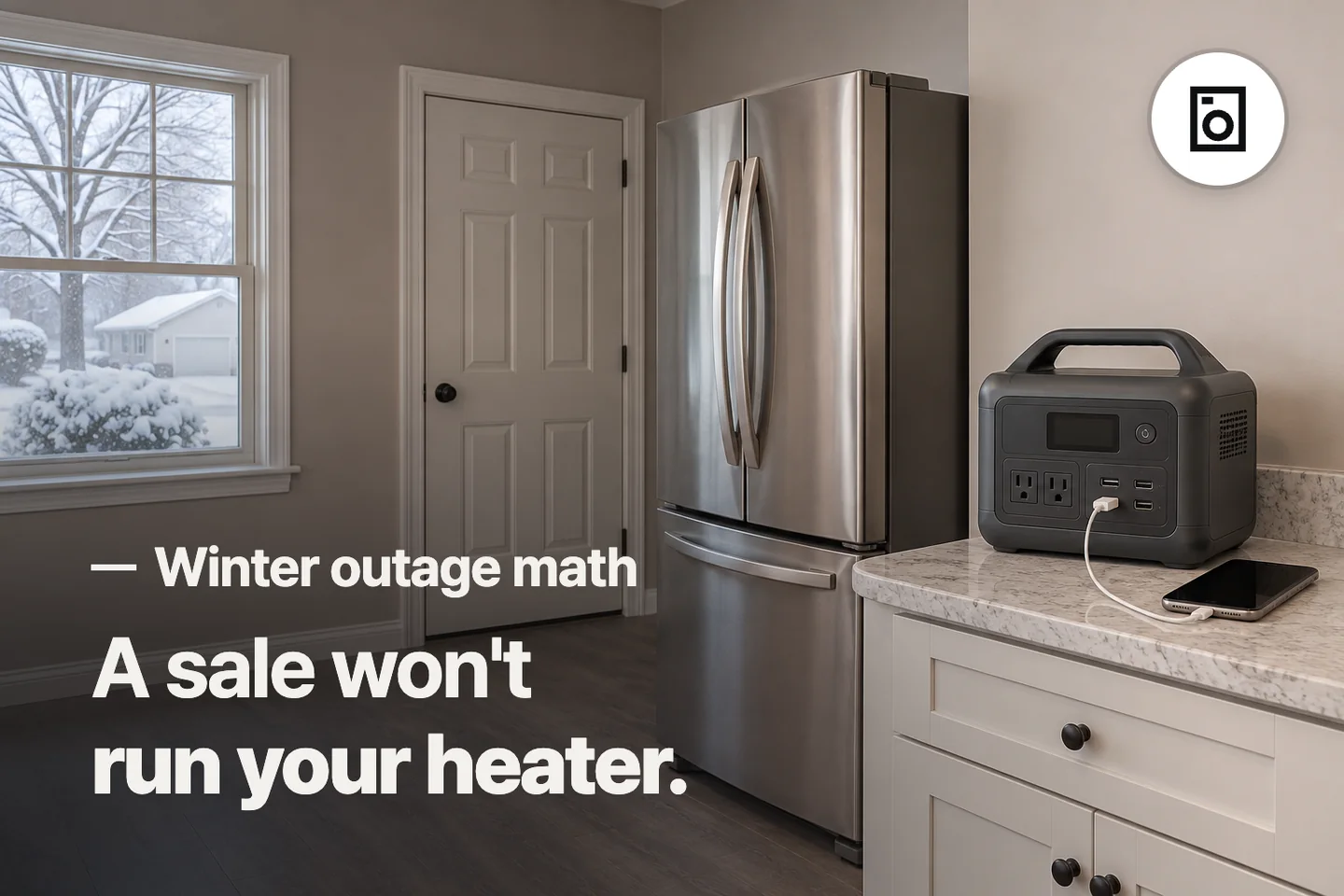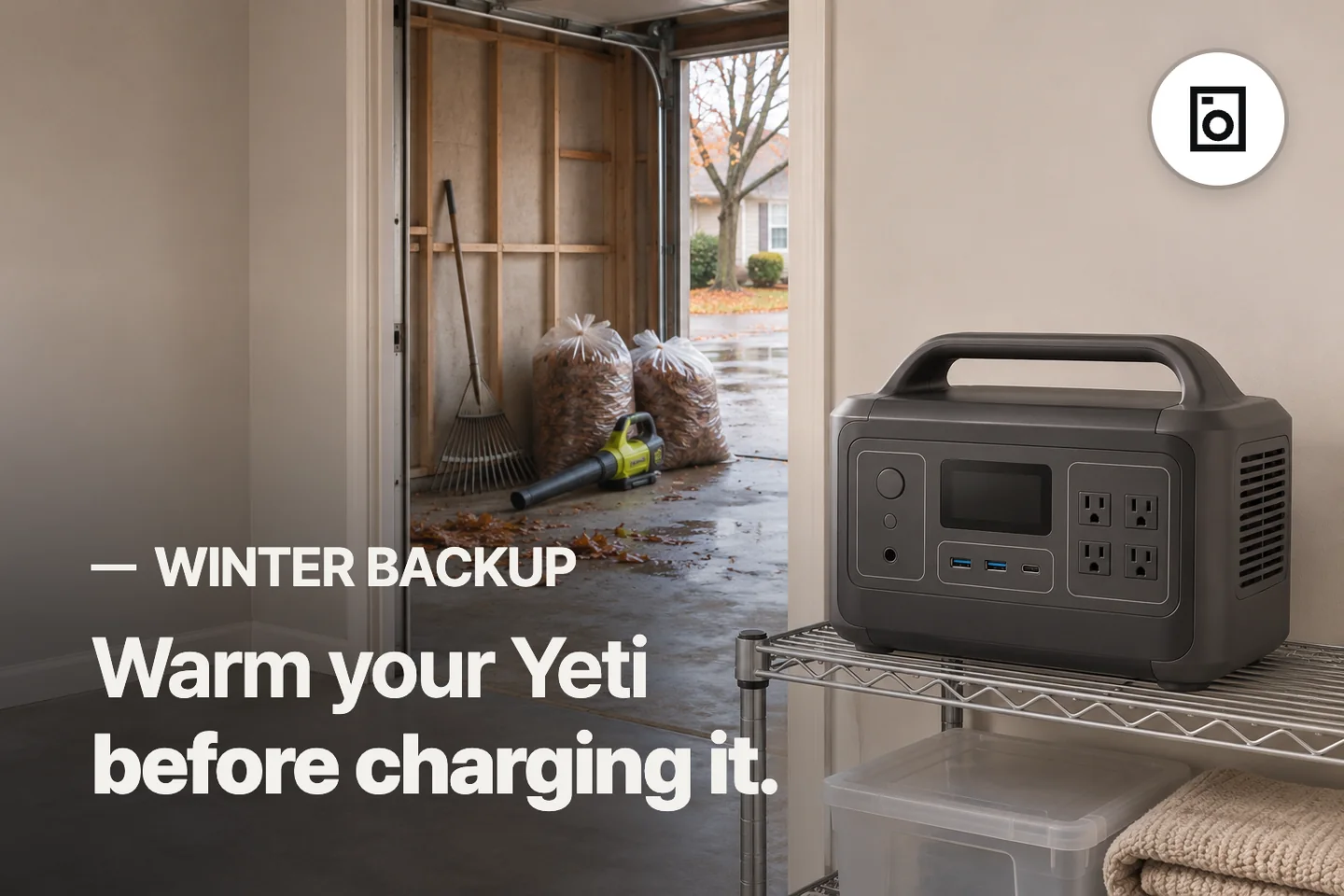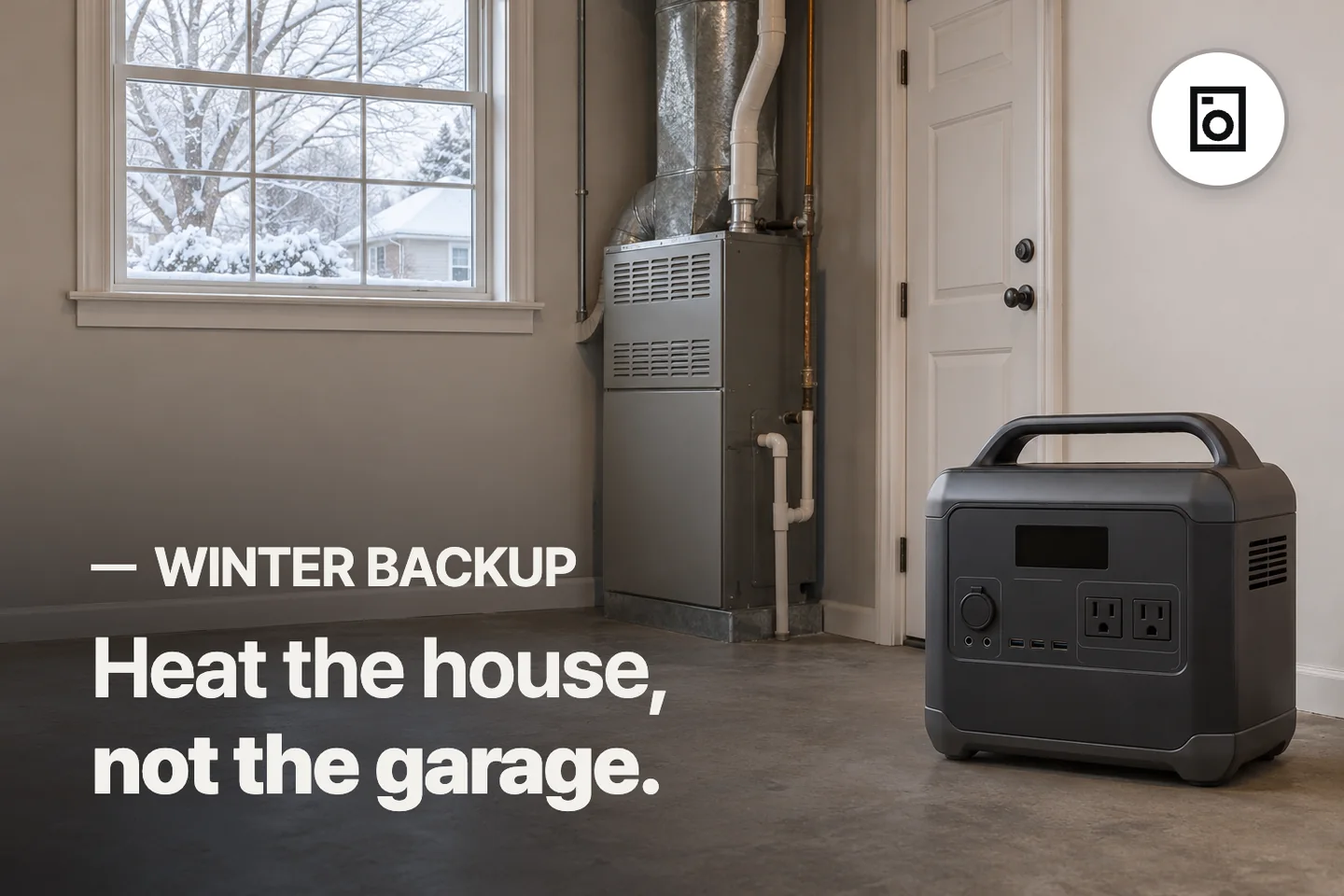
Does your goal zero yeti outage plan protect the furnace and sump pump, or mostly keep the garage comfortable? In a US house with an attached garage, that distinction matters before a winter storm knocks out the power.
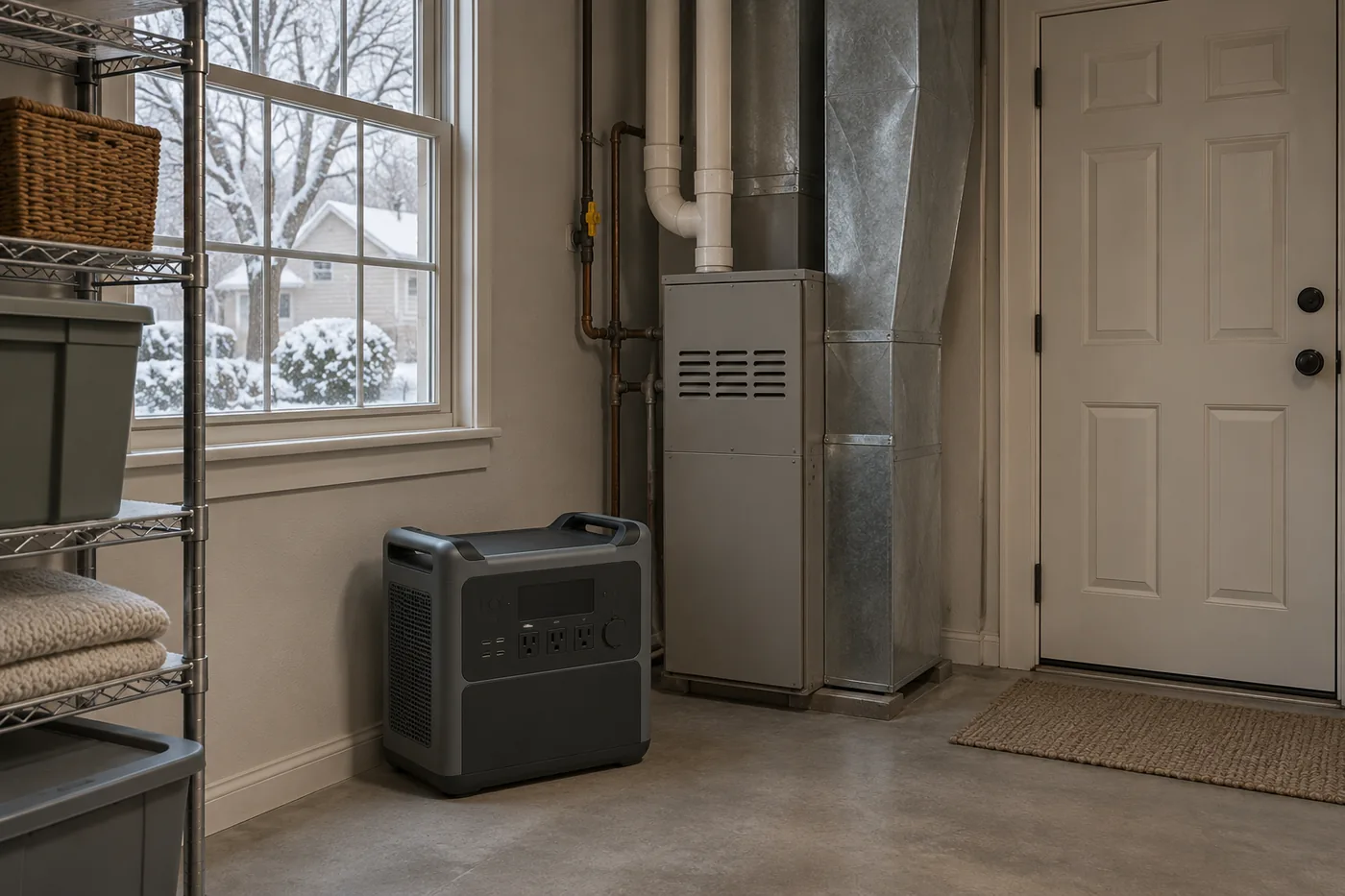 Keep the home's essential equipment on the list before adding garage comfort.
I'd choose the Goal Zero Yeti PRO 4000 for a shorter outage with carefully limited loads and a workable recharge plan. But I'd choose the Westinghouse WGen9500DF for longer interruptions only where outdoor placement, fuel and a proper electrical connection are practical.
How we chose
Manufacturer specifications, Honda's estimated-load calculator and EPA guidance were compared for essential-load capacity, replenishment and house connection. Product data retain their November 19, 2026 check because the pages could not be refreshed on November 24, 2026; EPA guidance was rechecked that day.
Toneandroom picks
Best goal zero yeti alternatives for home backup: Top 2
Shorter outages with limited essential loads and a workable recharge source
Goal Zero Yeti PRO 4000
$3,999.95 regular US maker price, equipment only; checked November 19, 2026. Price could not be refreshed November 24, 2026. Tax, delivery, solar and house connection extra.
I'd choose it for a shorter, carefully rationed outage when avoiding a running fuel engine matters and a recharge plan is available.
- Capacity
- 3,993.6 Wh
- Output
- 3,600 W
- Supply
- 120 V
- Charge range
- 32–125.6°F
- You can ration essential loads
- You have a viable recharge source
- Stored energy limits duration
- Cold charging needs planning
Longer interruptions with suitable outdoor space, fuel and a planned house connection
Westinghouse WGen9500DF
$1,249.00 US maker MSRP, equipment only; checked November 19, 2026. Price could not be refreshed November 24, 2026. Not a retailer checkout quote; tax, delivery, fuel and installation extra.
I'd choose it for fuel-supported longer operation when the property permits safe outdoor placement and the electrical connection is properly planned.
- Gas output
- 9,500 W
- Gas peak
- 12,500 W
- Gas tank
- 6.6 gal
- Supply
- 120/240 V
- You need more output headroom
- You can replenish the fuel
- Outdoor placement is essential
- Hookup and maintenance cost extra
What we considered
Essential loads
Can the equipment support your appliances starting and running?
Continuous output and starting demand need separate checks. The battery's stored watt-hours also limit how long the selected equipment can run.
Replenishment
How will you restore energy during a continuing outage?
Battery backup needs a credible source of charging power within the maker's temperature limits. Fuel-powered operation instead depends on replenishment and maintenance, with different output ratings for gasoline and propane.
House connection
Can you provide the right location and circuit connection?
A receptacle shape does not establish compatibility with hardwired household equipment. EPA's outdoor-placement guidance and an electrician's connection plan can determine whether the gas option is practical at all.
Part 11. Give the goal zero yeti a realistic load list
Start with what keeps the house functioning: the furnace blower, refrigerator and sump pump. Then write the garage heater separately, because its continuous demand competes with all of them.
Honda's home wattage calculator supplies planning examples of 500 W for a furnace fan, 192 W for an Energy Star refrigerator or freezer, and 800 W for a sump pump. Those selected estimates add up to 1,492 W while running together, but Honda warns that appliance wattages vary.
That total is a starting point, not permission to plug everything in. Because the blower, compressor and pump have starting demands as well as running demands, your appliance labels and installer need to settle the actual requirements.
A gas furnace also needs its normal fuel supply, so electrical backup alone cannot solve a fuel interruption. And if the sump pump must run frequently during the outage, its energy use deserves attention before any workshop comfort load.
Part 22. Treat the battery as a limited energy supply
The Yeti stores 3,993.6 Wh and supplies 3,600 W continuously, according to Goal Zero's specifications. That means it can serve selected loads without running a fuel engine, but its watt-hour capacity determines duration; the larger output number does not.
Divide the published capacity by the example load: 3,993.6 Wh ÷ 1,492 W gives about 2.7 hours before conversion losses and reserve. Because this assumes every load runs continuously, it is a simplified energy ceiling, not a prediction for your home.
Cycling appliances may stretch that duration, while more frequent pumping changes the average demand. So a useful estimate needs average consumption over time, not just the running-watt labels added together.
For a continuously running garage heater drawing H watts, the same calculation becomes 3,993.6 ÷ (1,492 + H) hours before losses and reserve. But if the combined running demand exceeds the inverter's output, that runtime calculation cannot make the combination workable.
Goal Zero also lists a 2,400 W limit for an individual AC receptacle. So the station's total output does not mean any single outlet can deliver it all.
Write down starting demand and average energy use separately; neither number replaces the other.
Part 33. Match the gas generator to a longer interruption
The Westinghouse WGen9500DF supplies 9,500 running watts and 12,500 peak watts on gasoline. That gives substantially more output headroom than the battery, but more output still needs a load plan, especially when several motors might start together.
Its 6.6-gallon tank supports an advertised runtime of up to 12 hours at 25% load. Because that claim has a specific load condition, it does not establish runtime for your furnace, fridge, pump and heater combination.
Propane operation changes the comparison too: Westinghouse lists 8,500 running watts on that fuel. So choose the fuel plan before deciding how much equipment the generator can support, rather than treating both fuels as identical.
Swipe sideways to see the full table →
| What affects the outage plan | Goal Zero Yeti PRO 4000 | Westinghouse WGen9500DF |
|---|---|---|
| Continuous output | 3,600 W | 9,500 W gasoline; 8,500 W propane |
| Stored energy or fuel | 3,993.6 Wh | 6.6-gallon gasoline tank |
| Supply and larger outlet | 120 V; TT-30R | 120/240 V; 14-50R |
| Duration reference | Calculated from average load | Up to 12 hours at 25% load on gasoline |
| Equipment-only price | $3,999.95 regular maker price | $1,249.00 maker MSRP |
Those prices retain their November 19, 2026 checks; the MSRP is not a retailer checkout quote. Neither figure includes the house connection, tax, delivery or the extras needed for your plan.
Part 44. Sort out placement before the hookup
Westinghouse's 14-50R receptacle is not a promise that the engine can supply the socket's full rating continuously. And the Yeti's 120 V TT-30R does not become a 120/240 V house supply through an adapter.
An electrician needs to establish the inlet, switching arrangement, grounding requirements and selected circuits for the actual equipment. Because a hardwired furnace or pump is not simply another plug-in appliance, connection work belongs in the purchase budget.
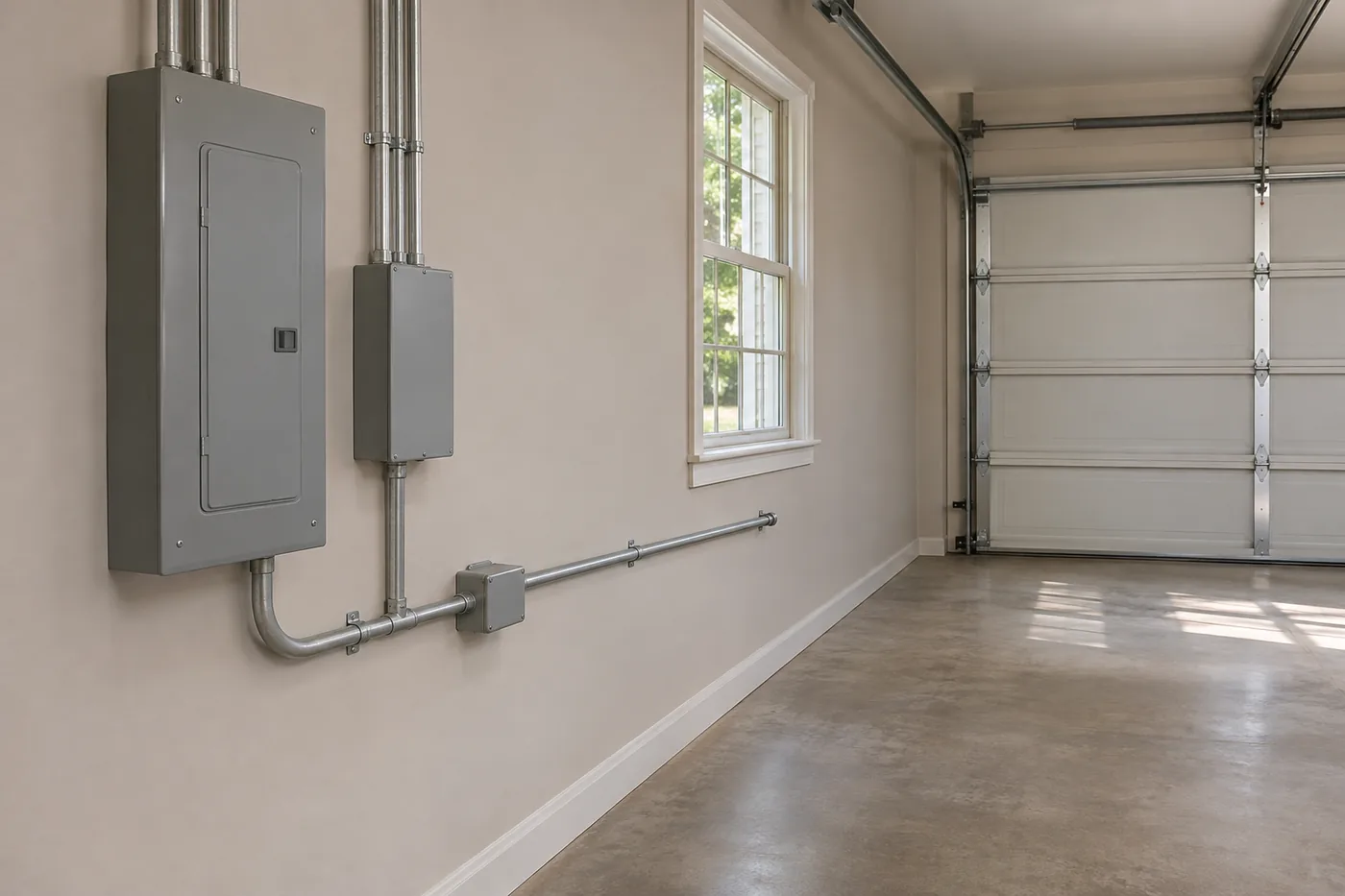 Plan the equipment location and electrical connection together, not as separate purchases.
EPA says fuel-powered portable generators must operate outdoors, far from buildings and away from doors, windows and air intakes. That excludes the attached garage, even when using it would make winter operation more convenient.
EPA distinguishes battery stations because they do not generate toxic fuel fumes. But that does not remove Goal Zero's placement and temperature requirements, so an indoor location still needs to follow the maker's instructions.
Goal Zero lists charging at 32–125.6°F and discharge at −4–140°F. Because those ranges differ, a freezing garage may permit discharge but not charging; plan where the battery will be recharged before it runs down.
Part 55. Buy the refill plan, not just the machine
Where will the next supply of energy come from if the outage continues? A wall charger needs live power, while solar charging needs a suitable panel setup and winter conditions that actually support it.
The gas generator instead needs fuel replenishment and maintenance, so its lower equipment price is not the whole cost. Westinghouse advertises noise as low as 74 dBA, but the cited specification gives no measurement distance; it cannot support a precise bedroom-noise comparison.
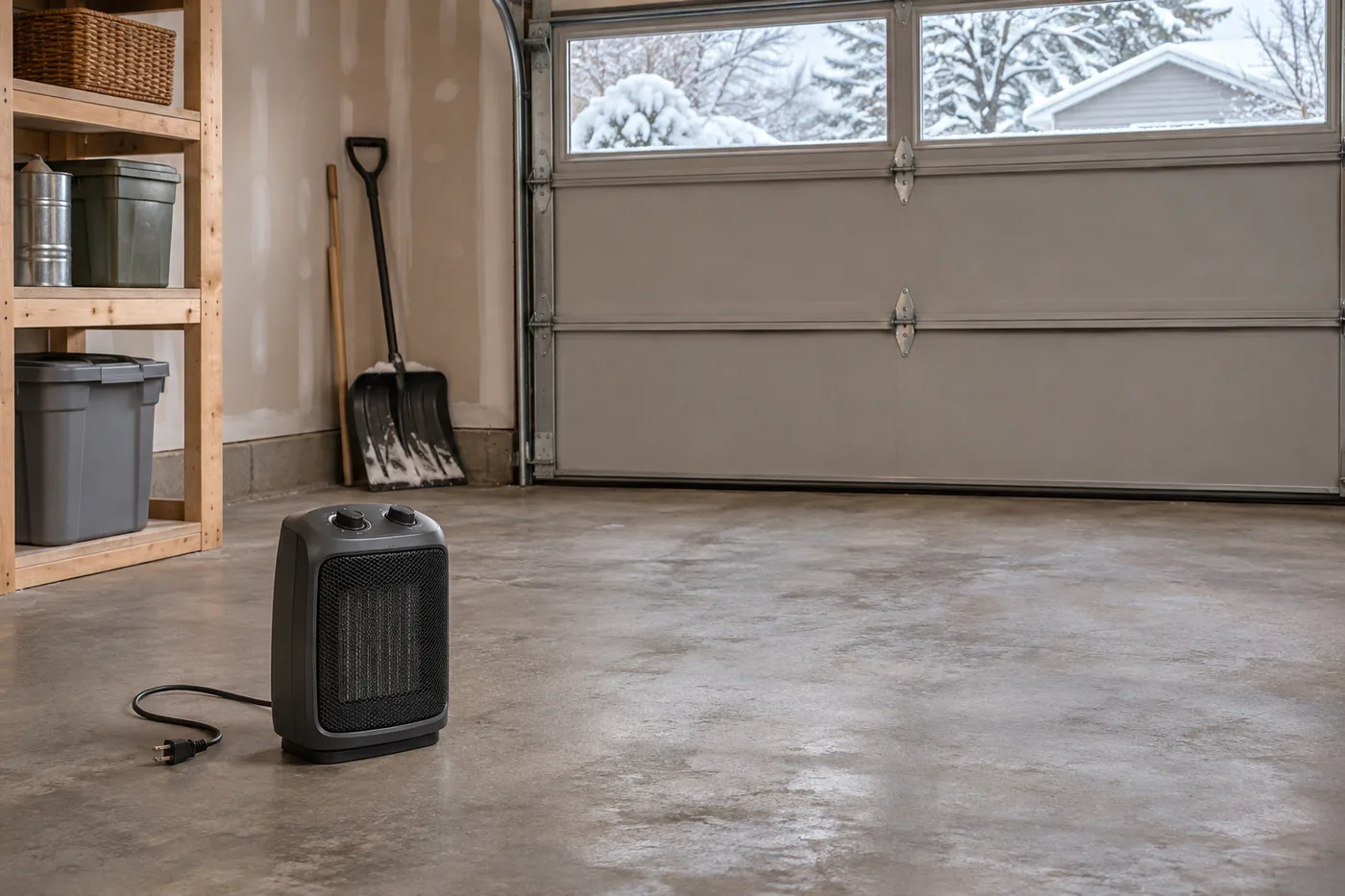 Leave electric garage heat off the essential-load list unless the remaining capacity genuinely allows it.
My preference stays with the battery for a short, rationed interruption; for longer fuel-supported operation, the Westinghouse makes more sense when its outdoor requirements can be met. Either way, keeping the garage heater optional preserves energy or output for equipment the house actually needs.
Method and selection: This comparison uses the manufacturers' published specifications, Honda's estimated-load calculator and EPA outage guidance. The three checks were essential-load capacity, replenishment and house connection. Product specifications and prices retain their November 19, 2026 verification because those pages could not be refreshed on November 24, 2026; EPA guidance was rechecked on November 24, 2026.
In one sentence
Protect the furnace, fridge and sump pump before spending backup power on garage heat.
Goal Zero Yeti PRO 4000
Westinghouse WGen9500DF
Frequently asked questions
Can a Goal Zero Yeti run a furnace, fridge and sump pump?
Potentially, but the actual voltage, running demand, motor startup and connection must fit the station and each outlet. Honda's selected planning examples total 1,492 W while running together; those estimates are not measurements of your appliances.
How long would the Yeti PRO 4000 last with those loads?
Using the published 3,993.6 Wh capacity and a constant 1,492 W load gives about 2.7 hours before conversion losses and reserve. Appliance cycling changes average demand, so this arithmetic is not a household runtime promise.
Can the Westinghouse WGen9500DF operate in an attached garage?
No. EPA says fuel-powered portable generators must operate outdoors, far from buildings and away from doors, windows and air intakes. An attached garage is not a suitable operating location.
Does the Westinghouse's advertised runtime apply to all backup loads?
No. Its up-to-12-hour gasoline claim is specified at 25% load. Your planned loads and fuel choice need their own assessment; published running output is 9,500 W on gasoline and 8,500 W on propane.
Sources
- Goal Zero Yeti PRO 4000 · 2026-11-19
Original verified figures retained: $3,999.95 regular US maker price; 3,993.6 Wh; 3,600 W continuous; 2,400 W individual AC receptacle; 120 V TT-30R; charging 32–125.6°F and discharge −4–140°F. Refresh attempted November 24, 2026 returned HTTP 429, so no new price verification is claimed. Capacity divided by the 1,492 W planning load yields approximately 2.7 hours before losses and reserve.
- Westinghouse WGen9500DF · 2026-11-19
Original verified figures retained: $1,249.00 maker MSRP; gasoline 9,500 running and 12,500 peak W; propane 8,500 running W; 6.6-gallon tank; up to 12 hours at 25% load on gasoline; as low as 74 dBA with measurement distance unspecified; 120/240 V 14-50R. Refresh attempted November 24, 2026 returned HTTP 429. MSRP is not a current retailer selling price.
- Honda home generator wattage calculator · 2026-11-19
Original verified estimated-load examples retained: furnace fan 500 W, Energy Star refrigerator/freezer 192 W and sump pump 800 W; selected sum 1,492 W. Honda labels wattages as estimates, not household measurements. Refresh attempted November 24, 2026 returned HTTP 403.
- EPA power outages and indoor air quality · 2026-11-24
Opened and read November 24, 2026; page states last updated February 18, 2026. Safety source rather than a numeric performance source: fuel generators belong outdoors far from buildings and away from doors, windows and air intakes, not in a house or garage; battery stations do not generate toxic fuel fumes.