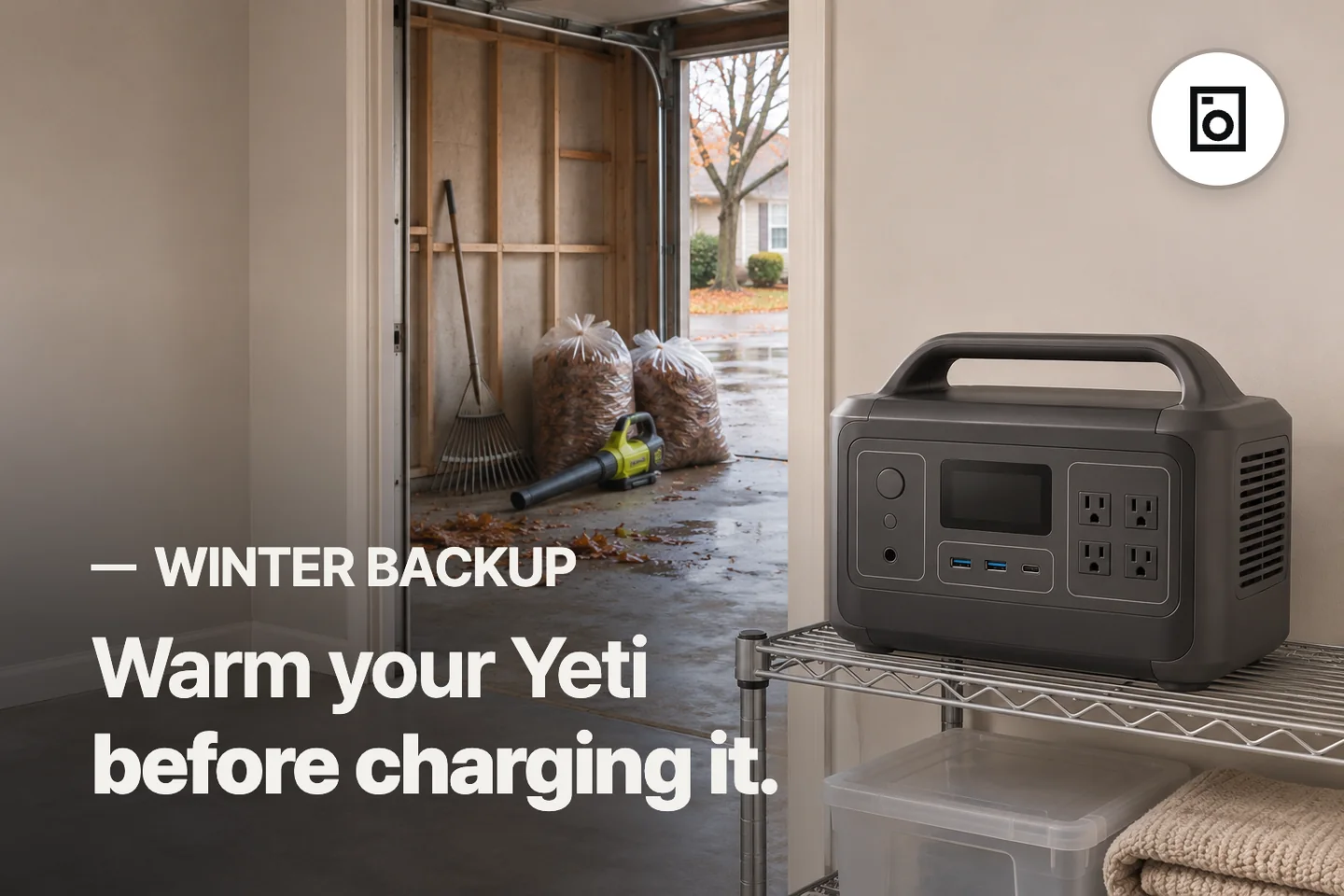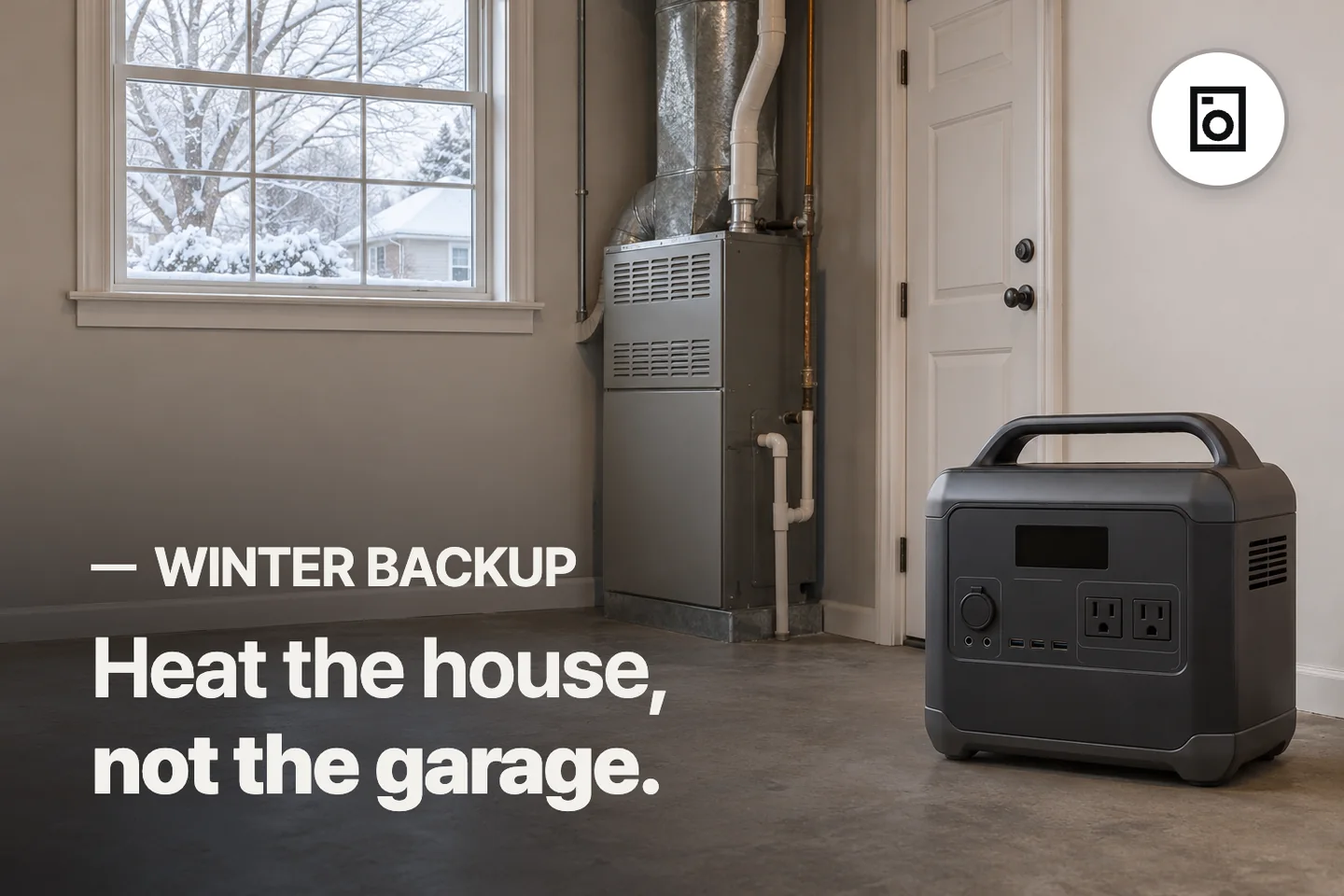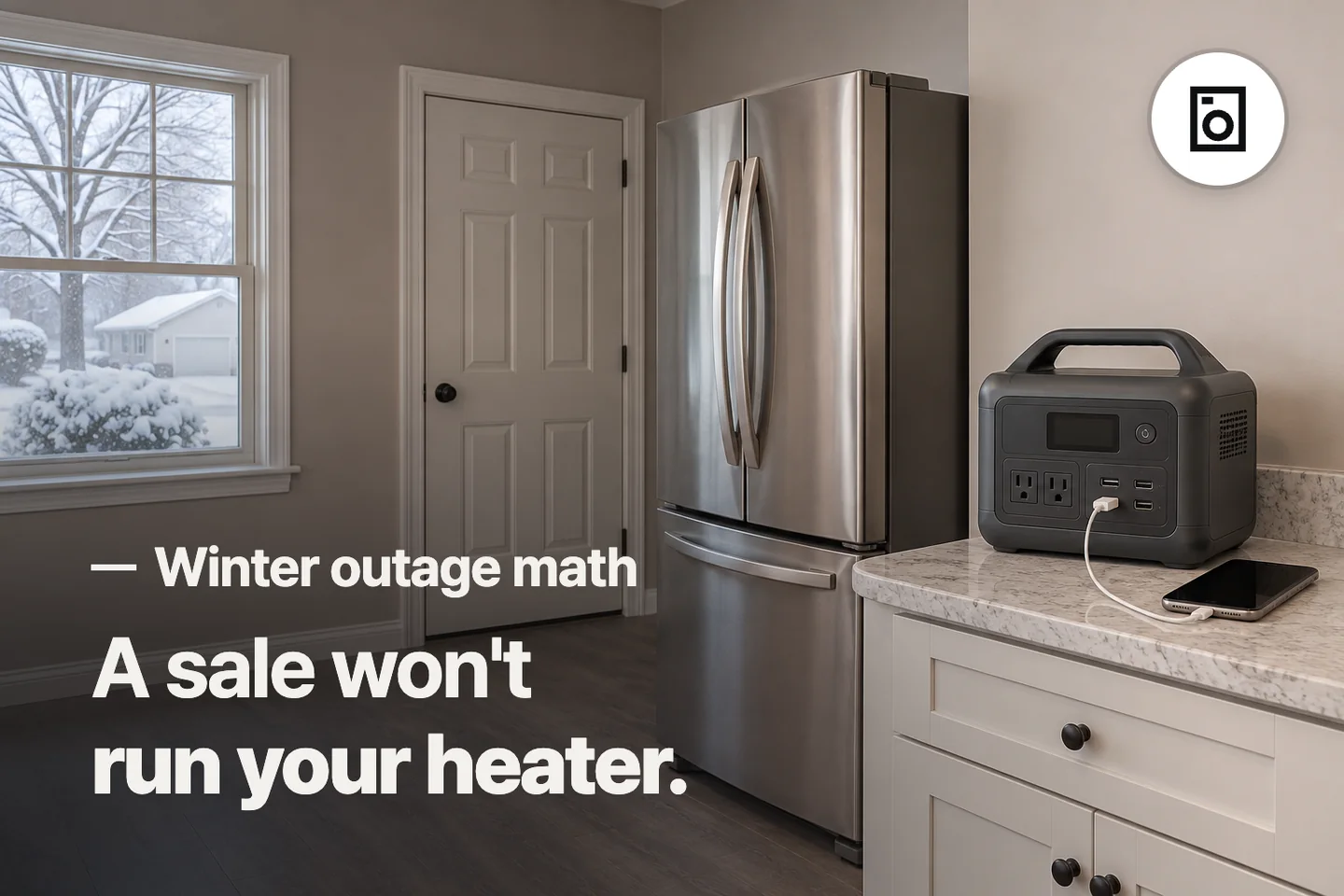
A 1,500W garage heater is a small appliance with a large appetite. For a homeowner facing a winter outage, browsing solar generators for sale makes more sense after that heater is removed from the essentials list. Otherwise, the refrigerator and router are competing with the wrong load.
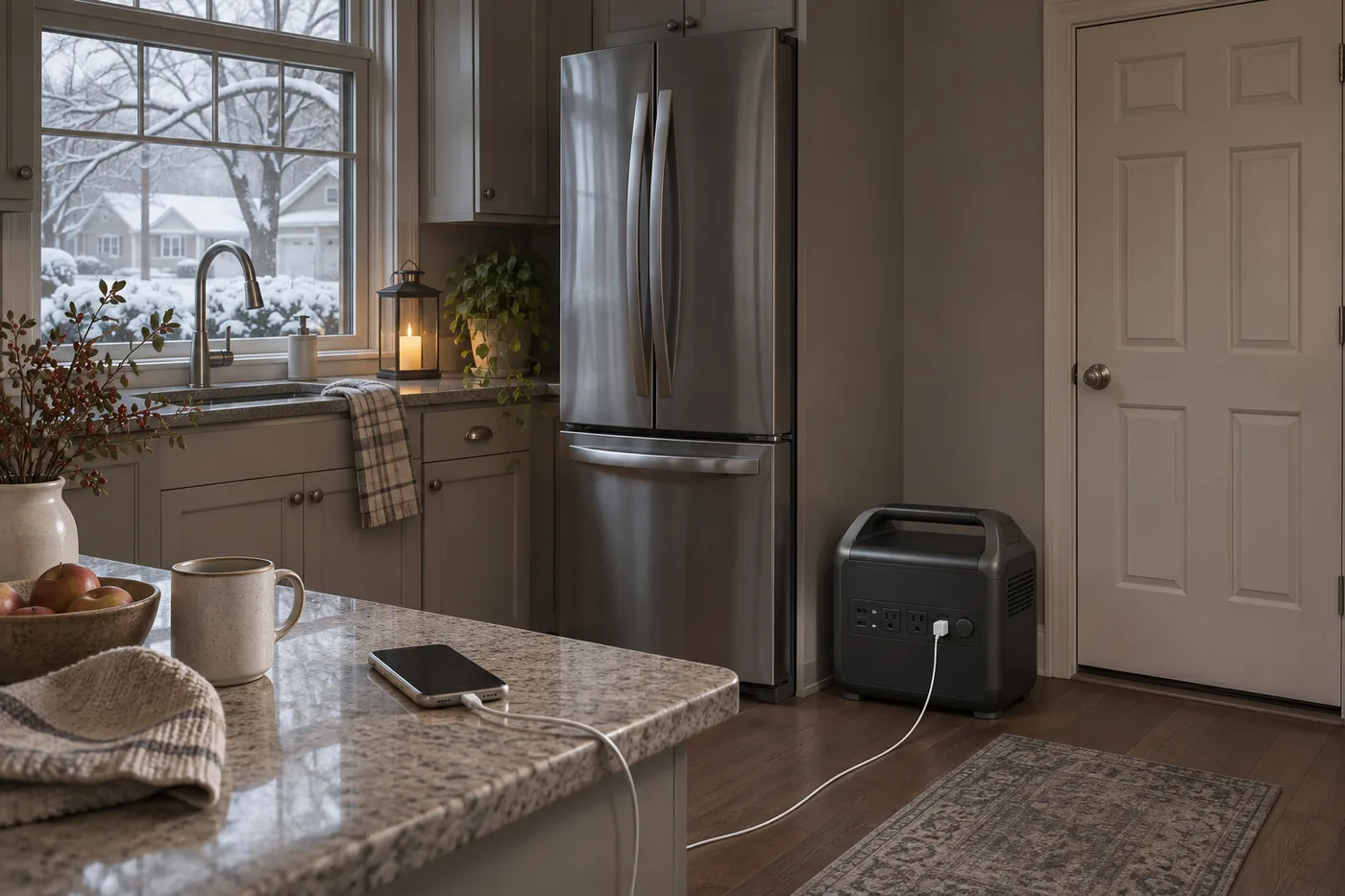 The kitchen essentials need their own power budget, separate from garage heat.
I'd choose the EcoFlow DELTA 2 Max Portable Power Station for essentials between planned recharges, not continuous heating. But the WEN 56477i Portable Inverter Generator deserves a separate calculation when an outage lasts longer and the property has a suitable outdoor operating spot. Neither price buys an unlimited supply of electricity.
How we chose
Manufacturer package prices and specifications were compared with CPSC generator guidance, using load fit, full-package cost and replenishment as the three criteria. November 24 refreshes were blocked, so prices retain their November 21, 2026 verification date; runtime calculations are estimates, not household measurements.
Toneandroom picks
Best solar generators for sale for winter backup: Top 2
Selected household essentials between planned recharges
EcoFlow DELTA 2 Max Portable Power Station
Manufacturer-direct station-only selection: $1,029, verified 2026-11-21; November 24 refresh blocked. Applicable checkout charges extra.
Its published capacity supports a transparent essentials budget, provided appliance demand and a dependable recharge route are established. The panel package adds $270 without increasing battery capacity.
- Capacity
- 2,048Wh
- Output
- 2,400W
- You can recharge between uses
- You can leave heating unplugged
- Station price excludes panels
- Heater drains stored energy
Longer outages with suitable outdoor placement and gasoline access
WEN 56477i Portable Inverter Generator
Manufacturer-direct individual unit: $634.99, verified 2026-11-21; November 24 refresh blocked. Fuel and applicable checkout charges extra.
The lower initial price and published fuel figures make an extended-outage budget possible, but only after CPSC placement requirements and the full operating cost are addressed.
- Rated
- 4,000W
- Surge
- 4,800W
- Tank
- 1.9 gal
- Runtime
- Up to 7h at half load
- Your site meets CPSC guidance
- You have dependable fuel access
- Fuel and maintenance add cost
- Never run inside a garage
What we considered
Load fit
Will the essentials fit both the output and energy limits?
Output determines which appliances can operate together, while stored energy limits duration. I favored the EcoFlow for selected essentials rather than treating its heater-compatible output as a long heating runtime.
Full cost
What is included before tax, fuel and extra hardware?
The station and panel bundle have different prices without different battery capacities. I separated that premium from WEN's fuel and maintenance expenses instead of comparing unlike cost-per-energy figures.
Replenishment
Can the household actually recharge or refuel during the outage?
Panels depend on usable sunlight, while gasoline operation needs both fuel and a suitable outdoor site. I kept the generator as a conditional alternative rather than a substitute for indoor battery backup.
Part 1Solar generators for sale: start with the box contents
The EcoFlow station-only selection displayed $1,029 when verified on November 21, 2026. That price covers a 2,048Wh battery, with 2,400W continuous output; the package with two 100W rigid panels displayed $1,299. Because the November 24 refresh was blocked, these remain dated comparison prices, not a promise about today's checkout.
The distinction matters before any discount arithmetic. The solar package adds $270 for charging hardware, while stored capacity stays the same. So it buys a way to refill the battery, not more energy to use before the next refill.
Swipe sideways to see the full table →
| Purchase detail | EcoFlow DELTA 2 Max Portable Power Station | WEN 56477i Portable Inverter Generator |
|---|---|---|
| Manufacturer-direct price, verified November 21, 2026 | $1,029, station only | $634.99, individual unit |
| Continuous output | 2,400W | 4,000W rated |
| Energy supply | 2,048Wh stored | Gasoline; 1.9-gallon tank |
| Extra purchase or running cost | Panel package adds $270 | Gasoline, oil, maintenance and connections |
For the EcoFlow, $1,029 ÷ 2,048Wh works out to about $0.502 per nominal Wh. That makes the station price comparable with another battery's capacity price, but it says nothing about outlet losses or what a recharge will cost.
The bundle calculation is $1,299 ÷ 2,048Wh, or about $0.634 per nominal Wh. But that higher figure includes panels, so it is not evidence of a worse battery; compare matching packages. EcoFlow also displayed a separate $977 promotional badge, which I would leave out of the budget until its eligibility is clear.
Package contents tell you more than the percentage-off banner.
Part 2The heater uses up the bargain
Newair lists its NGH160GA00 garage heater at 1,500W and 120V, with coverage up to 160 sq ft. That makes it a useful spot-heating example for a garage work area, not evidence of whole-house winter heating. The output rating and the energy budget answer different questions.
On the EcoFlow's published figures, the heater alone sits below the 2,400W continuous limit. But 2,048Wh ÷ 1,500W = about 1.37 hours is the ideal continuous-runtime ceiling, before conversion losses or any other appliance. Being able to switch something on is not the same as keeping it on through an outage.
What happens if you want heat throughout a two-to-three-day interruption? Treat that as a planning scenario of 48–72 hours: 1,500W × 48–72 hours requires 72,000–108,000Wh for continuous heating alone. A thermostat may reduce actual on-time, but neither its duty cycle nor your garage's heat loss has been measured here.
That is why I would reserve the battery for selected essentials and decide on a separate heating plan. Measure refrigerator consumption over its cycling operation and check startup demand, then add the router and chargers. The useful question is how much energy those appliances need before the next reliable recharge.
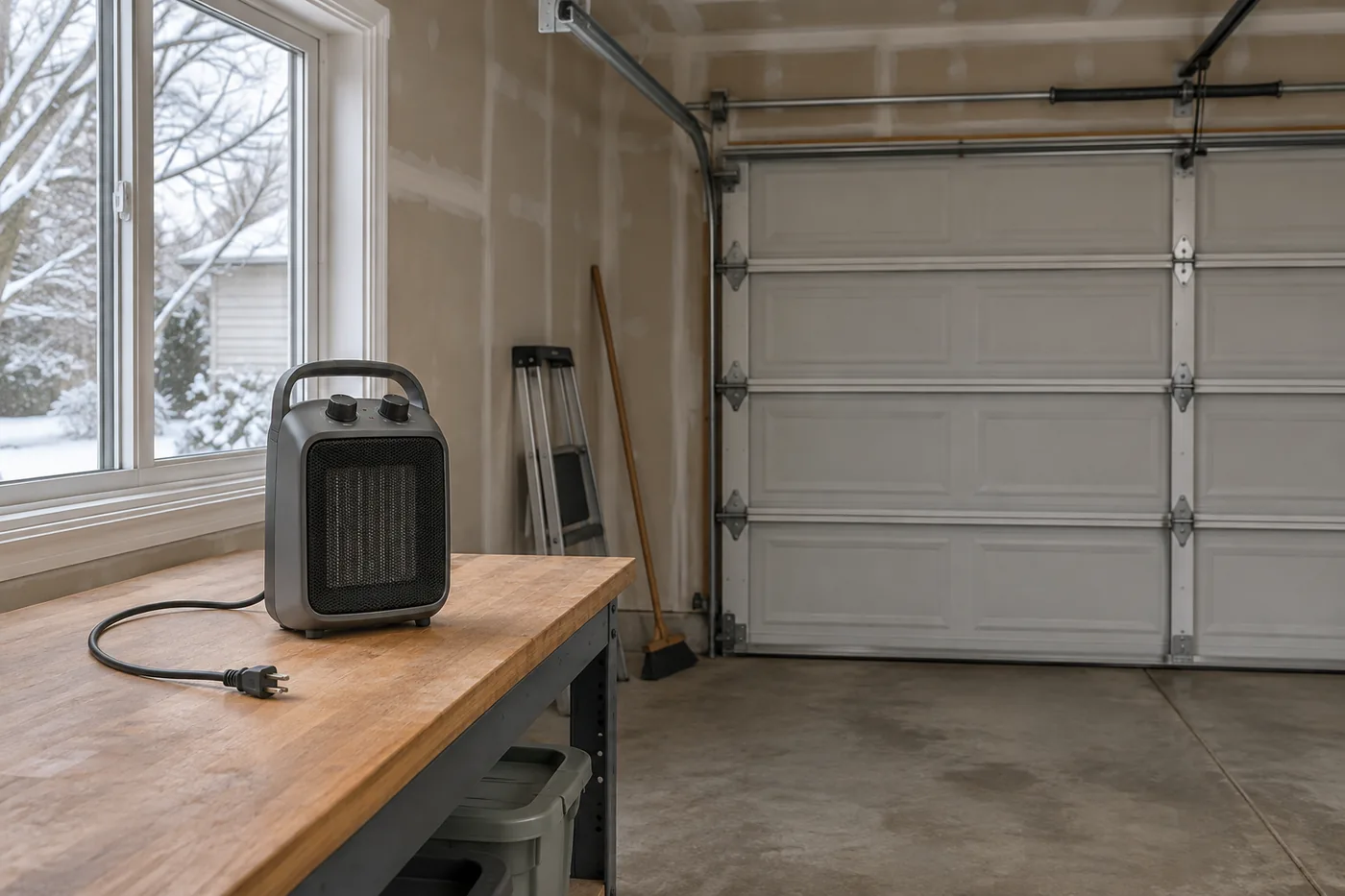 An electric garage heater belongs in the energy calculation before it belongs on the backup circuit.
Part 3Gasoline needs a different cost calculation
The WEN manufacturer's individual-unit price was $634.99 on November 21, 2026; the November 24 refresh was also blocked. That is $394.01 less upfront than the EcoFlow station-only price used here. But the difference is not a break-even calculation, because gasoline keeps adding to the bill.
WEN lists 4,000 rated watts, 4,800 surge watts and up to seven hours at half load from the 1.9-gallon tank. Half the rated load is 2,000W, so that published operating point implies 2,000W × 7 hours = 14kWh per tank. Dividing by 1.9 gives about 7.37kWh per gallon under that stated condition.
If local gasoline costs P dollars per gallon, P ÷ 7.37 gives the corresponding fuel-only dollars per kWh. That deliberately leaves gasoline price as an input rather than inventing a national pump price. It also leaves out the machine, oil, maintenance and connection equipment, which still need budget space.
Using the same maximum half-load runtime, 48–72 hours implies roughly 13.0–19.5 gallons. But household loads vary, so this is a planning estimate, not a guaranteed fuel requirement or a reason to leave the generator unattended. Its stored-capacity cost per Wh is not comparable with the battery's purchase-price calculation.
CPSC says a portable generator must operate outdoors, at least 20 feet from homes, with exhaust directed away. CPSC also says never to operate one inside a home or garage, even with doors and windows open, and calls for battery-operated or battery-backup CO alarms on every level and outside sleeping areas. An open garage door does not solve the placement problem.
Part 4Buy the recharge plan, not just the sale
Before comparing solar generators for sale on Amazon.com, match the exact model and package. Then compare delivery commitments, the final payable price and written return terms against these dated manufacturer prices. No current Amazon price is assumed here.
For a battery, the missing purchase may be charging hardware; for gasoline, the missing requirement may be a safe place to run it. So establish a dependable recharge or refueling route before counting either machine as a multi-day plan. A panel bundle still needs usable sunlight.
 Panel placement and winter sunlight determine whether the extra hardware helps refill the battery.
Sources and method: manufacturer specifications, package prices and CPSC guidance retained from November 21, 2026; page refreshes were blocked on November 24, 2026. Selection compares load fit, full-package cost and replenishment. Arithmetic uses nominal capacity and published runtime, not measured household performance. Applicable checkout charges are extra.
The heater consumes watt-hours, not discounts.
In one sentence
The panel premium buys a recharge route, while a garage heater can exhaust the battery long before an outage ends.
EcoFlow DELTA 2 Max Portable Power Station
Check price on AmazonWEN 56477i Portable Inverter Generator
Check price on AmazonFrequently asked questions
Does the EcoFlow solar package contain a larger battery?
No. The November 21, 2026 manufacturer selections showed the same 2,048Wh battery at $1,029 alone or $1,299 with two 100W rigid panels. The $270 difference buys charging hardware; the November 24 price refresh was blocked.
How long could the EcoFlow power a 1,500W garage heater?
Dividing 2,048Wh by 1,500W gives about 1.37 hours before conversion losses or other loads. That is an ideal continuous-runtime ceiling, not a measured result or a winter heating plan.
How does gasoline cost compare with battery cost per watt-hour?
Battery purchase price divided by nominal Wh measures upfront storage cost. WEN's published half-load figures imply about 7.37kWh per gallon, so local gasoline dollars per gallon divided by 7.37 estimates fuel-only dollars per kWh at that operating point; purchase and maintenance remain extra.
Can the WEN run in a garage with the door open?
No. CPSC says never to operate a portable generator in a home or garage, even with doors and windows open. Its guidance calls for outdoor operation at least 20 feet from homes with exhaust facing away, plus battery-operated or battery-backup CO alarms on every level and outside sleeping areas.
Sources
- EcoFlow DELTA 2 Max Portable Power Station · 2026-11-21
Retained from original verified source because 2026-11-24 refresh returned HTTP 429: $1,029 station-only selection, $1,299 kit with two 100W rigid panels, separate $977 promotional badge, 2,048Wh and 2,400W continuous output. Derived $270 panel premium, $0.502/Wh station and $0.634/Wh kit.
- WEN 56477i Portable Inverter Generator · 2026-11-21
Retained from original verified source because 2026-11-24 refresh returned HTTP 429: $634.99 individual unit, 4,000 rated W, 4,800 surge W, 1.9-gallon tank, up to seven hours at half load. Derived 14kWh/tank, about 7.37kWh/gallon, $394.01 lower initial price, and roughly 13.0–19.5 gallons for the hypothetical 48–72-hour half-load scenario.
- Newair NGH160GA00 garage heater · 2026-11-21
Retained from original verified source because 2026-11-24 refresh returned HTTP 429: 1,500W, 120V, coverage up to 160 sq ft. Derived EcoFlow heater-only ceiling 2,048/1,500 = about 1.37 hours; hypothetical 48–72 hours of continuous heating requires 72,000–108,000Wh.
- CPSC carbon monoxide and generator guidance · 2026-11-21
Retained from original verified source because 2026-11-24 refresh returned HTTP 403: generators outdoors at least 20 feet from homes with exhaust away; never inside homes or garages even with doors and windows open. Battery-operated or battery-backup CO alarms on every level and outside sleeping areas.