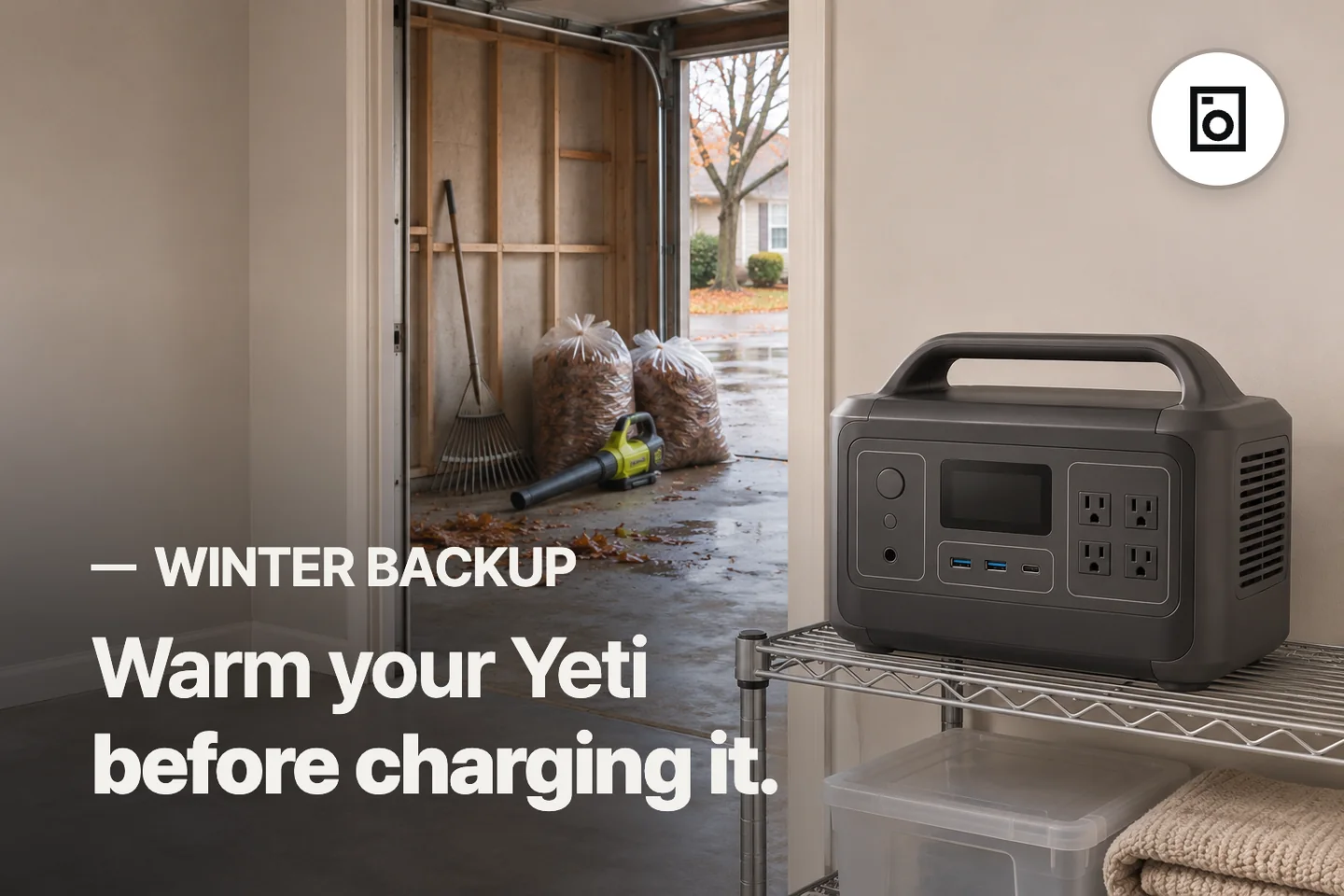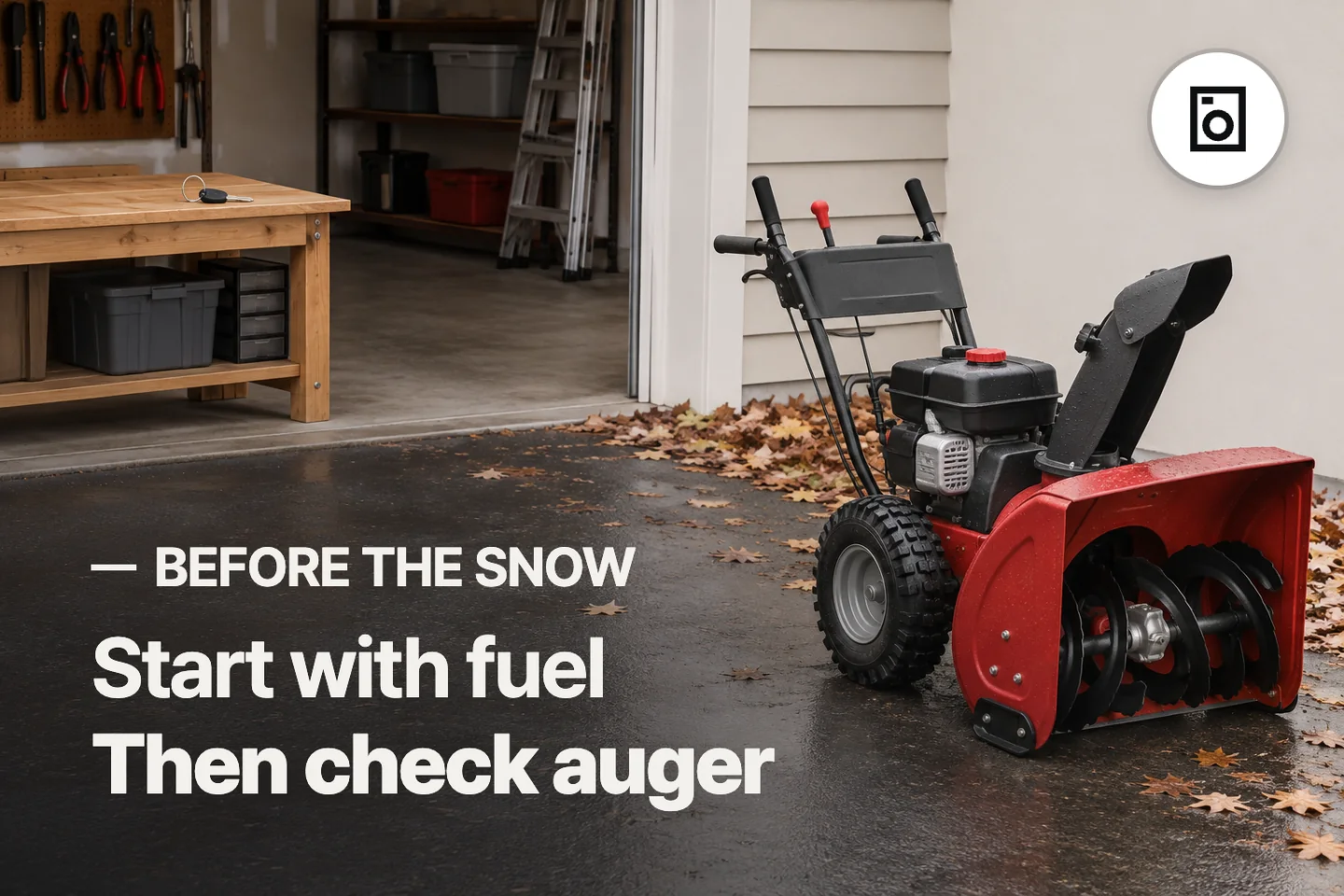
The coffee hasn't finished brewing when you pull the snow blower out of its garage corner, tug the starter rope, and get nothing. It's still dark, the driveway needs clearing before work, and the gasoline in the tank has been sitting since spring.
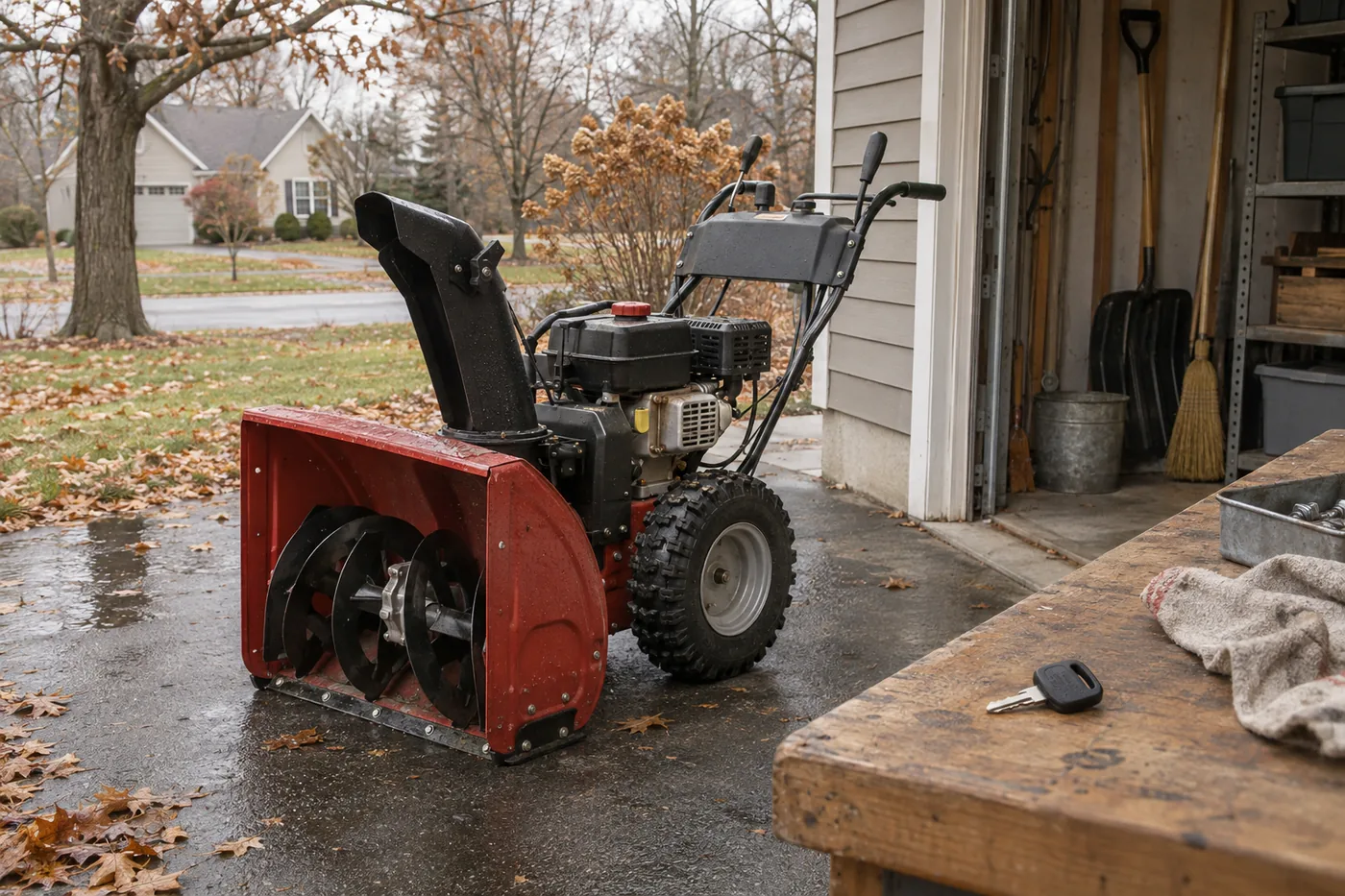 The first useful check happens before another pull of the starter rope.
I'd start with fuel and the plug connection, not an order for auger parts. The Toro Power Max 824 OE is the example here; its starting instructions and auger protection need to match your machine before any wrench comes out.
How we chose
Toro's operator manual and current 824 OE product page were checked against Ariens' shear-pin guidance. The checks prioritize fuel condition, model-specific hardware, and safe owner-service limits, without assuming that a no-start calls for replacement parts.
Part 1Identify the machine before opening anything
Find the model and serial label, then retrieve the manual covering that serial range. Toro's current 824 OE, model 37798, has a 24-inch clearing width suitable for a residential driveway, but that product name alone doesn't establish which instructions cover an older machine.
That distinction matters most at the auger. Toro explicitly describes the current model as having no shear pins to replace, so a generic winter tune-up shopping list can send you toward parts it doesn't use.
For inspection, Toro directs owners to park on level ground, shut the engine off, wait for moving parts to stop, and disconnect the spark-plug wire. Follow its key-removal instructions too; those precautions come before reaching near the auger or removing a guard.
Part 2Deal with stored gasoline before blaming the plug
Do you know when the tank was filled? If the answer is last spring, Toro's fuel requirements give you a more useful starting point than another hard pull: gasoline less than 30 days old, at least 87 octane, and no more than 10% ethanol.
That makes uncertain old fuel the first thing to resolve. Follow the matching manual's fuel-draining procedure rather than diluting it with a fresh top-up, and ask your local household hazardous-waste service how it accepts old gasoline.
Toro describes stabilizer as something added to newly purchased fuel. That doesn't establish that an additive can restore gasoline left through the summer, so don't make that assumption while troubleshooting.
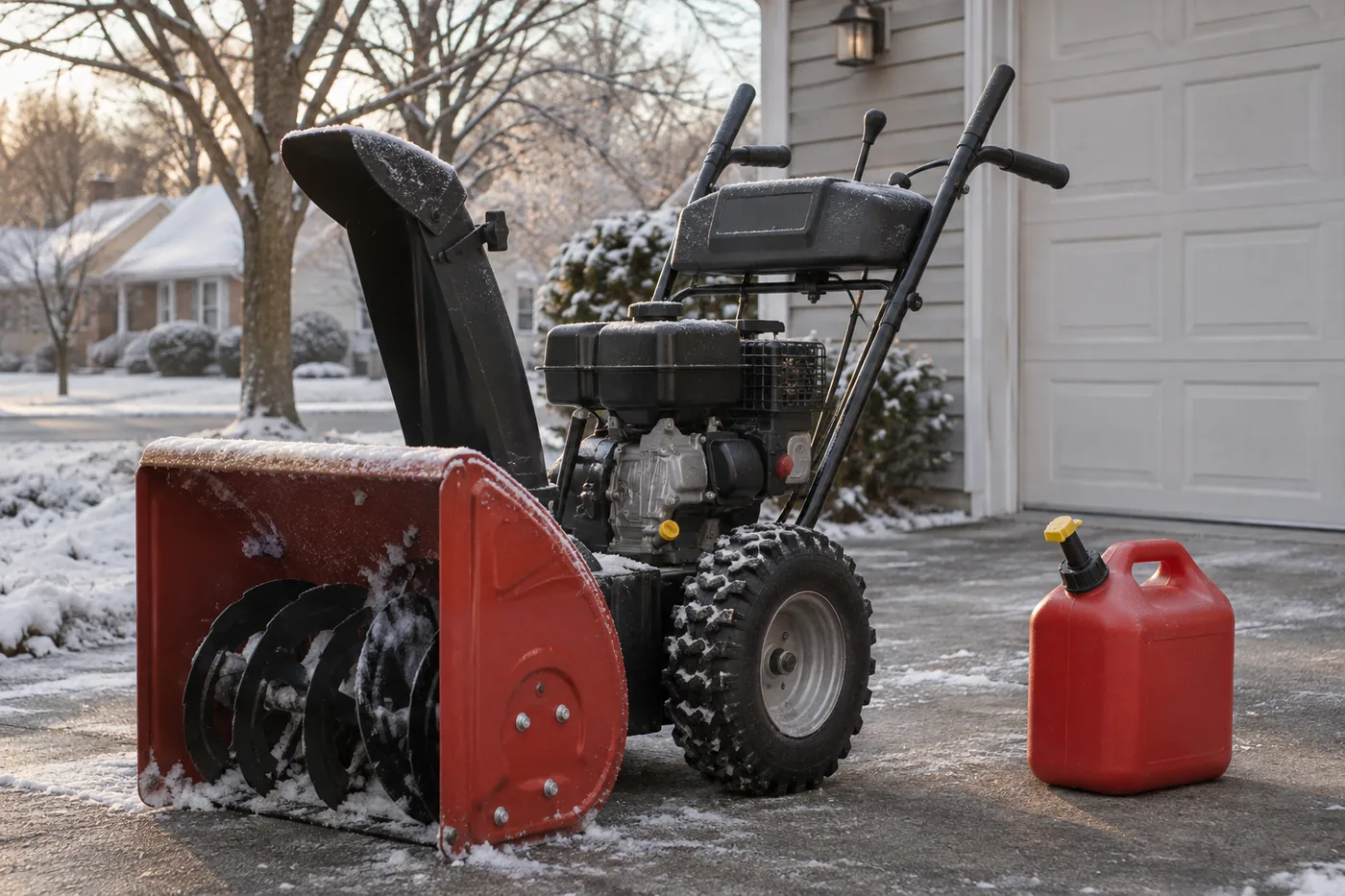 Fuel work belongs outdoors, away from ignition sources, with the engine cool.
Toro requires outdoor fueling away from flames and sparks, and warns against tipping a fueled machine. Its instructions also say not to mix oil into this model's gasoline, so a premixed fuel intended for a different engine isn't interchangeable.
Check the crankcase separately using the manual's dipstick procedure. Toro specifies an oil-level check before each use; correcting the level is part of preparing to start, not something to postpone until the engine runs.
Part 3Check ignition without turning it into a parts haul
Start at the plug boot and its connection. With the engine cool and ignition disabled as Toro directs, check that connection; if plug removal is needed, clean around it first and follow the manual's inspection instructions.
The opened 824 OE manual names Champion RN9YC or NGK BPR6ES equivalents and a 0.030-inch gap. It also lists replacement every 100 operating hours, so those values belong to that manual rather than every engine sold under the Toro name.
A damaged or incorrectly gapped plug deserves attention. But replacing it doesn't prove the fuel system is clear, and an intact plug doesn't excuse skipping the key, fuel valve, choke, and primer sequence in the matching starting instructions.
Keep starting trouble separate from clearing trouble. This prevents a silent engine from becoming an excuse to buy a belt, and keeps an engine that starts from being mistaken for a fully checked machine.
Swipe sideways to see the full table →
| What the machine does | Where the check belongs | When to arrange service |
|---|---|---|
| Engine will not start | Fuel, oil level, plug connection, and correct starting controls | Correct fuel and the matching start procedure don't resolve it |
| Engine runs but auger will not feed snow | Obstruction and the actual model's auger hardware, with ignition disabled | Damage or uncertain hardware |
| Engine runs but clearing is weak | Chute, auger cable, and belt checks specified by the manual | Persistent slipping or a damaged belt |
Part 4Check the auger design, then respect the belt boundary
Toro says the current 824 OE's protection system deliberately stalls the engine if the auger hits hard material. That is why a missing shear pin is not the default diagnosis for this model, and why an unfamiliar bolt shouldn't be replaced on a guess.
Ariens describes a different arrangement: sacrificial pins connecting the auger to its shaft. Its guidance says the pins break during a jam to protect the gearcase, but that explanation must not override Toro's model-specific information.
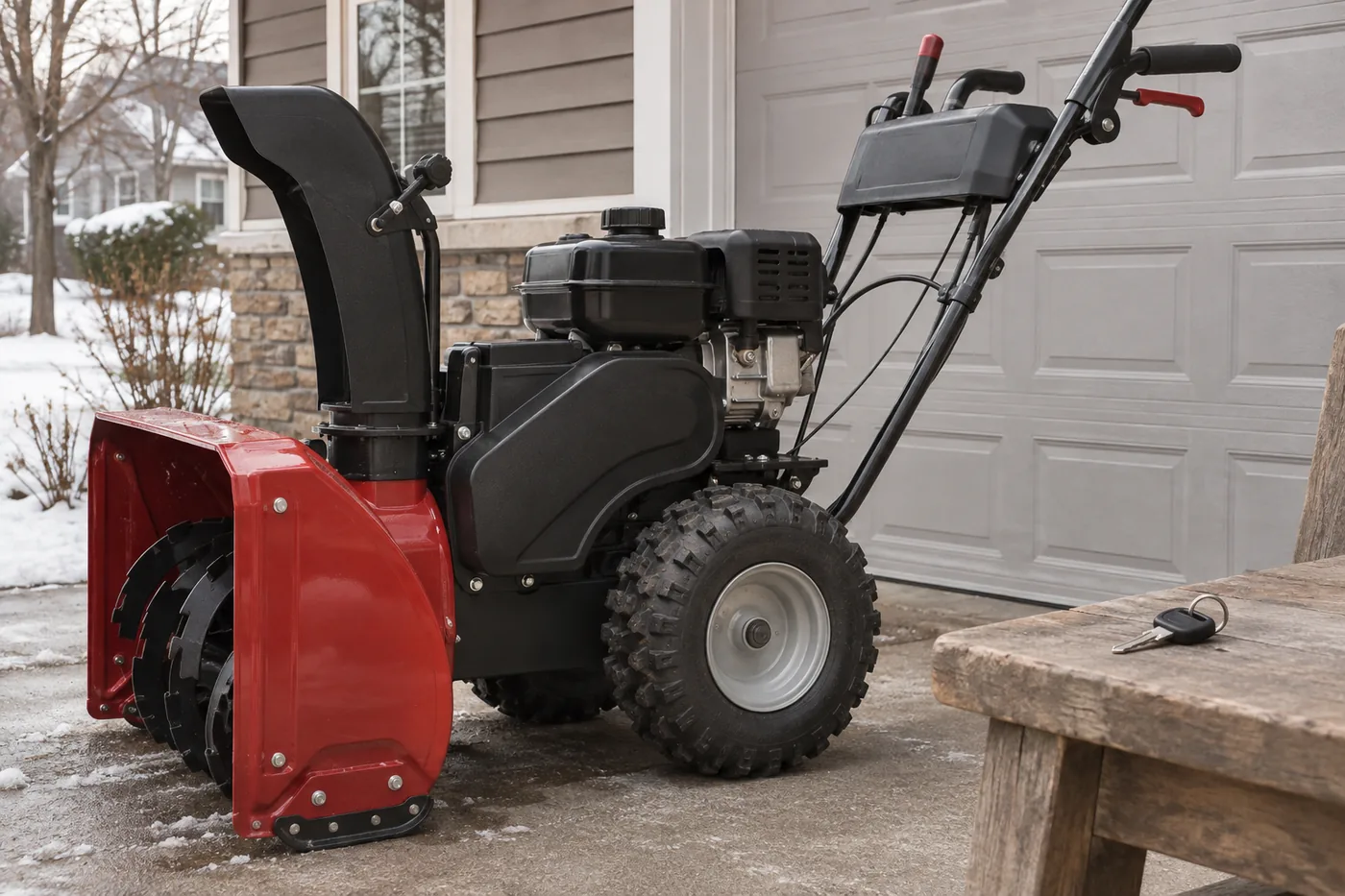 Identify the auger hardware from the matching manual, not from another brand's parts list.
For a machine that does use shear pins, Ariens directs owners to stop the engine, remove the key, disconnect the plug wire, and wait for all movement to stop before inspection. It also warns that a pin resisting too much torque can damage the machine, so a stronger ordinary bolt is not an upgrade.
The belt has its own stopping point. Toro's opened manual assigns replacement of worn, oil-soaked, or otherwise damaged drive belts to an Authorized Service Dealer; that is a service boundary, not an invitation to run the machine with a cover off.
The model decides the auger hardware; belt damage decides when this check becomes a service appointment.
Part 5Finish outdoors, with the controls checked
For a running check, Toro's instructions put the machine outdoors, with guards installed and the operating area clear. Follow the matching cold-start procedure from behind the handles rather than borrowing another engine's primer count.
Watch what happens when the levers are released. Toro says to stop immediately and disconnect the plug wire if the auger or impeller keeps turning; unresolved disengagement trouble needs service, and unintended movement with traction released also needs correction.
A successful dry run has limits. It can expose starting and control faults, but it doesn't prove how the machine will clear loaded snow; Toro also specifies a cleanout tool, never hands, for the discharge chute.
I'd get a repair estimate before replacing the whole machine. Toro's equipment-only listing was $1,399 USD on November 24, 2026, roughly $116.58 a month spread over a household's annual budget, before tax or financing; that's budget arithmetic, not a payment offer or a promised repair saving.
Sources and method: Toro's operator manual and current model 37798 product page were checked alongside Ariens' shear-pin guidance. The sequence follows fuel condition, model-specific hardware, and safe owner-service limits. Last checked November 24, 2026; use your serial-range manual before ordering parts.
In one sentence
Resolve stored-fuel and ignition trouble before ordering auger parts for a snow blower that will not start.
Frequently asked questions
Can fuel stabilizer fix gasoline left in a snow blower all summer?
Toro describes adding stabilizer to newly purchased fuel, not restoring stale gasoline. Its opened manual calls for fuel less than 30 days old. Follow your matching manual's draining procedure when the tank's contents are old or uncertain.
Does the Toro Power Max 824 OE need spare shear pins?
Toro's current model 37798 page explicitly says there are no shear pins to replace and describes an engine-stalling protection system. Check your model and serial-range manual rather than applying another brand's pin instructions.
What spark plug gap does the Toro 824 OE manual specify?
The opened manual specifies 0.030 inch and names Champion RN9YC or NGK BPR6ES equivalents. Those specifications apply to the machine covered by that manual; match your serial range before using them.
Can a regular bolt replace an Ariens snow blower shear pin?
Ariens warns that a pin able to resist too much torque can damage the machine. Use the part number and tightening specification in the matching operator's manual, not an ordinary stronger bolt.
When does an auger belt check need a service dealer?
Toro's opened manual assigns replacement of worn, oil-soaked, or otherwise damaged drive belts to an Authorized Service Dealer. Follow the service limits in your own manual, and do not operate with guards removed.
Sources
- Toro Power Max 824 OE operator manual · 2026-11-24
Fuel less than 30 days old, at least 87 octane, no more than 10% ethanol; Champion RN9YC or NGK BPR6ES equivalents, 0.030-inch plug gap, replacement every 100 operating hours. Oil level checked before each use. Manual also supplies ignition-isolation, fueling, control-check, cleanout-tool, and damaged-belt service instructions; match the machine's serial range.
- Toro Power Max 824 OE model 37798 · 2026-11-24
Model 37798 has a 24-inch clearing width. Displayed equipment-only price: $1,399.00 USD on November 24, 2026; $1,399 divided across an annual budget is approximately $116.58 monthly, not financing. Page explicitly states no shear pins to replace and describes purposeful engine stalling if the auger hits hard material.
- Ariens: What are shear pins and why do I need them? · 2026-11-24
Page timestamp: October 30, 2026. Explains sacrificial auger pins, key removal and plug-wire disconnection, correct part identification, and excess-torque damage. No model-specific pin size or tightening torque is given; its broad two-stage wording is not applied to Toro's documented no-pin model.