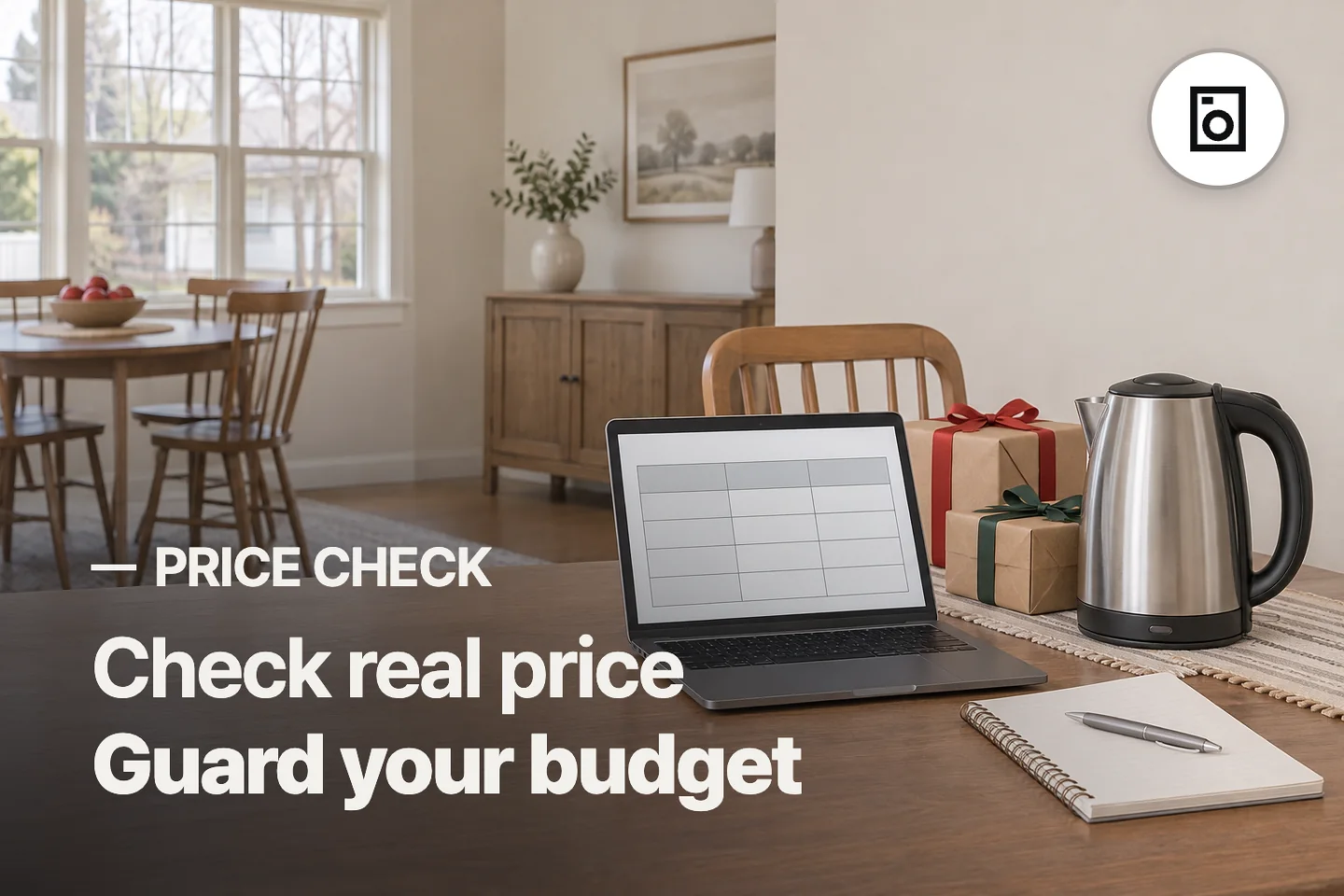
“Black Friday Deals Are Live” reads the banner on Cuisinart’s website. For a family checking a holiday gift list at the dining table in their American home, that sounds like a reason to finish shopping. But the banner does not establish whether the kettle underneath it costs less than it did before.
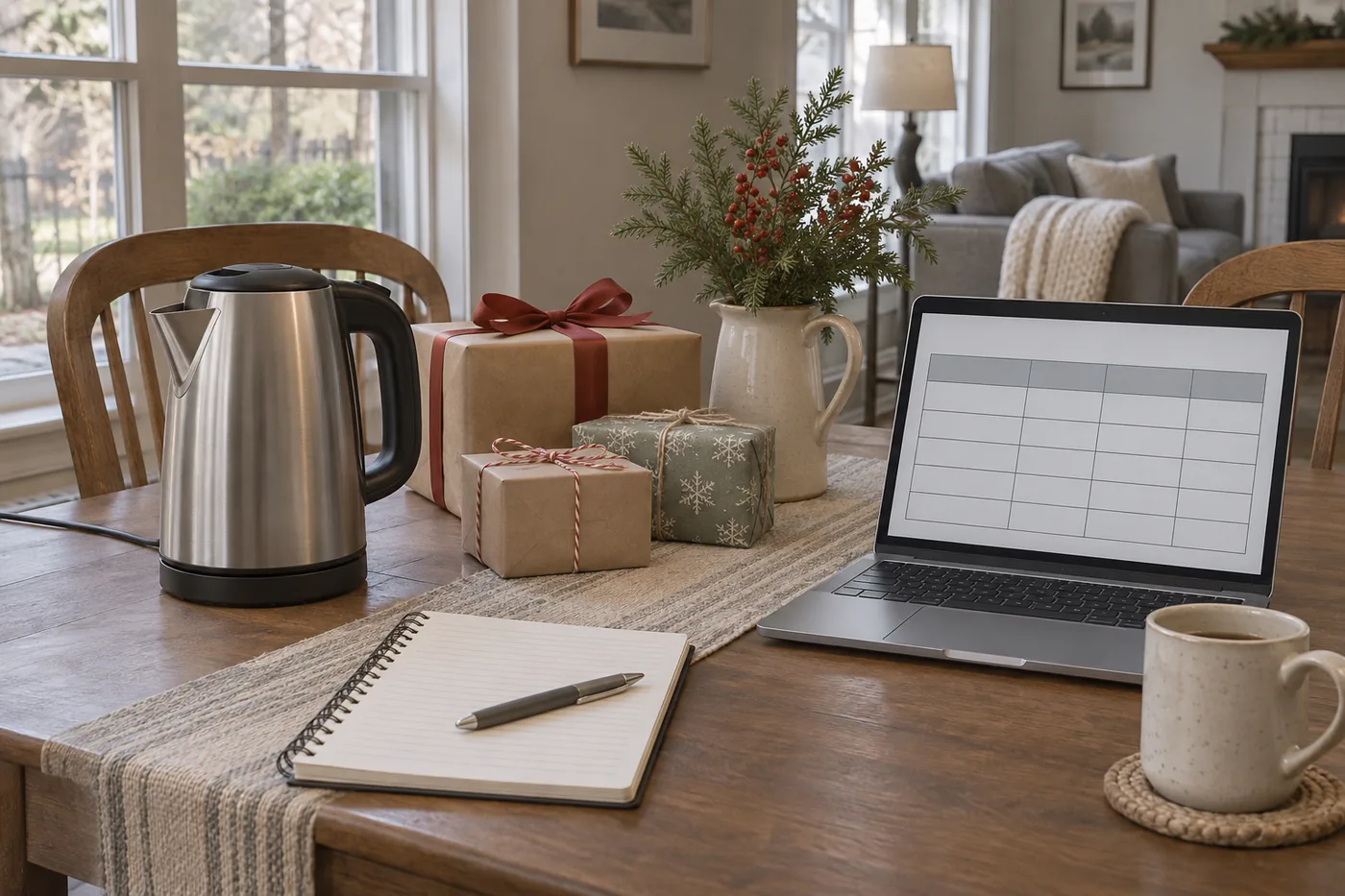 The gift list comes before the sale badge.
The useful test is whether the same item has become cheaper on comparable terms, not whether a promotion looks convincing. Cuisinart’s JK-17P1 Electric Cordless Tea Kettle makes a useful comparison example, but it is not a purchase recommendation here. No paid tool is needed to keep a dated record and leave an unverified offer pending.
How we chose
Reviewed Cuisinart and IKEA US product pages and FTC pricing guidance reproduced by Cornell LII; an Amazon search returned an error. The check uses exact-item matching, credible earlier offers, and final payable cost. No current Amazon price or usable historical series was established.
Part 11. Claim: a sale banner means the item is cheaper
What we found: Cuisinart’s US product page displayed $99.95 for the JK-17P1 on November 24, 2026. That establishes a current maker-store asking price, not an Amazon offer or a reduction from an earlier price. The broad sale banner alone supplies neither comparison.
Before assessing any Amazon discount, pin down the exact model, finish, condition, accessories, and seller. Then copy the reference wording beside the current price without changing its meaning. A label such as “List Price” needs its own entry; it does not belong in a box called “what people normally paid.”
This matters because an apparently similar offer can be a different purchase. A used kettle, a different model, or a bundle with extra accessories cannot quietly replace a new standalone item in your comparison. Match the offer before comparing the numbers.
The Amazon.com search for Cuisinart JK-17P1 returned an error page during this check. So no readable Amazon offer, reference price, or coupon was established. Price varies; check Amazon.
Part 22. Claim: the crossed-out price proves the savings
What we found: The Federal Trade Commission’s former-price guidance, reproduced by Cornell’s Legal Information Institute in 16 CFR § 233.1, distinguishes a genuine earlier asking price from an inflated reference created to advertise a reduction. But it also explains that a former asking price is not necessarily fictitious merely because no sales occurred at that price. Neither a strike-through nor an empty sales record settles the question alone.
 Keep the date, seller, condition, and amount together in each saved offer.
For this worksheet, look back over the previous 60 days if records are available. That is an editorial comparison window, not an Amazon requirement or a legal deadline. The point is to find repeated comparable offers rather than let a brief high-price period define the bargain.
If you use a price-history chart, check which seller and condition its line represents. That line generally reflects advertised offers, not every shopper’s receipt, so account-specific coupons and delivery costs may still be missing. An offer chart is not a checkout ledger.
Does the chart track the same new item from the same seller, or a cheaper used offer? If that detail is unclear, keep the line out of your savings calculation until you can identify it. A low number attached to the wrong offer does not answer your question.
No usable historical series was obtained for the examples in this article. So their earlier Amazon prices remain unverified, and neither qualifies here as a documented historical low. Existing dated screenshots or saved offers can help; without them, the honest entry is “history unavailable.”
A missing history leaves the savings claim unproven; it does not make the current price either good or bad.
Part 33. Claim: the maker’s price tells you the normal price
What we found: Both maker pages supplied readable US prices on November 24, 2026. But the FTC’s manufacturer-price guidance in 16 CFR § 233.3 cautions that suggested-price comparisons can mislead when those references do not correspond to substantial actual sales. A maker’s current store offer is useful context, not automatically the manufacturer’s suggested retail price, or MSRP.
Swipe sideways to see the full table →
| Exact comparison item | Maker-store display, checked November 24, 2026 | Earlier Amazon offers |
|---|---|---|
| Cuisinart JK-17P1 Electric Cordless Tea Kettle | $99.95 | Not verified |
| IKEA FÖRNUFTIG white air purifier, article 504.619.61 | $79.99 | Not verified |
These are displayed item prices, not checkout quotes. So compare any Amazon offer with the maker price only after accounting for delivery, tax, included parts, and relevant seller terms. Neither maker display was established as a separately labeled MSRP.
IKEA is a direct-store cross-check here, not a verified Amazon offer. Its US page says the particle filter is included, while the gas filter costs extra, so a listing with different filters would need a separate comparison. IKEA also lists coverage of up to 85–105 sq ft depending on fan speed; that makes this a small-room example, not a whole-home gift suggestion.
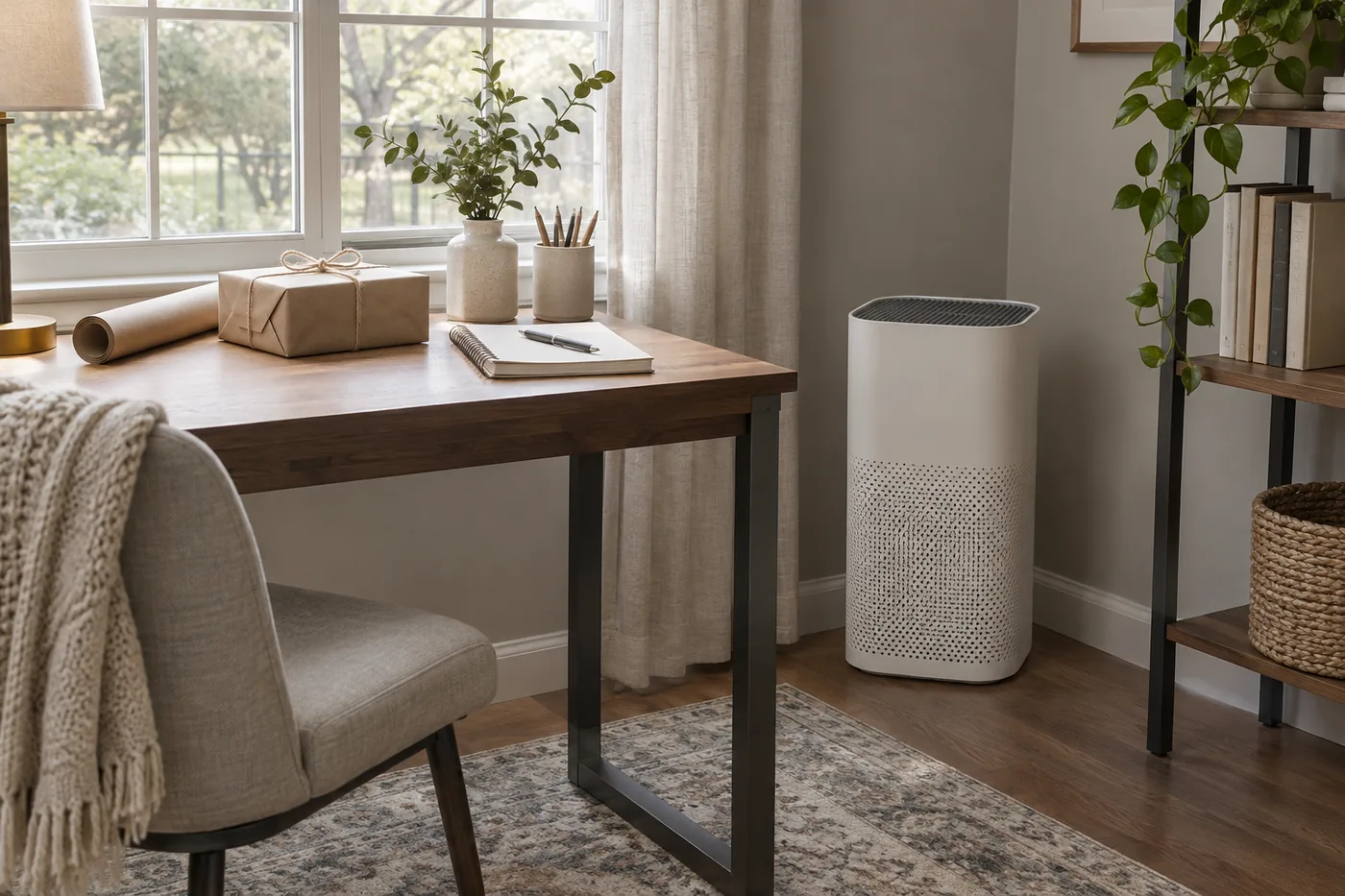 The room and included accessories still matter when comparing appliance prices.
The kettle needs the same common-sense check: does the recipient actually want an electric kettle? If not, a lower price would not fix the mismatch. Product fit comes before a savings calculation.
Part 44. Claim: the biggest percentage deserves the checkout
What we found: The verified maker prices do not establish an Amazon discount percentage. Without a credible earlier offer for the identical purchase, there is no supported historical saving to calculate. That leaves the final cost and the gift’s usefulness as the immediate decisions you can make.
When comparable records exist, calculate the dollar difference as the earlier eligible price minus today’s eligible price. Then divide that difference by the earlier price if a percentage helps, keeping shipping and tax on the same basis. A coupon belongs in today’s amount only when your account can actually redeem it.
Before paying, reopen the offer and check the seller, condition, delivery date, return terms, and payable total. This catches changes that a saved headline price will miss. A larger reference price does not lower your bill.
I would leave an appliance pending when its history is missing and the purchase depends on believing the advertised savings. But if the gift is already needed, the total fits the budget, and the seller’s terms work, you can choose it without claiming a bargain you cannot document. That is a clearer reason to spend than a dramatic badge.
Sources and method: Cuisinart and IKEA US product pages, FTC pricing guidance reproduced by Cornell LII, and an Amazon.com search were opened. Comparisons focused on exact-item matching, credible earlier offers, and final payable cost. No usable Amazon price history or readable current Amazon offer was obtained. The maker displays are not verified checkout totals. Last checked November 24, 2026.
In one sentence
Treat a discount as unproven until the exact offer, earlier price evidence, and payable total line up.
Check the seller’s priceFrequently asked questions
How do I check Amazon Black Friday deals when price history is unavailable?
Look for dated screenshots or saved offers that identify the exact model, seller, and condition. If you have no comparable records, leave the historical saving unverified and assess the present total on its own.
Does a crossed-out Amazon price prove the item previously sold for that amount?
Not by itself. Preserve the reference label and look for supporting context; a list price, former asking price, and actual transaction price describe different things.
Is the 60-day price-history window an Amazon policy?
No. It is the comparison window suggested for this worksheet, not an Amazon policy or a legal minimum stated in the FTC provisions reviewed. No usable historical series was obtained for the example products.
Is Cuisinart’s $99.95 kettle price a confirmed Amazon deal?
No. It was the US maker-store display for model JK-17P1 checked November 24, 2026. The Amazon search returned an error, so no Amazon offer or discount was verified.
Can a maker-store price replace MSRP in my comparison?
Keep those entries separate. A maker’s current asking price is a useful alternative offer, while MSRP is a suggested reference; neither automatically proves what Amazon shoppers usually paid.
Sources
- Cuisinart JK-17P1 Electric Cordless Tea Kettle · 2026-11-24
Opened US product page displayed $99.95 for model JK-17P1 and the banner ‘Black Friday Deals Are Live’. Neither an earlier Amazon price nor a separately labeled MSRP was established.
- IKEA US FÖRNUFTIG white air purifier · 2026-11-24
Opened US page displayed $79.99 for article 504.619.61 and coverage up to 85–105 sq ft depending on fan speed. Particle filter included; gas filter sold separately. No Amazon offer established.
- FTC former-price guidance via Cornell LII · 2026-11-24
16 CFR § 233.1 distinguishes genuine former asking prices from fictitious inflated references and warns against implying sales without substantial sales. No numerical price example is used; the article’s 60-day window is editorial.
- FTC manufacturer-price guidance via Cornell LII · 2026-11-24
16 CFR § 233.3 discusses manufacturer list and suggested prices in relation to substantial actual sales. No product price, discount percentage, or numerical sales threshold is taken from this provision.