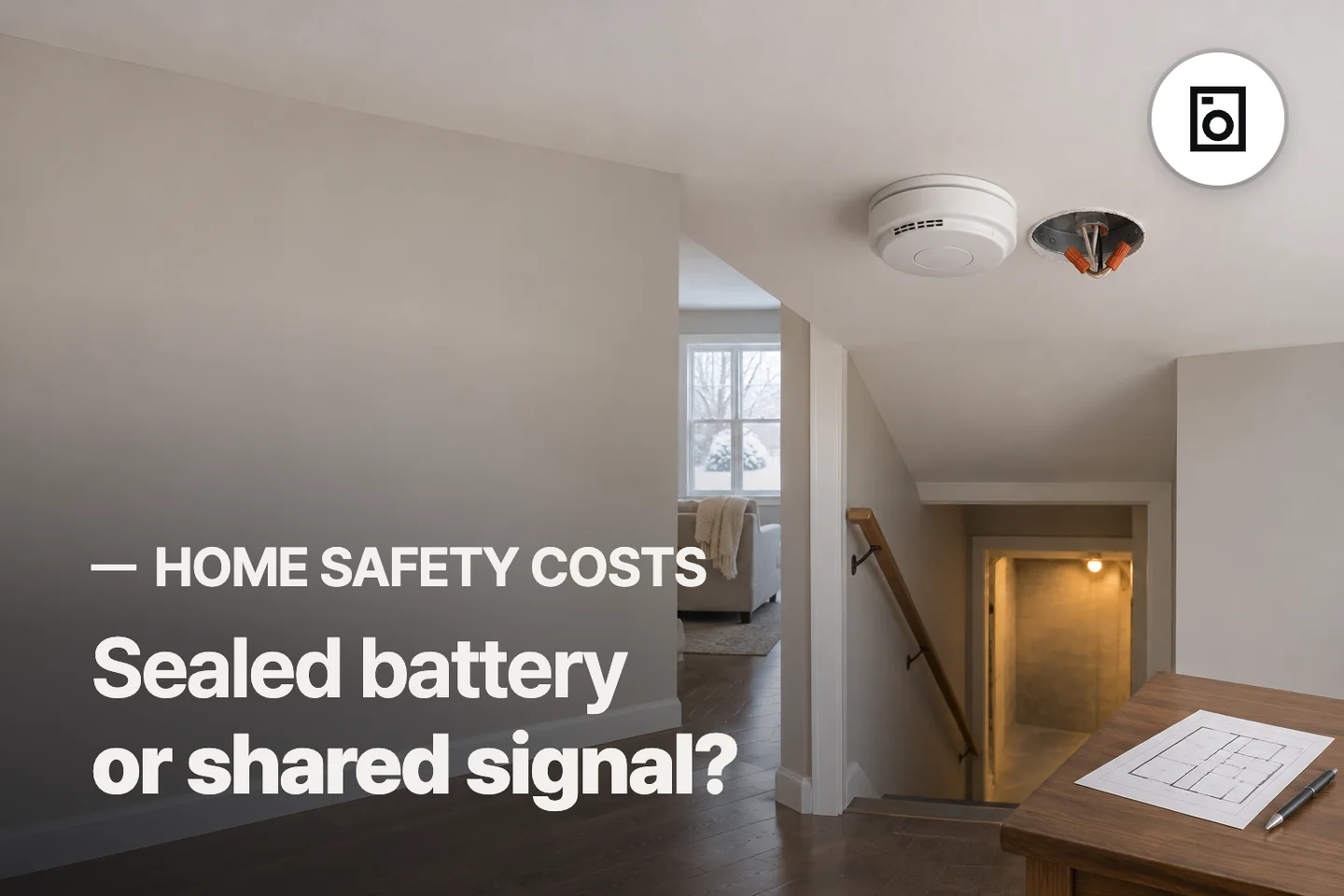
Is the cheaper smoke detector still cheaper once you have covered the whole house before November's first cold snap? If you're checking a multilevel home while worrying about power outages and heating bills, the shelf price answers only part of that question. If you rent, this is a conversation with your landlord, not a reason to change the existing alarm system yourself.
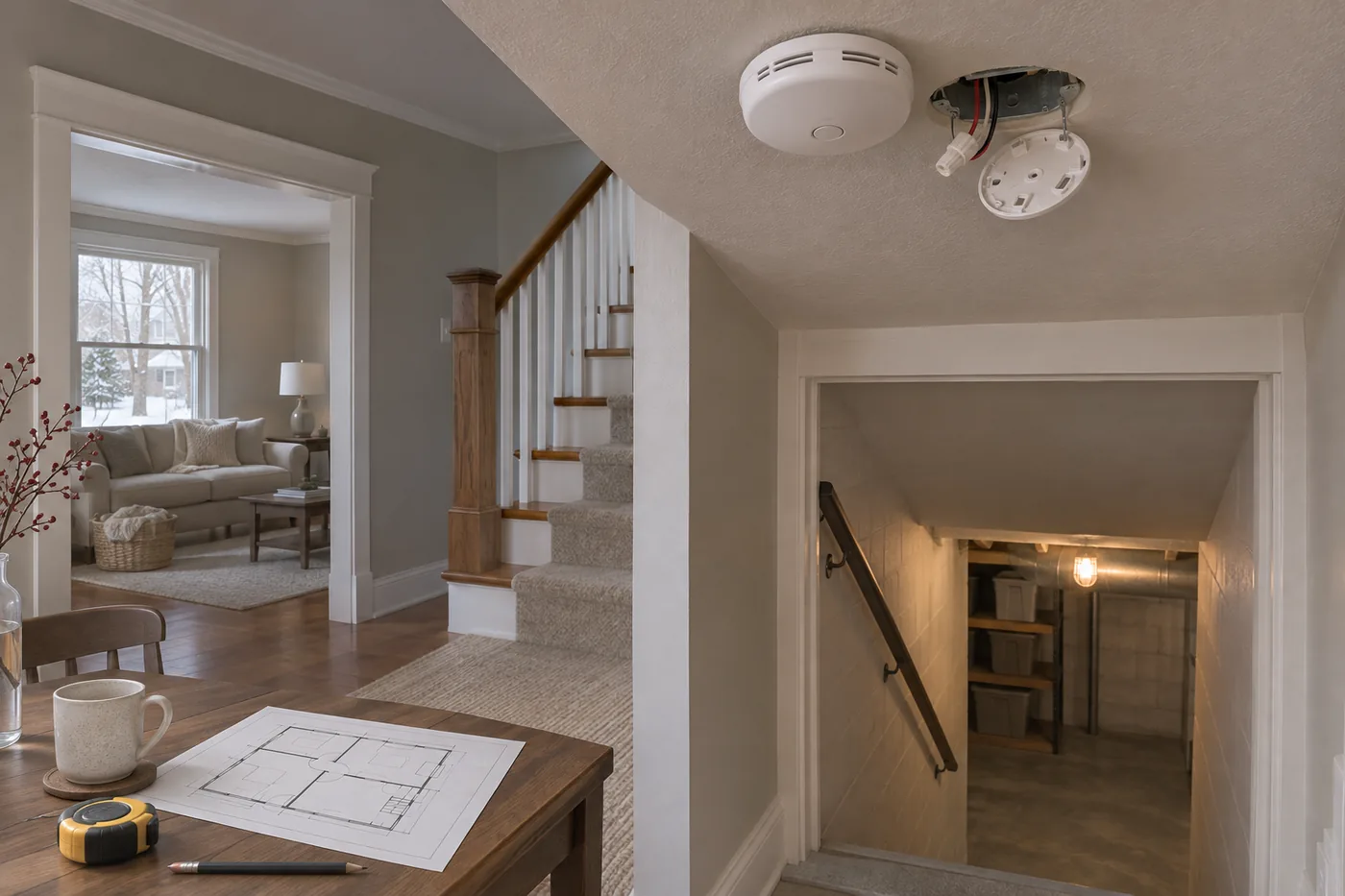 Start with the rooms that need alarms, not the number of boxes on sale.
I'd favor the Kidde DETECT 20SA10 Smoke Alarm, Hardwired with 10-Year Backup Battery where a qualified electrician confirms compatible wiring and an acceptable installed quote. But the Kidde DETECT 20SD10 Smoke Alarm, 10-Year Battery Powered avoids new wiring where standalone alarms are permitted; it just does not provide the same connected signaling.
How we chose
I checked Kidde's product pages and technical data sheets, Shop Kidde's displayed price, and U.S. Fire Administration guidance. The comparison weighs required placement, compatible interconnection, and total ownership cost, with annual hardware arithmetic separated from unquoted installation.
Toneandroom picks
Best smoke detector for winter home checks: Top 2
Permitted standalone placement without suitable alarm wiring
See all specsKidde DETECT 20SD10 Smoke Alarm, 10-Year Battery Powered
Shop Kidde U.S. displayed price: $34.97 per unit, in stock, checked November 24, 2026; tax and shipping extra. About $3.50 per alarm per year over an assumed full ten-year period, not a guaranteed ser
A confirmed hardware price and no electrical wiring connection make the cost easy to budget, but this model cannot provide interconnected alerts.
- Power
- 10-year sealed
- Sensor
- Photoelectric
- Linking
- Standalone
- Temp
- 40–100°F
- No new electrical wiring
- No routine battery purchases
- No interconnected alerts
- Local rules must permit it
Existing suitable wiring and a confirmed compatible alarm system
See all specsKidde DETECT 20SA10 Smoke Alarm, Hardwired with 10-Year Backup Battery
Manufacturer product-page price: Not listed by the maker, checked November 24, 2026. Stock unconfirmed; obtain a current equipment and installation quote.
Compatible wired interconnection and sealed backup power suit a multilevel home when an electrician confirms the existing circuit and model list.
- Power
- 120V AC, 60 Hz
- Backup
- 10-year sealed
- Linking
- Compatible wired
- Temp
- 40–100°F
- Compatible shared alerts
- Sealed backup battery
- Qualified electrician needed
- Price and labor need a quote
Compare 2 products at a glance
Same questions, different installed costs
| Cost or capability | Top pickKidde DETECT 20SD10 Smoke Alarm, 10-Year Battery PoweredShop Kidde U.S. displayed price: $34.97 per unit, in stock, checked November 24, 2026; tax and shipping extra. About $3.50 per alarm per year over an assumed full ten-year period, not a guaranteed ser | Kidde DETECT 20SA10 Smoke Alarm, Hardwired with 10-Year Backup BatteryManufacturer product-page price: Not listed by the maker, checked November 24, 2026. Stock unconfirmed; obtain a current equipment and installation quote. |
|---|---|---|
| Power source, per Kidde | Sealed ten-year battery | 120V AC, 60 Hz; sealed ten-year backup |
| Shared signaling, per Kidde | No interconnection | Compatible wired interconnection |
| Unit price checked November 24, 2026 | $34.97 at Shop Kidde U.S.; in stock | Not listed by the maker; stock unconfirmed |
| Annual hardware cost | About $3.50 over an assumed full ten years | Current unit quote ÷ planned service years |
| Installation cost | Mounting cost if applicable; no electrical connection | Qualified electrician's itemized quote |
| Operating conditions, per Kidde | 40°F–100°F; non-condensing | 40°F–100°F; non-condensing |
Swipe sideways to see the full table →
What we considered
Required placement
Does this model suit the locations your home needs?
USFA's placement guidance includes bedrooms, separate sleeping areas, and every level. I considered the manufacturer's indoor operating limits as well, because a low price does not make either model suitable for a freezing basement.
Shared alerts
Will the installed alarms sound together?
The 20SD10 has no interconnection, while the 20SA10 supports compatible wired devices. I kept that difference separate from battery type rather than treating both as equivalent whole-home systems.
Complete cost
What is included in the annual cost calculation?
The verified 20SD10 selling price supports a hardware-only calculation. I left the 20SA10 premium unpriced because neither a current selling price nor installation quote was confirmed.
Part 1Smoke detector costs start with the room count
The U.S. Fire Administration calls for alarms in every bedroom, outside each separate sleeping area, and on every level, including the basement. So the shopping list comes from the layout, not a square-footage claim on a package. It also recommends interconnected alarms so that when one sounds, they all sound.
That distinction changes what you're buying. Kidde lists the 20SD10 as standalone, while the 20SA10 supports compatible wired interconnection; several standalone units do not become a connected system just because they share a brand. Would a basement alarm also trigger the bedroom alarms? That is the question worth settling before dividing anything by years.
USFA also recommends both ionization and photoelectric alarms, or dual-sensor alarms. But Kidde identifies both models here as photoelectric, so this cost comparison is not a complete sensor plan. Your local fire marshal can explain the required types and locations for your home.
Part 2The battery model: a price you can actually divide
Shop Kidde displayed the 20SD10 at $34.97 per alarm with stock available on November 24, 2026. That is its U.S. official-store selling price before tax or shipping, not an Amazon quote or a claimed sale discount. Spread over a full ten-year budgeting period, $34.97 ÷ 10 is about $3.50 per alarm per year for hardware alone.
For the whole-house arithmetic, multiply $34.97 by your required alarm count. Then divide that hardware total by the actual service period you can reasonably budget for; tax, delivery, and any mounting labor remain outside that figure. The annual number is useful, but it is not an installed-cost estimate.
The buying case is straightforward: Kidde includes a twist-and-click mounting bracket and specifies no electrical wiring connection. So where local requirements allow this model, you avoid adding an alarm circuit and routine replacement-battery purchases. That is a real convenience, not a reason to give up required interconnection.
The case against is equally plain: the 20SD10 cannot interconnect with other alarms. If the house needs connected alerts and new wiring is impractical, USFA notes that wireless interconnected alarms exist; this particular battery model is not one of them. Ask about a suitable compatible system rather than filling the house with unrelated alarms.
There is another catch in the division. USFA says replacement age is measured from manufacture, while Kidde describes a replacement notification ten years after activation and says its limited warranty is not a battery-performance claim. So check the manufacture date before treating a new purchase as ten full years of remaining service; an earlier fault can shorten that period too.
A lower annual hardware cost is useful only when the alarm suits the required location and signaling arrangement.
Part 3What the hardwired smoke detector adds
Kidde specifies 120V AC, 60 Hz plus a sealed ten-year backup battery for the 20SA10. So its buying case is not simply that it runs on house power: it combines that supply with backup power and compatible wired interconnection. That backup belongs on the winter outage checklist, though it does not establish compatibility with whatever is already on the ceiling.
The manufacturer's product page did not display a unit price when checked on November 24, 2026. So ask for a current equipment price and an itemized installation quote; there is no verified dollar premium to subtract from $34.97 here. The other models' prices on a store page cannot fill that gap.
For an existing compatible circuit, the quote should distinguish the alarms from replacement labor and any compatibility work. But a home needing new wiring has a different job to price, which is why a shelf-price comparison cannot settle the bill. USFA says only qualified electricians should install hardwired alarms.
Kidde allows up to 24 interconnected devices, with no more than 18 initiating devices, including no more than 12 smoke alarms. But those ceilings are not permission to mix arbitrary units: Kidde directs buyers to the compatible-model list and excludes other manufacturers' products unless specifically stated otherwise. An electrician needs the exact existing model numbers, not merely a connector that appears to fit.
For annual budgeting, divide the quoted hardware and installation total by the planned remaining service period. That gives you an installed-cost comparison rather than a hardware-only number dressed up as one. Without the unit price and labor quote, a break-even year would be guesswork.
Part 4Which cost belongs in your winter budget?
Start with the system already in the house. If it is compatible and hardwired, I'd put the 20SA10 quote ahead of the cheaper standalone box because shared signaling is the meaningful difference in this comparison. But if standalone alarms are permitted and no suitable wiring exists, the 20SD10 has a verified hardware price and avoids adding electrical wiring.
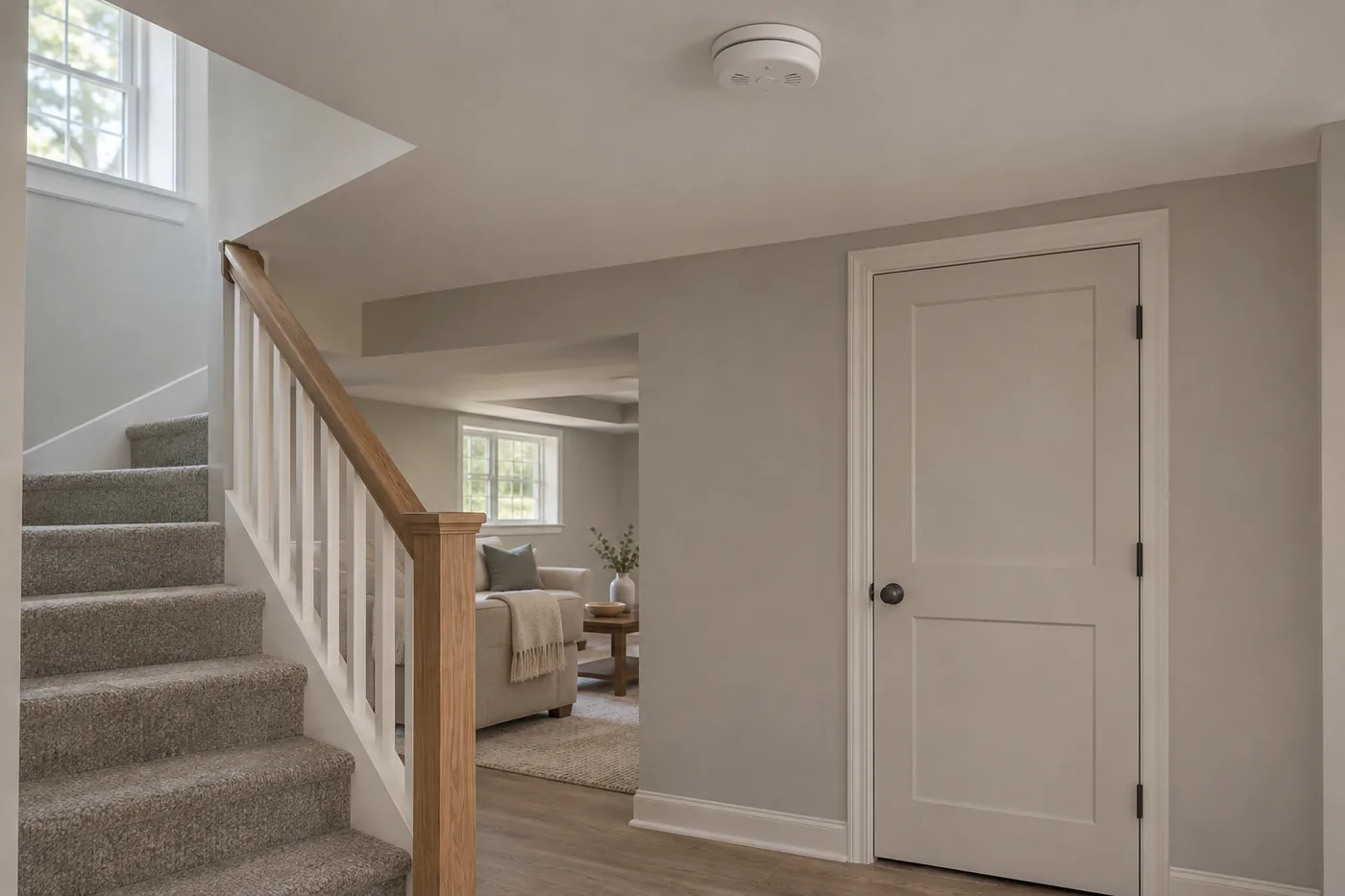 An indoor basement still needs to meet the alarm maker's temperature and humidity limits.
Kidde specifies 40°F–100°F and non-condensing conditions for both models. So a freezing or damp basement is not automatically suitable just because it is inside the house; ask Kidde or your local fire official about appropriate placement. The same operating limits apply whichever power source you choose.
Kidde's data sheets also call for a manual button test once per week on both models. That means internal self-testing does not remove the manual check from your calendar. Neither model is a CO detector, according to Kidde; the 20SA10 can relay a compatible CO alarm's signal, but that does not mean it senses carbon monoxide itself.
The short answer: compare a permitted standalone installation with its real total cost, and a compatible interconnected installation with its real quote. Then keep the separate CO-alarm check on your heating-season list. The missing labor price is not zero.
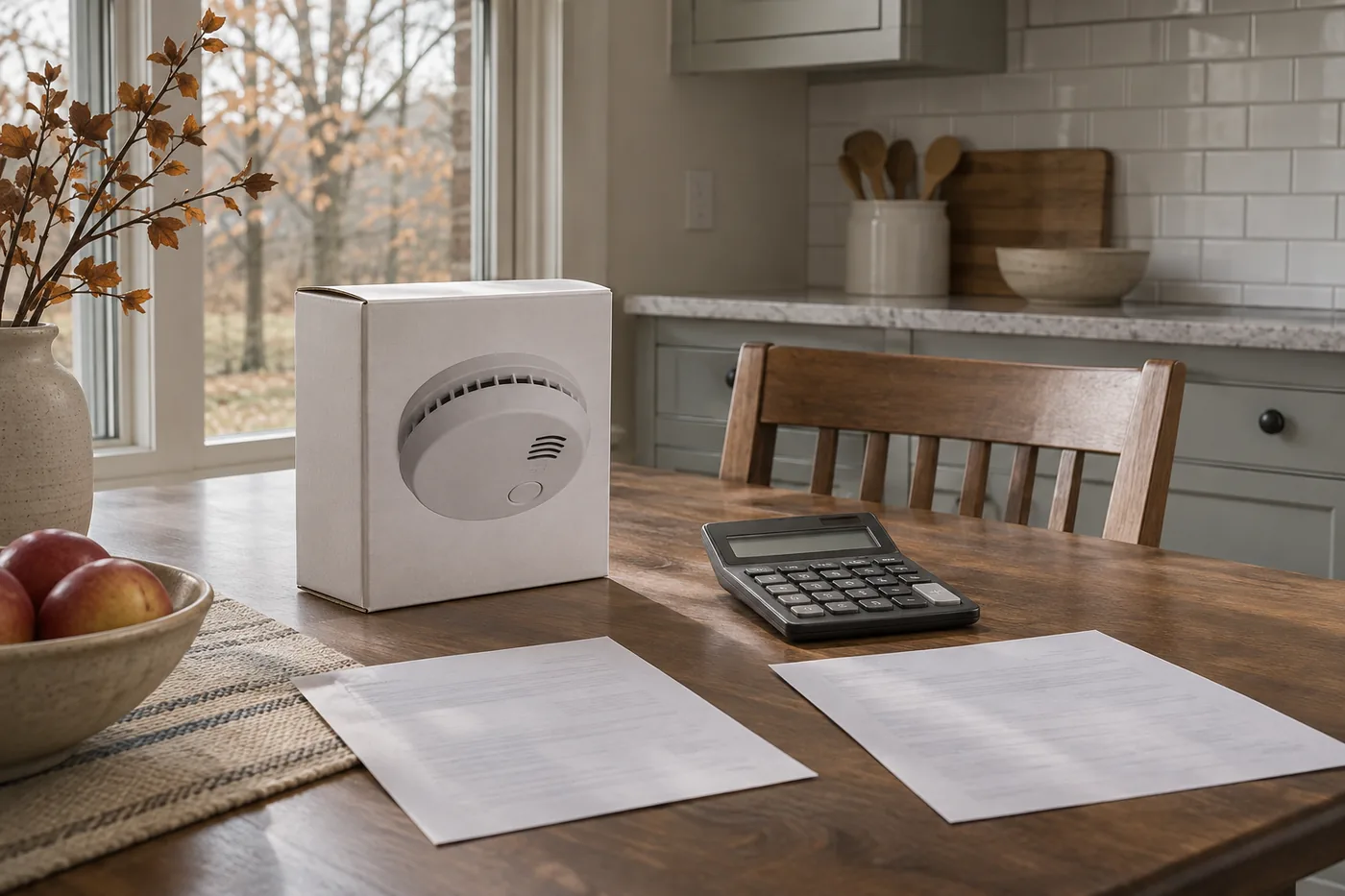 Keep equipment and installation separate until both have a confirmed price.
Sources and selection: Kidde product pages, both model data sheets, Shop Kidde's 20SD10 listing, and USFA guidance were checked for placement, interconnection, and ownership cost. The 20SA10 selling price and installation cost remain unconfirmed; ask for a current quote. Last checked November 24, 2026; seller prices and stock can change.
In one sentence
The standalone Kidde has a verified hardware price; the hardwired Kidde adds compatible interconnection, with installation still to quote.
Kidde DETECT 20SD10 Smoke Alarm, 10-Year Battery Powered
Check price on AmazonKidde DETECT 20SA10 Smoke Alarm, Hardwired with 10-Year Backup Battery
Frequently asked questions
Does a hardwired smoke detector still need a backup battery?
Kidde specifies a sealed ten-year backup battery in the 20SA10 alongside 120V AC power. This particular model does not require routine replacement backup batteries; follow Kidde's testing and whole-alarm replacement instructions.
Which Kidde smoke alarm can trigger the other alarms?
The 20SA10 supports compatible wired interconnection; the 20SD10 does not. Kidde requires checking the exact compatible models, so an apparently matching connector alone does not establish suitability.
Is either Kidde smoke detector also a CO alarm?
No. Kidde identifies both as smoke-only models. The 20SA10 can relay a compatible interconnected CO alarm's signal but does not detect carbon monoxide itself.
How much does the battery smoke alarm cost per year?
Shop Kidde displayed $34.97 per 20SD10 on November 24, 2026. Dividing by an assumed full ten-year budgeting period gives about $3.50 per alarm per year, excluding tax, shipping, and installation. USFA measures replacement age from manufacture, so actual remaining service can be shorter.
Can either smoke alarm go in an unheated basement?
Kidde specifies 40°F–100°F and non-condensing conditions for both models. A basement that freezes or develops condensation falls outside those limits; ask Kidde or your local fire official about suitable placement.
Sources
- Kidde DETECT 20SD10 Smoke Alarm, 10-Year Battery Powered · 2026-11-24
20SD10; sealed ten-year battery format and replacement notification ten years after powering. Ten-year limited warranty is explicitly not a battery-performance claim.
- Kidde DETECT 20SA10 Smoke Alarm, Hardwired with 10-Year Backup Battery · 2026-11-24
20SA10; hardwired power, ten-year sealed backup battery, and model-specific wired interconnection. No selling price displayed on this page; stock not confirmed.
- Kidde 20SD10 technical data sheet · 2026-11-24
Photoelectric; wiring and interconnection N/A; 40°F–100°F, non-condensing; manual button test once per week. Ten-year sealed battery and ten-year limited warranty, not a battery-performance claim.
- Kidde 20SA10 technical data sheet · 2026-11-24
120V AC, 60 Hz with sealed ten-year backup; photoelectric; maximum 24 devices, 18 initiating devices, 12 smoke alarms; 40°F–100°F, non-condensing; weekly manual button test. Not a CO detector; compatible-device restrictions apply.
- Shop Kidde U.S. 20SD10 selling price · 2026-11-24
$34.97 per 20SD10, in stock. Derived hardware arithmetic: $34.97 ÷ 10 assumed years = $3.497, rounded to $3.50 per alarm per year, excluding tax, shipping, and installation.
- U.S. Fire Administration smoke-alarm guidance · 2026-11-24
Replace ten years from manufacture; install in every bedroom, outside separate sleeping areas, and on every level including basement. Recommends interconnection and both sensor types or dual sensors; qualified electricians for hardwired installation; wireless interconnected options exist.