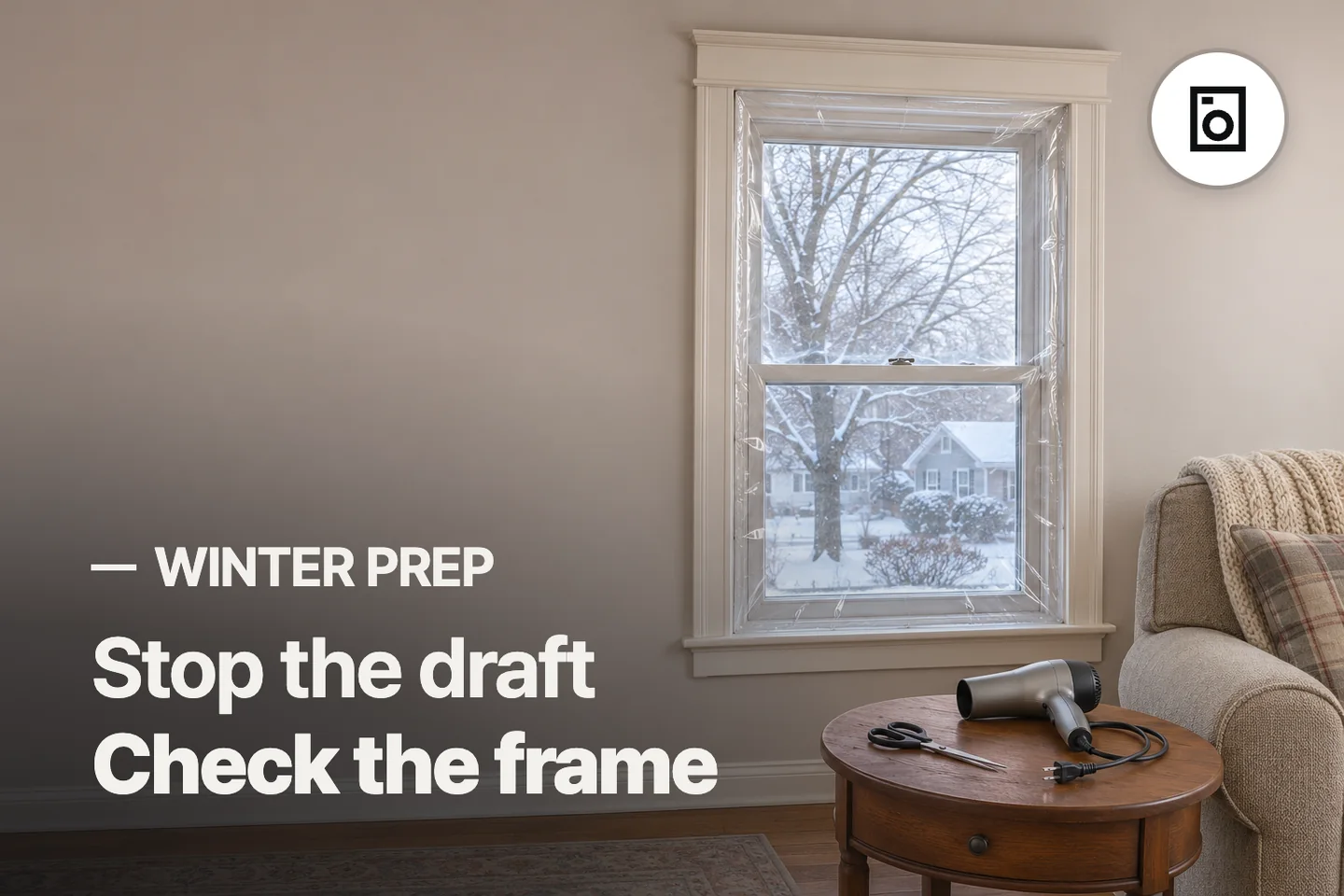
“Save up to 10%* on Home Energy Costs,” says Duck's listing. For a renter checking the front door and drafty windows before a cold snap, that sounds like heating-bill relief. But a window insulation film kit needs a sound attachment surface, and that asterisk does not promise film-only savings.
 Start with the drafty window beside the seat you actually use.
I'd choose the Duck Brand Rolled Shrink Film Window Insulation Kit, Clear, 10 Window, 62 in. × 420 in. for measured openings with landlord-approved, compatible trim. The useful fix is a continuous temporary barrier, not plastic stretched over a window that needs repair.
How we chose
We checked Duck's product listing, rolled-kit installation guide, and FAQ against ENERGY STAR and EPA guidance. The three checks were coverage and trim compatibility, adhesive application conditions, and moisture or access problems that should stop installation; no verified retail-price history was available.
Toneandroom picks
Best window insulation film kit for rentals: Top 1
Seasonal draft reduction on landlord-approved interior trim that can remain covered
Duck Brand Rolled Shrink Film Window Insulation Kit, Clear, 10 Window, 62 in. × 420 in.
US manufacturer listing, November 24, 2026: retail price not listed. Price varies; check Amazon.
The listed roll dimensions, compatible surfaces, and matching installation instructions make coverage and application requirements checkable before purchase.
- Film roll
- 62 × 420 in.
- Pack label
- 10 windows
- Tape surface
- 40°F minimum
- Contents
- Film + window tape
- Sound, compatible interior trim
- Windows that can stay covered
- Confirm roll and tape coverage
- Avoid damp or peeling finishes
What we considered
Opening fit
Can the roll cover your eligible attachment boundaries?
Duck specifies a 62 × 420 in. roll rather than guaranteed coverage for any ten openings. We retained the kit for measured windows with a continuous boundary of compatible, sound trim.
Tape readiness
Is the attachment surface clean, dry, and warm enough?
Duck requires the bonding surface to be at least 40°F and identifies dirt and cold as common adhesion problems. That makes preparation more important than trying to rescue a poor bond by stretching the film.
Stop conditions
Can this window stay covered without hiding a problem?
EPA guidance calls for addressing moisture sources and taking precautions around deteriorating older paint. We exclude damaged or damp openings and keep necessary ventilation and escape access outside the sealing plan.
Part 11. Claim: A window insulation film kit pays for itself
What we found: Duck qualifies its savings headline as proper sealing and insulation of the home, not this roll alone. So it cannot establish your rental's bill reduction or a payback date.
The manufacturer listing supplies no retail price, and no current Amazon checkout price or historical selling-price record was verified. That means there is no defensible sale-versus-list comparison here; compare the actual checkout total when ordering, rather than treating an energy-savings banner as a discount.
Start the physical check by closing and locking the sashes. ENERGY STAR suggests closing a window on paper: if the paper slides easily, the closure could be tighter. That points you toward a poorly seated sash or worn weatherstripping before you cover anything.
A cold pane is not the same finding as a draft. ENERGY STAR describes shrink-to-fit plastic as a draft barrier that adds an insulating air layer, so it can help an otherwise serviceable window without fixing broken hardware or a leak.
Part 22. Claim: The Duck window insulation kit fits ten windows
What we found: The label says ten windows, while the actual film supply is a 62 × 420 in. roll with window kit tape. That is a material quantity, not a custom cutting plan for your house.
Measure the full interior attachment boundary, rather than the glass alone, then map your cuts against the roll and the package's trimming allowance. This catches the tall opening or wide casing that turns a seemingly generous pack into a short roll.
Duck lists clean, dry painted or finished wood, aluminum, and vinyl as suitable surfaces. But it excludes plaster, drywall, wallboard, and unfinished or unvarnished wood; extending the tape onto an adjacent wall is not a workaround.
The readable listing does not give the included tape's length. So check the package against your combined attachment perimeters before assuming the film and tape will both stretch to every opening.
Will you need to open that sash during winter? Leave necessary ventilation and escape openings accessible, and confirm escape requirements with your local fire official before covering them. Blind controls also need a workable route that does not interrupt the seal.
Finish the opening list before cutting: compatible trim and continued access matter more than the pack count.
Part 33. Claim: Window insulation film sticks after a quick wipe
What we found: Duck names dirt and cold surfaces as common reasons its indoor kits fall off. Its FAQ requires an attachment surface at 40°F or warmer, so a warm room thermostat does not establish that the trim is ready.
Inspect the finish before cleaning. EPA says homes built before 1978 are more likely to contain lead-based paint, and worn window surfaces can release paint chips and dust. So peeling paint calls for landlord assessment and appropriate repair, not sanding or scraping to help the tape grip.
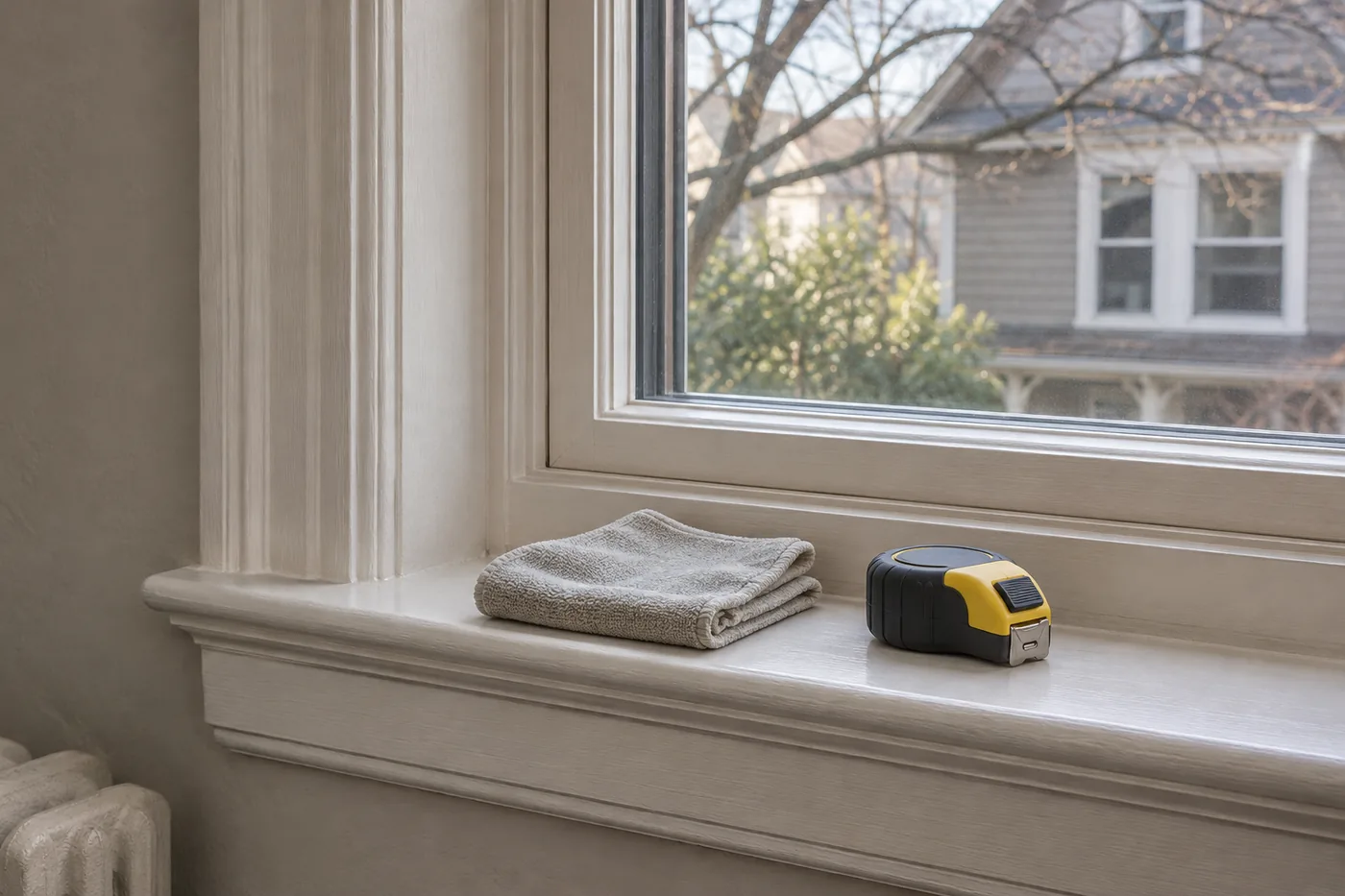 Sound, dry trim is the attachment surface; damaged paint needs attention before film.
Duck recommends a general-purpose or alcohol-based cleaner for suitable surfaces. But the finish must tolerate that cleaner, so check an inconspicuous area and allow the boundary to dry completely before applying tape.
Damp wood, water stains, or visible mold change the job. EPA's guidance is to fix the moisture source, not hide it; notify the landlord and resolve that problem before enclosing the window.
Part 44. Claim: Extra heat makes a window insulation shrink kit tighter
What we found: Duck warns that over-shrinking loads the tape with tension and can pull it away. So a lifting edge needs an attachment check, not another long pass with the dryer.
Gather the scissors and hair dryer specified by Duck, along with your measurements. Its rolled-kit guide starts with tape across the top attachment edge; remove that liner, then roll the film from right to left and cut it to size.
The detail worth slowing down for is the loose edge, not the folded edge: Duck says the loose edge attaches to the top tape. Then apply tape down the sides and across the bottom, remove those liners, unfold the film, and press it firmly around the perimeter.
Check contact at the corners before shrinking. This is where a missed section can leave a path around otherwise smooth plastic, so complete adhesion comes before appearance.
Use the hair dryer as directed by the kit and the appliance instructions to remove wrinkles. But stop if the tape begins releasing; further shrinking cannot clean the trim, warm an unsuitable bonding surface retroactively, or repair missed contact.
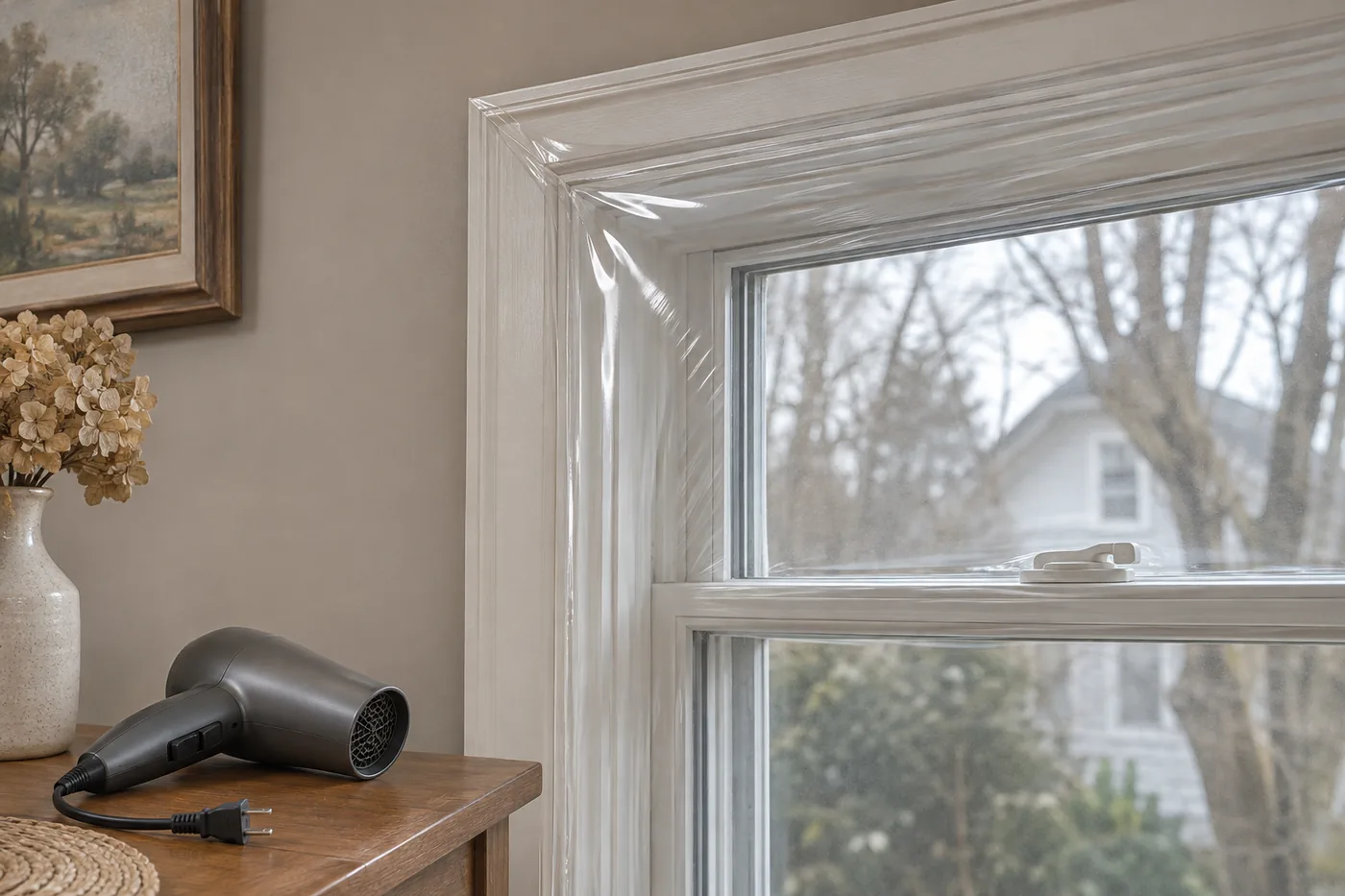 Check the perimeter before chasing the last wrinkle.
Part 55. Claim: Clear window shrink film means the job is finished
What we found: Transparency makes the pane visible, but it does not prove the perimeter stayed attached or the space behind it stayed dry. So revisit the corners, bottom edge, and surrounding trim when colder weather arrives.
EPA recommends indoor relative humidity below 60%, ideally between 30% and 50%. Those are general moisture-control figures, not a guarantee against condensation at a particular window; if water appears, dry affected surfaces and investigate the source rather than leaving it concealed.
A released edge deserves the same checks as the initial installation: surface condition, temperature, contact, and film tension. That keeps the repair aimed at the failed bond instead of adding more heat to already stressed tape.
For seasonal removal, Duck advises warming the taped area with a hair dryer to soften the adhesive before pulling away the film. But its renter-friendly description cannot guarantee every older paint finish, so follow the removal directions and pause if the coating begins to lift.
Sources and selection: Duck's product listing, rolled-kit instructions, and FAQ were checked alongside ENERGY STAR and EPA guidance for fit, adhesion, and moisture precautions. No verified retail price or price history supports a discount claim. Last checked November 24, 2026; seller prices and availability can change.
In one sentence
Fit the film to suitable trim, secure the perimeter, and stop for moisture or damaged paint.
Duck Brand Rolled Shrink Film Window Insulation Kit, Clear, 10 Window, 62 in. × 420 in.
Frequently asked questions
Is window insulation film the same as solar-control film?
This Duck kit places shrinkable plastic over an interior attachment boundary to create a temporary barrier and insulating air layer. It is not a solar-control coating applied directly to the glass, so use the rolled-kit instructions.
Does the duck window insulation kit cover ten large windows?
Not automatically. Duck lists a 62 × 420 in. roll and a ten-window pack label; measure full attachment boundaries, allow for trimming, and check tape requirements before relying on that count.
What temperature does a window insulation shrink kit need?
Duck's FAQ specifies an attachment surface of at least 40°F. Check the trim itself rather than assuming the thermostat reading establishes a suitable bonding temperature.
Why does window shrink film pull away after heating?
Duck says excessive shrinking can put too much pressure on the tape. Check surface cleanliness, temperature, and perimeter contact instead of continuing to heat a releasing panel.
Can window insulation film cover condensation or peeling paint?
Resolve those problems first. EPA advises correcting moisture sources and warns that deteriorating paint in older homes can create lead hazards; ask the landlord for appropriate assessment or repair rather than enclosing damp trim or disturbing suspect paint.
Sources
- Duck Brand Rolled Shrink Film Window Insulation Kit, Clear, 10 Window, 62 in. × 420 in. · 2026-11-24
62 × 420 in. roll, ten-window label, film and window tape. Up-to-10% savings headline applies to complete home sealing and insulation, not film alone. Retail price and tape length are not listed.
- Duck rolled window kit installation guide · 2026-11-24
No numerical settings used. Guide specifies top tape, right-to-left rolling, loose-edge attachment, side and bottom tape, unfolding, pressing, and hair-dryer shrinking.
- Duck weatherization FAQ · 2026-11-24
Tape attachment surface must be at least 40°F. Describes dirt and cold as adhesion problems, over-shrinking as a cause of tape release, and warming adhesive for film removal.
- ENERGY STAR plastic-over-windows guidance · 2026-11-24
No numerical savings estimate used. Supports the paper closure test, draft reduction, and an added insulating air layer; does not establish film-only bill savings.
- EPA mold and moisture guidance · 2026-11-24
Indoor relative humidity below 60%, ideally 30–50%. Advises drying condensation, fixing moisture sources, and notifying the building owner about rental moisture problems.
- EPA lead exposure precautions at home · 2026-11-24
Homes built before 1978 are more likely to contain lead-based paint. Worn painted window surfaces can produce hazardous chips and dust; supports assessment and lead-safe repair rather than disturbing suspect paint.