Ten thousand square feet of grass is a sizable item on a November homeowner's checklist, especially with leaves down and the first cold snap competing for attention. If you're the renter handling that same suburban yard, scotts turf builder winterguard fall lawn food raises the same practical problem: enough bags for the grass, without another feeding the lawn doesn't need.
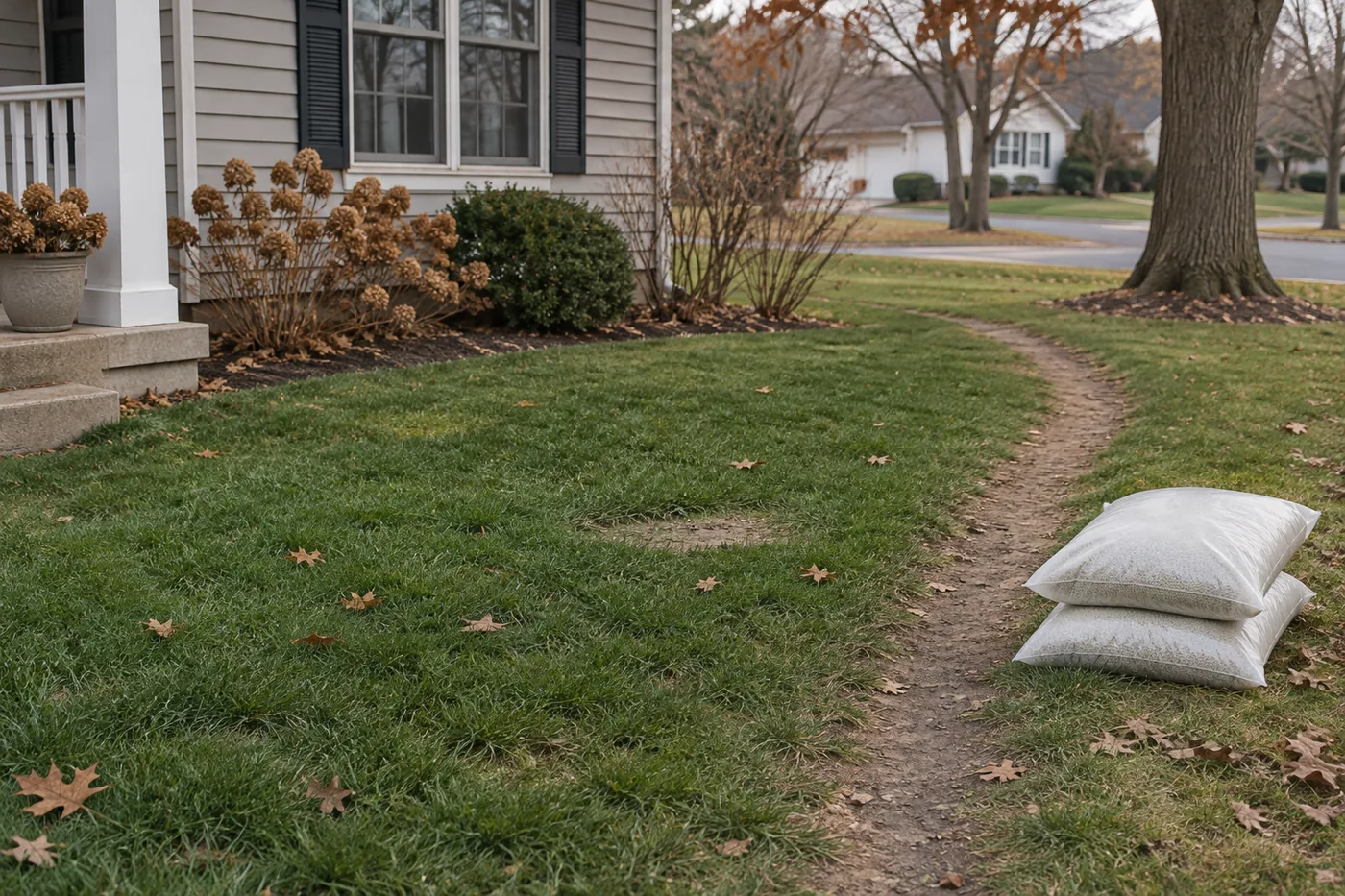 Measure the grass that needs feeding, not the property boundary.
I'd choose Scotts Turf Builder WinterGuard Fall Lawn Food for established, actively growing cool-season turf that still needs fall nutrients, only while local rules allow it. For a measured 10,000-sq-ft lawn, the current small package means buying three bags, not two; in Maryland on November 24, the homeowner application window is already closed.
How we chose
I checked Scotts' US product specifications, displayed small-package price, and application directions against Maryland agriculture guidance and University of Maryland Extension's lawn calendar. The three checks were actual turf coverage, remaining nutrient need, and locally permitted timing.
Toneandroom picks
Best scotts turf builder winterguard fall lawn food for lawns: Top 1
Established cool-season turf with a remaining fall nutrient need, while grass is growing and local application rules permit feeding
Scotts Turf Builder WinterGuard Fall Lawn Food
Scotts US displayed price: $32.99 per up-to-4,000-sq-ft small bag, checked November 24, 2026, before tax and shipping. Three bags: calculated $98.97; larger-package price not verified.
Its published small-bag coverage makes the quantity calculation straightforward for measured turf. It fits a needed, permitted fall feeding, not a closed application window or a bare-patch repair.
- Coverage
- 4,000 sq ft
- NPK
- 32-0-10
- SKU
- 22342
- Your turf still needs fall nutrients
- You measured the grass, not the lot
- Local cutoffs may rule out feeding
- Two small bags cover only 8,000 sq ft
What we considered
Turf area
How much of the property is actually grass?
The small package covers up to 4,000 sq ft, while driveways and buildings need none. I based the purchase on measured turf so two undersized bags do not become an underfed lawn.
Feeding need
Does this grass still need fall nutrients?
The maker allows any grass type, but Extension distinguishes cool-season fall feeding from warm-season dormancy. I favor established cool-season turf with an unmet need, not an automatic extra application.
Local timing
Is spreading appropriate and permitted now?
Scotts lists August through November, but Maryland prohibits homeowner application between November 16 and March 1. I would defer feeding there now and use local rules and growing conditions elsewhere.
Part 1scotts turf builder winterguard fall lawn food: count the bags
Start with the lawn, not the deed. Maryland's Department of Agriculture says to subtract the house, deck, driveway, and garden from the measured area, so a property described as 10,000 sq ft may contain considerably less grass.
Scotts lists its small package, SKU 22342, for up to 4,000 sq ft, with a 32-0-10 fertilizer analysis. That makes two bags enough for only 8,000 sq ft at labeled coverage, leaving 2,000 sq ft of an actual 10,000-sq-ft lawn unaccounted for.
Swipe sideways to see the full table →
| Small-bag purchase | Calculated coverage | Scotts direct-store cost |
|---|---|---|
| One bag | Up to 4,000 sq ft | $32.99 |
| Two bags | Up to 8,000 sq ft | $65.98 |
| Three bags | Up to 12,000 sq ft | $98.97 |
Those costs use Scotts' displayed US price of $32.99 for SKU 22342, checked November 24, 2026, before tax and shipping. So the third bag adds $32.99 to the purchase, but buying it is not permission to empty it: apply only the purchased label's amount for your measured turf.
For this lawn size, three small bags leave product equivalent to 2,000 sq ft of nominal coverage. Scotts also lists an up-to-12,000-sq-ft package, so compare that selection's current checkout price with $98.97 rather than assuming the small bag's price applies to both.
Part 2Scotts winterguard fall lawn food: is November too late?
Scotts says to apply once in fall, between August and November. But the bag's seasonal range is not a local deadline, and a mild afternoon doesn't reopen a closed application window.
Maryland's Department of Agriculture prohibits homeowner lawn fertilizing between November 16 and March 1. That means a Maryland reader checking this on November 24 should leave the spreader parked, even though November appears in Scotts' instructions.
University of Maryland Extension separately advises applying before November 15 in its lawn calendar. So neither source supports a late-November catch-up feeding there; elsewhere, check your state or local restrictions and Extension's schedule for your grass rather than borrowing Maryland's dates.
Still mowing because the grass is growing? That is useful information, but growth alone doesn't prove a nutrient shortfall: look back at earlier fertilizer applications and soil-test guidance before adding another dose.
Maryland's agriculture department also caps a single application at 0.9 lb of total nitrogen per 1,000 sq ft, including no more than 0.7 lb of soluble nitrogen. Those are nutrient limits, not pounds of bagged product, so compare the purchased label's nutrient delivery with the applicable limits instead of treating coverage arithmetic as a compliance check.
Enough fertilizer and permission to spread it are separate checks.
Scotts describes the product as usable on any grass type. But Extension's Maryland calendar places tall-fescue feeding in fall and says not to fertilize zoysia and bermudagrass in autumn as they head toward dormancy, so grass compatibility doesn't settle seasonal timing.
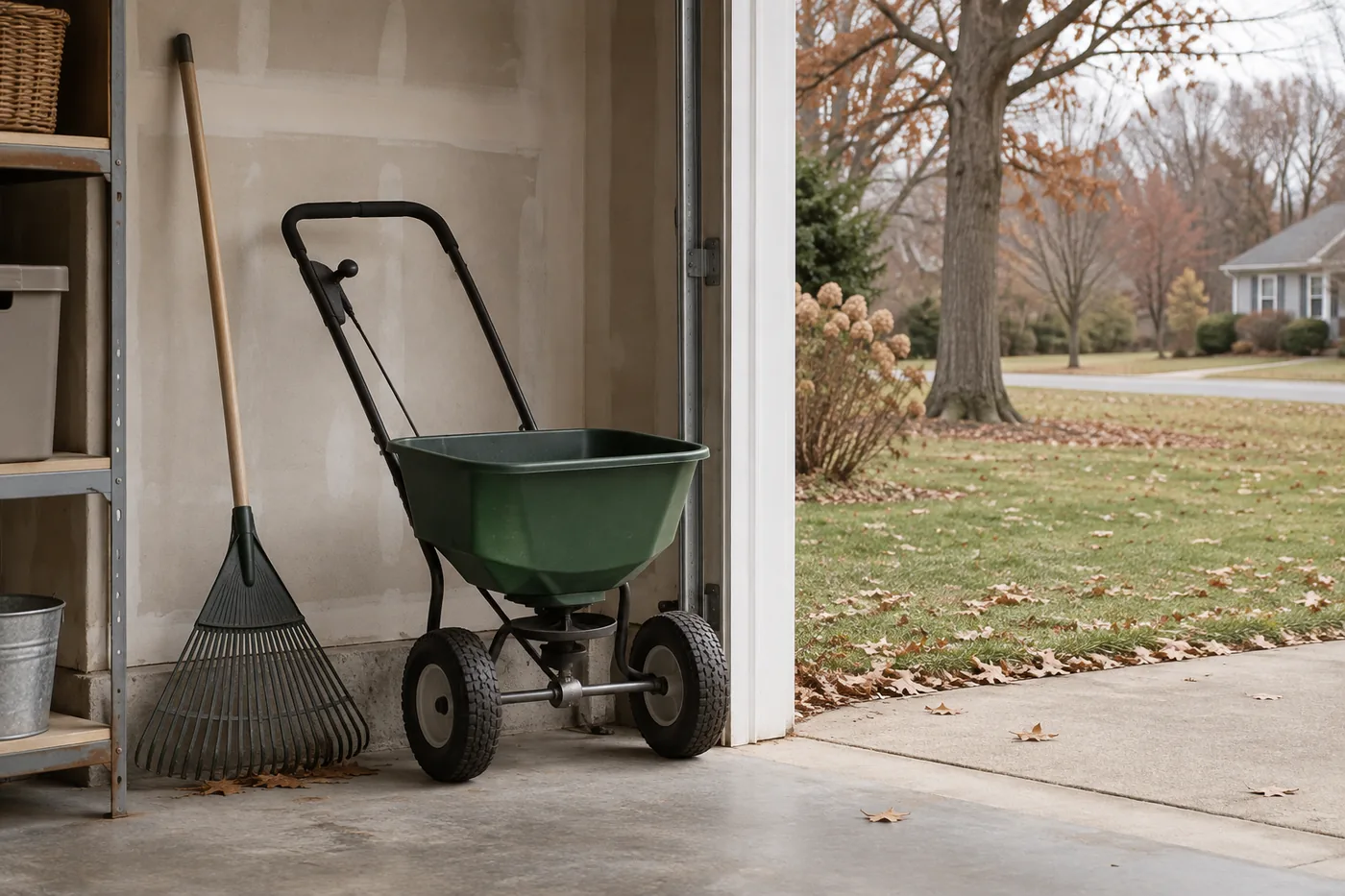 A clear afternoon is not a reason to ignore the local fertilizer cutoff.
Part 3Scotts fall lawn food: spread it without adding extra
For a lawn that passes the timing and nutrient checks, Scotts permits application to wet or dry grass. Its instructions don't require watering in, though light watering helps nutrients get to work; that flexibility is useful when the hose is already put away, not a reason to spread before a storm.
The Maryland agriculture department says not to fertilize frozen ground or when heavy rain is predicted. So check the ground and forecast before filling the hopper, even if your calendar and grass type otherwise fit.
Use the purchased label's application rate and the setting for your specific spreader. That matters more than making the bag disappear, because a bag count tells you what to purchase, not how heavily to cover each pass.
Scotts directs users to sweep or blow stray granules from sidewalks and driveways back onto the lawn. For the unused portion, the maker says to fold and secure the bag and keep it cool and dry, away from children and pets; a properly stored remainder beats an extra pass.
If you're renting, confirm who handles fertilizer before opening anything. A landlord or lawn service may already have fed the yard, so the missing information could be an application record rather than a shopping list.
Part 4Scotts turf builder winterguard: feeding isn't patch repair
A bare strip beside the path needs a different question: why isn't grass growing there? Fertilizer feeds existing plants, so bare soil, compacted footpaths, and drainage trouble need separate attention rather than the remainder of the bag.
Maryland's agriculture department describes core aeration as a way to relieve compaction. But Extension schedules aeration and seeding around suitable growth periods, with tall-fescue sowing no later than mid-October in its Maryland calendar, so a late-November feeding cannot make that repair window return.
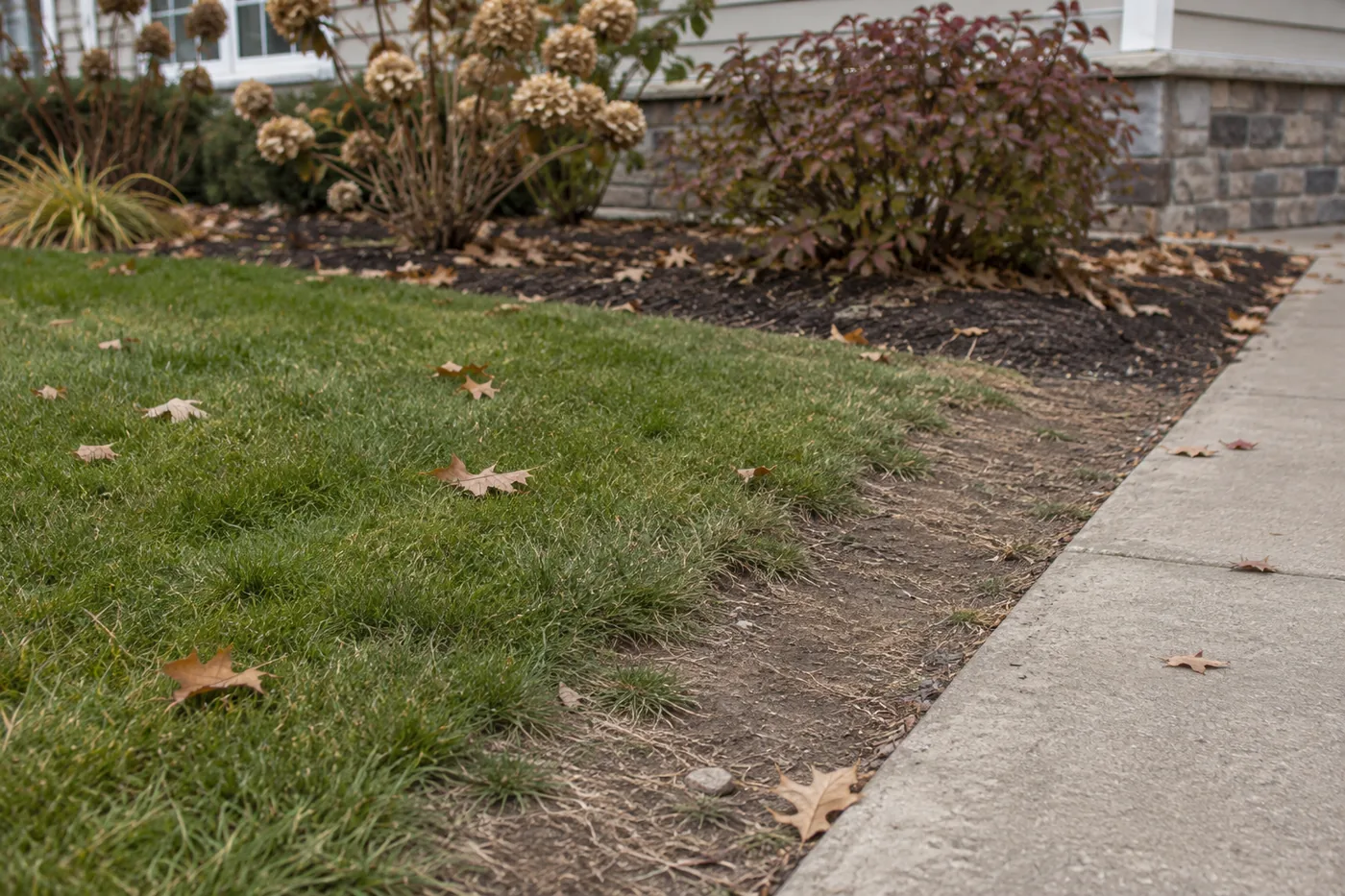 The worn strip needs its cause identified before more fertilizer goes down.
For now, Extension recommends removing leaves that thickly cover the grass. That leaves a useful job on the list even when feeding must wait, and it lets you see which patches need a properly timed repair.
Feed the lawn, not the empty space in the bag.
How this was checked: Scotts' US product listing supplied package coverage, fertilizer analysis, displayed pricing, and directions. Maryland's agriculture department and University of Maryland Extension supplied regional timing and nutrient guidance; the comparison used measured turf area, remaining feeding need, and legal application timing.
Purchase links: No affiliate purchase link is included here.
Last checked: November 24, 2026. Prices exclude tax and shipping; bag totals are calculated from the small-package price, not a checkout quote.
In one sentence
For 10,000 sq ft of actual turf, buy three current 4,000-sq-ft small bags only if a fall feeding is still needed and locally permitted.
Scotts Turf Builder WinterGuard Fall Lawn Food
Frequently asked questions
Will two small bags of scotts winterguard cover 10,000 sq ft?
No. The current up-to-4,000-sq-ft package gives two bags a calculated 8,000 sq ft of coverage. Three provide enough product to purchase, but use only the purchased label's amount for your turf and retain the surplus.
Can scotts winterguard fall lawn food go down in late November?
Not everywhere. Scotts lists August through November, but Maryland's homeowner prohibition runs between November 16 and March 1, so November 24 is outside that window. Elsewhere, check local restrictions, grass growth, nutrient need, frozen ground, and the rain forecast.
Does scotts fall lawn food need watering in?
Scotts says watering in is not required, although light watering helps the nutrients get to work. The maker permits wet- or dry-grass application; Maryland's agriculture department warns against fertilizing before predicted heavy rain or on frozen ground.
Will scotts turf builder winterguard fix a bare patch?
It feeds grass rather than replacing missing plants or relieving compaction. Identify the cause of the bare patch and schedule seeding, aeration, or drainage work for the locally appropriate season.
Sources
- Scotts Turf Builder WinterGuard Fall Lawn Food · 2026-11-24
SKU 22342: up to 4,000 sq ft, 32-0-10 NPK, $32.99 displayed US direct-store price before tax and shipping. Larger option up to 12,000 sq ft; its price was not verified. Once in fall, August–November. Derived small-bag totals: two cover 8,000 sq ft at $65.98; three cover 12,000 sq ft at $98.97; a 10,000-sq-ft application leaves 2,000 sq ft of nominal product coverage. Wet/dry application, watering, cleanup, and storage directions also read.
- Maryland Department of Agriculture: Lawn Fertilizer Guide for Homeowners & Residents · 2026-11-24
Homeowner fertilizer prohibition November 16–March 1; single application maximum 0.9 lb total nitrogen per 1,000 sq ft, including no more than 0.7 lb soluble nitrogen. Read turf-area subtraction, active-growth timing, no frozen-ground or predicted-heavy-rain application, and core-aeration guidance.
- University of Maryland Extension: Lawn Maintenance Calendar · 2026-11-24
Updated March 16, 2026. Tall-fescue late-autumn guidance says fertilize before November 15; sow seed no later than mid-October. Zoysia/bermudagrass autumn category September–November says not to fertilize. Leaf removal and season-specific aeration guidance also read; this is Maryland guidance, not nationwide timing.