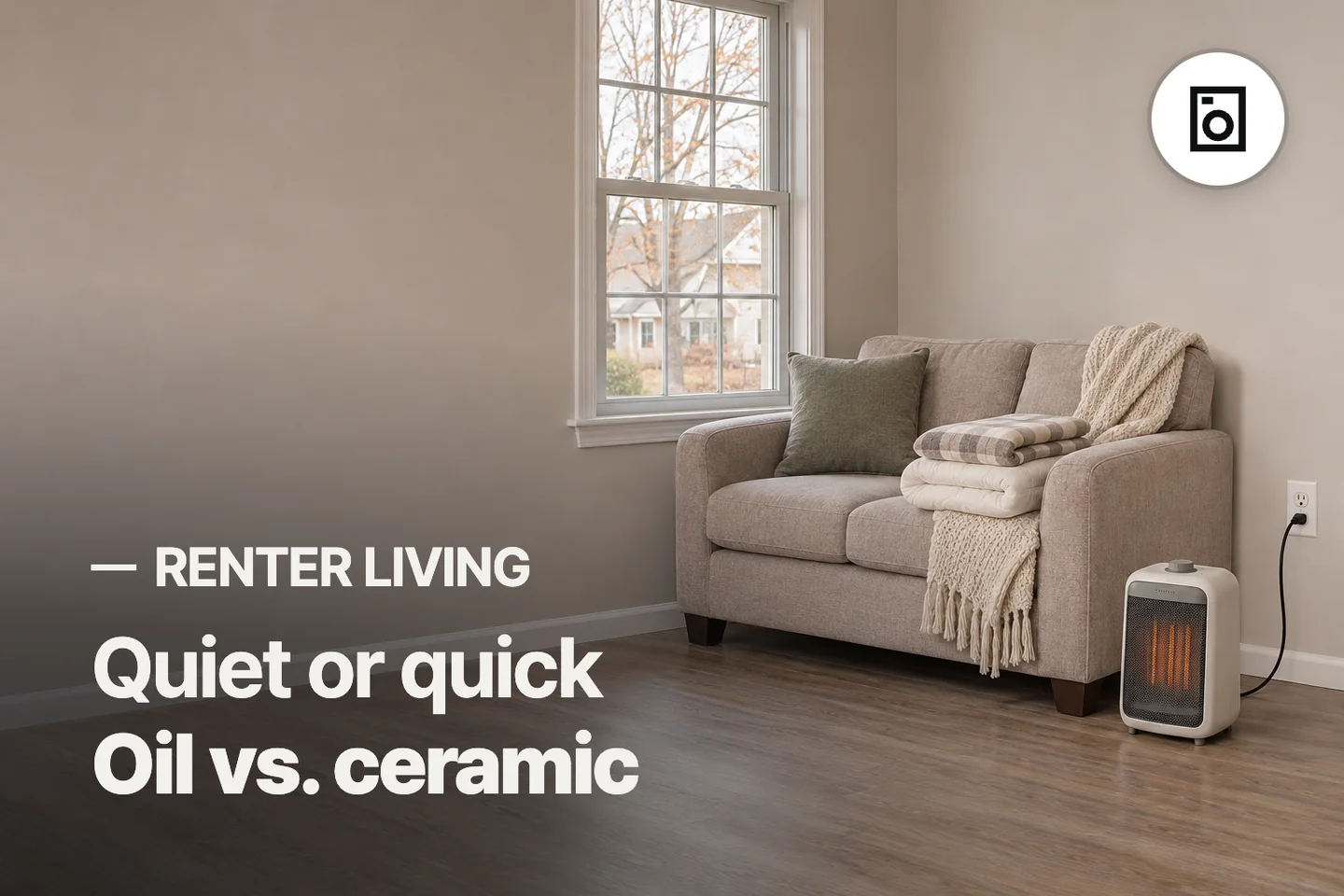
The holiday guest's suitcase is open across the only spare patch of floor, the sofa is about to become a bed, and the cold corner has somehow become everyone's favorite seat. In a small American rental, that is where an oil-filled radiator versus a ceramic space heater stops being an abstract shopping question.
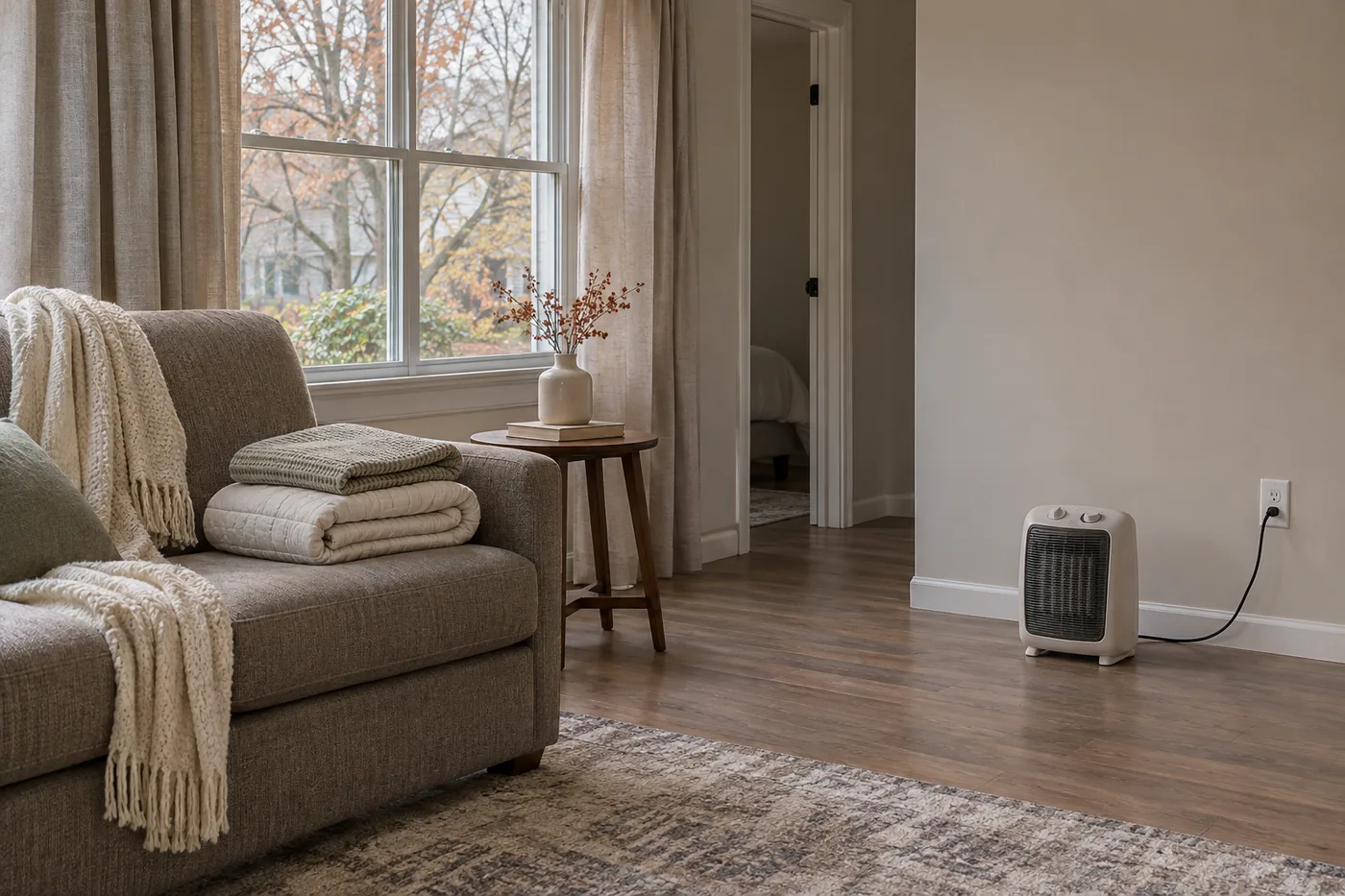 The suitcase can move; the route to the door needs to stay clear.
I'd choose the DREO Oil-filled Radiator 521 (OH521) for a settled evening of conversation without fan noise. But the DREO Ceramic Heater 316 makes more sense for quick warmth when guests arrive, provided the seating area has a suitable wall outlet and room to keep the heater clear.
How we chose
Compared DREO product specifications, FAQs and previously recorded store prices, alongside CPSC guidance and EIA electricity data. The three criteria were placement and circuit demand, sound and warm-up, and occupied-evening cost; blocked manufacturer pages retain their earlier verification dates.
Toneandroom picks
Best space heaters for a guest corner: Top 2
Guests settle into the same seats and dislike fan noise
See all specsDREO Oil-filled Radiator 521 (OH521)
$129.99 USD; DREO U.S. product-page price before applicable tax, checked 2026-11-16. Retained because the 2026-11-24 recheck was blocked.
The maker's silent specification and selectable power levels suit a settled, attended sitting area with time to warm up.
- Power
- 600/900/1500 W
- Footprint
- 18.5 × 7.68 in
- Weight
- 20.6 lb
- Sound
- Silent (maker)
- Quiet conversation matters
- The corner can stay clear
- Warm-up takes more time
- Maker warns of hot surfaces
Guests want prompt warmth after arriving and accept fan sound
See all specsDREO Ceramic Heater 316
$39.99 USD; DREO U.S. product-page price before applicable tax, checked 2026-11-16. Retained because the 2026-11-24 recheck was blocked.
Fan-driven delivery and the maker's quick-start claim suit an occupied arrival spot; the lower dated purchase price helps if silence is not essential.
- Power
- 1500 W max
- Coverage
- 200 sq ft
- Settings
- 41–95°F
- Sound
- 37 dB (maker)
- Prompt warmth is the priority
- Fan sound is acceptable
- High draws the same 1500 W
- Not a whole-apartment claim
Compare 2 products at a glance
The same questions for both heaters
| Guest-corner question | Top pickDREO Oil-filled Radiator 521 (OH521)$129.99 USD; DREO U.S. product-page price before applicable tax, checked 2026-11-16. Retained because the 2026-11-24 recheck was blocked. | DREO Ceramic Heater 316$39.99 USD; DREO U.S. product-page price before applicable tax, checked 2026-11-16. Retained because the 2026-11-24 recheck was blocked. |
|---|---|---|
| Sound | Silent, maker specification | 37 dB, maker comparison; conditions unspecified |
| Warm-up | Slower convection acknowledged by maker | Two-second heat advertising claim, not room warm-up |
| Maximum power | 1500 W | 1500 W |
| Shutoffs | Tip-over and overheat, maker listed | Tip-over and overheat, maker listed |
| Last readable maker price | $129.99 before tax; 2026-11-16 | $39.99 before tax; 2026-11-16 |
Swipe sideways to see the full table →
What we considered
Room to operate
Can clearance and a suitable wall outlet coexist?
CPSC's clearance guidance can rule out a location even when the casing fits. Both heaters share the same maximum wattage, so the circuit must be considered before housing size.
Guest routine
Is quiet conversation or prompt warmth more important?
DREO lists the radiator as silent and acknowledges slower warm-up. The ceramic model favors prompt delivery, with fan sound as the trade-off.
Evening cost
What are you paying upfront and during occupied hours?
The retained maker-store prices put the radiator above the ceramic model, but they are not refreshed offers. Running cost follows wattage, energized time and the local rate rather than the oil-filled label.
Part 1Give the heater space before giving it power
Start with where the duvet will land when the sofa opens. CPSC says portable heaters need at least three feet of clearance from bedding, curtains and other combustible material, so picture a yardstick between the heater and the nearest fabric, not merely a neat gap beside its casing.
CPSC also says to plug heaters directly into a wall outlet, never a power strip or extension cord. That means the beautifully empty corner across the room may be useless if the only way to power it is through the strip already feeding the television.
Both DREO models reach 1,500 W, so the smaller machine does not buy a smaller maximum electrical load. Using the 316's maker-listed 120 V supply, 1,500 ÷ 120 gives 12.5 amps: a substantial draw from a circuit that may also serve another room.
DREO's troubleshooting guidance identifies excessive circuit load as a possible reason for tripping. So if a breaker trips or the shared outlets are uncertain, the next conversation is with the landlord about the circuit, not about whether ceramic technology will somehow negotiate with it.
A smaller casing does not make the high setting a lighter circuit load.
Part 2Oil-filled suits the corner that stays put
The OH521's attraction is DREO's silent-operation specification, not a claim that it heats a room instantly. The maker acknowledges slower convection warm-up, so this is the option for guests who will settle into the same seats rather than warm their hands and leave.
DREO lists a footprint of 18.5 by 7.68 inches, a narrow strip of hardware before the much larger clearance area enters the picture. Its listed 20.6 lb weight also makes it a deliberate placement, not something to keep shifting whenever someone opens a suitcase.
The selectable 600, 900 and 1,500 W settings let you use less power when less heat is enough. But the lowest setting delivers less heat too; it is not the full-output setting at a secret discount.
DREO warns that the radiator's surfaces get hot. That warning matters more than the reassuring handle: the handle does not turn the entire cabinet into a cool surface, and this is no place to drape a guest's damp scarf.
Swipe sideways to see the full table →
| At the guest sitting area | DREO Oil-filled Radiator 521 (OH521) | DREO Ceramic Heater 316 |
|---|---|---|
| Noise | Maker lists silent operation | Maker comparison lists 37 dB; fan sound remains |
| Warm-up | Maker acknowledges slower convection | Maker advertises two-second heat, not a warm room in that time |
| Highest power | 1,500 W | 1,500 W |
| Protective shutoffs | Maker lists tip-over and overheat protection | Maker lists tip-over and overheat protection |
| Numerical coverage | Not listed by the maker on the reviewed page | 200 sq ft, a room-sized zone rather than the whole rental |
Those shutoffs are useful listed features, but CPSC's placement and sleeping guidance still applies to both. So neither model gets to sit closer to the sofa simply because its specification includes protection.
Part 3Ceramic suits arrivals, with a fan attached
The DREO Ceramic Heater 316 is the choice when guests come in cold and want warmth at their sitting spot promptly. DREO's two-second heat claim describes startup, so it should not become a promise that the whole room will feel comfortable before someone finishes taking off a coat.
DREO's comparison page lists 37 dB for the 316, but it does not supply measurement conditions there. That means fan sound belongs in the decision without pretending the figure predicts exactly what your guest will hear beside the chair.
The maker lists 200 sq ft of coverage, which points to a room-sized occupied zone, not an entire apartment. Its thermostat spans 41°F to 95°F, from a low setting to one far above ordinary sitting comfort; turning it to the top does not enlarge that coverage claim.
Does your guest want quiet conversation or warmth immediately after coming through the door? That distinction does more useful work than choosing by the size of the plastic housing, because the maximum wattage is the same.
The last readable DREO U.S. product-page prices were $129.99 for the OH521 and $39.99 for the 316, before applicable tax, checked November 16, 2026. So the radiator carried a $90 upfront premium, more than the ceramic model's entire listed price; the November 24 recheck was blocked, and these are dated references rather than current offers.
Amazon.com checkout prices were not verified for this rewrite. So the maker-store figures should not be read as Amazon quotes; Price varies; check Amazon.
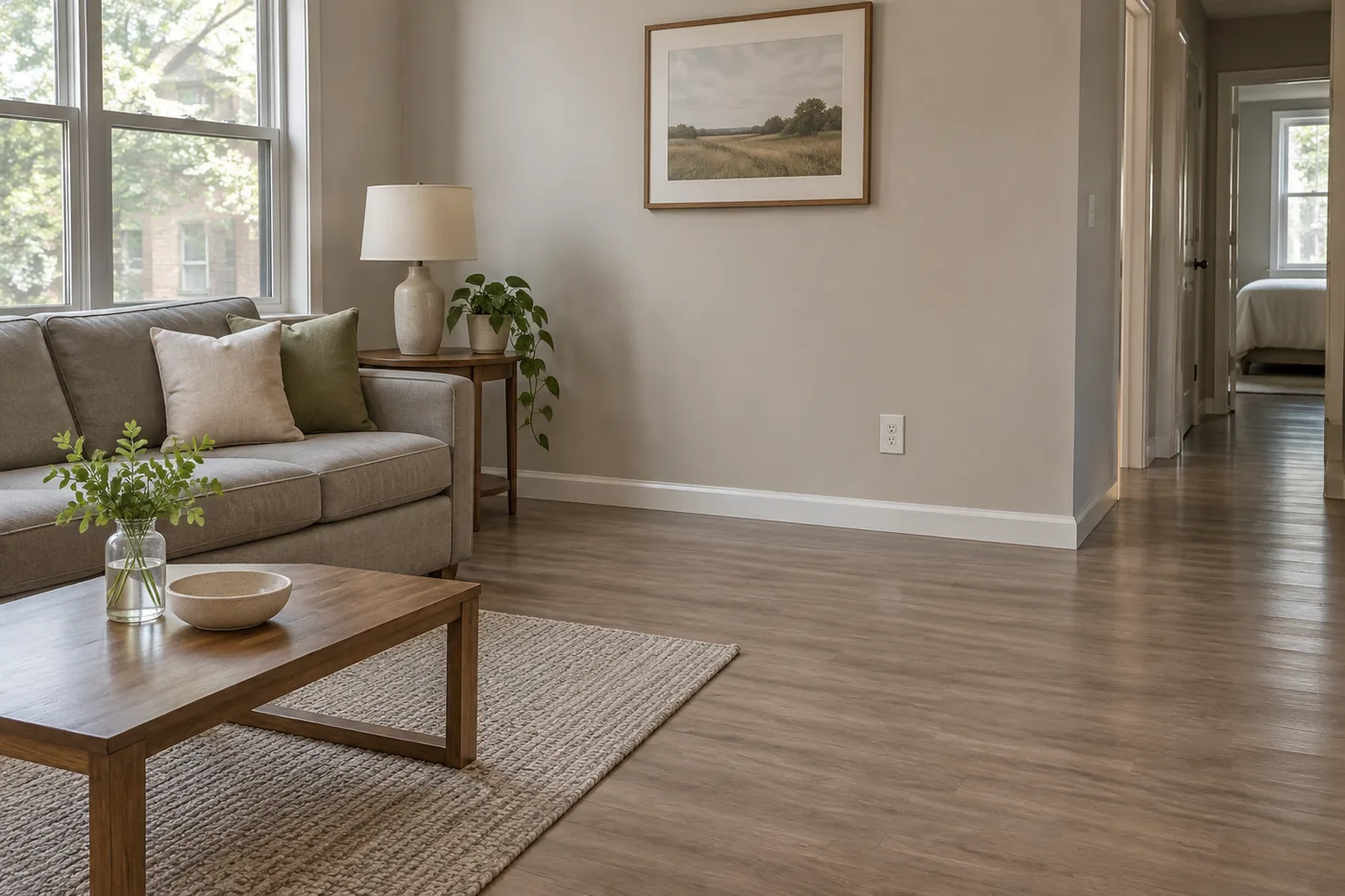 An available outlet and an open floor area need to exist in the same corner.
Part 4Price the occupied evening, not the heating label
Oil does not make electricity free after switch-off. The radiator releases warmth it stored earlier, so equal watts for equal energized time mean equal electricity consumption, even though the delivery feels different.
EIA lists the preliminary 2025 U.S. residential average at 17.30 cents per kWh, rechecked November 24, 2026. That is a historical national benchmark, not your utility's rate, so substitute the variable electricity charges from your own bill before budgeting a regular routine.
For an illustrative four-hour evening continuously at maximum power, the arithmetic is 1.5 kW × 4 hours × $0.173 = $1.038, or about $1.04. That buys an evening's energized time on either model, not a guaranteed room temperature or a charge that applies whenever the plug is connected.
At the radiator's 600 W setting, the same example is 0.6 × 4 × $0.173 = $0.4152, about $0.42 for the evening. But that lower bill comes with lower output, while thermostat cycling can reduce actual energized time on either heater.
CPSC says never to leave portable heaters on while sleeping. So when conversation ends and the sofa becomes a bed, switch the portable heater off; adequate fixed heating and a discussion with the landlord are the overnight route, not a timer standing guard.
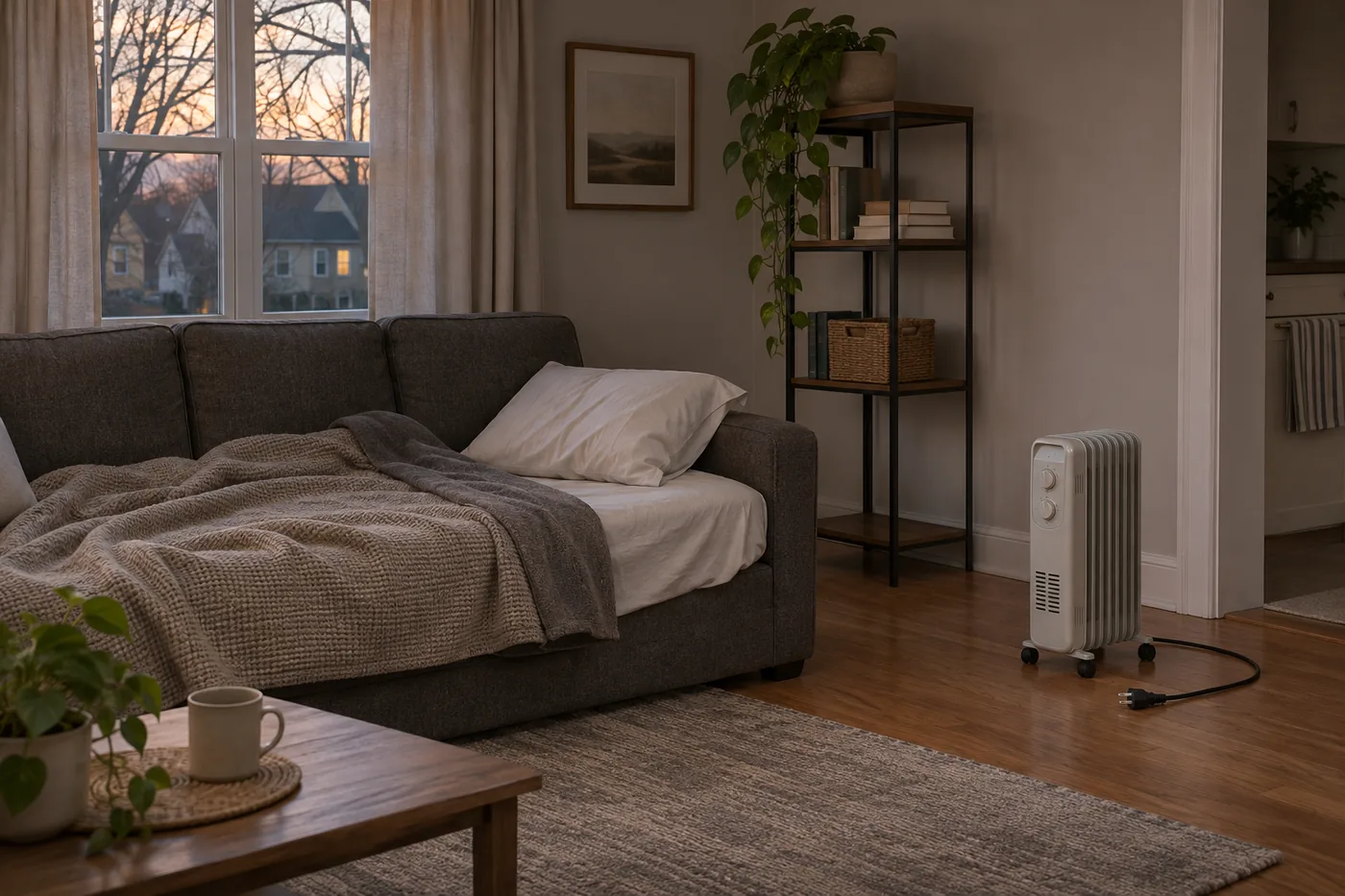 The heater is off before the sitting corner becomes sleeping space.
Sources and selection: DREO specifications, FAQs and dated store prices were compared for placement and circuit demand, sound and warm-up, and occupied-time cost. CPSC supplies safety guidance; EIA supplies the electricity benchmark. Commission terms did not determine the comparison. Last checked November 24, 2026; blocked DREO and CPSC pages retain their November 16 source records. No refreshed maker price or apartment performance measurement is claimed.
In one sentence
Choose the radiator for a quiet, settled sitting area or the ceramic model for quick-start warmth while guests are awake.
DREO Oil-filled Radiator 521 (OH521)
DREO Ceramic Heater 316
Frequently asked questions
Does an oil-filled radiator use less electricity than a ceramic heater?
Not at equal wattage for equal energized time. Lower power settings or less energized time can reduce consumption, but oil storage alone does not establish a lower bill.
How much does an evening with a 1500 W heater cost?
For an illustrative four continuous energized hours, 1.5 kW × 4 × EIA's historical $0.173 per kWh benchmark is $1.038, about $1.04. Use your local marginal rate; thermostat cycling changes actual consumption.
Can either portable heater stay on while a guest sleeps?
CPSC says never to leave portable heaters on while sleeping. A timer, tip-over protection or overheat shutoff does not replace that guidance.
Will the smaller ceramic heater stop a breaker from tripping?
Not by being smaller: both models reach 1500 W. DREO identifies excessive circuit load as a possible cause of tripping, so have the landlord assess the shared circuit rather than changing heating styles as a workaround.
Sources
- DREO Oil-filled Radiator 521 (OH521) · 2026-11-16
Retained original source record: $129.99 USD before tax; 600/900/1500 W; 18.5 × 7.68 in footprint; 20.6 lb; silent specification; tip-over and overheat protection; slower convection and hot-surface warnings. Opened again 2026-11-24 but response was local_rate_limited, so no new verification date is claimed.
- DREO Ceramic Heater 316 · 2026-11-16
Retained original source record: $39.99 USD before tax; 1500 W; 120 V; 200 sq ft; 41–95°F settings; two-second heat claim; tip-over and overheat protection. Calculated load: 1500 W / 120 V = 12.5 A. Opened again 2026-11-24 but response was local_rate_limited.
- DREO portable ceramic heater comparison · 2026-11-16
Retained original source record: 316 listed at 37 dB, without measurement conditions. Product-page price is used rather than the differing comparison-table price. Opened again 2026-11-24 but response was local_rate_limited.
- CPSC portable-heater safety guidance · 2026-11-16
Retained original source record: at least three feet from combustible materials; direct wall-outlet connection, no power strips or extension cords; never leave portable heaters on while sleeping. Opened again 2026-11-24 but access was denied.
- EIA electricity prices and factors affecting prices · 2026-11-24
Readable page lists preliminary 2025 U.S. residential average of 17.30 cents/kWh. Illustrative four-hour continuous calculations: 1.5 kW × 4 × $0.173 = $1.038, about $1.04; 0.6 kW × 4 × $0.173 = $0.4152, about $0.42. Four hours is an example duration, not measured runtime; national historical data is not a local tariff.