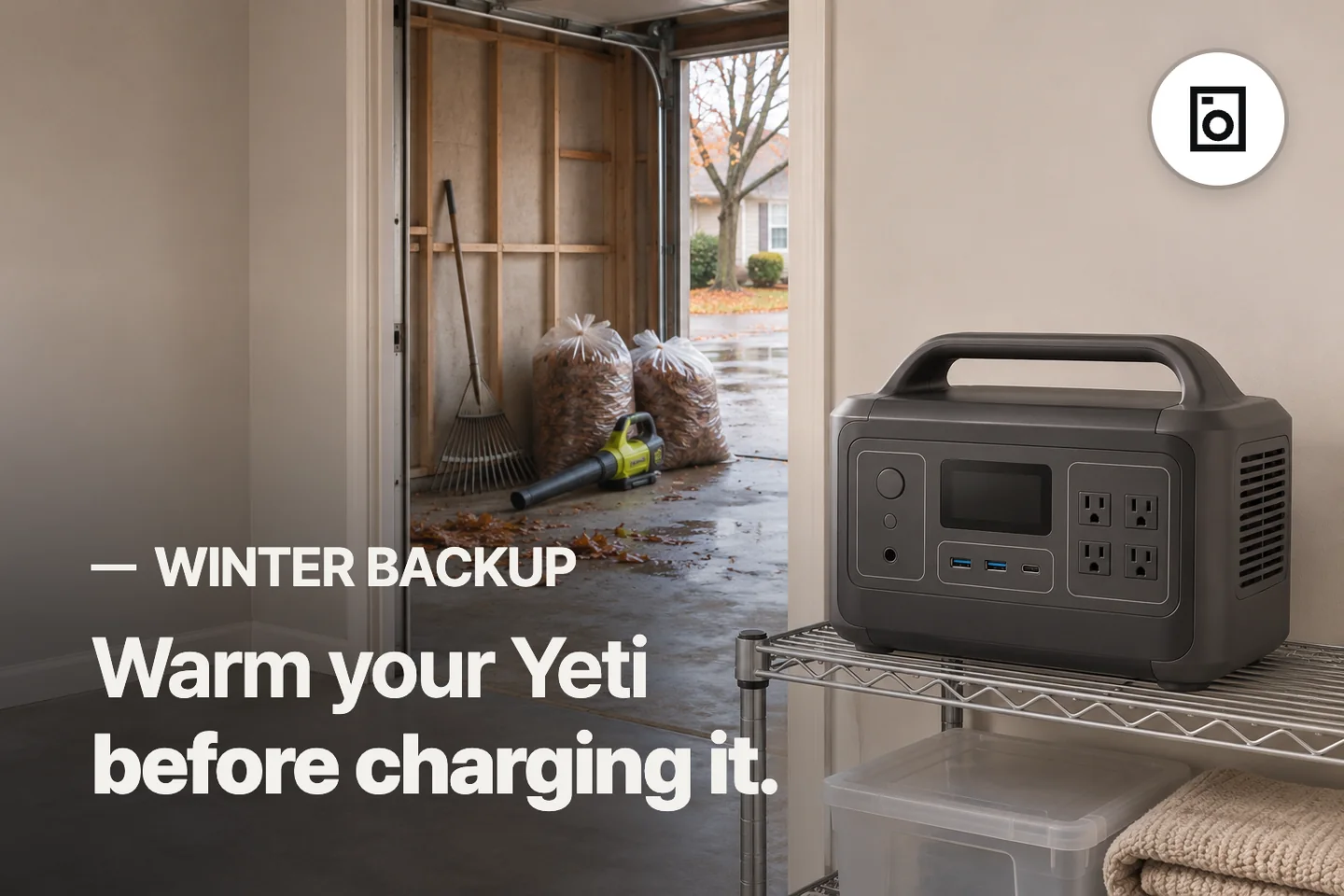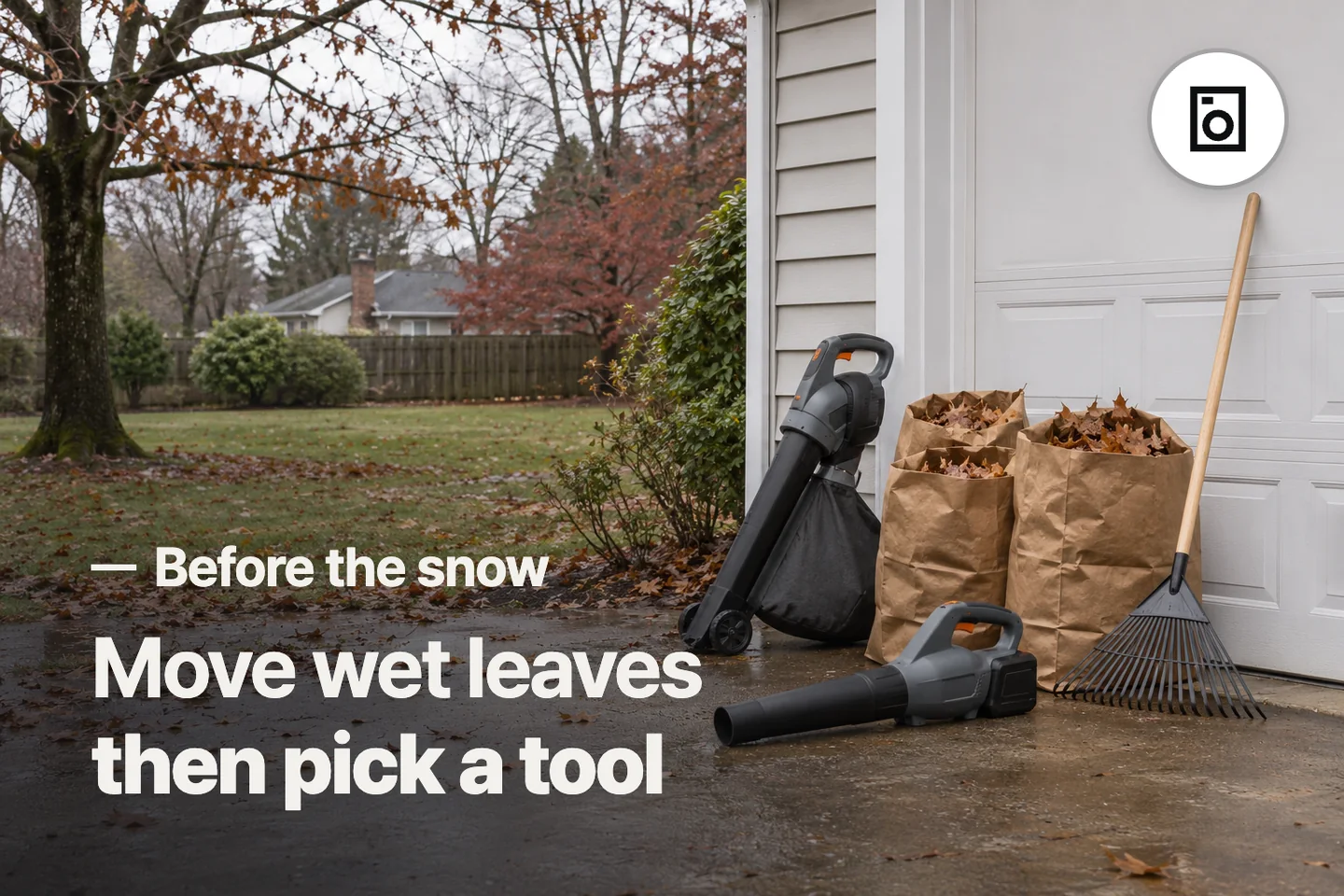
At dawn, the garage door lifts onto a ridge of soggy leaves, leaving the car trapped behind yesterday’s unfinished cleanup. For a homeowner facing a quarter-acre yard before snow, the fix starts with a rake, not a stronger leaf vacuum mulcher.
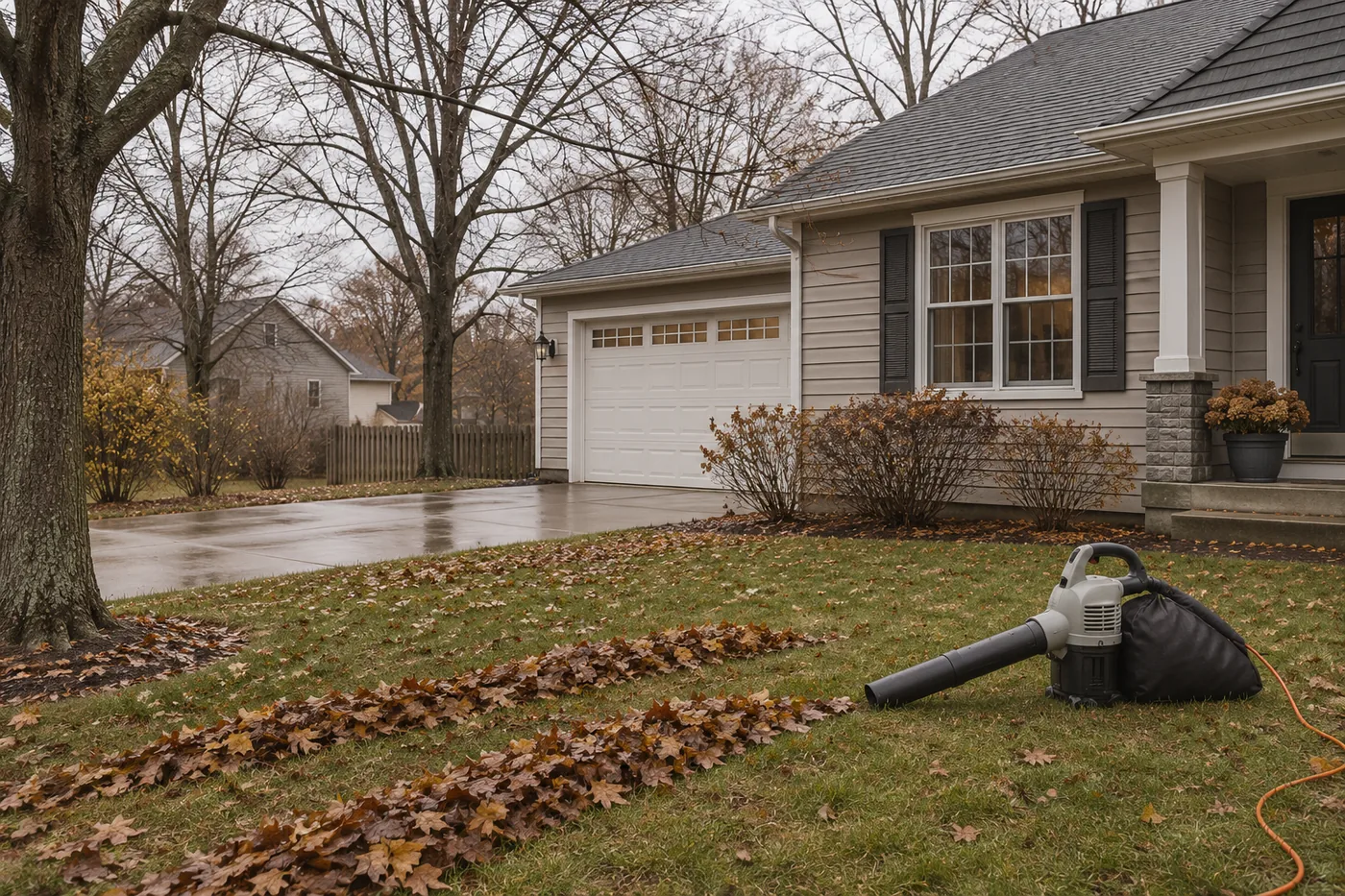 The garage entrance needs a clear route before the rest of the lawn needs a tidy finish.
I’d choose the Toro UltraPlus 340 CFM Corded Electric Leaf Blower/Vac, model 51621 for the later, dry-leaf stage because Toro publishes separate blowing and vacuum airflow figures. But neither tool here is a shortcut through a soaked pile: Toro’s manual expressly limits vacuuming to dry leaves and soft items.
That changes the job. Break the wet mat apart manually, wait for dry leaves and dry working surfaces, then make reachable rows before switching to suction.
How we chose
Toro’s product page and operator manual were checked; BLACK+DECKER figures retain their earlier source date after a failed refresh. The three criteria were permitted leaf condition, practical cord access, and controlled feeding without forcing the intake.
Toneandroom picks
Best leaf vacuum mulcher for dry-yard cleanup: Top 2
Dry leaves beside a clear cord route, after wet mats have been separated manually
Toro UltraPlus 340 CFM Corded Electric Leaf Blower/Vac, model 51621
$119.99 USD, Toro US product-page price before checkout adjustments; checked November 24, 2026
The current operator manual gives an explicit dry-leaf limit, cord table, and blockage-clearing sequence, making the work boundaries clear.
- Blow airflow
- 340 CFM
- Vac airflow
- 405 CFM
- Weight
- 13 lb
- Speed control
- Variable
- You can wait for dry leaves and surfaces
- Your rows are reachable by a suitable cord
- Not for rain, wet surfaces, or wet pickup
- Remove hard debris before vacuuming
A second corded option for comparison after checking its current instructions and seller price
BLACK+DECKER 12 Amp High Performance Blower/Vacuum/Mulcher BV6600
Not listed by the maker on the page checked November 7, 2026; refresh unavailable November 24, 2026
Its previously checked maker listing describes a metal-fan blower, vacuum, and mulcher; it offers an alternative, not evidence that wet leaves can be vacuumed.
- Power
- 12 amp
- Air speed
- Up to 250 mph
- Fan
- Metal
- You want another corded combination tool
- You prefer a maker-listed metal fan
- Specifications retain the earlier check date
- Confirm current price and manual first
What we considered
Leaf condition
Are the leaves and working surfaces dry?
Toro limits vacuum pickup to dry leaves and soft material. That makes drying or manual removal the first decision, ahead of airflow comparisons.
Cord access
Can the cord reach without crossing wet ground?
Toro prohibits routing the cord through wet grass or standing water. Choose the work area around a compliant route, rather than assuming the tool covers an entire property.
Feed control
Can the intake collect loose leaves without being forced?
Toro warns that pushing the vacuum tube into a pile can damage the impeller. Accessible rows matter more here than the largest advertised reduction claim.
Part 1Find out what is stopping the leaves
A flattened layer behaves differently from loose leaves. Because its pieces cling together, pushing the vacuum tube deeper only feeds a larger clump toward the opening; Toro warns that forcing the tube into debris can clog and damage the impeller.
Start at the garage threshold and lift the mat with a rake. That lets you separate leaves from gravel, fallen twigs, and other hard material without asking a motor to sort them. Keep the walking route open as you work outward.
Is the ground still wet beneath the pile? Then the corded stage waits, even if the top leaves look better. Toro’s instructions prohibit use on wet surfaces or in rain and say not to run the extension cord through wet grass or standing water.
Spread the lifted leaves into shallow, reachable patches rather than one towering heap. That gives you something to inspect when conditions improve, while leaving the driveway available for its actual job.
 Separate the wet mat manually; leave the electric tools stored until conditions are dry.
Part 2Set the cord route before making rows
Once both the leaves and working surfaces are dry, decide where the cord can run without crossing your leaf rows. Because the same tool has to return to each row in vacuum mode, a pile beyond practical cord reach is a pile in the wrong place.
Toro specifies an outdoor-rated, polarized, UL-listed extension cord and a firmly seated connection. Its manual calls for at least 14 AWG at 100 ft; that is a cord specification, not permission to reach a distant corner across damp grass. Match the manual to your machine and cord length.
Now use blower mode to gather loose leaves into narrow rows beside that clear route. This is easier to approach from an edge than a mound backed against a fence, and it leaves room to carry the bag away. Keep the rows on your property and out of the street and drains.
A reachable row is useful; a larger pile beyond the cord route just creates another moving job.
Part 3Pick a tool for the dry stage
Toro lists 340 CFM blowing and 405 CFM vacuum airflow for the 51621. Because those figures describe different modes, they help explain its gather-then-collect role; neither tells you how long your entire yard will take. Its variable speed control lets the setting follow the task rather than treating every patch alike.
Toro’s US page shows $119.99 before any checkout adjustments, checked November 24, 2026. That is a one-time equipment expense, not a monthly household bill; electricity cost needs your runtime and utility rate, neither of which the page supplies. Buying it does not remove the need to rake wet material first.
The BLACK+DECKER 12 Amp High Performance Blower/Vacuum/Mulcher BV6600 is the alternative if you are comparing another corded blower, vacuum, and mulcher with a metal fan. Its previously checked maker listing gives 12 amp power, up to 250 mph blowing speed, and a claim of reducing 16 bags to one. Because that page could not be reopened, these remain November 7, 2026 figures, not newly confirmed specifications.
That bag claim does not answer the wet-leaf problem. Nor does air speed alone show that BLACK+DECKER moves more material than Toro: mph and CFM describe different things. Compare the working setup and instructions, rather than picking whichever number looks bigger.
The BV6600’s earlier maker listing supplied no price, and a fresh price could not be confirmed. So check the seller’s total before comparing purchase costs, and read the BV6600 manual before using it; Toro’s cord table and operating instructions do not transfer automatically to another model.
Part 4Feed the edge, then finish the route
For the Toro, assemble the vacuum tube and collection bag as its manual directs, with the machine unplugged. Because Toro warns against sharp or hard debris, remove stones, sticks, acorns, and pine cones from the leaf row before collecting it. Wear the eye protection, long pants, and substantial footwear Toro specifies, and keep bystanders and pets away.
Approach the loose edge without burying the intake. That gives the machine a small amount to collect at a time, rather than a compressed plug; Toro specifically warns against forcing material into the tube or holding it upright while force-feeding debris.
If suction drops, or the machine vibrates or sounds abnormal, stop. Toro’s clearing sequence is to switch off, unplug, and wait for all moving parts to stop before removing the vacuum tube and clearing the impeller. Repeated blockage means revisiting the material and feed, not pushing harder.
 Keep the collection route open so each emptied bag has somewhere to go.
Empty the Toro bag with power off and the cord unplugged, following its manual. Because Toro also warns that worn bag fabric can let objects escape, inspect it rather than treating the bag as permanent equipment. Leave no debris stored inside it.
Finish at the garage entrance, steps, walkway, and downspout outlets. That puts access ahead of a spotless lawn; if another patch remains wet, rake and collect it manually or leave the vacuum stage for a dry window. An unfinished lawn is not a reason to override the manual.
Stop the powered stage when its operating conditions stop being met, not when the whole yard looks finished.
Sources and selection: Toro’s product page and operator manual were reopened for specifications, price, dry-leaf limits, cord requirements, and clearing instructions. BLACK+DECKER specifications and missing-price status retain their November 7, 2026 check because its page could not be reopened. Toro price and manual last checked November 24, 2026; seller totals and availability may change.
In one sentence
Rake apart wet mats, wait for dry leaves and surfaces, then collect reachable rows in small amounts.
Toro UltraPlus 340 CFM Corded Electric Leaf Blower/Vac, model 51621
BLACK+DECKER 12 Amp High Performance Blower/Vacuum/Mulcher BV6600
Check price on AmazonFrequently asked questions
Can a leaf vacuum mulcher pick up wet leaves?
Toro’s 51621 manual says to vacuum only dry leaves and soft items, and prohibits operation on wet surfaces or in rain. Rake wet material manually, then wait for the leaves and work area to dry before using that machine.
Why does the leaf vacuum keep clogging?
Toro warns that forcing the intake into debris can clog and damage the impeller. Stop, unplug, wait for moving parts to stop, and follow the manual’s clearing sequence; then check for damp clumps, hard debris, or overly aggressive feeding.
Does higher mph mean a better leaf blower vacuum?
Air speed in mph and air volume in CFM are different measurements, so the numbers cannot be ranked directly against each other. Neither manufacturer listing establishes whole-yard cleanup time or wet-leaf performance.
What extension cord does the Toro 51621 need?
Toro specifies an outdoor-rated, polarized, UL-listed extension cord and gives minimum wire gauges by length; its table calls for 14 AWG at 100 ft. Consult the complete table for your length, and do not route the cord through wet grass or standing water.
Sources
- Toro UltraPlus 340 CFM Corded Electric Leaf Blower/Vac, model 51621 · 2026-11-24
Reopened page lists $119.99 USD, 340 CFM blow airflow, 405 CFM vacuum airflow, 13 lb weight, variable speed, and up to 97% reduction with a material-condition disclaimer. Reduction is not used as a wet-leaf promise.
- BLACK+DECKER 12 Amp High Performance Blower/Vacuum/Mulcher BV6600 · 2026-11-07
Previously opened source in the original article lists 12 amp, up to 250 mph, a metal fan, and a 16-to-1 bag claim, with no maker price. Refresh on November 24, 2026 returned local_rate_limited; the earlier values and date are retained.
- Toro UltraPlus 51621 operator manual · 2026-11-24
Manual identifies model 51621 and specifies minimum 14 AWG at 100 ft. It limits pickup to dry leaves and soft items, prohibits wet-surface or rain use and wet-grass cord routing, and requires unplugging and waiting for moving parts before clearing.