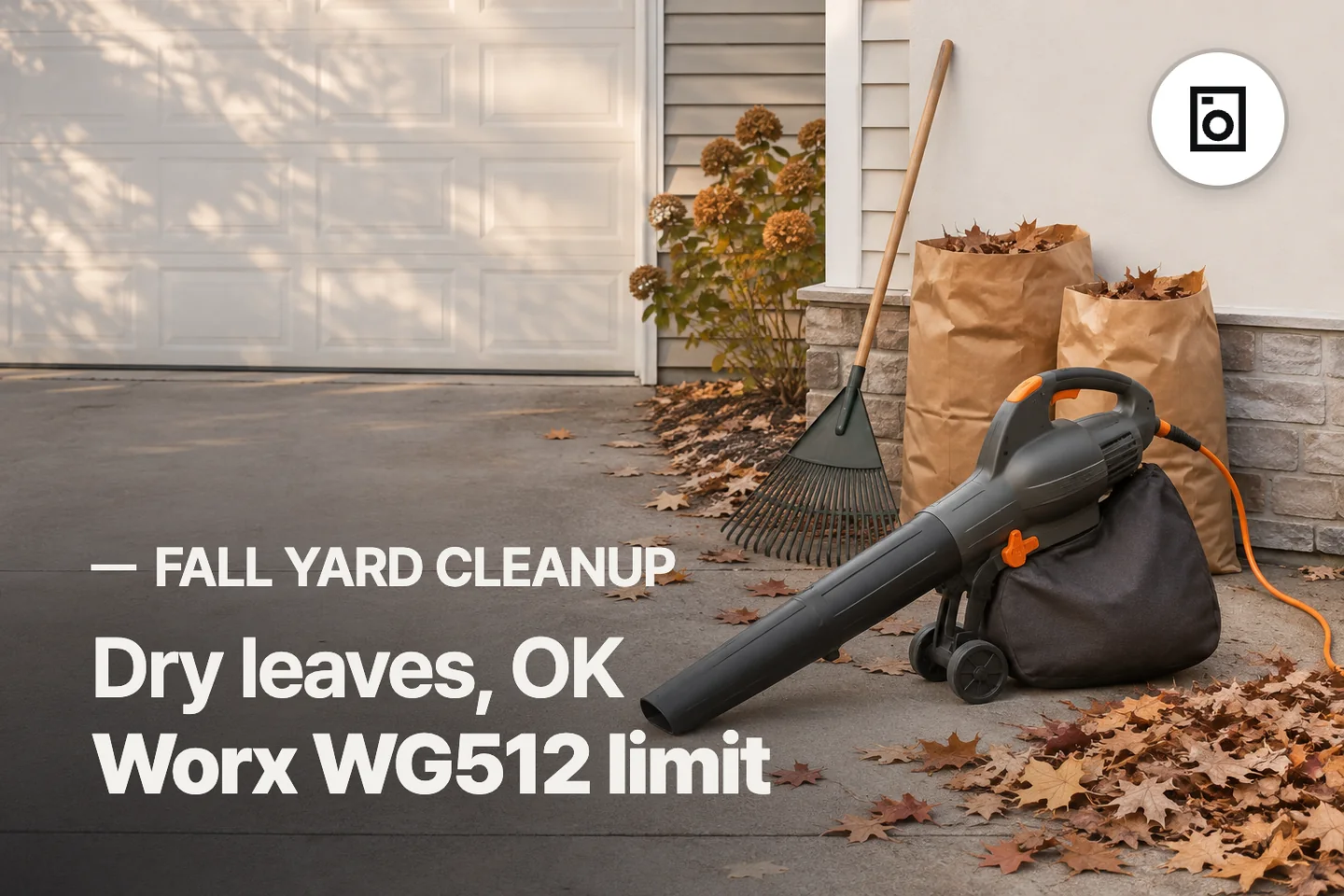
A 1.2-bushel bag puts the last fall cleanup into perspective. For a homeowner looking at dry maple leaves along a suburban driveway and a soaked lawn beyond it, that is the Worx WG512's published collection capacity—not a promise to finish the property without stopping.
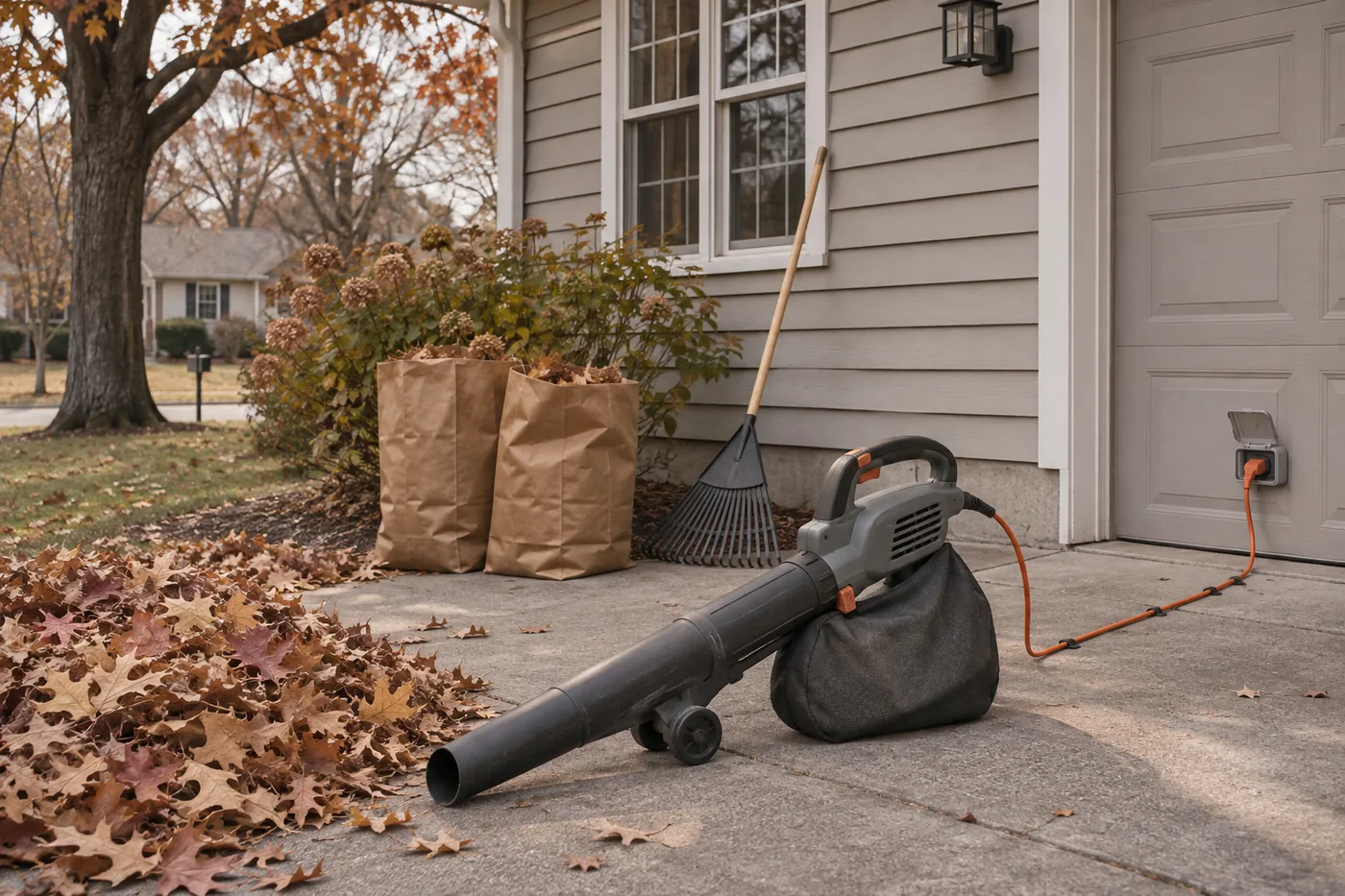 Driveway edges and a reachable outlet make a more useful starting point than the size of the lot.
I'd choose the Worx TRIVAC WG512 for the dry driveway leaves, provided the cord route works. But I would leave the wet lawn to a different cleanup plan, because Worx explicitly rules out vacuuming wet leaves.
How we chose
I checked Worx's US product specifications, FAQ, catalog, and embedded price data, alongside EPA composting guidance. The assessment uses three practical criteria: outlet reach with a suitable cord, collection-bag handling, and the manufacturer's dry-leaf restrictions.
Toneandroom picks
Best leaf blower vacuum for dry driveway leaves: Top 1
Dry leaves around driveway edges and reachable beds with a suitable outdoor cord and a nearby emptying spot
Worx TRIVAC WG512
US Worx embedded WG512 item data: $129.99 offer and display price, checked November 24, 2026. Visible fields were placeholders; checkout total, shipping, tax, and any extension cord are unconfirmed.
I'd choose it for reachable dry-leaf collection because it combines blowing, vacuuming, and mulching without a battery purchase, provided the cord route and bag carrying are manageable.
- Power
- 12 A corded
- Airflow
- 600 CFM
- Bag
- 1.2 bushels
- Weight
- 8.6 lb
- Dry leaves near an outlet
- No battery platform needed
- No wet-leaf vacuuming
- Cord and bag need handling
What we considered
Outlet reach
Can a suitable outdoor cord follow the actual pickup route?
Worx identifies the WG512 as a corded tool and specifies wire gauges by extension length. I favor accessible driveway edges and beds over a whole-yard plan that depends on awkward routing.
Bag handling
Will carrying and emptying the bag fit your cleanup routine?
The published collection capacity is 1.2 bushels, while the listed machine weight is 8.6 lb. I treat emptying and carrying collected material as part of the purchase decision rather than assuming shredding removes those tasks.
Dry conditions
Are both the leaves and the working area dry?
Worx rejects wet-leaf vacuuming and advises against operation near wet or damp areas. That restriction excludes a soaked-lawn cleanup even if the mulching feature otherwise sounds convenient.
Part 1Start at the outlet, not the back fence
The WG512 is a corded 12-amp machine, so the buying question starts with where you can plug it in. That means tracing the actual route past the garage, planting beds, and gates rather than measuring straight across the lawn.
Worx calls for an outdoor-rated extension cord and gives length-specific wire gauges in its FAQ. For the lengths below, its guidance is:
Swipe sideways to see the full table →
| Cord length | Worx's listed wire gauge |
|---|---|
| 50 ft | 16 gauge |
| 100 ft | 14 gauge |
| 150 ft | 12 gauge |
That longer cord may reach the far bed, but it also has to travel around whatever stands between the outlet and the leaves. So a cord you already own is useful only if it matches the manufacturer's requirements for the job; length alone is not enough.
The product page needs some sorting, too. Its descriptive copy mentions 40V, but the specifications and battery FAQ identify this model as corded, with no battery or charger required. The same page disagrees on airspeed, so I would ask Worx to clarify that figure rather than use it to justify the purchase.
What is consistent is the combination of blowing, vacuuming, and mulching in the WG512. That makes it appealing when loose leaves need gathering and then collecting in the same reachable area, rather than simply moving to a distant curb.
Part 2The bag is part of the workload
Worx lists the machine at 8.6 lb, with a collection bag rated at 1.2 bushels. But that machine-weight figure does not tell you what the setup weighs after it has collected leaves, which matters if carrying and emptying are already the tiresome part of fall cleanup.
The bag is included, and Worx describes a quick-release attachment. So there is no separate collection bag to add to the initial shopping list, but there is still somewhere to put each load when it comes off the tool.
Before buying, decide where the contents will go. If your disposal bags or compost area sit across the property, the walk back and forth remains part of the job even though the machine handles shredding.
The headline mulching claim is 16:1, which Worx describes as reducing sixteen bags of leaves to one. That is a manufacturer's reduction claim, not a reliable forecast of your curbside bag count; the page does not explain results for your particular mix of leaves and moisture.
Would fewer loose leaves to bag solve your problem, or is hauling any bag the problem? That distinction matters more than the biggest reduction number, because this tool still leaves you carrying the material it collects.
For a compost pile, EPA identifies dry leaves as carbon-rich browns and advises at least two to three times the volume of browns to greens. So shredded leaves can become an ingredient, but they are not finished compost just because they have passed through an impeller.
Plan the emptying spot along with the pickup route; the collection bag still needs a destination.
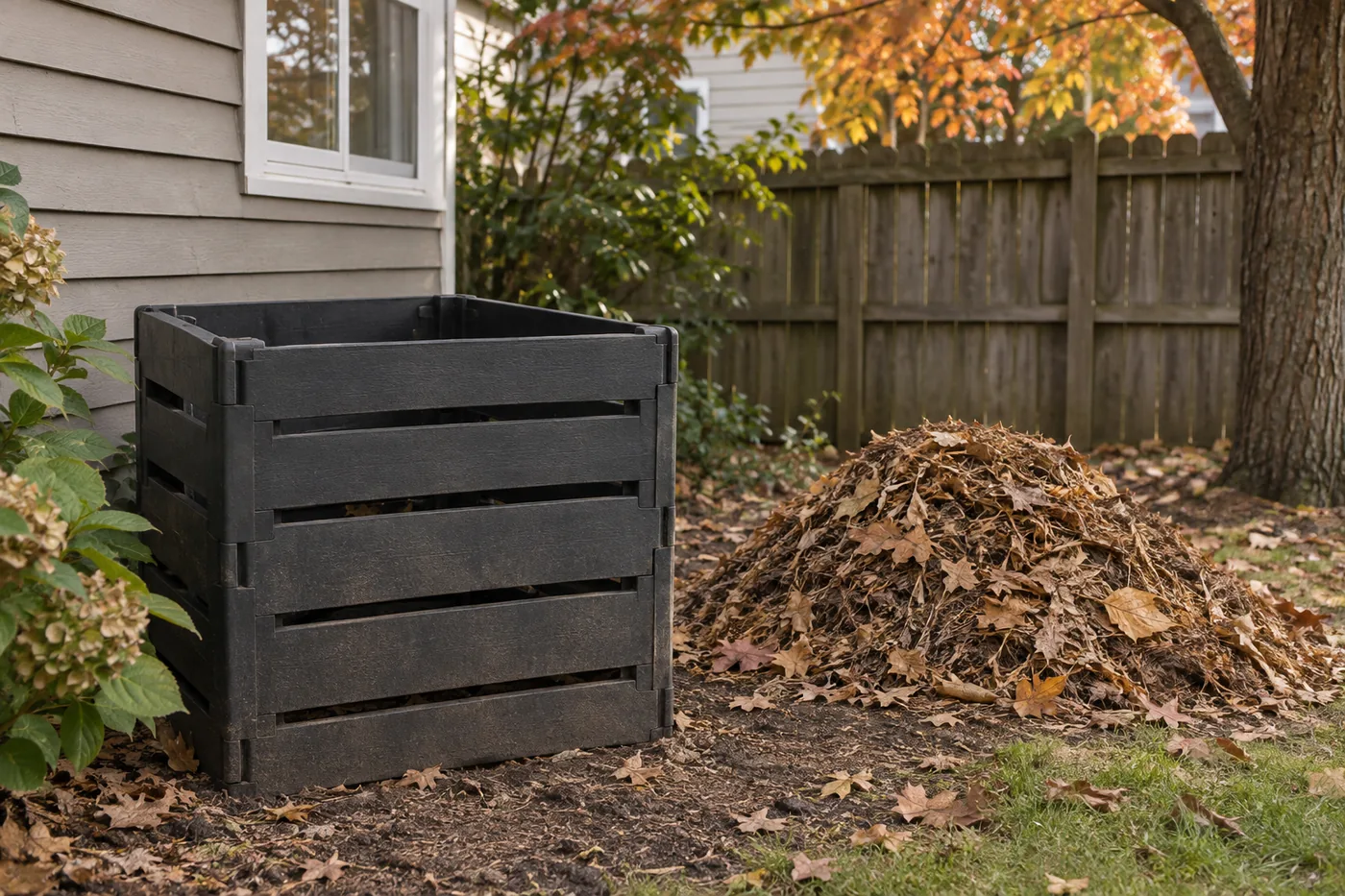 A nearby destination for collected leaves keeps bag handling from turning into repeated trips across the yard.
Part 3Wet leaves change the answer
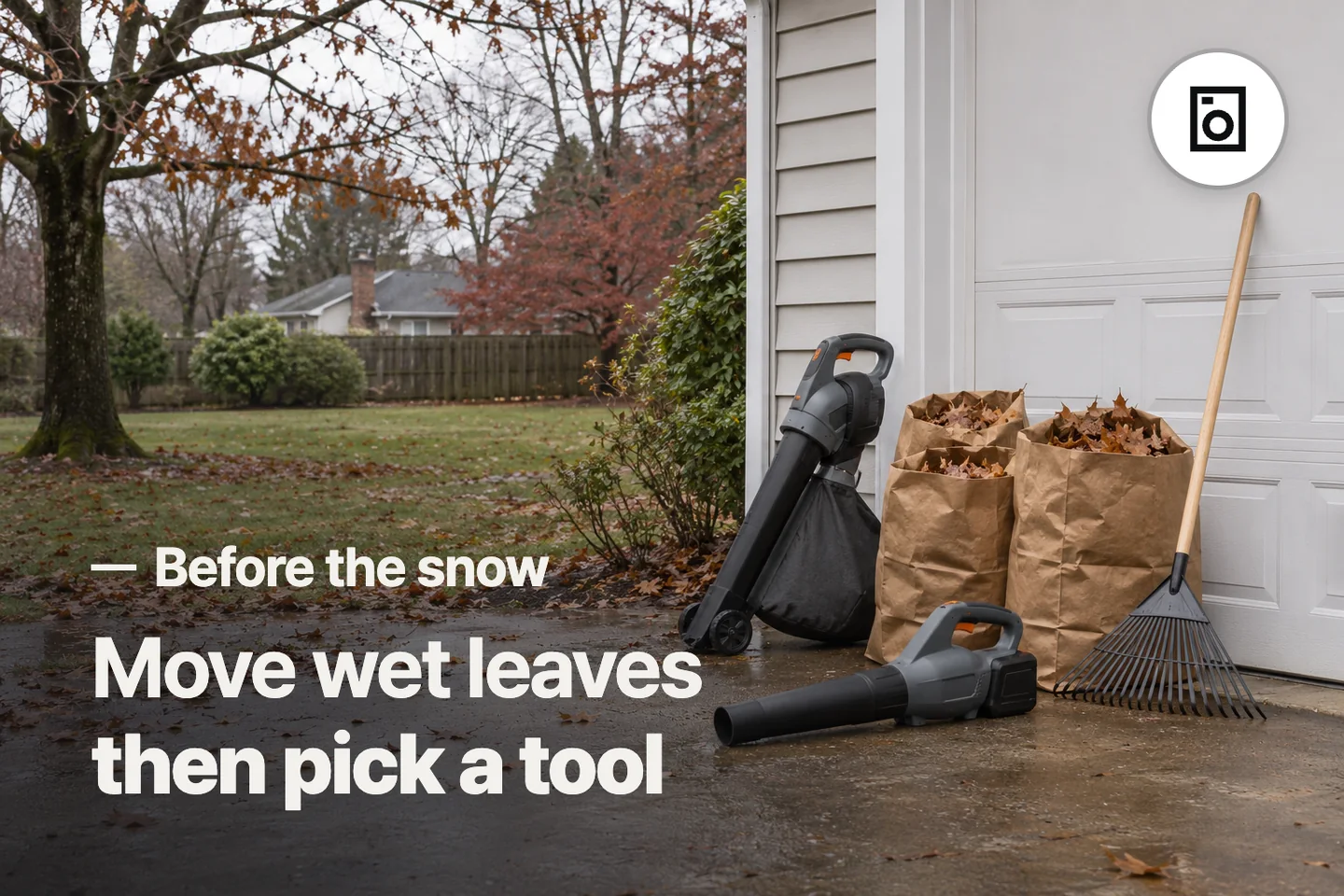
Worx's answer to vacuuming wet leaves is no: it says they can stick and cause clogging. The manufacturer also advises against using this electric tool near wet or damp areas, so dry leaves and a dry working area are conditions for using it, not optional improvements.
That rules out a familiar late-fall shortcut: taking the vacuum straight to the flattened leaves left after rain. Instead, a rake can handle gathering that wet material while the WG512 stays put away until the leaves and work area are dry.
On a dry day, I would separate gathering from detailed collection. First decide where the loose leaves will be brought together; then decide whether vacuuming that reachable pile actually saves handling compared with bagging it another way.
That sequence also exposes a poor fit before money changes hands. If most of your remaining work is scattered across a lawn beyond practical cord reach, the vacuum feature does not remove the need to get those leaves to an accessible spot.
Worx lists 600 CFM of airflow, meaning cubic feet per minute. But that air-volume specification does not tell you how quickly the vacuum will pick up a particular pile, so I would not translate it into a promised cleanup time.
For beds and driveway edges, the appeal is more modest and more believable: blowing, collecting, and reducing dry leaves without buying into a battery platform. That is enough of a reason when the route and bag handling suit you; it is not a reason to treat the machine as a wet-debris collector.
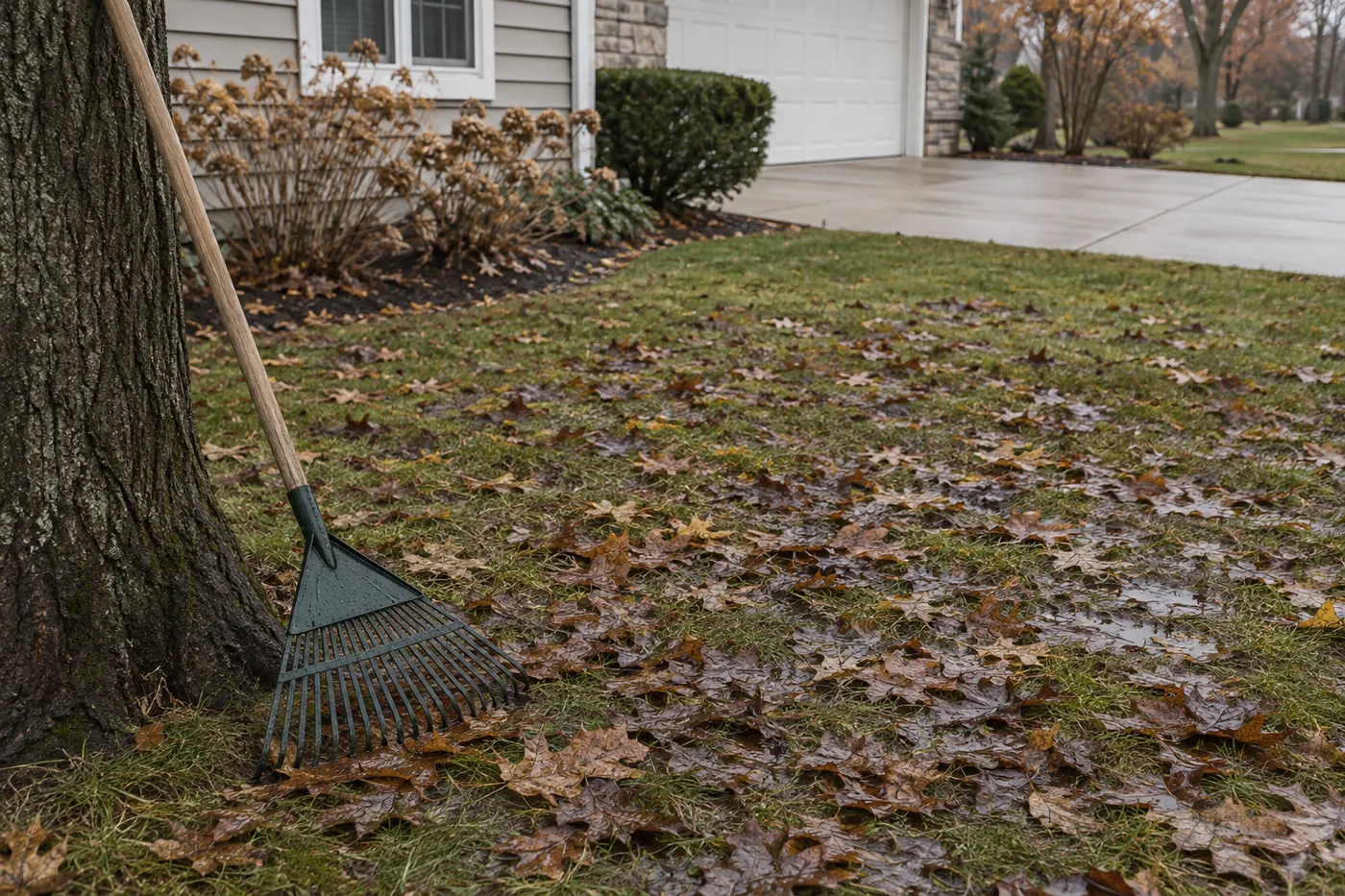 A wet lawn calls for a different task, not a more ambitious use of the vacuum.
Part 4Check the price before adding a cord
On November 24, 2026, Worx's US page data listed both the WG512 offer and display price at $129.99. But the visible price fields were placeholders, so this is an embedded page-data price—not a confirmed checkout total, and not a price that includes any extension cord you may need.
That makes the useful comparison the tool plus a suitable cord, rather than the tool against a battery kit's sticker price. Before paying, confirm the current offer, shipping, and tax, then check whether your existing outdoor cord meets Worx's length-and-gauge guidance.
Sources and selection: Worx's US WG512 product page and leaf-blower catalog, plus EPA's home-composting guidance. The assessment weighs outlet reach, bag handling, and dry-leaf limits; it does not estimate clearing time. No purchase link is included here. Specifications and the embedded US price were checked November 24, 2026.
Buy for the dry leaves within reach; the wet lawn is a separate job.
In one sentence
The Worx WG512 fits dry-leaf collection near an outlet, with cord routing and bag handling built into the job.
Worx TRIVAC WG512
Check price on AmazonFrequently asked questions
Can the Worx WG512 vacuum wet leaves?
No. Worx says wet leaves can stick and cause clogging, and advises against using this electric tool near wet or damp areas. Wait for dry leaves and a dry working area before using it.
What extension cord does the WG512 require?
Worx calls for an outdoor-rated extension cord. Its FAQ lists 16 gauge at 50 ft, 14 gauge at 100 ft, and 12 gauge at 150 ft; match the manufacturer's requirements to the actual route and length.
Is the Worx WG512 cordless?
No. Its specifications and battery FAQ identify a corded 12-amp machine that needs an extension cord connected to an outlet. The page's 40V descriptive copy conflicts with that model-specific information.
Does the 16:1 mulching ratio mean the bag rarely needs emptying?
Not necessarily. Worx publishes a 16:1 reduction claim and a 1.2-bushel bag capacity, but these do not establish fill time or bag counts for your leaves. Plan for carrying and emptying, not just shredding.
Can shredded leaves go straight into a compost pile?
EPA identifies dry leaves as carbon-rich browns and recommends at least two to three times the volume of browns to greens when adding ingredients. Shredding prepares material; it does not make finished compost.
Sources
- Worx TRIVAC WG512 · 2026-11-24
Read 12 A input, 600 CFM airflow, 1.2-bushel bag, 8.6 lb machine weight, and 16:1 mulching claim. Embedded WG512 item data now lists USD 129.99 for both Offer and Display; visible prices remain placeholders, not a verified checkout total. FAQ lists outdoor cords of 50 ft/16 gauge, 100 ft/14 gauge, and 150 ft/12 gauge; rejects wet-leaf vacuuming and advises against wet/damp areas. Descriptive copy mentions 40V despite corded specifications; title says 70 MPH while the specification table says 75 MPH, so neither speed is used to assess fit.
- Worx US leaf-blower and mulcher catalog · 2026-11-24
WG512 entry confirms corded 3-in-1 operation, 12 A, 600 CFM, and 16:1 mulching. Catalog price placeholders were not used for pricing.
- EPA composting at home · 2026-11-24
EPA identifies dry leaves as carbon-rich browns and advises at least two to three times the volume of browns to greens when adding compost ingredients. Chopping helps materials break down; composting remains a separate biological process.