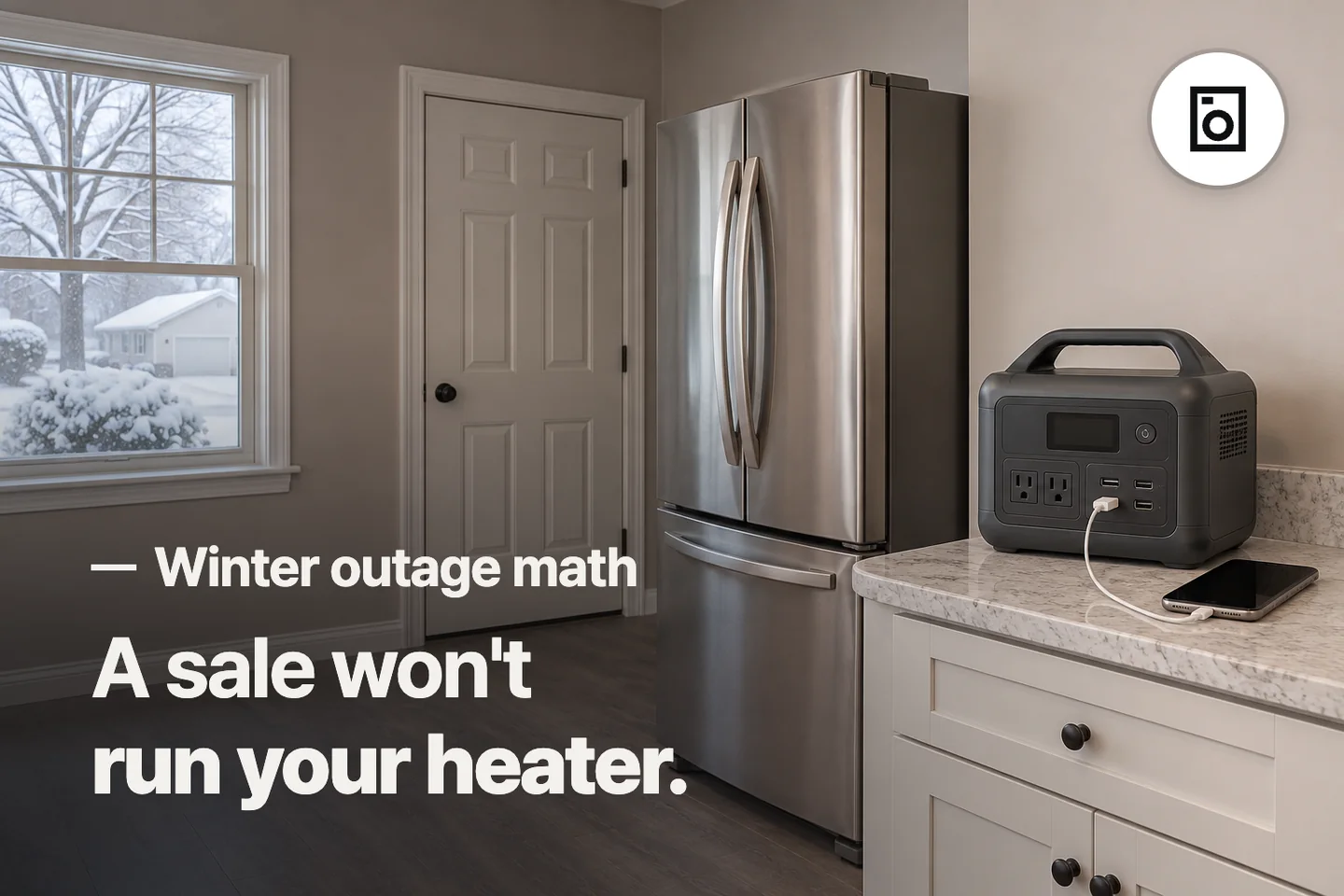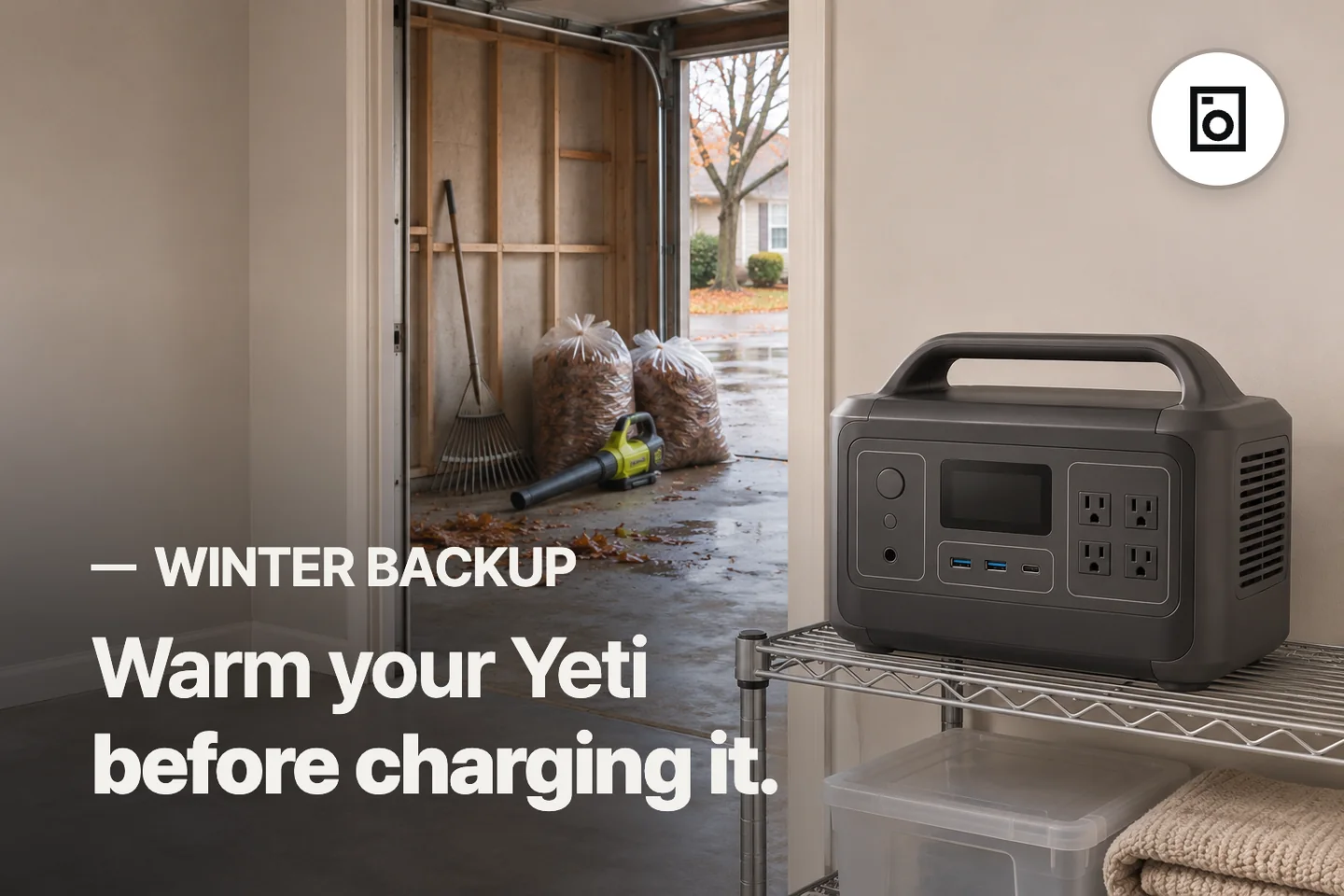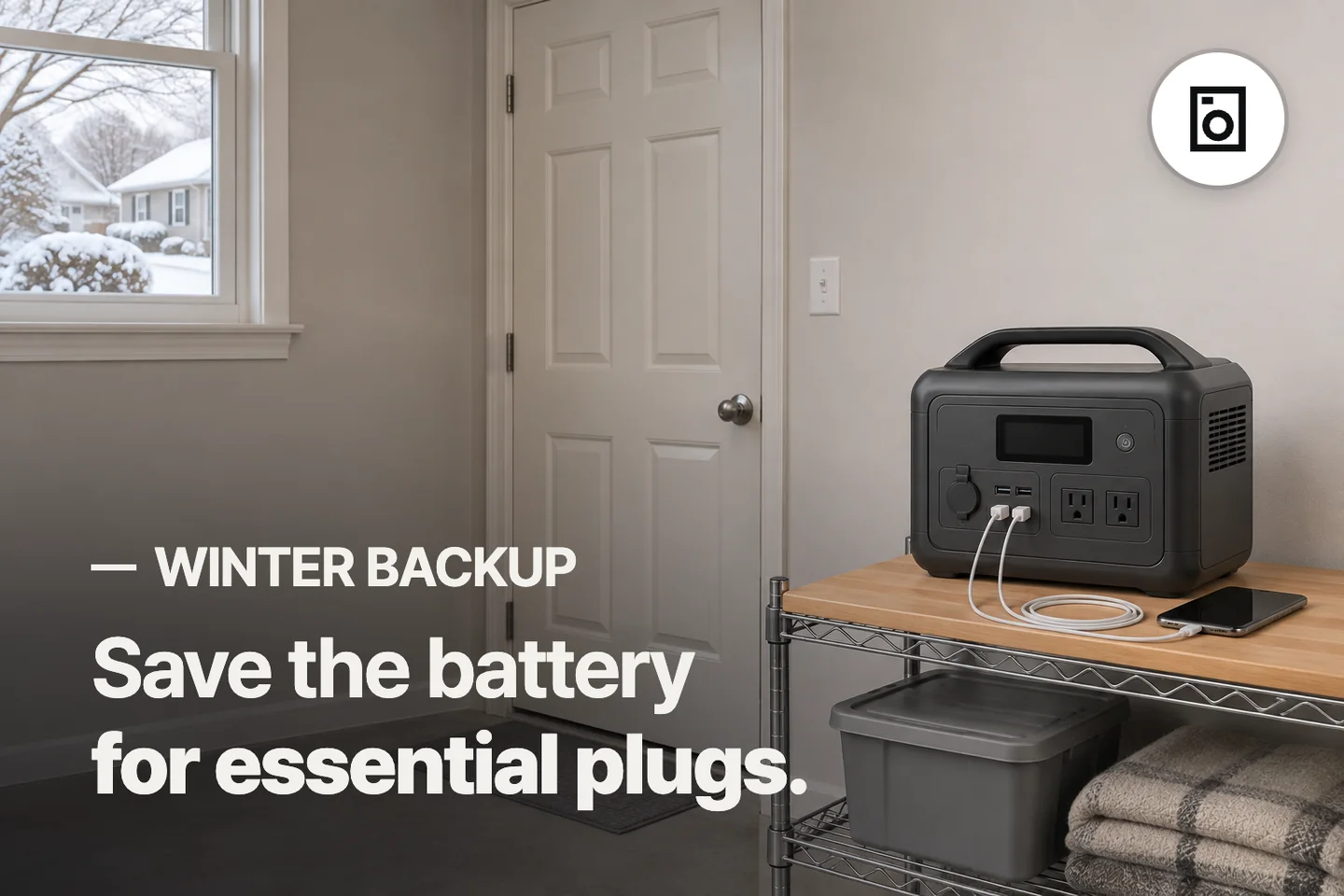
32°F is the charging boundary worth noticing before parking a jackery 1000 in an attached garage for winter. Jackery's original manual sets that lower limit, so a suburban household preparing for a storm needs an indoor charging spot, not just an empty garage shelf.
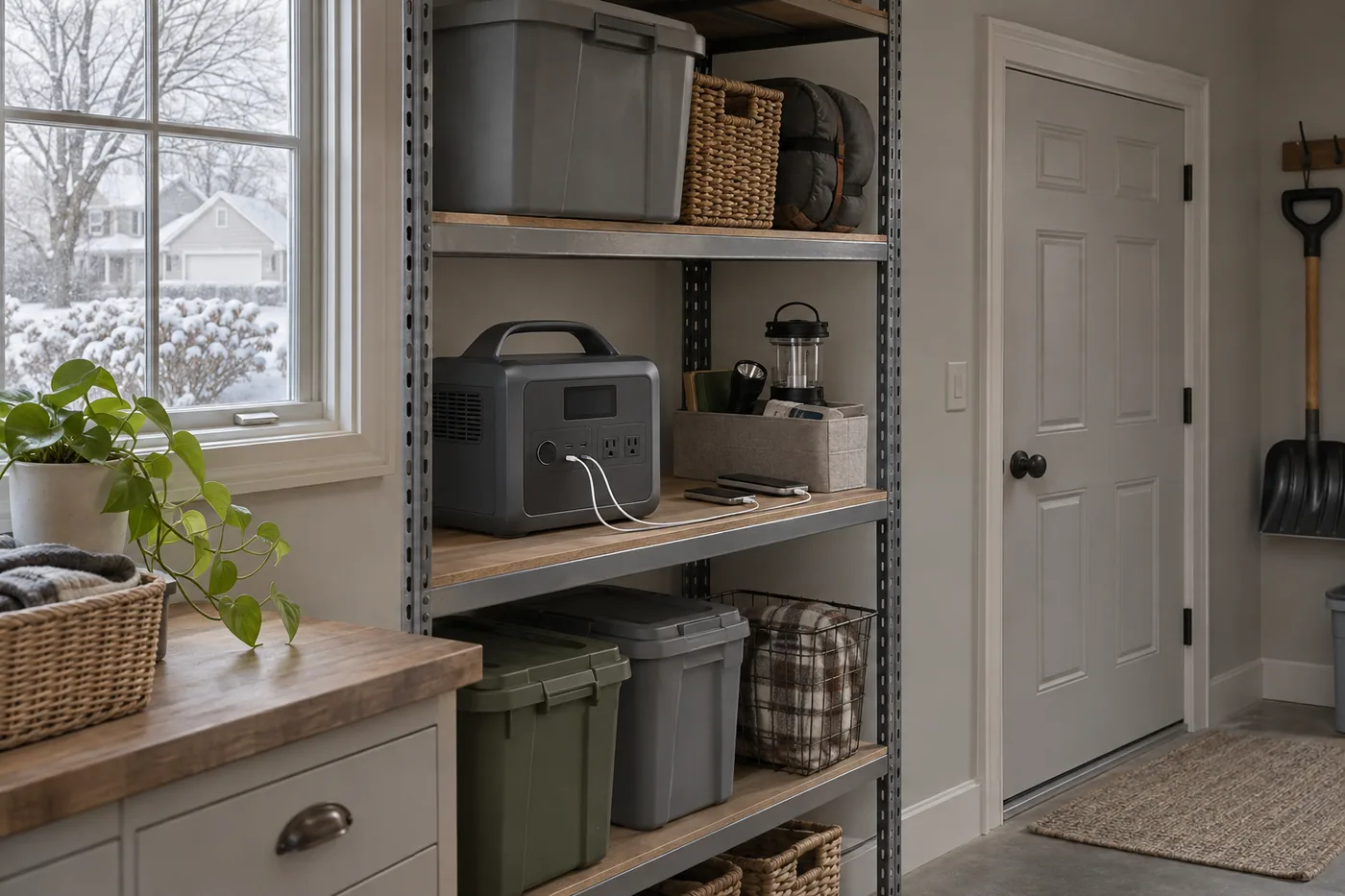 A winter backup spot belongs on the indoor side of the garage door.
I'd keep the Jackery Explorer 1000 (original US model, 1002Wh) for selected compatible essentials, especially if it's already owned. But I wouldn't buy it to heat the garage or assume it will take over medical equipment automatically. The useful purchase is limited backup, not a promise that the house carries on unchanged.
How we chose
The original Jackery manual and previously verified manufacturer, Amazon, and CPSC material were reviewed for load compatibility, charging conditions, and refill practicality. Technical facts retain their November 18 verification date; the November 24 recheck did not establish fresh stock or pricing.
Toneandroom picks
Best jackery 1000 for winter essentials: Top 1
An existing owner prioritizing compatible communications equipment and selected outage essentials
Jackery Explorer 1000 (original US model, 1002Wh)
Amazon.com original model: unavailable, no purchasable price displayed at the November 18, 2026 check. November 24 recheck blocked; Price varies; check Amazon. Original maker price: Not listed by the
I'd keep this model for a deliberately limited set of compatible essentials, provided there is an indoor charging location and an achievable refill plan.
- Capacity
- 1,002Wh
- AC limit
- 1,000W
- Surge
- 2,000W
- Charging
- 32–104°F
- Selected small outage loads
- Indoor spot within maker guidance
- Check fridge startup separately
- No automatic UPS takeover
What we considered
Load fit
Can the connected equipment start and keep running?
The original model's continuous ceiling and surge allowance serve different demands. Refrigerator startup and combined running loads therefore need separate checks before allocating energy.
Charging spot
Will the battery stay within Jackery's charging guidance?
The original manual's charging range begins at freezing, while its broader troubleshooting guidance favors indoor-friendly temperatures. A cold attached garage shouldn't be the assumed charging location.
Next charge
Where will the next usable charge come from?
Published charging times depend on the charging method, with solar also dependent on weather. An outage plan needs an achievable refill source rather than a solar package alone.
Part 1Match the jackery 1000 label before the price
Start with the exact model. Jackery's original US manual lists 1,002Wh of capacity, a shared 1,000W continuous AC maximum, and a 2,000W surge peak, so plugging into another outlet doesn't create more available power. Those limits belong to the original machine, not every product with 1000 in its name.
That distinction matters when shopping old stock. At the November 18, 2026 source check, Jackery's familiar product address displayed the newer Explorer 1000 v2 with 1,024Wh and 1,500W; the original Amazon listing was unavailable. But those newer specifications don't carry backward to the original battery.
The November 24, 2026 recheck couldn't establish a fresh original-model price: Jackery's page was rate-limited, and Amazon showed a shopping gate rather than a usable listing. So the older stock observation stays dated November 18, not quietly promoted to today's availability. Price varies; check Amazon.
Swipe sideways to see the full table →
| Purchase detail | Original Explorer 1000 |
|---|---|
| Amazon stock observation | Unavailable at the November 18, 2026 check; not reconfirmed November 24 |
| Purchasable price | Price varies; check Amazon |
| Original maker price | Not listed by the maker |
| Model match | Confirm original US model, supplied charger, and matching manual |
Part 2Give the fridge a starting check, then an energy budget
A refrigerator has to start before runtime arithmetic matters. Jackery's manual cautions about inductive startup loads, so compare the refrigerator manufacturer's starting requirement with the station's surge limit before assigning it an overnight job. A running-watt label isn't a startup guarantee.
For energy planning, Jackery gives runtime as 1,002Wh × 0.85 divided by operating watts. That makes 851.7Wh a calculated allowance, not a measured winter result; a refrigerator also cycles, and some models add defrost loads. So use energy measured across normal operation rather than the display reading while its compressor happens to be off.
What needs to stay connected while everyone sleeps? A router may also need its modem or fiber terminal, so budget the connected equipment together. But keeping that equipment powered won't restore a failed connection farther down the street.
Small loads have their own catch. Jackery's original manual describes automatic shutdown after 12 hours below 10W, so a modest communications setup deserves a pre-storm check on the exact unit. A battery with charge remaining isn't useful if its output has switched off.
Medical backup needs a separate conversation. Jackery says the original model is not a UPS, so don't count on automatic takeover for a CPAP machine. Ask the equipment maker or supplier about the exact machine, approved connection, prescribed settings, heated accessories, and appropriate backup arrangements.
A successful fridge start and a sensible overnight energy budget answer different questions.
 Refrigerator startup demand comes before any estimate of overnight runtime.
Part 3Cold charging changes the refill plan
Jackery's original specification allows discharge from 14°F to 104°F, converted from its Celsius range, but charging is restricted to 32°F–104°F. Its troubleshooting advice also favors that warmer range for charging, use, and storage. So I'd plan around a dry indoor location within Jackery's guidance rather than the coldest permitted discharge temperature.
Those endpoints don't tell you how many fridge hours remain in a freezing garage. The source material doesn't establish that result, so ask Jackery about the expected conditions instead of treating its runtime formula as a winter guarantee. Permitted operation isn't unchanged capacity.
Refilling takes time, too. The original manual gives about 7.5 hours with the wall charger and about 8 hours with two SolarSaga 100W panels, depending on weather. But the older Amazon copy quoted faster figures, so the manual supplied with the exact unit and clarification from Jackery matter more than the better-looking claim.
A solar refill depends on the weather the outage actually brings. That means the next charge needs a believable source; snow and overcast skies don't become dependable sunshine because a panel package was purchased. I'd settle that question before buying remaining original-model stock.
Part 4Leave the garage heater off this list
An electric heater drawing more than the original station's 1,000W continuous maximum is outside Jackery's stated capability. But a smaller heater that fits the limit still consumes the reserve that could serve other plugs. The 2,000W surge figure isn't continuous heating power.
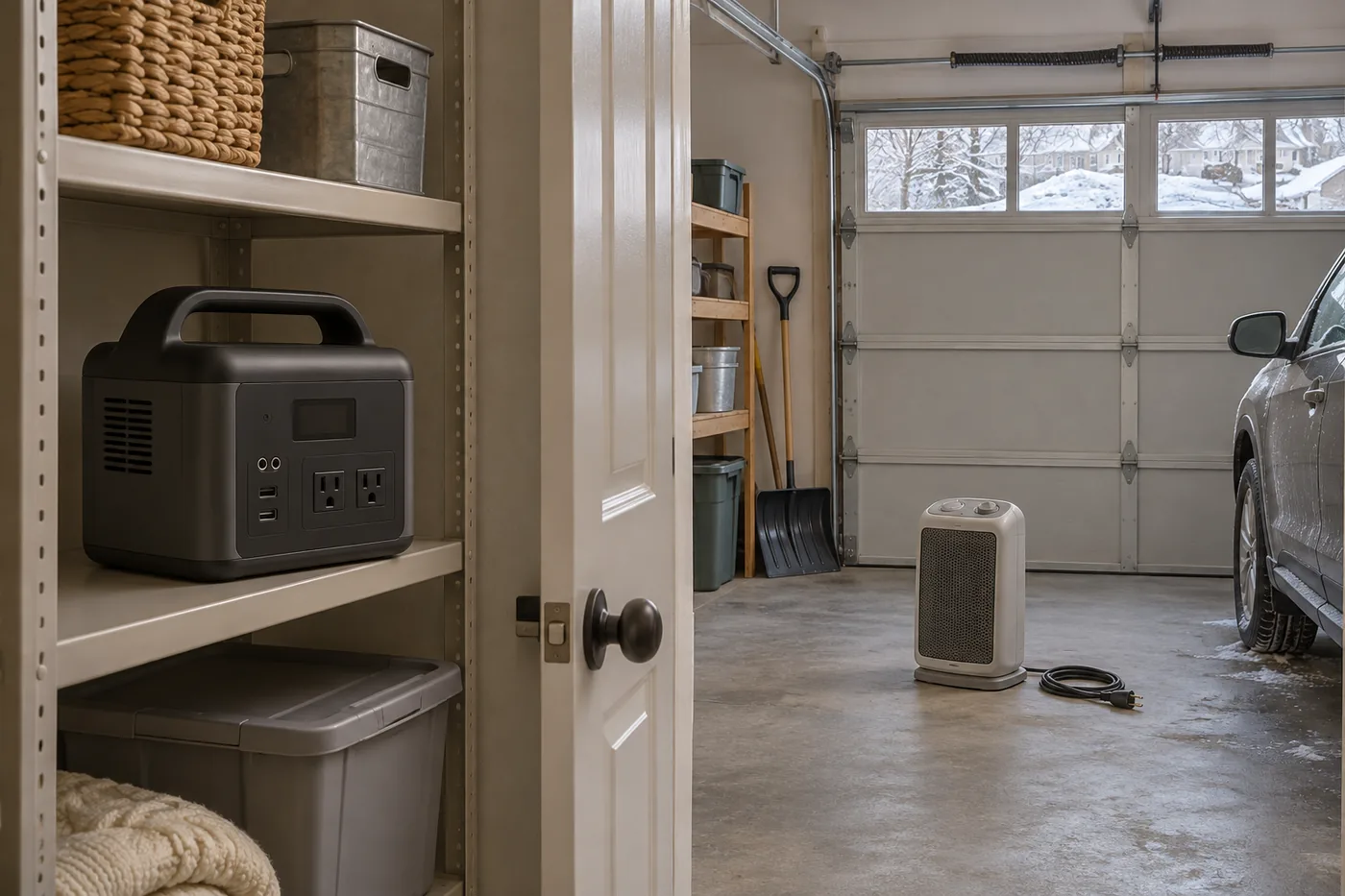 Keeping a heater off the battery leaves more energy for compatible essentials.
A furnace blower isn't an automatic workaround, either. Its manufacturer needs to establish electrical requirements and a qualified professional needs to advise on the connection, because a hardwired heating system isn't simply another plug-in appliance. So this battery alone doesn't establish a household heating plan.
A fuel-burning generator has different placement requirements. In the CPSC guidance retained from the November 18 source check, the agency says to keep portable generators outdoors at least 20 feet from the home, exhaust pointing away, never inside a house or garage even with doors open. That rule concerns an engine-driven generator, not permission to ignore Jackery's battery instructions.
Sources and method: This rewrite uses the original Jackery US manual, the previously checked Amazon listing and Jackery product page, and CPSC guidance. The three checks were load compatibility, charging conditions, and a realistic refill source. Source facts and stock observations retain their November 18, 2026 verification date; on November 24 the manual PDF was reachable, but the sales pages and CPSC page did not permit fresh verification. No new price is quoted.
Keep the essentials running; leave the garage heating to another plan.
In one sentence
The original Explorer 1000 fits a checked list of outage essentials, not sustained garage heating.
Jackery Explorer 1000 (original US model, 1002Wh)
Check price on AmazonFrequently asked questions
How long can the original jackery 1000 run a refrigerator?
Jackery's planning formula is 1,002Wh × 0.85 divided by operating watts, not a measured fridge runtime. Confirm startup compatibility first, then use average energy across compressor and defrost cycles; no specific cold-garage duration is established.
Can the original Explorer 1000 charge in a freezing garage?
Jackery lists a 32°F–104°F charging range for the original model. Its troubleshooting guidance also recommends that warmer range for use and storage, so plan a dry indoor location rather than charging below freezing.
Can it power an electric garage heater?
A heater above the original unit's 1,000W continuous maximum exceeds its output specification. A lower-draw heater may fit that limit but uses energy otherwise available to essentials; the 2,000W surge allowance is not continuous heating capacity.
Will it automatically take over a CPAP when the power fails?
Jackery's original manual says the unit is not a UPS. Ask the CPAP manufacturer or equipment supplier to confirm the exact machine, connection, settings, accessories, and suitable backup arrangements before relying on it.
Sources
- Jackery Explorer 1000 (original US model, 1002Wh) · 2026-11-18
Jackery-authored original US manual: 1002Wh, 1000W continuous, 2000W surge; discharge −10 to 40°C (converted to 14–104°F), charging 0 to 40°C (32–104°F); about 7.5h wall charging and 8h with two SolarSaga 100W panels depending on weather; shutdown after 12h below 10W; runtime formula 1002Wh × 0.85 / watts gives calculated 851.7Wh. Says not a UPS; troubleshooting recommends 32–104°F. Values retained from the published article's November 18 verification; PDF retrieved successfully November 24 without a fresh text verification.
- Jackery product address previously displaying Explorer 1000 v2 · 2026-11-18
November 18 page displayed Explorer 1000 v2 with 1024Wh and 1500W, used only to distinguish it from the original 1002Wh model. Opened again November 24 but returned local_rate_limited; no new specifications or price attributed to the original model.
- CPSC carbon-monoxide prevention guidance · 2026-11-18
November 18 guidance: fuel-burning portable generators outdoors at least 20 feet from homes, exhaust facing away, never in a home or garage even with doors or windows open. Opened again November 24 but access was denied; safety guidance retains its original verification date.