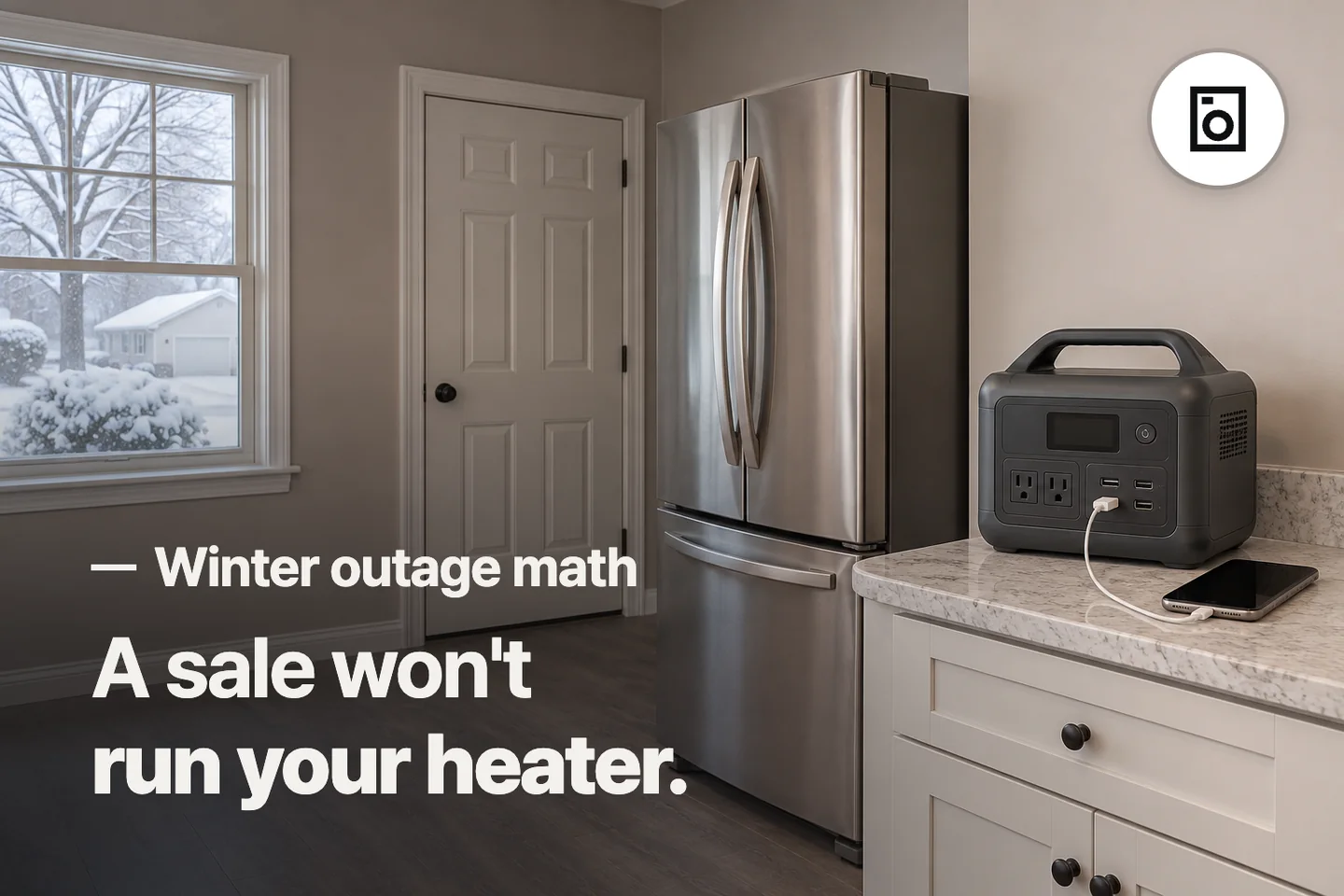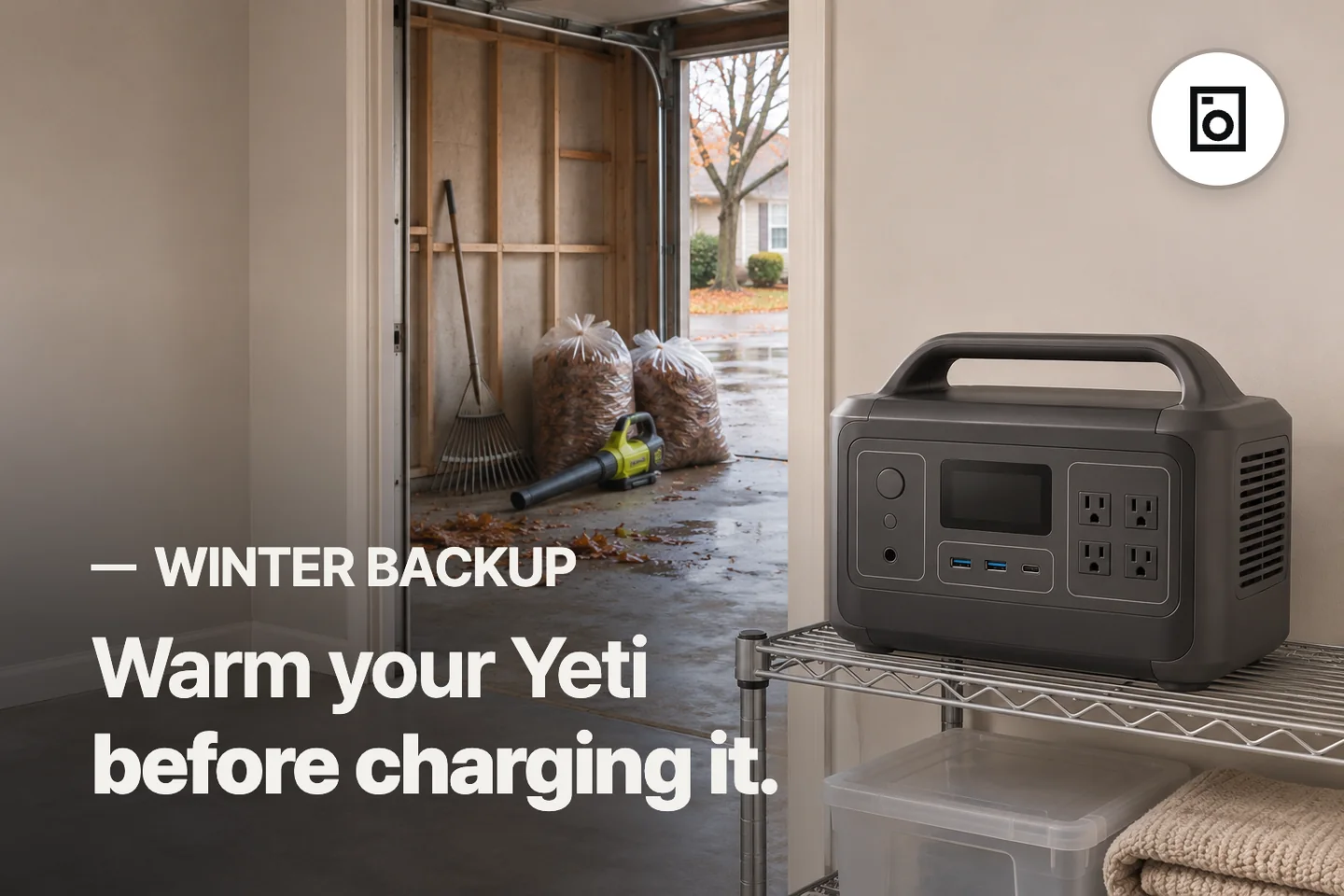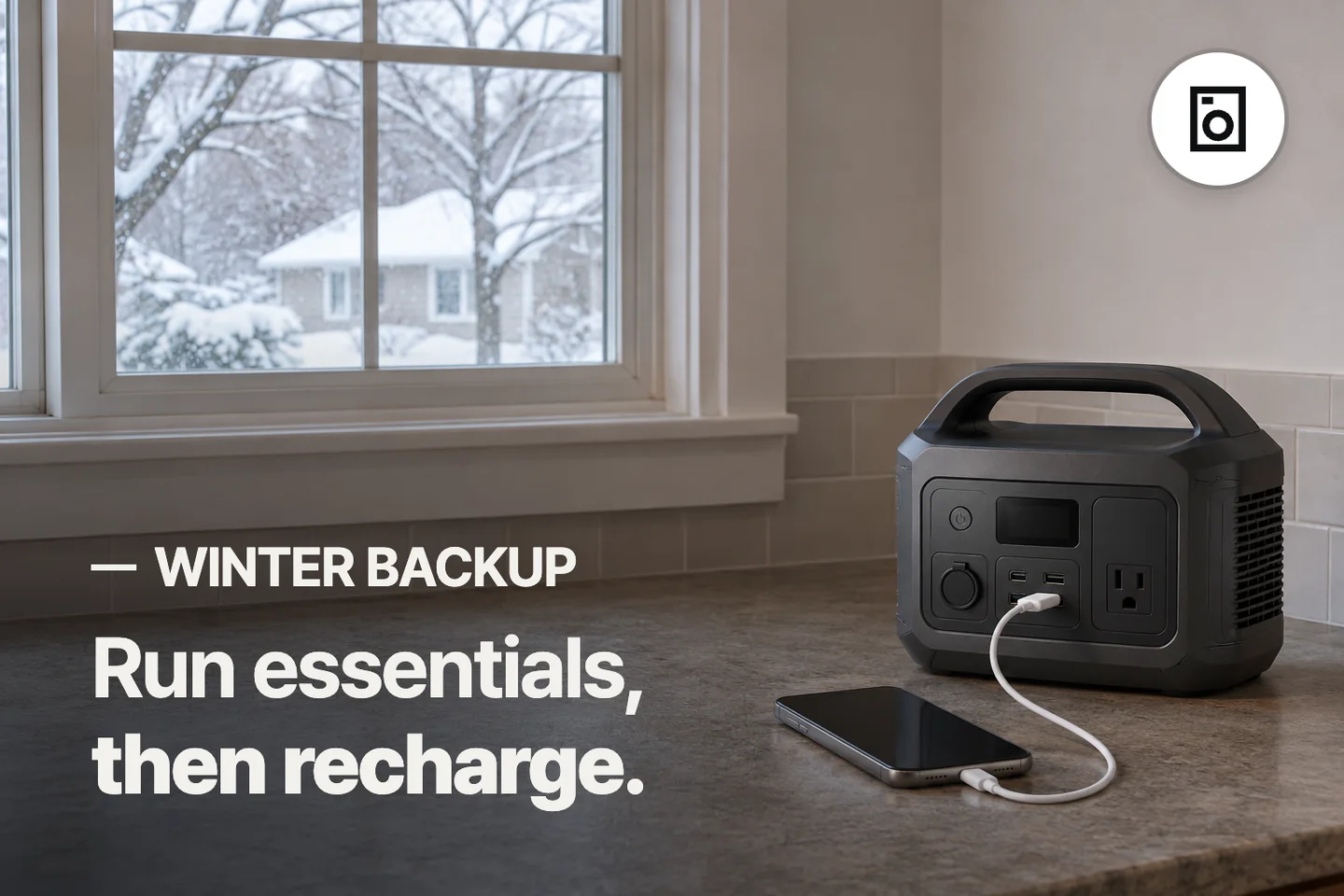
Where will your honda inverter generator run when a winter storm knocks out the fridge and gas furnace in your suburban house? That question comes before wattage, because the attached garage is not an operating site.
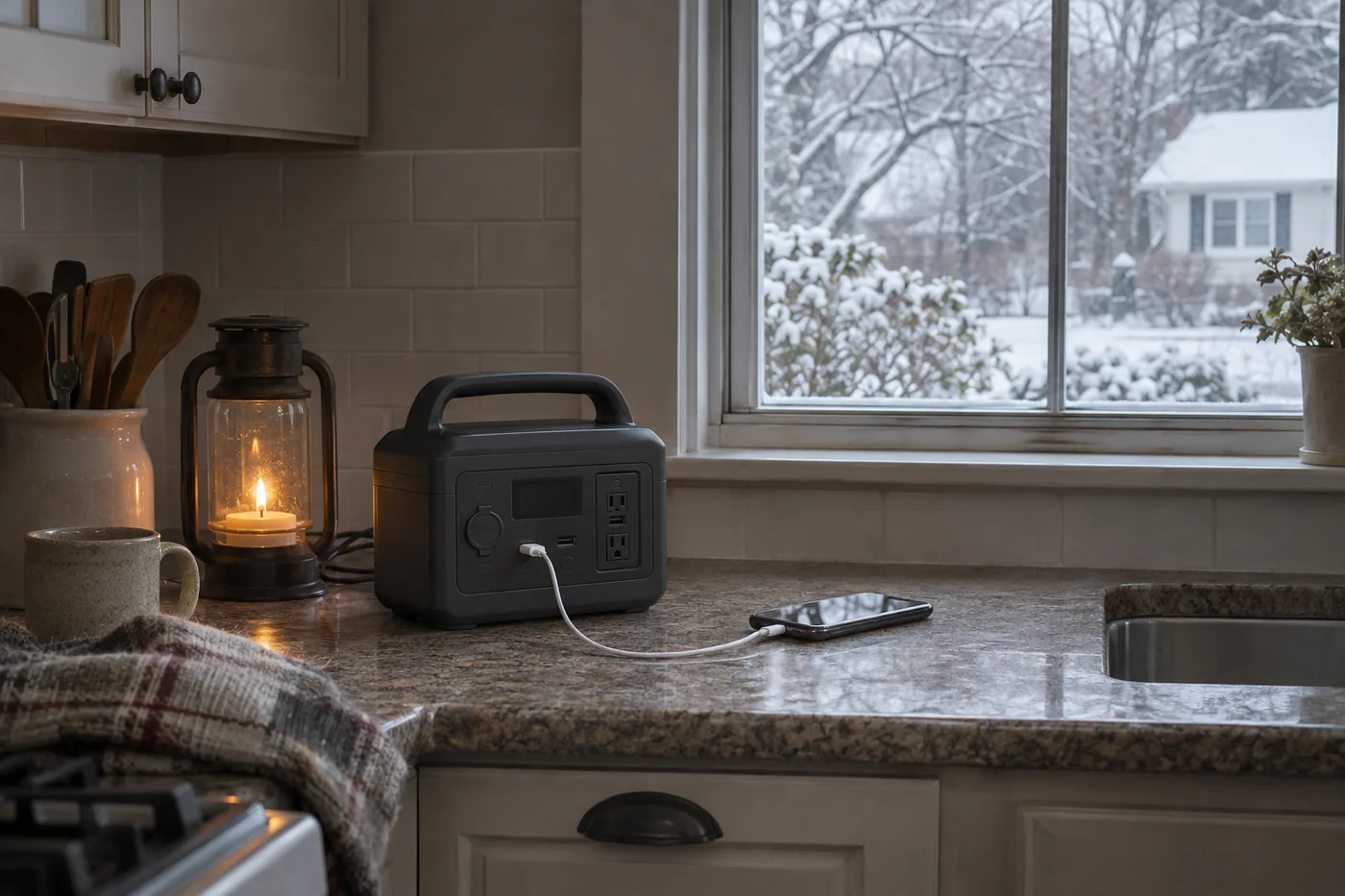 The outage plan starts with the appliances that matter, not every outlet in the house.
I'd choose the Honda EU2200i for repeated essential-load backup when safe outdoor placement, gasoline, and a compatible furnace connection are available. But the Jackery Explorer 1000 v2 makes more sense for indoor phone charging and limited fridge support when you have somewhere dependable to recharge it. Neither purchase guarantees heat through the night.
How we chose
Reviewed Honda's US specifications and safety guidance, Jackery's US product listing, and CPSC's storm guidance. The comparison uses three criteria: essential-load compatibility, safe operating location, and a realistic fuel or recharge plan; it does not assign unmeasured fridge or furnace runtimes.
Toneandroom picks
Best honda inverter generator alternatives for outages: Top 2
Repeated essential-load operation with a safe outdoor site, gasoline, and a professionally arranged furnace connection
See all specsHonda EU2200i
US Honda displayed MSRP $1,199, checked November 24, 2026; fuel, accessories, and electrical work extra.
Its refillable fuel supply supports repeated operation of compatible essential loads without requiring an external battery-charging destination.
- Rated
- 1,800W
- Maximum
- 2,200W
- Tank
- 0.95 gal
- Weight
- 47.4 lb
- You have compliant outdoor space
- You can obtain and handle fuel
- Have furnace wiring assessed
- Not for sale in California
Indoor phone charging and limited appliance backup with a confirmed recharge destination and seller stock
See all specsJackery Explorer 1000 v2
US Jackery BASIC station and AC cable $559; SolarSaga 200W package $879. Both listed sold out, checked November 24, 2026.
USB charging and battery-powered AC outlets suit limited indoor needs, provided the exact unit, appliance demand, and replenishment route are confirmed.
- Rated
- 1,500W
- Surge
- 3,000W
- Weight
- 23.8 lb
- Charging
- 32–113°F
- You need indoor phone charging
- You have somewhere to recharge
- Confirm conflicting Wh figures
- Maker listing shows sold out
Compare 2 products at a glance
Essential-load comparison
| Household job | Top pickHonda EU2200iUS Honda displayed MSRP $1,199, checked November 24, 2026; fuel, accessories, and electrical work extra. | Jackery Explorer 1000 v2US Jackery BASIC station and AC cable $559; SolarSaga 200W package $879. Both listed sold out, checked November 24, 2026. |
|---|---|---|
| Refrigerator | Check startup; 1,800W rated, 2,200W max | Check startup; 1,500W rated, 3,000W surge; finite energy |
| Gas furnace | Contractor checks demand; electrician designs connection | Same professional checks, plus battery runtime budget |
| Phones | Compatible AC charger while engine runs | Compatible devices can use USB ports |
Swipe sideways to see the full table →
What we considered
Load fit
Will the complete appliance combination start and keep running?
Continuous output and startup allowances serve different purposes. Both appliances must fit the supply together, and furnace compatibility needs the contractor's assessment rather than a floor-area estimate.
Safe placement
Does your property have a suitable operating location?
CPSC requires outdoor generator operation at least 20 feet from homes and buildings. Battery placement avoids engine exhaust indoors but still has to satisfy Jackery's temperature and operating instructions.
Replenishment
What replaces the fuel or charge after the initial supply?
Honda's tank runtimes depend on load, while Jackery's charge is finite. A workable purchase includes fuel access or a dependable recharge destination, not just the machine.
Part 11. Give the honda inverter generator a safe job
Start outside. The US Consumer Product Safety Commission (CPSC) says portable generators belong at least 20 feet from homes and buildings, with exhaust pointing away from windows, doors, and vents. That rules out an attached garage even with its door open; Honda's CO-MINDER shutdown does not make the garage acceptable.
Next, give the generator an appliance list. Honda specifies 1,800W rated output, with 2,200W maximum at 120V, so the bigger number is not your continuous operating budget. Honda names refrigerators among suitable applications, but also warns that its listed applications cannot all run together.
A furnace needs more homework than a phone charger. Because its blower, ignition, and controls all need electricity, have the furnace contractor identify the complete system's running demand, starting demand, and voltage before promising it backup power. Honda says building connections must isolate generator power from utility lines, so have an electrician design that connection rather than improvising furnace wiring or backfeeding an outlet.
The Honda EU2200i makes sense here because its refillable fuel supply gives compatible loads a way to keep going after a battery would be empty. But that advantage only exists if you can actually meet the siting and connection requirements.
Swipe sideways to see the full table →
| Household job | Honda EU2200i | Jackery Explorer 1000 v2 |
|---|---|---|
| Refrigerator | Check compressor startup against 1,800W rated and 2,200W maximum output | Check startup against 1,500W rated and 3,000W surge output; then budget stored energy |
| Gas furnace | Contractor checks demand; electrician designs the building connection | Same checks, with finite battery energy added to the calculation |
| Phones | Compatible charger uses an AC outlet while the engine runs | USB ports supply compatible devices without running an engine |
A supported appliance is not proof that every essential appliance can run at once.
Part 22. Separate battery output from battery endurance
The Jackery Explorer 1000 v2 lists 1,500W rated AC output and a 3,000W surge peak in its US specifications. That makes it worth checking against a refrigerator's starting requirements, but the surge number says nothing about how many hours the food stays cooled.
Its capacity listing deserves a raised eyebrow. Jackery shows 1,024Wh in its headline but 1,070Wh in its technical section; ask Jackery which applies to the exact unit offered before calculating endurance. I would not quietly use the larger figure to make a purchase look better.
For phones, the Jackery's USB ports let you avoid starting a gasoline engine for a small charging job. But for a fridge or furnace, you need the appliance's actual consumption and cycling pattern, because a continuous-output rating is not a runtime measurement.
Cold also changes where this battery belongs. Jackery specifies 32–113°F for charging and 14–113°F for discharging, so a freezing garage is not automatically a suitable recharge location. Follow those limits and the maker's placement instructions rather than treating the battery as winter-proof.
The noise labels need similar restraint. Honda gives 48 dB(A) at quarter load and 57 dB(A) at rated load, whereas Jackery advertises 30 dB without matching measurement conditions in that statement. So don't subtract those figures as though someone measured both units under the same load, at the same distance; indoor battery operation can still involve fan noise.
Part 33. Decide what happens when the supply runs low
Honda publishes a 0.95-gallon tank, with 3.2 hours at rated load or 8.1 hours at quarter load. Those are different workloads, so the longer figure is not a promise for your fridge-and-furnace combination. A cycling compressor and blower need their own load assessment.
Refueling extends the plan, but it creates work too. Honda says not to refuel a hot or running engine, to refuel outdoors, and to store gasoline in an approved container. Honda also warns that rain or snow creates an electrocution hazard, so arrange dry operation according to its instructions without enclosing the exhaust.
Jackery advertises 50-minute emergency charging, but that claim assumes a working power source and the appropriate charging mode. A powerless wall socket cannot help, and listing solar or vehicle charging does not establish a dependable winter replenishment schedule.
Where will that recharge actually happen? If the answer is a relative's powered home, confirm the arrangement before the storm; if it is solar, leave room for winter weather to interrupt it. Without replenishment, this battery provides limited backup rather than continuous multiday service.
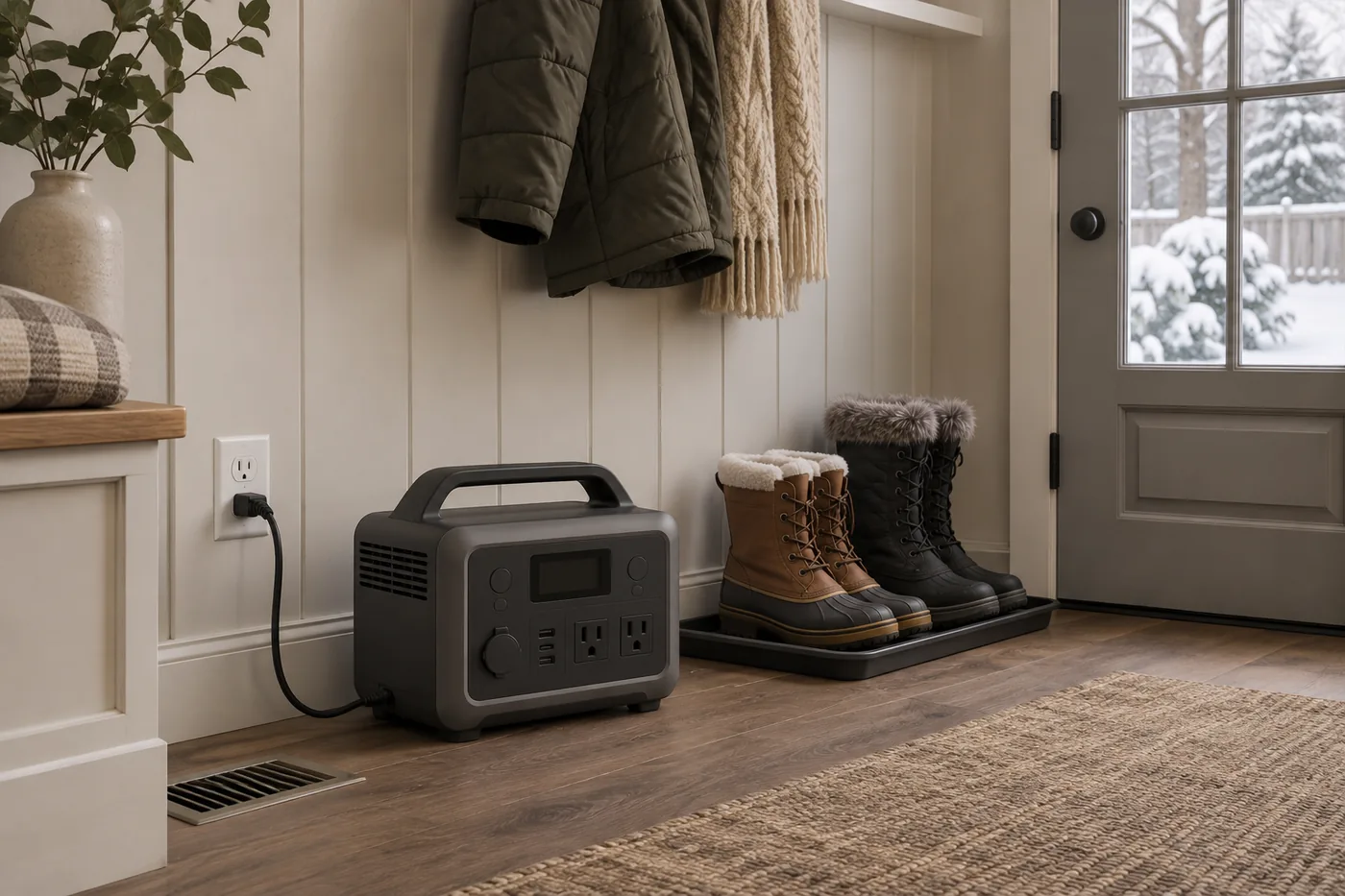 A working outlet somewhere else is a recharge plan only when you can reach it.
For battery planning, divide usable delivered watt-hours by average connected watts. But usable energy must allow for conversion losses and idle consumption, so neither conflicting capacity figure establishes your household's runtime. Keep electric space heating out of this essential-load plan because it competes with the fridge and furnace for output and stored energy.
Part 44. Compare the checkout price with the complete plan
Honda's US page displays $1,199 MSRP, checked November 24, 2026. That is the generator price, not a quote for fuel, maintenance, suitable cords, weather protection, or an electrician-designed furnace connection. The same listing says this model is not for sale in California, so California shoppers need a different locally permitted option.
Jackery's US listing shows $559 for the BASIC station with AC charging cable and $879 for the station with SolarSaga 200W, checked November 24, 2026. But both are marked sold out, so those figures are displayed maker prices, not promises of available stock. Compare the station-only option with the generator before deciding whether solar hardware belongs in your budget.
For a longer winter outage, I favor the honda inverter generator when the house can accommodate it safely and the loads fit. But for a renter without a compliant outdoor site, the Jackery is the more workable limited-backup choice if stock and recharging are confirmed. An apartment balcony is not a substitute for the outdoor separation CPSC requires.
 Keep a warm place to go in the plan if portable backup cannot support the furnace.
If neither safe generator placement nor reliable battery recharging is possible, arrange another heated place to stay. CPSC also calls for battery-operated or battery-backup CO alarms on every level and outside sleeping areas; buying backup power does not replace those alarms.
Sources and selection: Honda's US product and safety pages, Jackery's US listing, and CPSC's storm guidance were reviewed for load fit, safe placement, and replenishment. Appliance runtimes and matched noise performance were not measured. Prices and source pages checked November 24, 2026.
In one sentence
Choose refillable outdoor generation for repeated essential loads, or indoor battery backup when the recharge plan is dependable.
Honda EU2200i
Check price on AmazonJackery Explorer 1000 v2
Check price on AmazonFrequently asked questions
Can the Honda EU2200i run a refrigerator and gas furnace together?
Only if combined running and starting requirements fit its 1,800W rated and 2,200W maximum output. Have the furnace contractor assess the complete appliance and an electrician arrange an isolated building connection; neither floor area nor Honda's refrigerator application listing proves the combination will work.
Can I run a portable generator in a garage with the door open?
No. CPSC says generators must operate outdoors at least 20 feet from homes and buildings, with exhaust directed away from windows, doors, and vents. An open door or CO shutoff feature does not permit garage operation.
How long will Jackery Explorer 1000 v2 run a fridge?
The opened product page does not establish runtime for your refrigerator. Confirm its cycling consumption, starting demand, and usable delivered battery energy; also resolve Jackery's conflicting 1,024Wh headline and 1,070Wh technical listing before calculating duration.
Does 50-minute emergency charging solve a winter outage?
No. Jackery's claim requires a functioning power source and the appropriate mode. Arrange a dependable recharge destination and follow its 32–113°F charging range; solar and vehicle charging options alone do not establish a winter recharge schedule.
Sources
- Honda EU2200i · 2026-11-24
US displayed MSRP $1,199; 120V, 1,800W rated and 2,200W maximum; 0.95 gal; 3.2 hours at rated load and 8.1 hours at quarter load; noise 57 and 48 dB(A) respectively; dry weight 47.4 lb. Lists refrigerator applications, warns against powering all listed applications simultaneously, and states not for sale in California.
- Jackery Explorer 1000 v2 · 2026-11-24
BASIC station with AC cable $559 and SolarSaga 200W package $879, both sold out. 1,500W rated, 3,000W surge, around 23.8 lb; charging 32–113°F, discharging 14–113°F. Headline 1,024Wh conflicts with technical listing 1,070Wh. Advertises 50-minute emergency charging and 30 dB without matched Honda test conditions; USB and wall, solar, and vehicle charging listed.
- CPSC storm generator safety · 2026-11-24
May 27, 2026 release: generators outdoors at least 20 feet from homes and buildings; no garage operation even with openings; exhaust away from doors, windows, and vents. Battery-operated or battery-backup CO alarms on every level and outside sleeping areas.
- Honda generator safety · 2026-11-24
Requires dry operation, utility-isolated building connections, no refueling while hot or running, outdoor refueling, and approved fuel containers. Specifies three feet of cooling clearance above and on all sides; this is not a replacement for CPSC's 20-foot siting guidance.