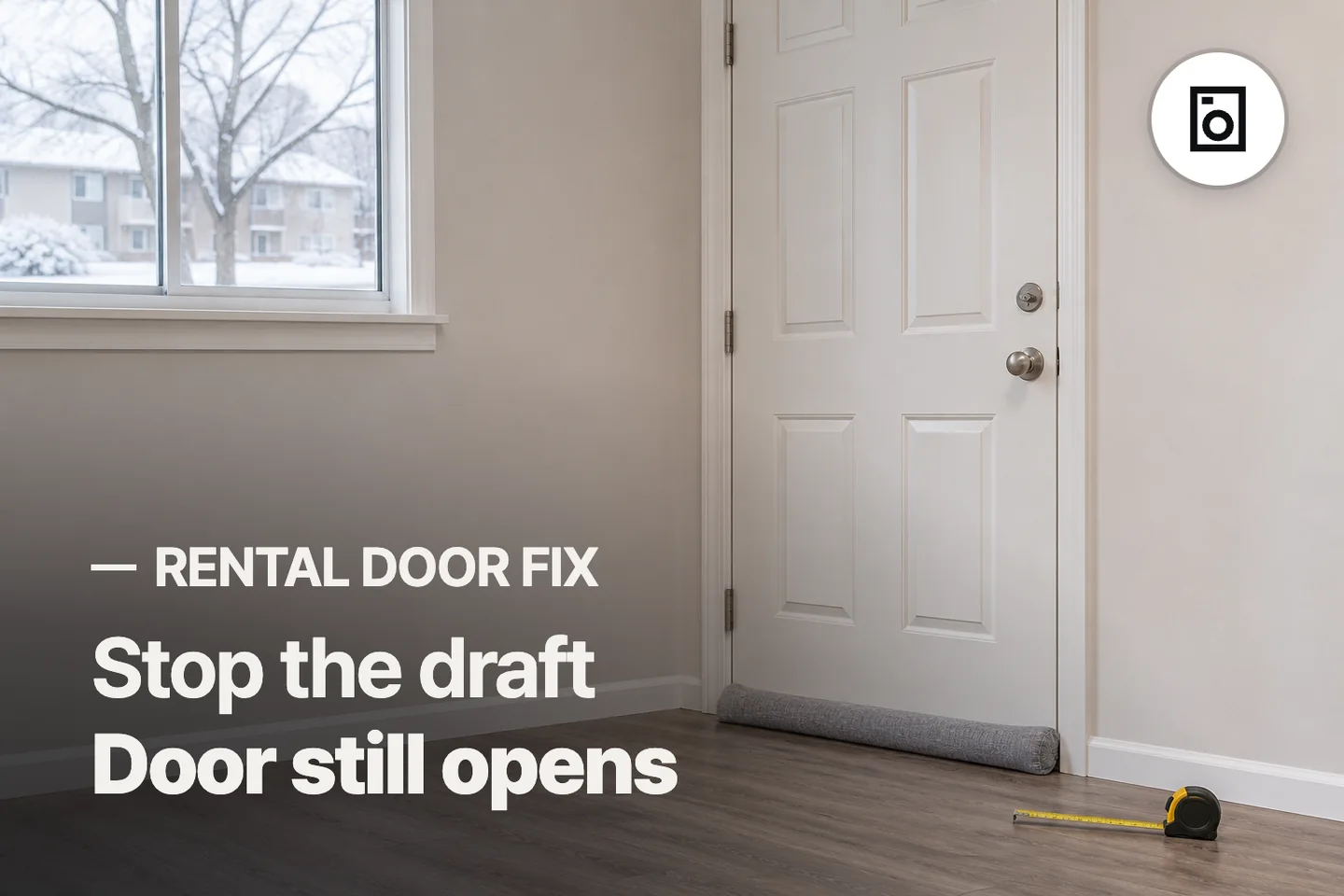
Your heating bill is already worrying you, and cold air keeps reaching your ankles beside the apartment entrance. Before buying another heater, check whether a bottom door seal would address the actual leak. If the air comes around the frame instead, covering the space underneath leaves the problem where it was.
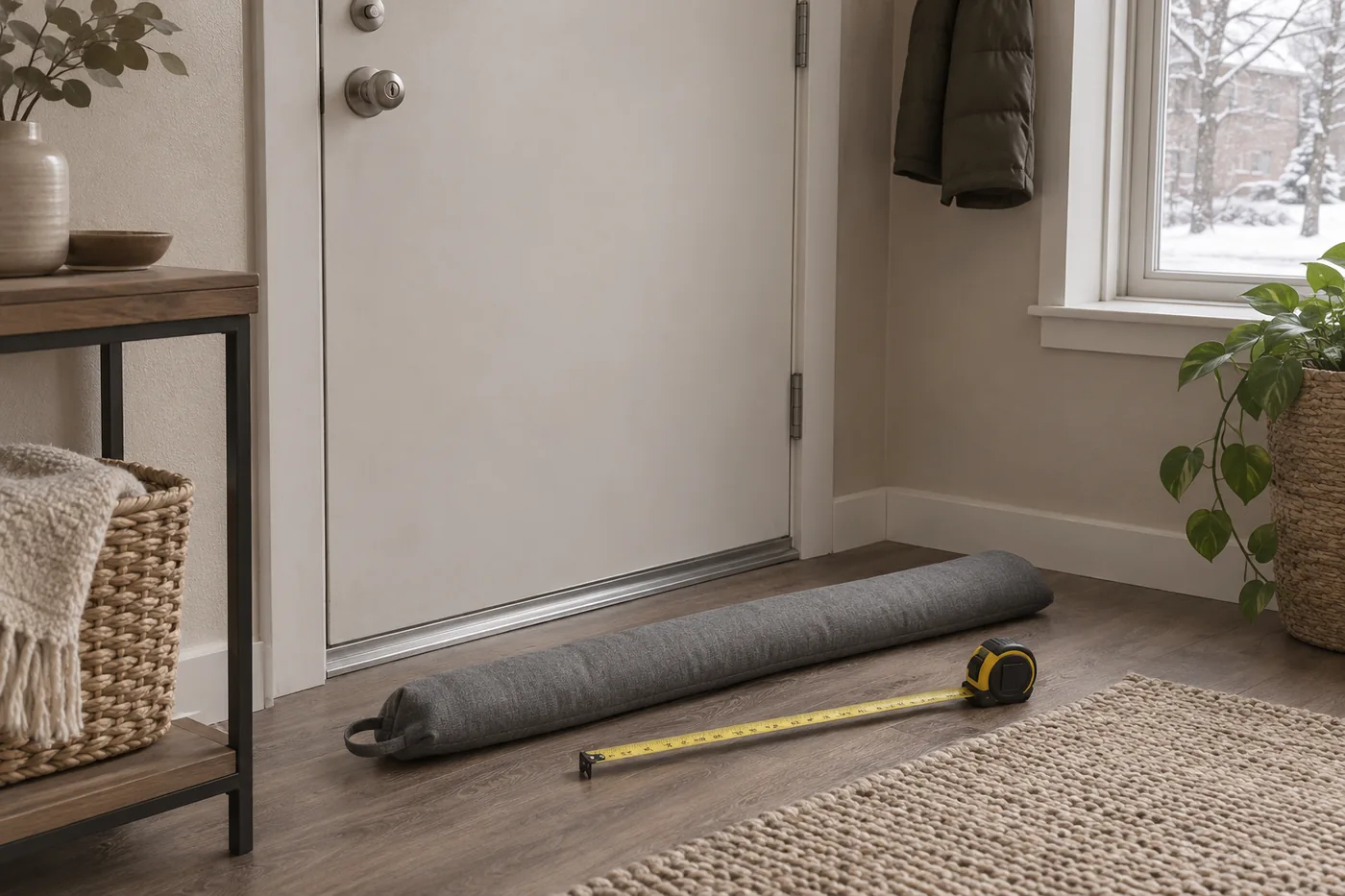 Start where you feel moving air, not where a seal looks easiest to attach.
For an approved doorway with suitable clearance, I'd choose the Frost King DDS1 Double Draft Stop as a removable, no-drill option. But permission and an unobstructed door swing come first: the fabric sleeve needs room underneath, and its foam tubes must clear the threshold without changing how the door closes.
How we chose
Reviewed Frost King's DDS1 dimensions and fitting FAQ, Duck's slide-on seal specifications and UL Solutions' door-assembly guidance. The selection uses three checks: management permission, clearance throughout the door's travel and unchanged closing and latching. Retailer price and stock were not verified.
Toneandroom picks
Best bottom door seal for an approved rental doorway: Top 1
Management approves a removable draft stop and the fabric sleeve clears the floor and threshold throughout the swing.
Frost King DDS1 Double Draft Stop
Manufacturer list price: Not listed by the maker on its official US product page, checked November 24, 2026. Amazon price and retailer stock were not verified; check Amazon for the current offer.
The sleeve slides beneath the door without drilling, and Frost King allows shortening the foam tubes and folding the loose cover ends for narrower openings. Fit remains conditional on threshold clearance and management approval.
- Width
- Up to 36 in.
- Listed size
- 1-1/4 in.
- Mounting
- Slide-under
- Approved removable installation
- Foam can be cut to door width
- Confirm moving-door clearance
- Confirm fire-door compatibility
What we considered
Permission
Has management approved this product for the entrance?
UL Solutions treats fire doors as assemblies, not isolated panels. A lease allowing removable decorations does not establish compatibility with a labeled door, so product-specific approval comes before fitting.
Moving clearance
Can the sleeve travel across the threshold without catching?
The DDS1's published dimensions do not specify maximum gap coverage. Measure the opening and inspect the moving door's path before deciding whether its fabric and foam construction can fit.
Normal latching
Does the door still close and latch without extra help?
A draft fix is unsuitable if the addition obstructs normal door movement. Compare closing action before and after fitting, and remove the sleeve if it introduces resistance or rubbing.
Part 1Check permission before changing the entrance
Ask management whether this entrance has fire, smoke-control or ventilation requirements, and send the exact product name rather than asking about weatherstripping generally. UL Solutions describes fire doors as assemblies that include hardware and accessories, with installation governed by manufacturer instructions. So a removable household draft stopper is not automatically compatible.
If you find a fire label, or management cannot establish what is permitted, wait for an approved repair. Don't remove existing seals or adjust the closer to make room for a new sleeve; that would change more than the draft.
Photograph the door edge and floor, then check its normal closing action before adding anything. If it already drags, hangs unevenly or needs an extra push to latch, ask maintenance to correct that first, because a thicker bottom edge won't straighten the door.
Part 2Measure the bottom door seal's entire travel path
Hold a narrow strip of tissue near the closed door's bottom, then near the sides and top. That helps locate moving air without a flame, but it doesn't measure leakage or predict savings. Keep the heating and ventilation settings comparable when you repeat the check later.
Measure the under-door opening at the hinge side, middle and latch side, noting the tightest clearance as well as the largest gap. Then measure door width and thickness and open it slowly across the threshold and floor. A closed-door measurement misses anything the sleeve catches during the swing.
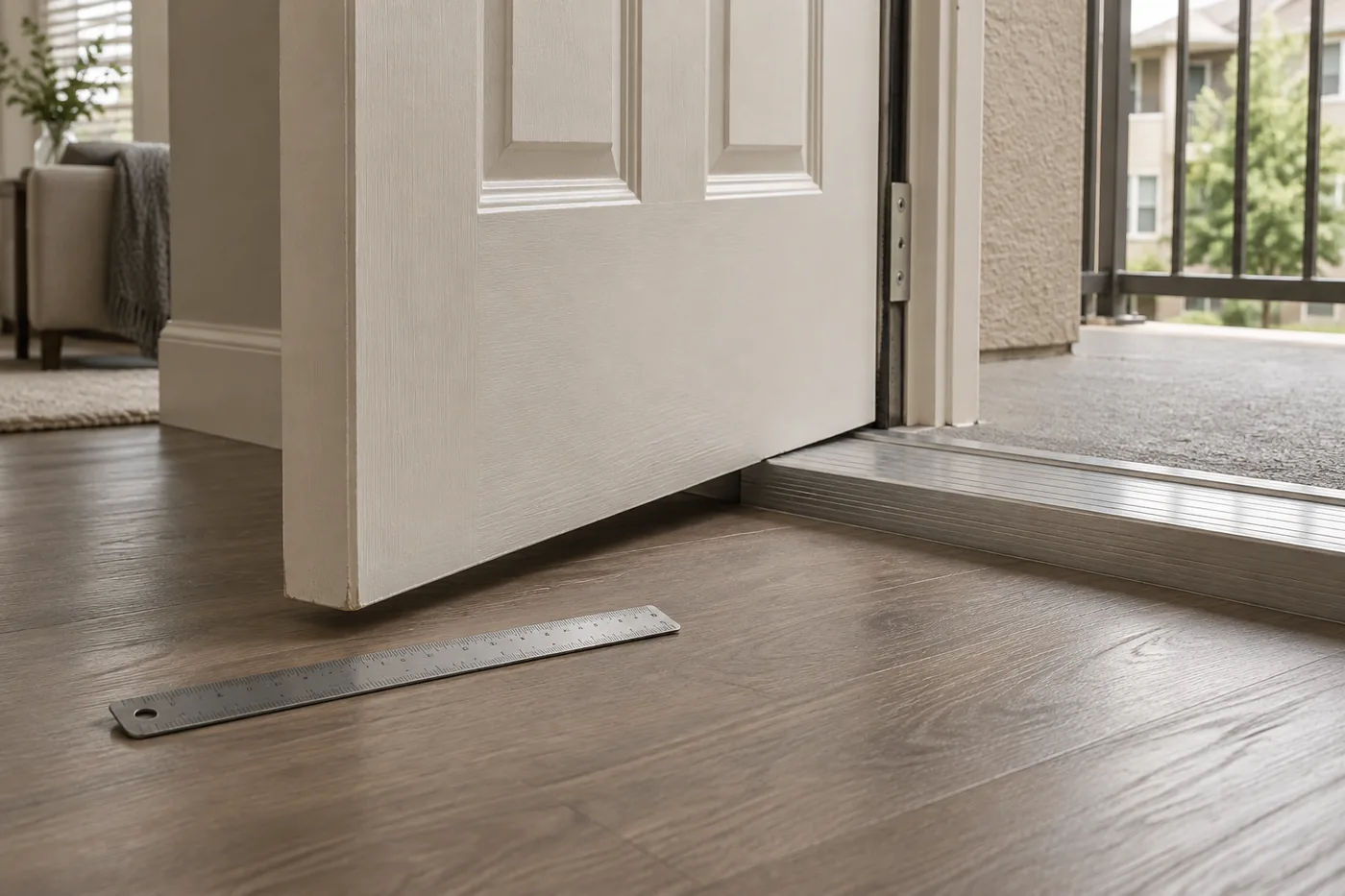 Check the narrowest clearance and the floor the door crosses, not just the visible gap.
Does the threshold stand higher than the floor on either side? If so, a fabric-and-foam sleeve may fit at rest but bunch up as you leave. A rug in that path creates another obstruction, so move it clear for the fitting check rather than forcing the door over it.
The useful measurement is the clearance that remains while the door moves, not only the opening you see when it is shut.
Part 3Match the sleeve to the opening, not the search term
Frost King DDS1 Double Draft Stop has foam tubes inside a fabric case that slides beneath the door. Frost King lists it as 1-1/4 in. by up to 36 in. wide, and its FAQ allows cutting the tubes and folding loose cover ends for narrower openings. That gives you a way to shorten it without drilling into the door.
But the published size is not a maximum-gap rating. Frost King's shared FAQ also mentions a half-inch gap for a Stanley replacement bottom; that answer names another product, not DDS1. Don't borrow that figure to decide whether this sleeve will bridge your opening.
The Duck MAX Triple Draft Seal illustrates why the attachment details matter more than the phrase “door sweep weather stripping.” Duck specifies doors up to 36 in. wide and 1-3/4 in. thick, with fins adjusted to touch the threshold. That's a different construction, not an extra recommendation here, and its dimensions do not establish DDS1 compatibility.
Swipe sideways to see the full table →
| Check | Frost King DDS1 Double Draft Stop |
|---|---|
| Published size | 1-1/4 in. by up to 36 in. wide |
| Width adjustment | Cut foam tubes; fold loose fabric ends |
| Maximum gap coverage | Not listed by the maker |
| Manufacturer list price | Not listed by the maker; official US page checked November 24, 2026 |
You still need a fitting check before treating the sleeve as a solution. The official page confirms the product listing, not live retailer stock or an Amazon price, so check the current Amazon offer separately.
Part 4Fit it without turning a small job into a repair
After management approval, follow the supplied instructions and Frost King's fitting FAQ to shorten the foam tubes for the measured door width. Then put them back in the case and fold the loose ends as directed. Cutting before measuring can leave an uncovered end, so keep the full width until you've established the fit.
Clear grit from the floor and bottom edge before sliding the sleeve underneath. That matters because no adhesive does not mean no rubbing: trapped debris and moving fabric can still scuff a finish. Keep scissors away from the fitted cover and painted edge.
Move the door slowly and watch the fabric and both tubes. If the sleeve twists, catches or needs force to pass the threshold, remove it rather than adding tape or stacking more material underneath. A fitting problem calls for a different maintenance solution, not a harder shove.
Part 5Retest the latch before calling the job finished
Check opening, closing and latching against the door's original behavior. If a closer is fitted, let it perform its normal closing action instead of helping it along with your hand. A latch that now needs an extra push means the addition comes off, even if the draft feels smaller.
Repeat the tissue check at the same locations under comparable heating and ventilation conditions. Less movement suggests you've reduced airflow there, but it doesn't establish a heating-bill saving. If air remains around the jamb or upper edge, ask management about the perimeter seals rather than thickening the sleeve.
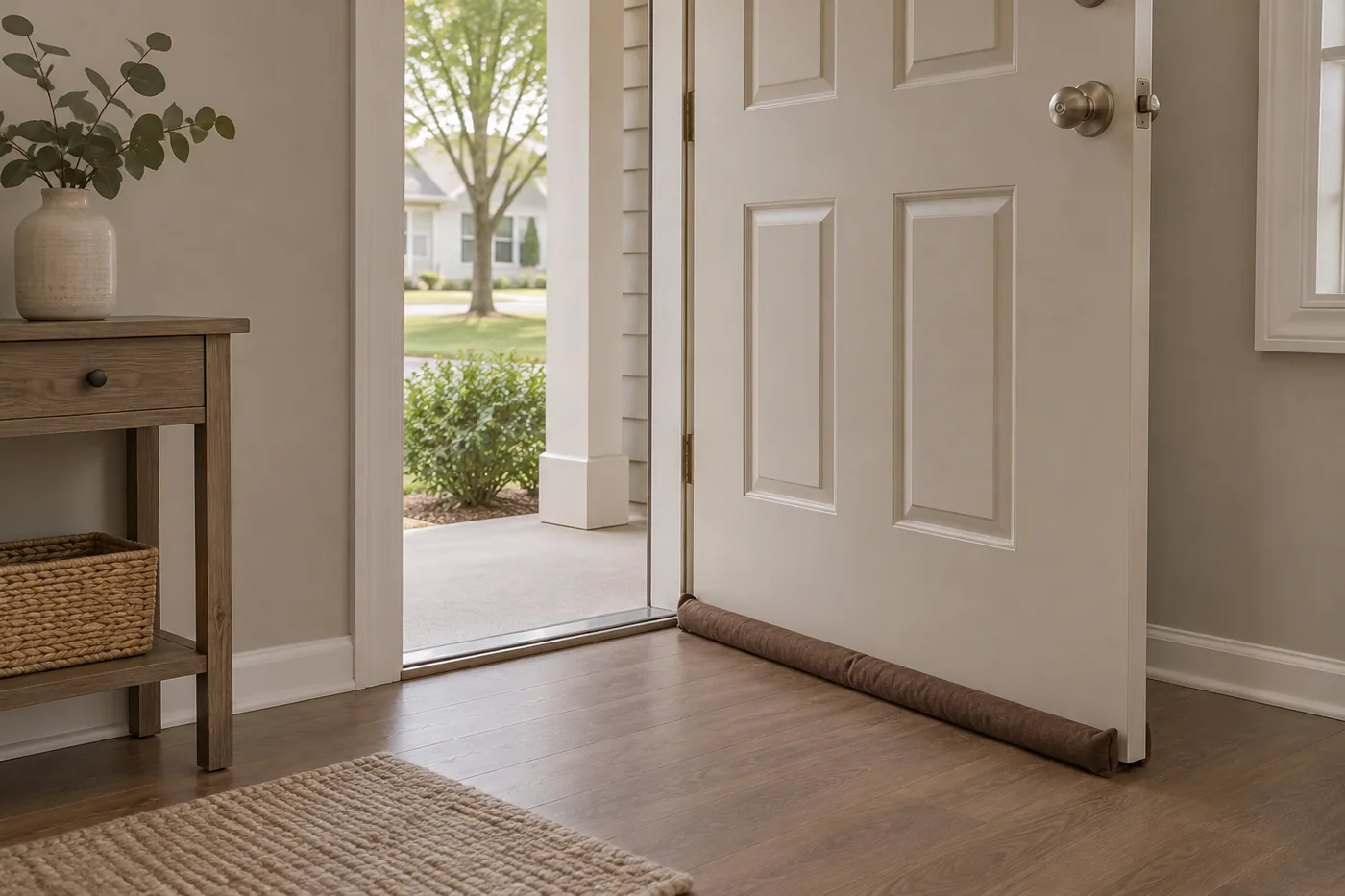 The door must keep opening and latching normally after the draft stop is fitted.
Recheck the sleeve after ordinary door use and when changing weather alters the fit. If it shifts or leaves fresh marks, take it off and send management the photos and measurements. Removability is useful only if you act on a bad fit.
Sources and selection: Frost King's DDS1 specifications and fitting FAQ, Duck's fit information and UL Solutions' door-assembly guide were checked November 24, 2026. Selection focused on permitted installation, moving clearance and unchanged closing action. Manufacturer pricing and retailer stock were not verified; check Amazon for the current offer.
In one sentence
Try a removable sleeve only after locating under-door airflow and confirming permission, clearance and normal latching.
Frost King DDS1 Double Draft Stop
Frequently asked questions
Is door sweep weather stripping the same as the DDS1 fabric sleeve?
No. The DDS1 slides beneath the door with foam tubes held in a fabric case, while other sweeps use different attachment methods and sealing edges. Match the construction to your opening and management's permission, not just the search term.
Which front door weather stripping bottom measurements matter in a rental?
Record door width and thickness, the tightest under-door clearance and the largest gap. Then check the entire swing across the threshold and flooring; a product that fits a closed door can still catch when opened.
Will a bottom of front door seal cover a half-inch gap?
The DDS1 page does not state a maximum gap rating, so its overall dimensions cannot answer that question. Frost King's shared FAQ gives a half-inch figure for a separately named Stanley replacement bottom, not DDS1. Confirm actual clearance and contact before relying on the sleeve.
Can door sweeps and weather stripping go on a fire-labeled apartment entrance?
Management must establish which products are permitted for that assembly. UL Solutions' guide requires manufacturer installation instructions for fire doors and relevant hardware or accessories; a household draft stopper should not be assumed compatible or a substitute for smoke-control gasketing.
Sources
- Frost King DDS1 Double Draft Stop · 2026-11-24
Lists DDS1 at 1-1/4 in. by up to 36 in. wide, brown; slide-under fitting, cuttable foam tubes and folded case ends. Maximum gap coverage and manufacturer list price are not stated. The FAQ's 1/2-in. gap figure is explicitly for a Stanley replacement bottom, not DDS1.
- Duck MAX Triple Draft Seal fit information · 2026-11-24
Fits most doors up to 36 in. wide and 1-3/4-in. doors. Describes slide-on installation without adhesive and adjustment until fins contact the threshold. Used to distinguish construction and fit requirements, not as another pick.
- UL Solutions doors and hardware application guide · 2026-11-24
No numerical clearance or fire rating applied to DDS1. Guide describes door assemblies and manufacturer installation instructions, with hardware and accessories installed under NFPA 80, NFPA 105 and manufacturer instructions.