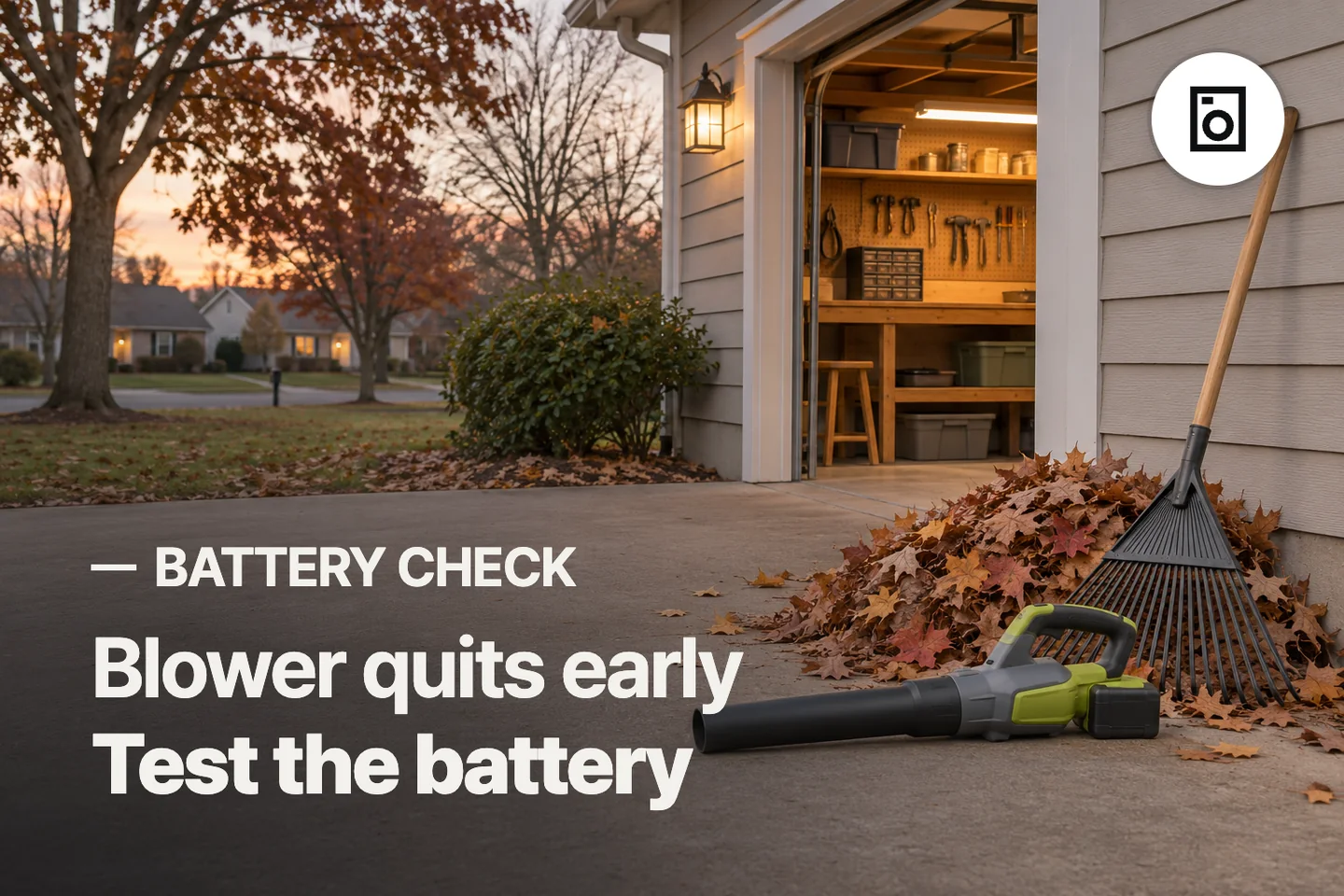
Dinner is getting cold, the porch light is on, and the blower has gone silent with a ribbon of leaves still across the driveway. If that sounds familiar, check the charging conditions before replacing the battery; a sudden stop alone cannot tell you what failed.
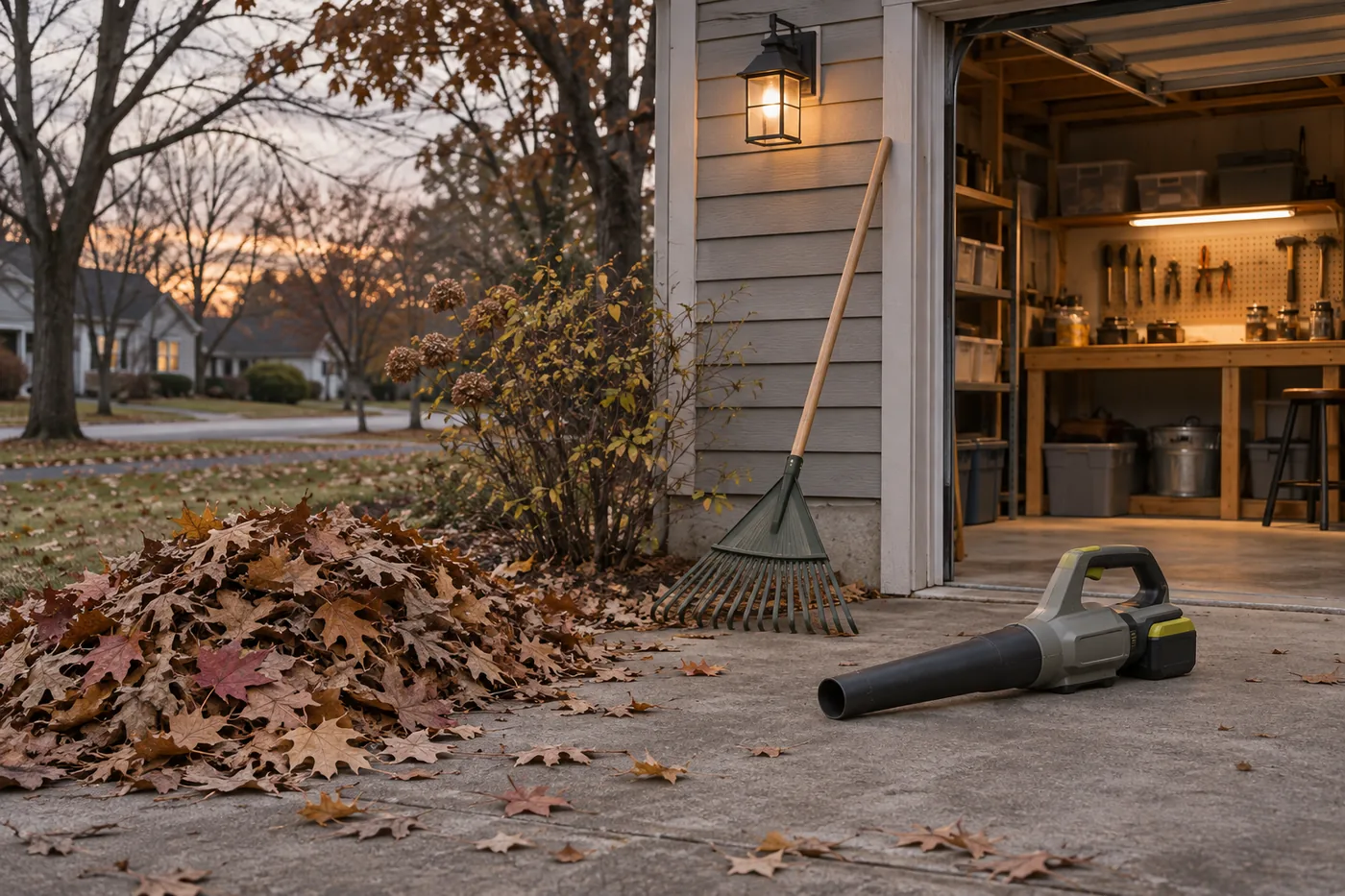 An interrupted evening cleanup calls for a battery check, not an immediate shopping trip.
For the DeWalt DCBL722, sold as the DCBL722B bare tool, I'd start with the existing pack and charger rather than recommend a purchase. DeWalt describes protection against overload, overheating, and deep discharge, so cold weather is a clue to investigate, not proof that the pack is finished.
How we chose
DeWalt's blower specifications, battery specifications, and instruction manual were checked for charging directions and safety limits. The troubleshooting order follows charging conditions, pack connection, and workload; no new battery purchase is needed to begin.
Part 1Get the charging temperature right
Was the charger sitting in an unheated garage? DeWalt's DCBL722 manual says do not charge below 40°F or above 104°F, with surrounding air of 65–75°F preferred, so a garage that feels merely uncomfortable may be unsuitable for charging.
Those limits apply to charging. They do not establish an outdoor operating cutoff or tell you how many minutes the blower loses in chilly weather, and treating them as either would send you toward the wrong fix.
Bring the charging setup into a dry place within the specified range and let the pack reach suitable conditions naturally. DeWalt says to keep the charger away from heat sources and rain or snow, so a heater aimed at the battery is not a shortcut.
Read the indicators for your actual charger. For chargers described in this manual, DeWalt explains that a blinking red light with a yellow light can indicate hot/cold delay; charging resumes when the pack reaches an acceptable temperature.
Wait for the charger's completed-charge indication, not simply a hopeful glance at the battery gauge. DeWalt says that gauge only approximates the charge remaining and can change with temperature and use.
If charging still fails, DeWalt's troubleshooting sequence starts with checking the outlet using a lamp and checking whether a wall switch controls it. Then try the pack and charger in the preferred temperature range; continued failure calls for service.
A temperature delay and a worn-out battery are different problems; establish that charging actually finished before comparing runtime.
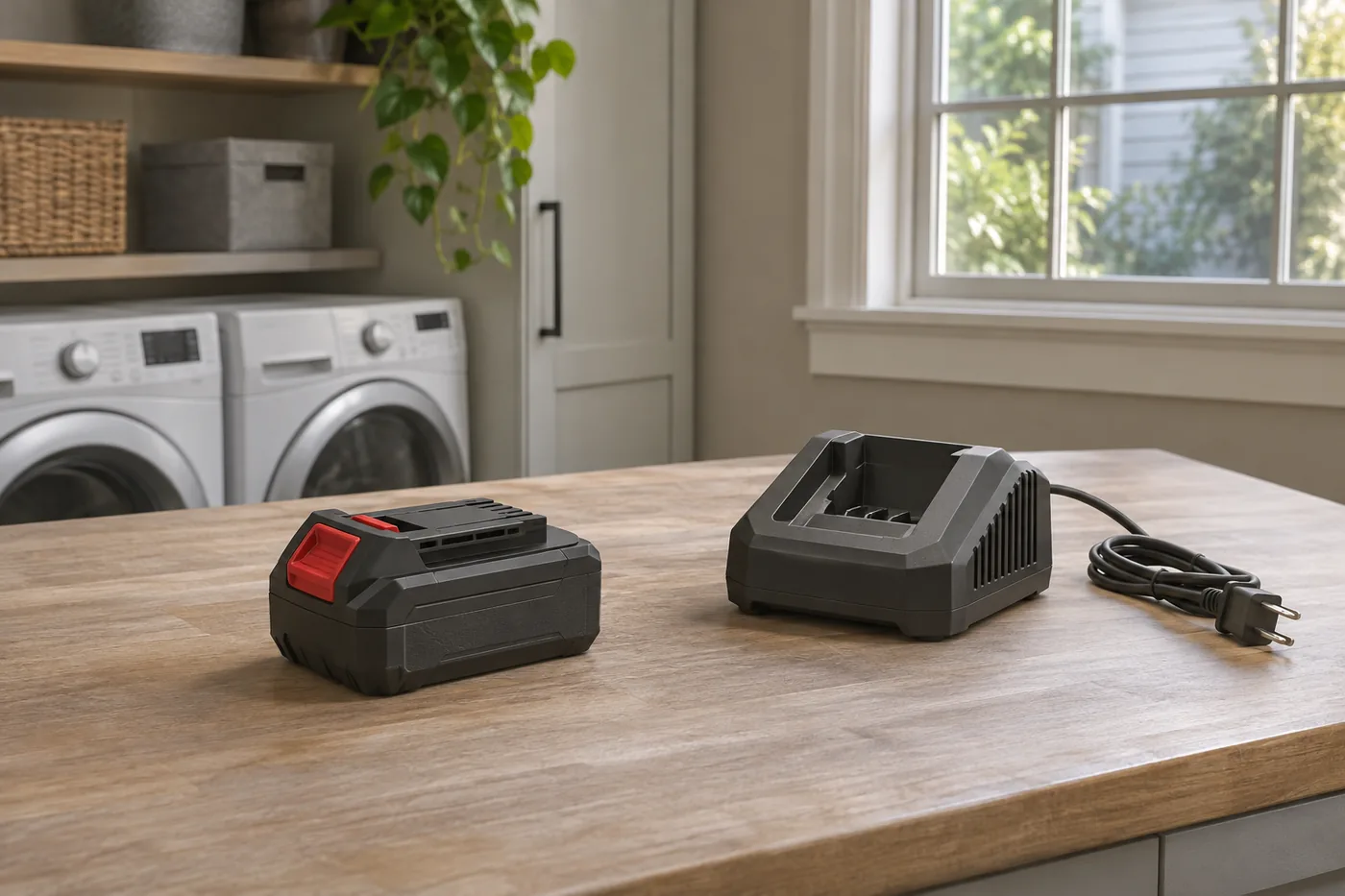 A dry indoor charging location separates the charging check from conditions in the garage.
Part 2Check the fit without opening the pack
Before touching the battery connection, DeWalt requires switching off and removing the pack for inspection, adjustment, or cleaning. That includes releasing the speed lock rather than assuming a silent blower is safely off.
Look over the detached pack, exposed contacts, and slide rails without taking anything apart. DeWalt warns against using damaged batteries or chargers, so a cracked case or damaged terminal ends this home check rather than becoming a repair project.
Keep metal away from exposed terminals. DeWalt warns that metal bridging them can cause a fire, which is why a screwdriver is the wrong tool for scraping out a battery connection.
For the charger exterior, DeWalt specifies unplugging it and using a cloth or soft nonmetallic brush, without water or cleaning solutions. That instruction is not permission to spray the blower connector or reach inside a battery; inaccessible contamination belongs with service.
If the pack is undamaged, follow DeWalt's seating procedure: align it with the rails, slide it fully into place, and confirm it stays firmly attached. A pack that will not seat securely needs attention, not extra force.
Part 3Ease off the speed lock
A full charge does not make maximum speed necessary for every loose leaf. DeWalt gives the DCBL722 a variable trigger and speed lock, so start with enough airflow to move the dry leaves and increase it only where needed.
The published output is up to 450 CFM and 125 MPH with the concentrator nozzle. Those are airflow and airspeed figures, not a promise that a charge will finish your lawn; the opened specifications offer no cold-weather clearing-time guarantee.
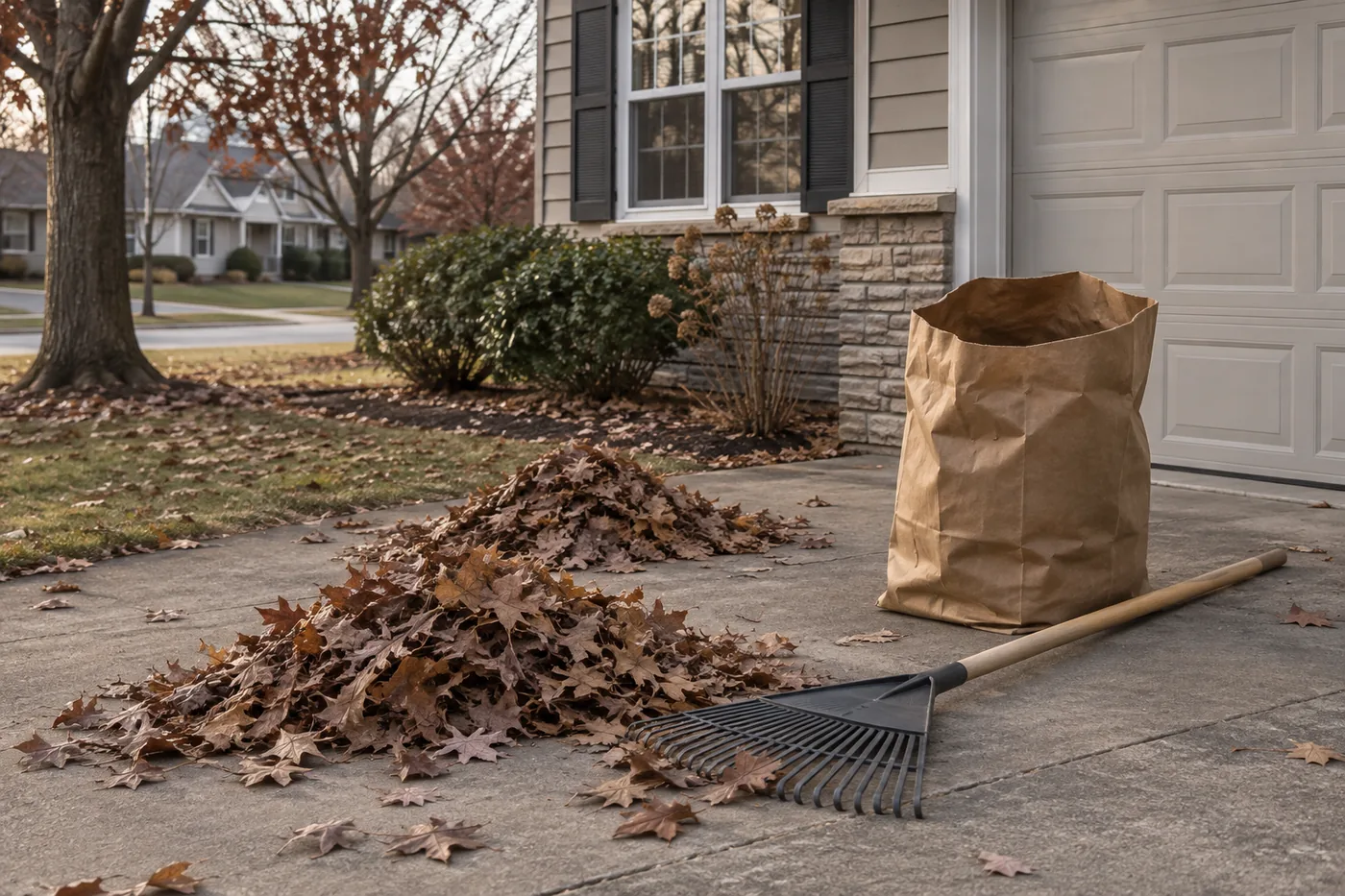 Gathering leaves nearby avoids repeatedly blowing them over ground that is already clear.
Break a dense mound apart with a rake, then move the loose material toward a nearby collection point. That reduces unnecessary blowing, but DeWalt provides no measured runtime gain for this routine, so there is no honest extra-minutes promise to attach to it.
Keep the retry small and the ground dry. DeWalt prohibits wet-surface use and calls for eye and hearing protection, so stronger airflow is not a workaround for rain, snow, or unsuitable ground.
Use the retry to observe whether the shutdown returns under a lighter workload, not to force the blower through repeated cutouts.
Part 4Compare an existing pack, then decide on service
Do you already own another compatible, undamaged pack? Once it is properly charged, comparing it on the same dry patch can help separate a pack-specific problem from trouble that follows the blower, without buying a battery just to investigate.
DeWalt's manual lists the DCB205 as compatible, and its battery page identifies 5Ah capacity and 20V MAX compatibility. That makes it a relevant comparison if you already own one, not a guarantee of longer runtime or a recommendation to order it now.
If only the original pack repeatedly stops, that points toward a pack-related issue. If both stop, the blower or workload remains in question; neither result identifies a failed internal part or replaces a service assessment.
For the next cleanup, DeWalt recommends cool, dry storage away from excessive heat or cold. For extended storage, its manual recommends a fully charged pack outside the charger, with exposed terminals kept away from loose metal such as screws.
The household-cost question needs a measurement, not an airflow specification. Monthly charging cost is wall electricity per recharge multiplied by that month's recharges and your electricity rate; these sources do not supply the wall-energy figure, so no defensible monthly dollar estimate follows from them.
If the shutdown persists after completed charging, secure seating, and a lighter workload, take the blower, battery, and charger to authorized service together. DeWalt says the battery and charger have no user-serviceable internal parts, so leave the pack closed rather than bypassing its protection.
Sources and method: DeWalt's US DCBL722B and DCB205 product pages and DCBL722 instruction manual N733328 supply the specifications and safety directions. The checks prioritize charging conditions, secure connections, and workload before replacement. Last checked November 24, 2026.
In one sentence
Check completed charging, secure pack seating, and speed demand before spending on a replacement battery.
Frequently asked questions
Does a DeWalt blower stopping in cold weather mean its battery is dead?
No. DeWalt describes protective shutdowns for overload, overheating, and deep discharge, as well as temperature-related charging delays. Establish that charging finished, check secure seating with an undamaged pack, and seek service if cutouts persist.
Can I charge the blower battery in a cold garage?
DeWalt's DCBL722 manual says not to charge below 40°F or above 104°F and prefers surrounding air of 65–75°F. Move charging to a dry location within those directions and let the pack reach suitable conditions naturally; these figures are not outdoor operating cutoffs.
Does the DCB205 battery guarantee a full yard cleanup?
No. DeWalt identifies the DCB205 as a 5Ah, 20V MAX battery, and the blower manual lists it as compatible. Those facts do not establish runtime for a particular yard, temperature, leaf depth, or speed setting; use an existing compatible pack for comparison rather than buying one on a coverage promise.
How should I store the battery after fall cleanup?
DeWalt recommends cool, dry storage away from excessive heat or cold. Its manual recommends a fully charged battery outside the charger for extended storage, with exposed terminals kept away from loose metal objects.
Sources
- DeWalt DCBL722B blower specifications · 2026-11-24
Reopened product page: up to 450 CFM and up to 125 MPH with the concentrator nozzle; variable trigger and speed lock. These are output specifications, not cold-weather runtime or yard-coverage figures.
- DeWalt DCBL722 instruction manual N733328 · 2026-11-24
Reopened and read manual: no charging below 40°F or above 104°F; preferred charging air 65–75°F. Also supports hot/cold delay, protection shutdown, DCB205 compatibility, seating, cleaning, wet-surface restrictions, and storage guidance.
- DeWalt DCB205 battery specifications · 2026-11-24
Reopened product page: 5Ah capacity and compatibility with 20V MAX tools and chargers; LED charge indicator. No wall electricity per recharge or cold-weather yard-completion time is established by the page.