Before dawn, the back door of a suburban house opens halfway, then scrapes against a soggy wad of leaves on the stoop. With frost approaching, that little obstruction sets the day's order: lift the wet leaves, expose the walking route, and only then decide what needs a machine.
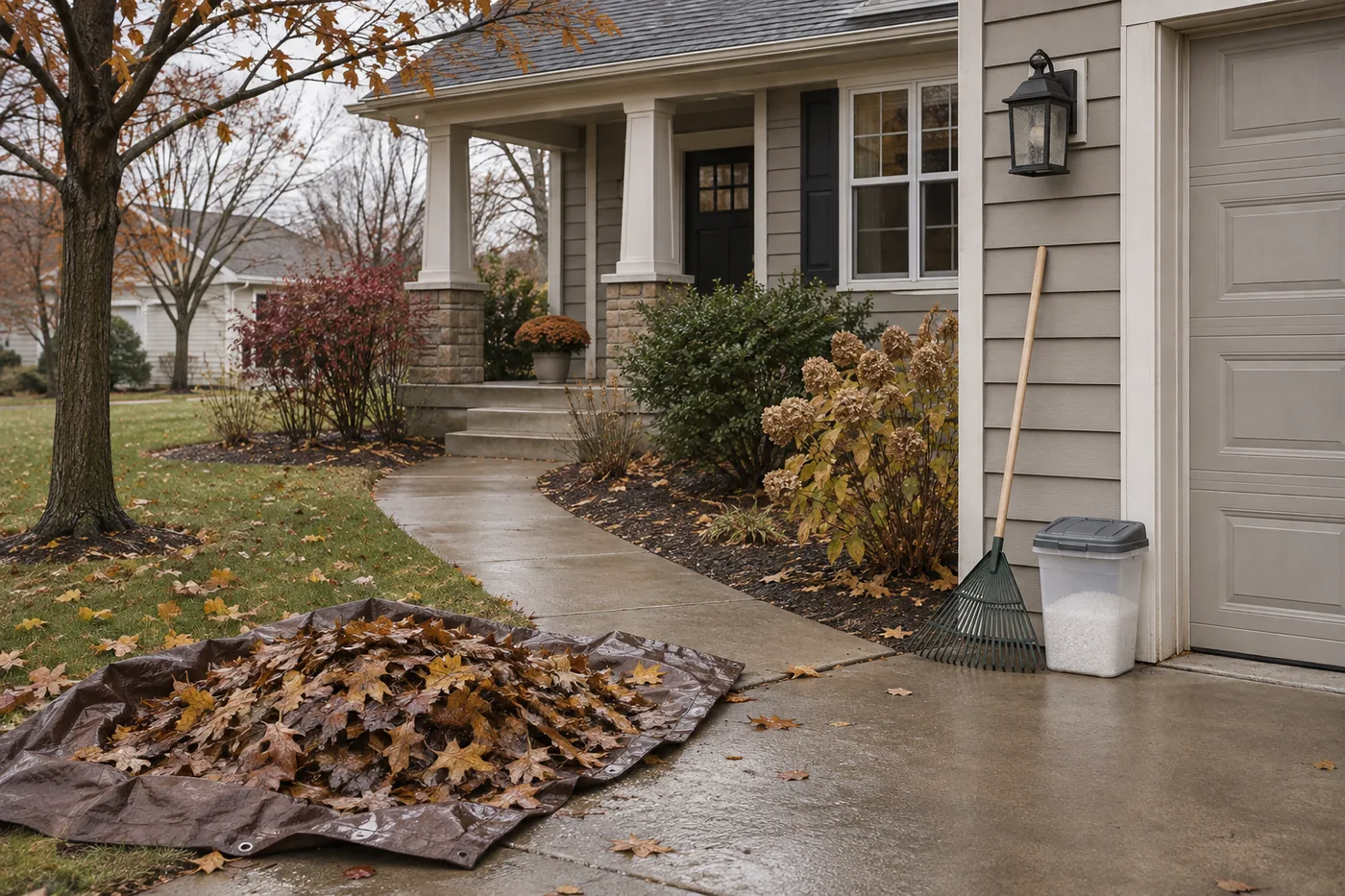 The doorway comes first, before the rest of the yard.
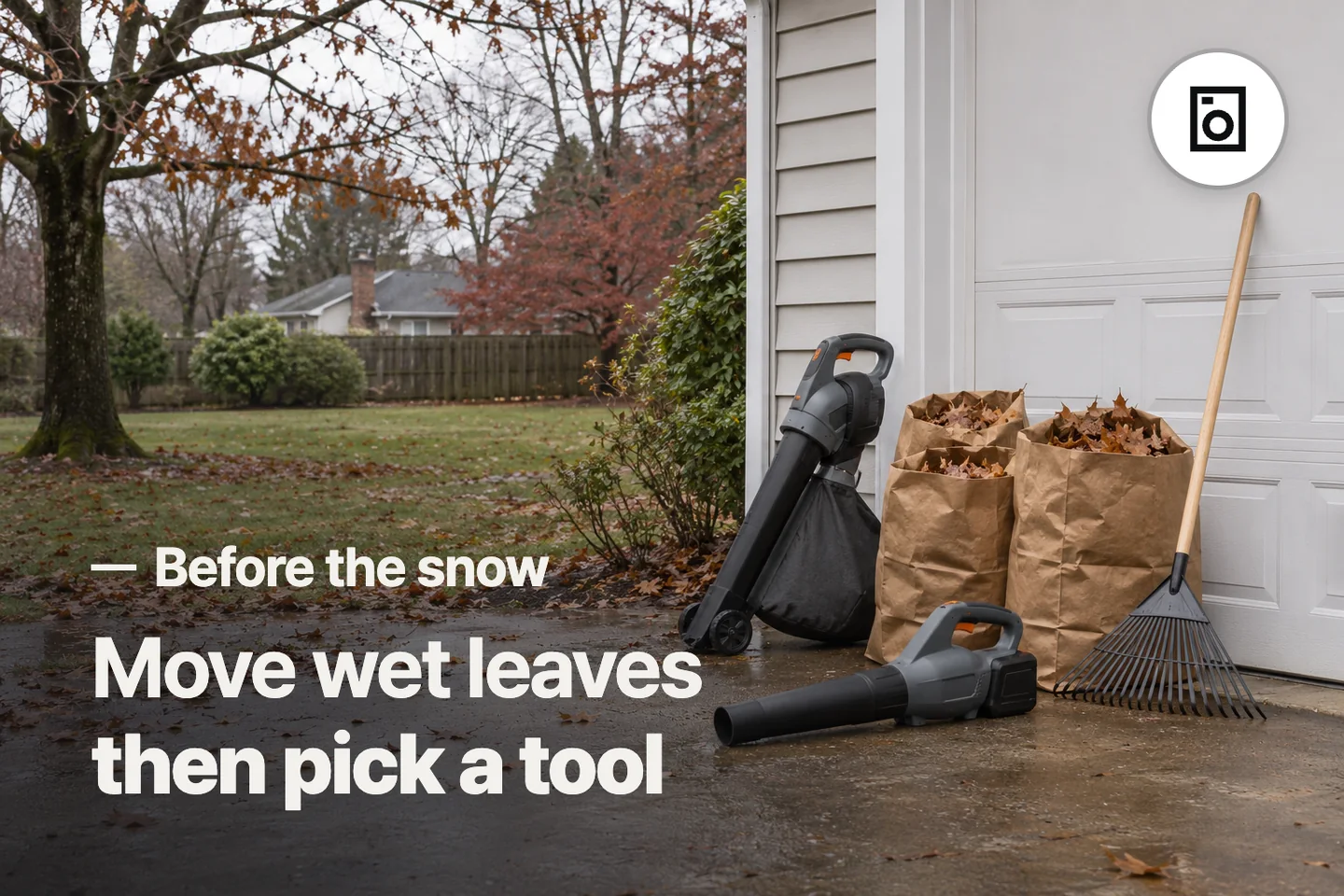
I'd start with a rake and broom, not a new blower. The Toro UltraPlus 51621 Corded Electric Blower/Vacuum is the optional tool I'd consider for dry finishing afterward, because Toro prohibits operating it on wet surfaces and vacuuming wet leaves.
That distinction matters more than the biggest airflow number on the box. This is a pavement-to-beds-to-lawn job, with collection along the way, so the same wet pile doesn't keep turning up somewhere else.
How we chose
Reviewed Toro's US specifications and operator manual alongside Iowa State lawn guidance, EPA salt guidance, and Salt Smart Collaborative's pavement-temperature advice. The optional finishing tool was assessed for dry-material compatibility, usable cord reach, and collection restrictions rather than wet-leaf clearing claims.
Toneandroom picks
Best leaf blower for dry finishing near the house: Top 1
Optional dry-leaf collection near an outlet after manual removal of saturated mats
Toro UltraPlus 51621 Corded Electric Blower/Vacuum
Toro US displayed price: $119.99 before applicable tax and delivery; checked November 24, 2026.
A conditional finishing tool for dry, reachable areas; it does not replace the rake for wet leaves or wet surfaces.
- Blower
- 340 CFM
- Vacuum
- 405 CFM
- Cord max
- 150 ft
- Dry leaves need collection
- An outlet is within reach
- Wet surfaces are prohibited
- Hard debris must stay out
What we considered
Dry conditions
Are both the leaves and the working surface dry?
Toro excludes wet surfaces and permits vacuuming only dry leaves and soft items. That makes manual removal the first step here, with powered finishing postponed until conditions suit the manual.
Outlet reach
Can a suitable cord reach without crossing wet ground?
Toro's maximum extension length is 150 ft, with different minimum wire gauges for different lengths. The tool is included for reachable dry areas, not as a promise of whole-yard coverage.
Clean material
Can hard debris be separated before vacuuming?
Toro warns that acorns, sticks, rocks, and pine cones damage the impeller. Collection is worthwhile only where dry leaves can be separated from those objects without forcing the tube into a pile.
Part 1Expose the driveway before reaching for power
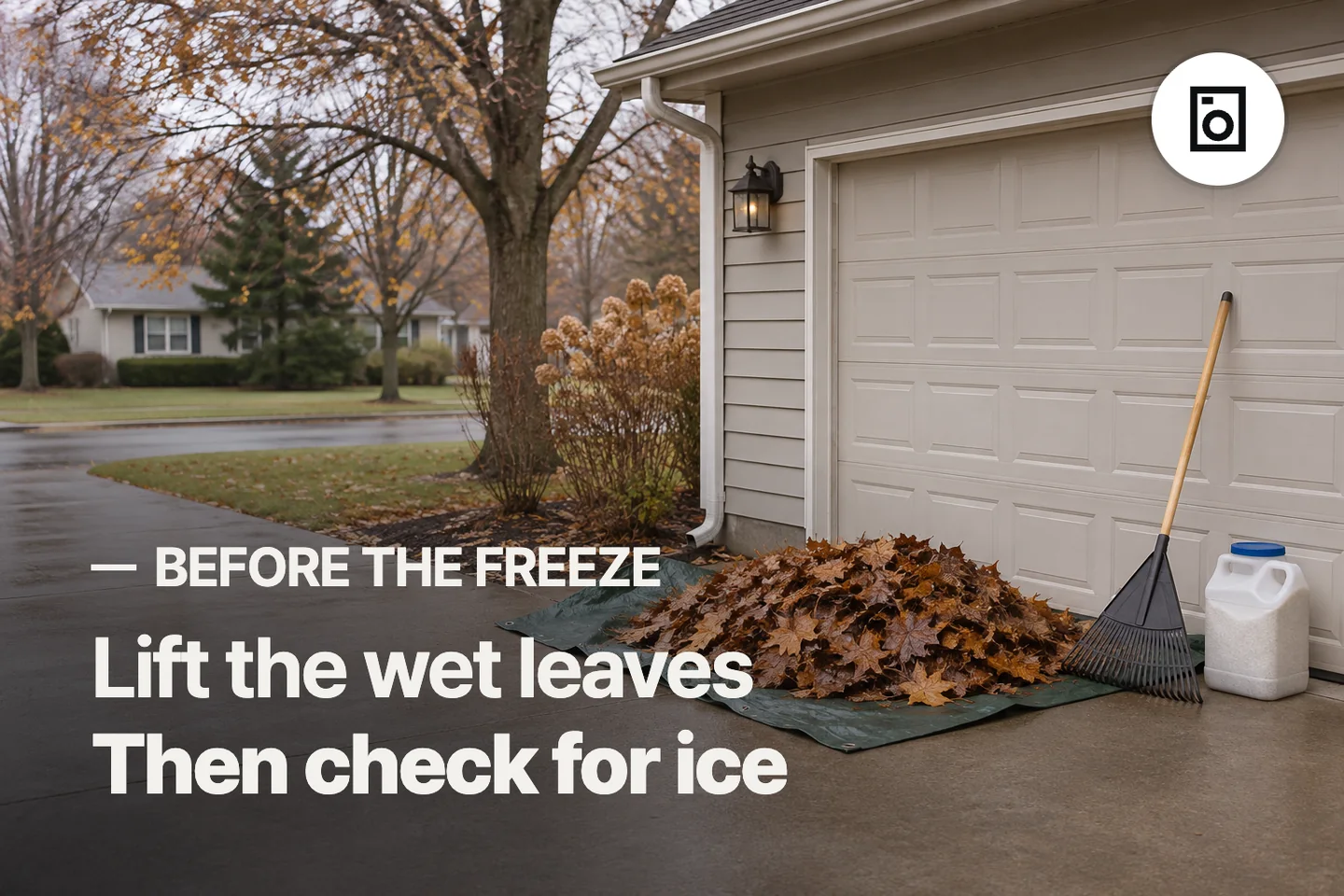
Start with somewhere for the leaves to go: a tarp, compost area, or container accepted by your local yard-waste service. Put it beside the work, out of the walking route, so each loosened section can leave the pavement rather than collect at the next doorway.
Use the rake to peel up the mat and the broom to gather what remains. Work outward from the stoop toward the driveway, because an exposed strip gives you somewhere to inspect before moving farther.
Cleared does not mean ice-free. If the uncovered patch is iced over, stop crossing it and address that surface before continuing; leaves were hiding the problem, not fixing it.
Keep this corded Toro unplugged while the working surface is wet. Toro's manual also prohibits rain exposure and routing the cord through standing water or wet grass, so dry leaves alone don't make a damp driveway suitable.
Finish this section with visible pavement and collected leaves, not a pile pushed into the street.
Part 2Thin the beds, then uncover the grass
At the planting beds, remove the heavy spillover that could fall back across the cleared edge. But don't turn that into a hunt for every leaf beneath a shrub; use the rake gently around stems and leave existing mulch in place.
 A collection tarp keeps the bed-edge cleanup from becoming another pile on the grass.
The lawn needs a different check: can you still see the grass? Iowa State University Extension says a layer hiding most or all of it needs management because the leaves block light the turf needs to make and store food before winter.
Lift wet, dense patches off the lawn rather than pulling everything into a ridge to sit until pickup. That ridge simply leaves another area covered, so collect as you move and send suitable leaves to compost or your local collection service.
A thin, dry scattering can wait for mowing under appropriate conditions. Iowa State recommends chopping it finely enough for the pieces to fall between grass blades, with very little leaf debris visible afterward; a mower pass is not the finish line if broad leaves still hide the turf.
Swipe sideways to see the full table →
| What you find | What to do next | What to check afterward |
|---|---|---|
| Wet mat on pavement | Lift, gather, and collect | Look for ice underneath |
| Thick cover hiding grass | Rake off the excess | Grass is no longer buried |
| Thin, dry leaves on mowable turf | Mulch according to mower instructions | Fine pieces fall between blades |
Part 3Save the Toro vacuum for dry leftovers
Still thinking about feeding that damp heap into a vacuum? Toro's instructions allow only dry leaves and soft items, so this machine belongs to the later cleanup, not the saturated pile in front of you.
For that later job, the Toro UltraPlus 51621 Corded Electric Blower/Vacuum combines blowing and vacuum collection with variable speed. Toro lists 340 CFM in blower mode and 405 CFM in vacuum mode; those are airflow volumes, not permission to collect wetter material.
Toro's US page shows $119.99 before applicable tax and delivery, checked November 24, 2026. That's an upfront purchase rather than a monthly charge; the cited airflow figures don't establish a monthly electricity bill, so budget from your actual runtime and utility rate rather than a guessed operating cost.
Before buying, trace the route from the outlet to the dry work area. Toro limits extension cords to 150 ft and specifies wire gauge by length, so a machine that suits the driveway may still be the wrong answer for the far side of the yard.
The cord isn't included, which makes its required length and gauge part of the purchase decision. If the route can't stay out of wet grass and water, keep the rake in service instead.
Part 4Keep hard debris out of the collection bag
Dry leaves still need sorting. Toro warns that sticks, rocks, acorns, and pine cones can damage the impeller, so don't treat a mixed driveway pile as vacuum-ready just because the rain stopped.
Keep the required bag and attachments fitted, and follow Toro's instruction not to force the tube into debris. If it clogs, Toro says to switch off, unplug, and wait for all moving parts to stop before removing the obstruction.
Toro also warns against operating near bystanders or pets because blown debris can cause injury. That means clearing the work area matters even for a short finishing pass; it isn't a reason to rush the last pile while someone walks past.
Part 5Treat remaining ice, not the leaf pile
Return to the walking route after collection. With leaves removed, mechanically clear removable snow or ice, then assess any bonded ice against the deicer's temperature and surface instructions instead of shaking granules through the debris.
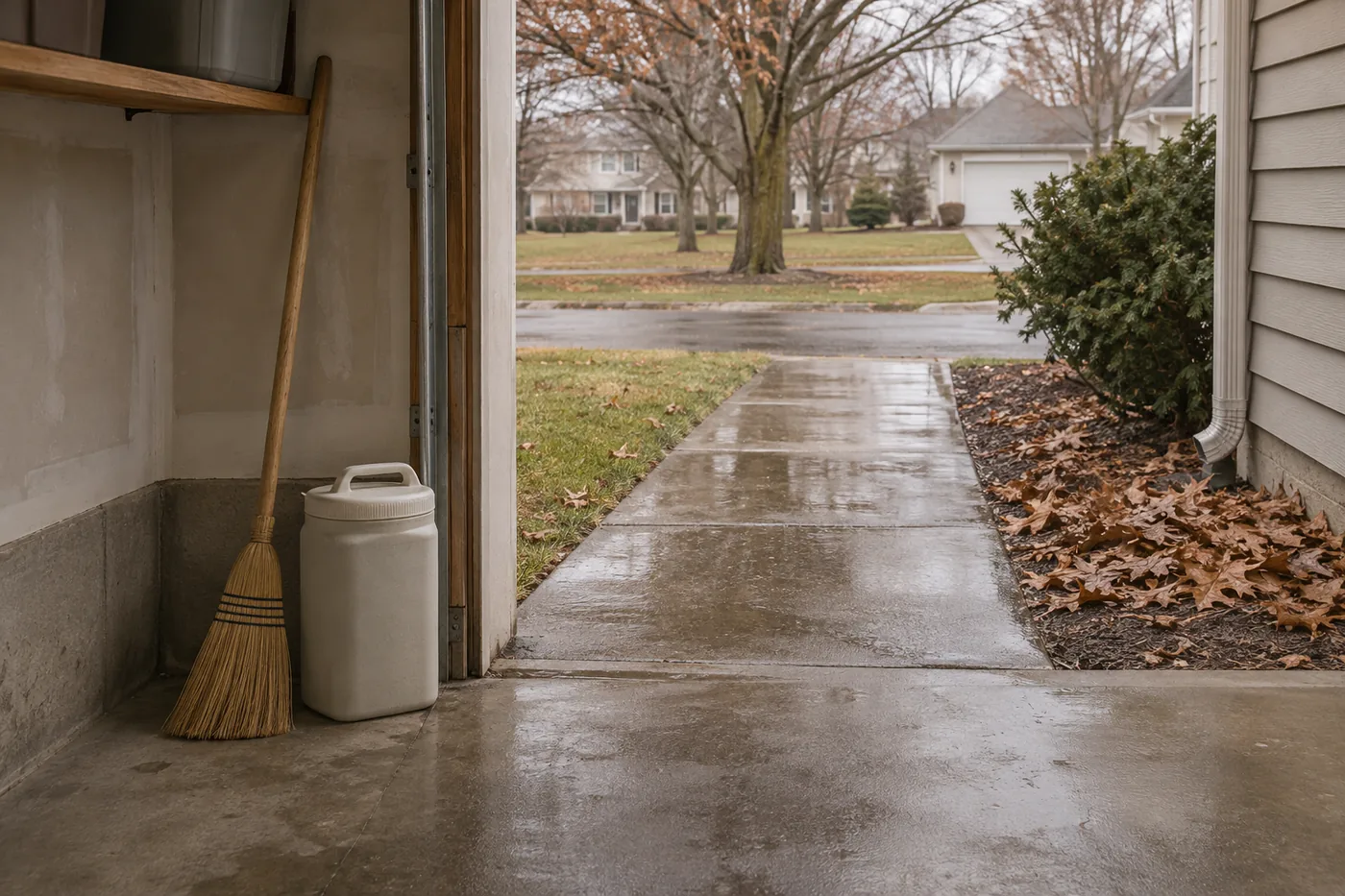 Check the pavement itself before deciding whether deicer is needed.
Pavement temperature matters. Salt Smart Collaborative gives the example of pavement warming above 32°F while the air remains below freezing: using air temperature alone in that situation can waste salt.
That isn't a universal treatment threshold or household dose. It means the forecast is a prompt to inspect, while the product label and actual pavement conditions determine whether and how to treat the cleared patch.
The EPA says excess salt pollutes drinking-water sources, harms aquatic life, and damages infrastructure. So keep any needed application targeted to compatible pavement, not the lawn or collected leaves, and don't add more simply to make the surface look treated.
The useful result is uncovered grass and an inspected walking route, not an empty yard at any cost. If the property stays soaked, finish the manual collection and leave the dry-only tool in the garage.
Sources and selection: Toro's US product page and operator manual, Iowa State University Extension, EPA guidance, and Salt Smart Collaborative informed the cleanup sequence. The optional machine was assessed for dry-material compatibility, cord reach, and collection restrictions. Sources and Toro's displayed price were checked November 24, 2026; tax, delivery, local disposal rules, and household electricity costs depend on your circumstances. The tool's inclusion reflects those published restrictions, not a claim that it can handle wet-leaf cleanup.
In one sentence
Lift saturated leaves manually, then reserve the Toro for dry leaves on dry working surfaces.
Toro UltraPlus 51621 Corded Electric Blower/Vacuum
Check price on AmazonFrequently asked questions
Can a leaf blower vacuum collect wet leaves?
Not this Toro model. Its manual limits vacuuming to dry leaves and soft items and prohibits wet-surface operation, so lift wet mats with manual tools and save vacuuming for suitable dry conditions.
Can I use this electric leaf blower on a damp driveway?
Toro prohibits using it on wet surfaces or in rain and routing the cord through wet grass or standing water. Drying leaves do not override those working-surface and cord-route restrictions.
Do all fallen leaves need removing from the lawn?
Iowa State says layers hiding most or all of the grass need management. A thin, dry layer can be mulched finely enough for pieces to fall between grass blades, leaving very little visible debris.
Should ice melt go down before the leaves are removed?
For this cleanup, remove the leaves and mechanically clear removable ice or snow before assessing remaining bonded ice. Match any deicer to its label, the surface, and pavement temperature rather than spreading it through the leaf pile.
Sources
- Toro UltraPlus 51621 Corded Electric Blower/Vacuum · 2026-11-24
US displayed price $119.99; model 51621; 340 CFM blower mode and 405 CFM vacuum mode. Variable speed and blower/vacuum conversion listed. Extension cord not included according to the operator manual.
- Toro UltraPlus operator manual · 2026-11-24
Model 51621; maximum extension cord 150 ft. Minimum gauges: 16 AWG at 25 or 50 ft, 14 AWG at 100 ft, 10 AWG at 150 ft. Prohibits wet-surface operation and rain exposure; vacuum only dry leaves and soft items; hard debris damages impeller.
- Iowa State University Extension: leaves on lawns · 2026-11-24
Updated October 10, 2025. Gives no numerical leaf-depth threshold: manage cover hiding grass; mulch thin, dry leaves into pieces that fall between blades, with very little debris visible afterward.
- EPA: salt in the environment · 2026-11-24
Updated December 22, 2025. Provides no household deicer dose; attributes drinking-water pollution, aquatic harm, and infrastructure damage to excess environmental salt.
- Salt Smart Collaborative: avoiding salt waste · 2026-11-24
Uses pavement rising above 32°F while air is below freezing as an example of waste caused by relying on air temperature alone. No universal household application rate adopted.