213.9 lb is a substantial thing to move out of a garage when a winter storm is approaching. That's Champion's published weight for the 201175, and it makes the cleared route outside part of the same decision as keeping a furnace blower and refrigerator running.
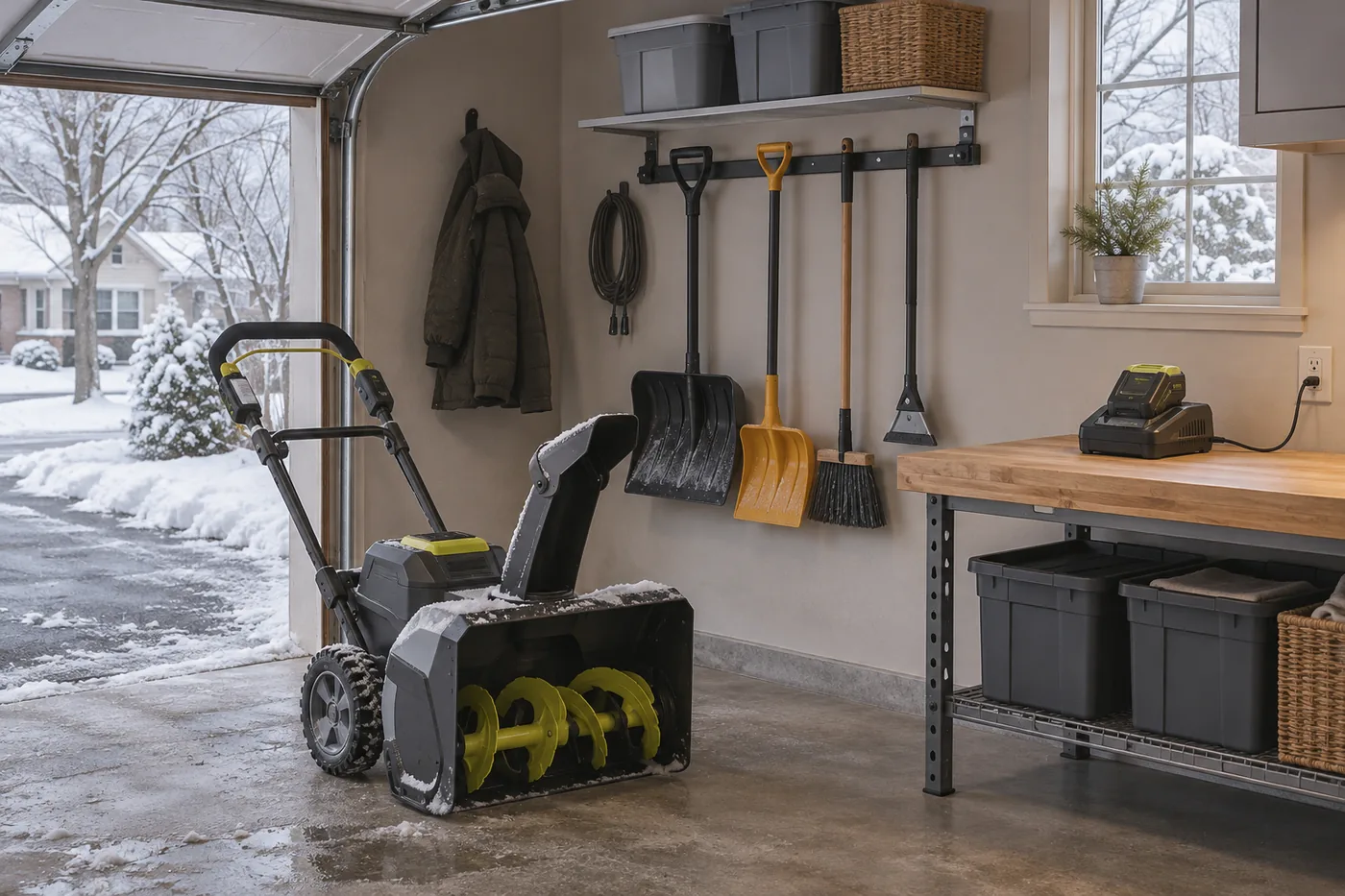 Winter preparation starts with a clear route out of storage, not a generator running beside the snow blower.
I'd choose the Champion Power Equipment 201175 8500W Electric Start Dual Fuel Inverter for managed essentials with a fuel-fired furnace, not unrestricted garage heat. That choice depends on checking the complete furnace demand and charger input, then arranging a suitable outdoor position and electrical connection before an outage.
How we chose
Reviewed Champion's published specifications, appliance examples and safety guidance, EGO's charger page, CDC guidance and the prior Amazon listing. The three checks are fuel-specific continuous output, complete appliance demand, and outdoor placement with a suitable house connection; blocked sources keep their earlier check dates.
Toneandroom picks
Best dual fuel inverter generator for winter essentials: Top 1
Managed winter essentials with a fuel-fired furnace, refrigerator and optional garage loads
Champion Power Equipment 201175 8500W Electric Start Dual Fuel Inverter
Amazon.com search listing: $1,852.50 among new offers, no featured offer; checked 2026-11-14. Revisit blocked 2026-11-24. Tax, shipping and checkout total unconfirmed. Price varies; check Amazon.
The published example loads fit either fuel's running rating before unresolved charger and complete-furnace demand. It suits a household prepared to verify those loads and arrange outdoor placement and the furnace connection first.
- Gas running
- 7,000W
- LPG running
- 6,300W
- Output
- 120/240V
- Weight
- 213.9 lb
- You can schedule optional loads
- You have an outdoor setup plan
- Confirm full furnace and charger demand
- Plan movement of a 213.9 lb unit
What we considered
Fuel output
Which fuel will supply the planned continuous loads?
Champion rates the machine at 7,000W running on gasoline and 6,300W on propane. A propane-first plan therefore uses the propane limit rather than the 8,500W starting headline.
Complete demand
Are the whole furnace and charger included?
Champion's example fan, refrigerator and small-heater upper running values add to 2,700W. That leaves the charger's input and the furnace's other components unresolved, so the example is not approval for every simultaneous load.
Placement
Can the machine reach a suitable outdoor spot and connection?
The published weight is 213.9 lb despite the included wheels. CDC outdoor clearance guidance and Champion's transfer-switch requirements make the route and electrician's connection plan part of suitability.
Part 1Begin with the fuel and the furnace
Champion lists 7,000W running on gasoline and 6,300W on propane, with 8,500 starting watts on either fuel. So a household planning to use propane needs to build its continuous-load budget around the lower running figure, not the larger number in the product name.
The following figures come from Champion's appliance chart, rather than measurements from your equipment. Because its furnace entry covers a fan, the rest of the furnace still needs accounting for.
Swipe sideways to see the full table →
| Load to identify | Example running demand | Example starting demand |
|---|---|---|
| Furnace fan, 1/2 HP | 300–800W | 800–1,600W |
| Refrigerator | 150–400W | 800–1,200W |
| Small space heater | 750–1,500W | No additional starting watts shown |
| Snow-blower battery charger | Not listed by the maker | Not listed by the maker |
Using those upper running values gives 2,700W before the charger: 800 + 400 + 1,500. A conservative overlap of the chart's starting figures gives 4,300W before the charger and other furnace components, so the known examples fit on paper without establishing that your whole setup will.
Champion also specifies 120/240V output and less than 3% total harmonic distortion. That published waveform figure is useful for the furnace installer, but it does not confirm furnace compatibility or the correct grounding arrangement.
Put the actual furnace and refrigerator labels ahead of the house's floor area.
Part 2Let garage heat wait its turn
A small plug-in heater is not a stand-in for every permanently wired garage heater. The table budgets only for Champion's space-heater category, so it says nothing about whether that heater can actually warm your garage or tolerate its operating conditions.
Would you rather keep the food cold or the workbench warm? I'd leave optional garage heat off first when the remaining demand is uncertain, rather than spend the available capacity on comfort before the essential motors have started.
That same distinction applies to the home's main heat. A fuel-fired furnace blower is not an electric furnace or heat pump, so an electrically heated home needs a fresh load calculation rather than a larger allowance based on room count.
For snow-blower charging, EGO's CH5500 page lists approximately 60 minutes for a 7.5Ah battery. But that gives a charging schedule, not the AC input needed for this power budget; battery voltage is not a substitute for the charger's input label.
Keep the existing charger in the plan and find its input rating before adding it to the total. Then schedule charging after essential loads have started, with optional heat paused if necessary, and follow EGO's charger and battery temperature instructions rather than assuming a cold garage is suitable.
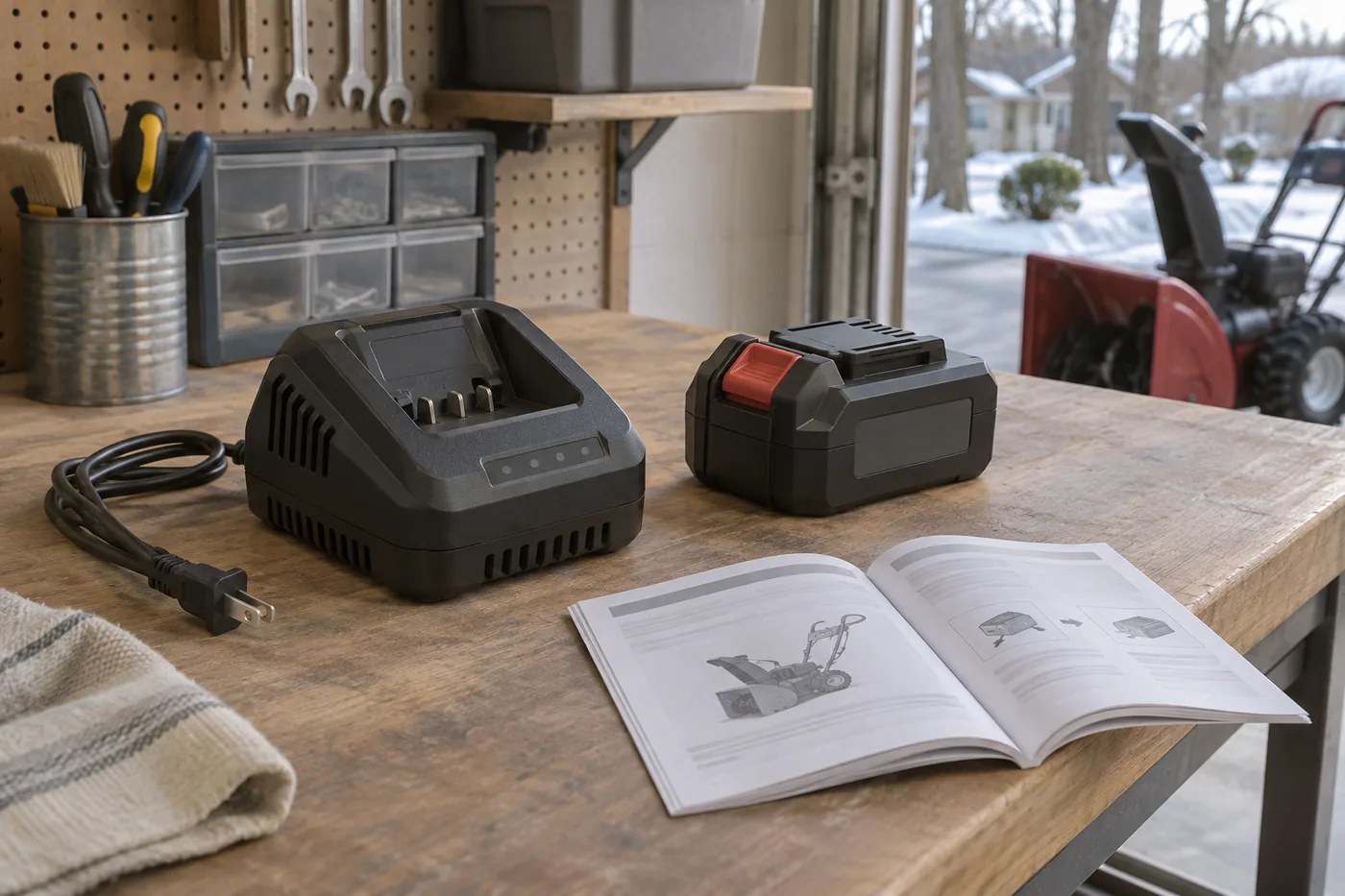 The charger's AC input label closes a gap that battery capacity and charging time cannot.
Part 3The operating spot comes before the outlet
Champion lists dimensions of 33.4 by 29.1 by 26 inches, with wheels included. But wheels do not settle how a 213.9 lb machine crosses steps or a snowy path, so the route from storage deserves checking before delivery.
The CDC says generators belong outdoors, more than 20 feet from windows, doors and vents, never in a garage even with the door open. Its guidance also calls for battery-operated or battery-backup carbon monoxide detectors indoors; opening a garage door is not an alternative.
Champion's safety guidance likewise calls for outdoor operation and exhaust directed away from people and buildings. That guidance says CO Shield does not replace indoor CO alarms, so an automatic shutdown feature does not make an unsuitable location acceptable.
For the hardwired furnace, Champion calls for a qualified electrician and a properly installed transfer switch before connecting to house wiring. Its 120V 20A household receptacles do not each deliver the generator's total output, so the connection plan also needs circuit limits and supply-leg balance checked.
Champion quotes 64 dBA at 23 feet, but that is not a bedroom noise reading. Its runtime claims are up to 14 hours on a 5.33-gallon gasoline tank or 12 hours on a 20-lb propane tank, both at 25% load; neither predicts this mixed winter schedule.
Champion also warns against refueling a hot or running generator. Because winter brings precipitation as well as outages, resolve the manufacturer's permitted weather-protection setup in advance rather than improvising a cover.
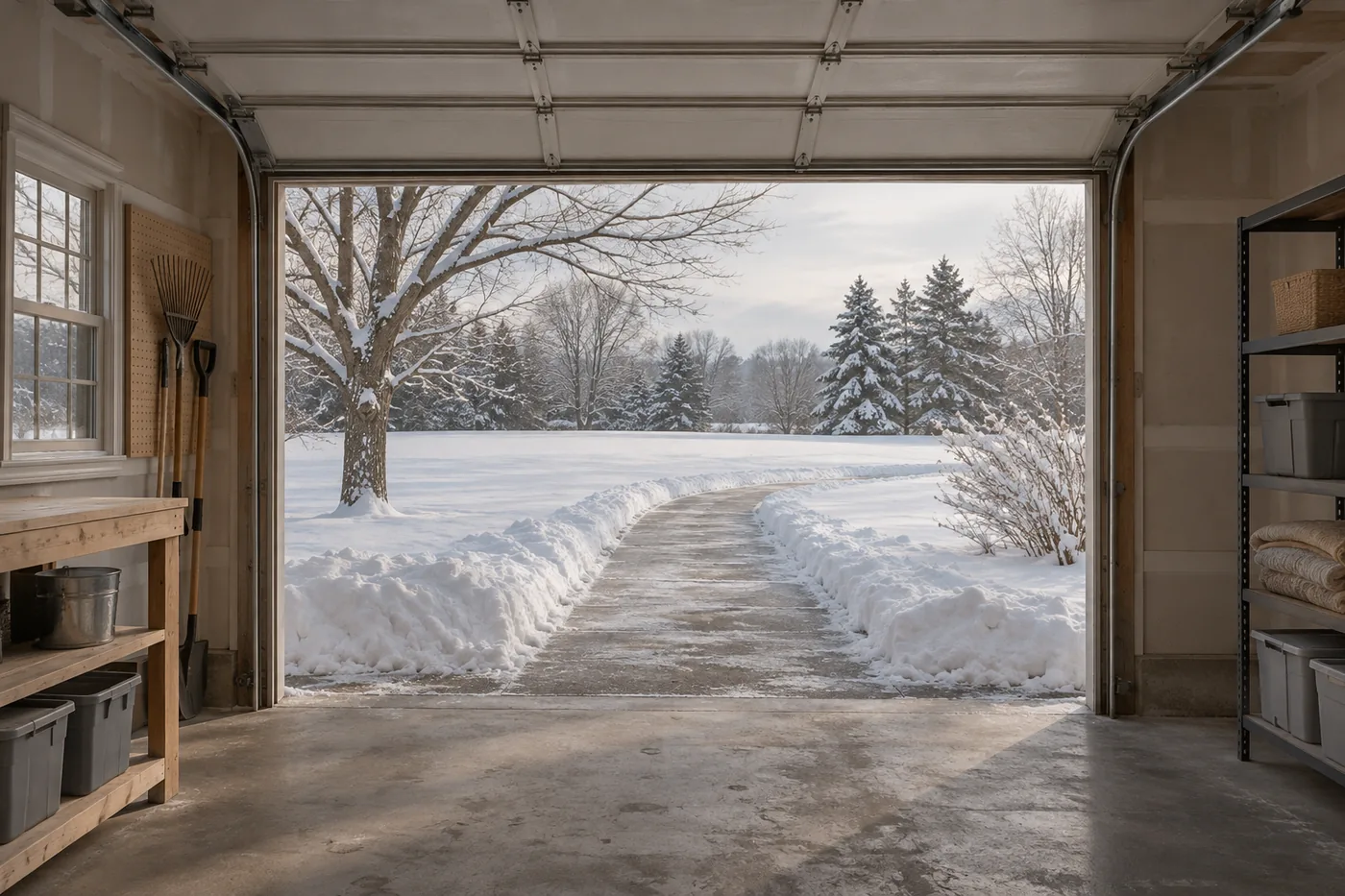 A clear storage route and a safe operating location are separate checks.
Part 4Budget for the connection, not just the machine
The earlier Amazon.com search listing showed $1,852.50 among new offers on November 14, 2026, with no featured offer. That was a search result, not a checkout total; the November 24 revisit was blocked, so Price varies; check Amazon.
Tax, shipping and current delivery remain unconfirmed, as does a current manufacturer list price. Because electrical preparation is separate from the machine's advertised price, an electrician's connection quote belongs in the purchase decision too.
I'd keep this model on the list for a household willing to manage loads and move substantial equipment. But I would pass if the expectation were automatic whole-house backup, continuous electric heating or running it inside the garage.
Sources and method: Manufacturer specifications, the appliance chart and safety guidance were reviewed alongside EGO's charger information, CDC guidance and the earlier Amazon listing. Selection weighs continuous output, unresolved appliance demand and placement/connection requirements. EGO was refreshed November 24, 2026; blocked Champion, CDC and Amazon pages retain their November 14, 2026 source checks and price basis. Calculations use published examples, not household measurements.
The workbench can wait; the furnace connection cannot.
In one sentence
Champion's 201175 fits managed winter essentials on paper, with the complete furnace and charger demand still to confirm.
Champion Power Equipment 201175 8500W Electric Start Dual Fuel Inverter
Check price on AmazonFrequently asked questions
Can the Champion 201175 run a furnace and refrigerator together?
Champion's chart gives a 1/2 HP furnace fan 300–800W running and a refrigerator 150–400W running. These examples fit the published output, but the complete furnace demand, motor starts and circuit arrangement still require checking.
Can I add a garage heater during a winter outage?
Only after identifying its actual load. The 750–1,500W example is Champion's small space-heater category, not a rating for every installed garage heater; optional heating should wait when capacity is uncertain.
How much generator power does a snow-blower battery charger need?
Use the charger's AC input label or manual. EGO's CH5500 page gives approximately 60 minutes for a 7.5Ah battery but does not establish the AC input watts needed for this load plan.
Can the generator run in a garage with the door open?
No. CDC guidance excludes garages even with doors open and calls for outdoor operation more than 20 feet from windows, doors and vents, with battery-operated or battery-backup CO detectors indoors.
Sources
- Champion Power Equipment 201175 8500W Electric Start Dual Fuel Inverter · 2026-11-14
Original source check retained because the 2026-11-24 revisit was blocked. 7,000W gasoline and 6,300W propane running; 8,500W starting on either; 120/240V; less than 3% THD; 213.9 lb; 33.4 x 29.1 x 26 in; 120V 20A household outlets; 64 dBA at 23 ft; up to 14 hours on 5.33 gallons gasoline or 12 hours on 20 lb propane, both at 25% load.
- Champion appliance wattage chart · 2026-11-14
Original check retained; revisit blocked 2026-11-24. 1/2 HP furnace fan: 300–800W running, 800–1,600W starting. Refrigerator: 150–400W running, 800–1,200W starting. Space heater: 750–1,500W running with no additional starting demand shown. Derived upper examples: 2,700W running and 4,300W overlapping starts, before charger and other furnace demand.
- Champion generator safety guidance · 2026-11-14
Original check retained; revisit blocked 2026-11-24. No numerical allowance taken. Outdoor operation, exhaust direction, indoor CO alarms, qualified electrician and transfer switch for house wiring; no hot or running refueling and no improvised weather cover.
- CDC carbon monoxide prevention · 2026-11-14
Original check retained; revisit denied 2026-11-24. Generator placement more than 20 feet from windows, doors and vents, never in garages even with doors open; battery-operated or battery-backup indoor CO detectors.
- EGO CH5500 Rapid Charger · 2026-11-24
CH5500 charges EGO 56V ARC Lithium batteries; approximately 60 minutes for a 7.5Ah pack. Opened page does not state the AC input watts needed for this budget; charging time is not input demand.