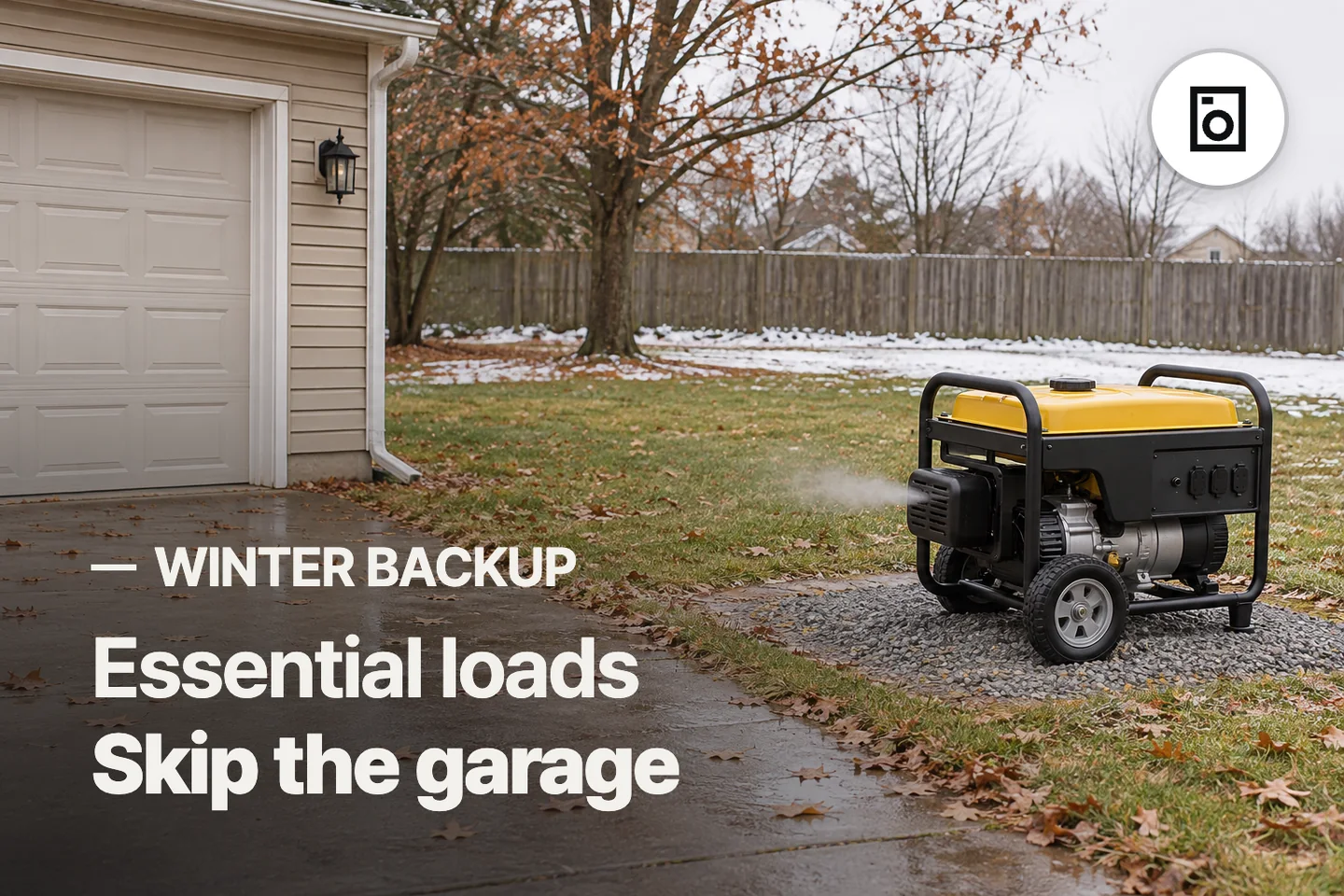
Twenty feet is a useful place to start when a winter storm threatens a suburban house with a dark kitchen and an idle furnace. That's CPSC's minimum distance from homes for an outdoor portable generator, with exhaust directed away—not a suggestion to roll it just beyond the garage door.
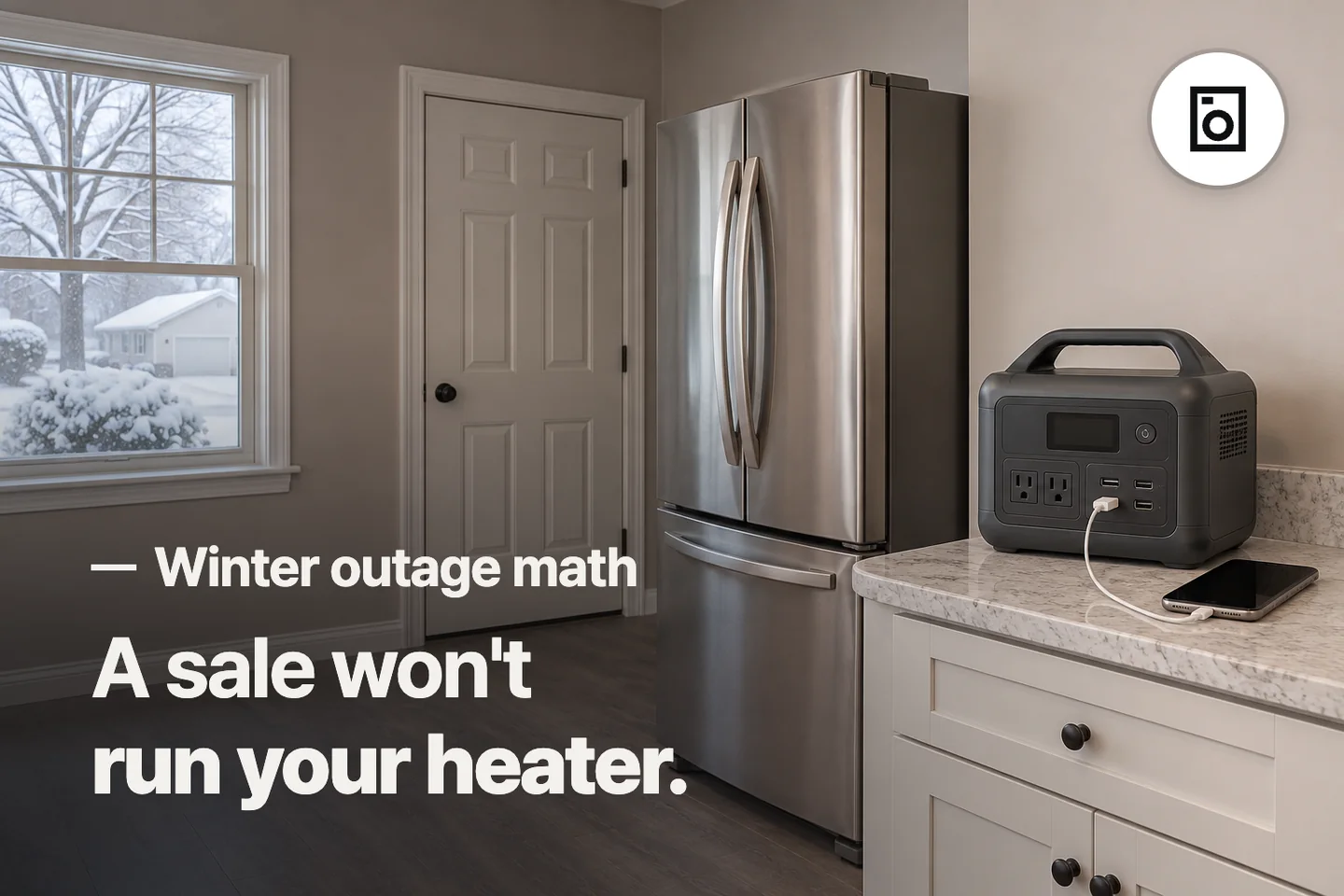
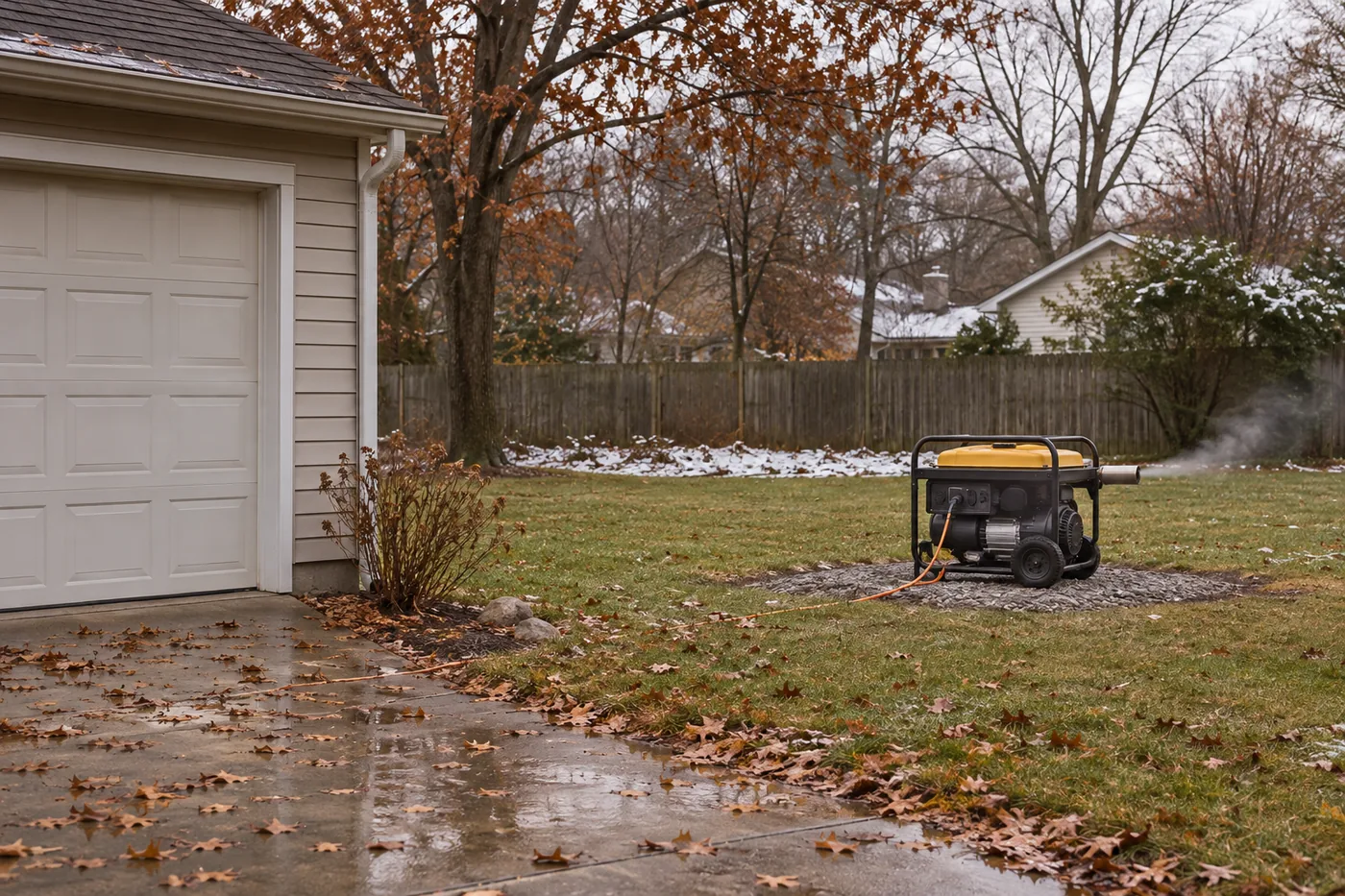 A winter outage plan starts with the space beyond the kitchen window.
I'd choose the Champion Power Equipment 201175 Dual Fuel Inverter Generator for selected essentials, provided an electrician has checked the loads and the property has a suitable outdoor operating spot. But I would not choose it for a household expecting automatic whole-house power or planning to run it in the garage. Those are different jobs.
How we chose
Reviewed Champion's US product specifications and generator-safety guidance alongside CPSC's carbon-monoxide advice. The three checks were outdoor operating space, essential-load capacity on either fuel, and the fuel supplies and load conditions behind advertised runtime; no measured winter performance is claimed.
Toneandroom picks
Best dual fuel inverter generator for storm essentials: Top 1
A US homeowner managing essential loads during a winter outage, with suitable outdoor space and an electrician-verified connection plan
Champion Power Equipment 201175 Dual Fuel Inverter Generator
US manufacturer page: no price displayed, checked November 24, 2026. Amazon.com: Price varies; check Amazon. Delivered price and stock unverified.
I'd choose it for manually managed essentials because it offers gasoline or propane operation and published 120/240V output, provided the loads and installation are professionally checked.
- Gas running
- 7,000 W
- LPG running
- 6,300 W
- Starting
- 8,500 W
- Output
- 120/240 V
- You can manage essential loads
- You want either fuel option
- Propane reduces running output
- Outdoor placement is mandatory
What we considered
Outdoor space
Can the property accommodate outdoor operation away from homes?
CPSC specifies at least 20 feet from homes, exhaust facing away, and no operation in garages. I would rule out this portable setup where the available outdoor space cannot meet that guidance.
Essential loads
Will the selected circuits fit when propane is the available fuel?
Champion rates continuous output at 6,300 W on propane versus 7,000 W on gasoline. I favor a professionally checked circuit plan that does not depend on the higher gasoline allowance.
Fuel planning
Does the outage plan account for the conditions behind runtime?
Champion's maximum runtime figures use 25% load and specified fuel supplies. I treat them as planning references, not proof that the household can run unattended through a freezing night.
Part 1Measure the outdoor space before the electrical panel
CPSC says never inside a home or garage, even with doors and windows open. So the useful measurement isn't the width of the garage doorway; it's whether an outdoor location meets that distance from homes, including nearby neighbors, while directing exhaust away from buildings and openings.
That location also needs a winter plan. Champion says not to operate under a canopy-like structure unless its manufacturer specifically supplies safe-use instructions, so a pop-up shelter isn't an automatic answer to falling snow. Ask Champion about weather protection compatible with this exact model before counting that patch of yard as usable.
The same caution applies to CO Shield, which Champion says shuts the engine down when it detects unsafe elevated carbon monoxide. But CO shutoff does not replace placement or indoor alarms; CPSC calls for battery-operated or battery-backup CO alarms on every level and outside sleeping areas.
A convenient parking spot is not necessarily an operating spot.
Part 2Plan essential circuits around the lower fuel rating
Champion lists 7,000 running watts on gasoline and 6,300 on propane, with 8,500 starting watts on either fuel. That means changing fuels preserves the advertised starting rating but reduces the continuous allowance; I'd have the essential-load plan work on propane rather than depend on gasoline's higher figure.
For this house, the planning list starts with refrigeration, necessary lights, communications, and heating equipment only if its electrical requirements and connection are suitable. But a list of appliance names isn't a load calculation: the electrician needs their actual ratings and motor-starting requirements, not a guess based on what usually stays plugged in.
Champion's published output is 120/240V, with less than 3% total harmonic distortion. Those specifications help describe the machine, but they don't establish that a particular furnace control, pump, or house wiring arrangement is compatible. That check belongs in the installation conversation.
There is a practical snag in the product copy, too. Champion's feature list names a 14-50R outlet, while its longer description uses L14-50R wording; both mention an L14-30R locking connection. So I would have the electrician verify the actual receptacles and current model documentation before ordering an inlet or cord.
Champion says a house connection requires a transfer switch installed by a qualified electrician, warning that improper connections can backfeed utility lines and endanger line workers. That also means the biggest-looking receptacle isn't a promise of extra output, and a household wall outlet isn't a generator inlet.
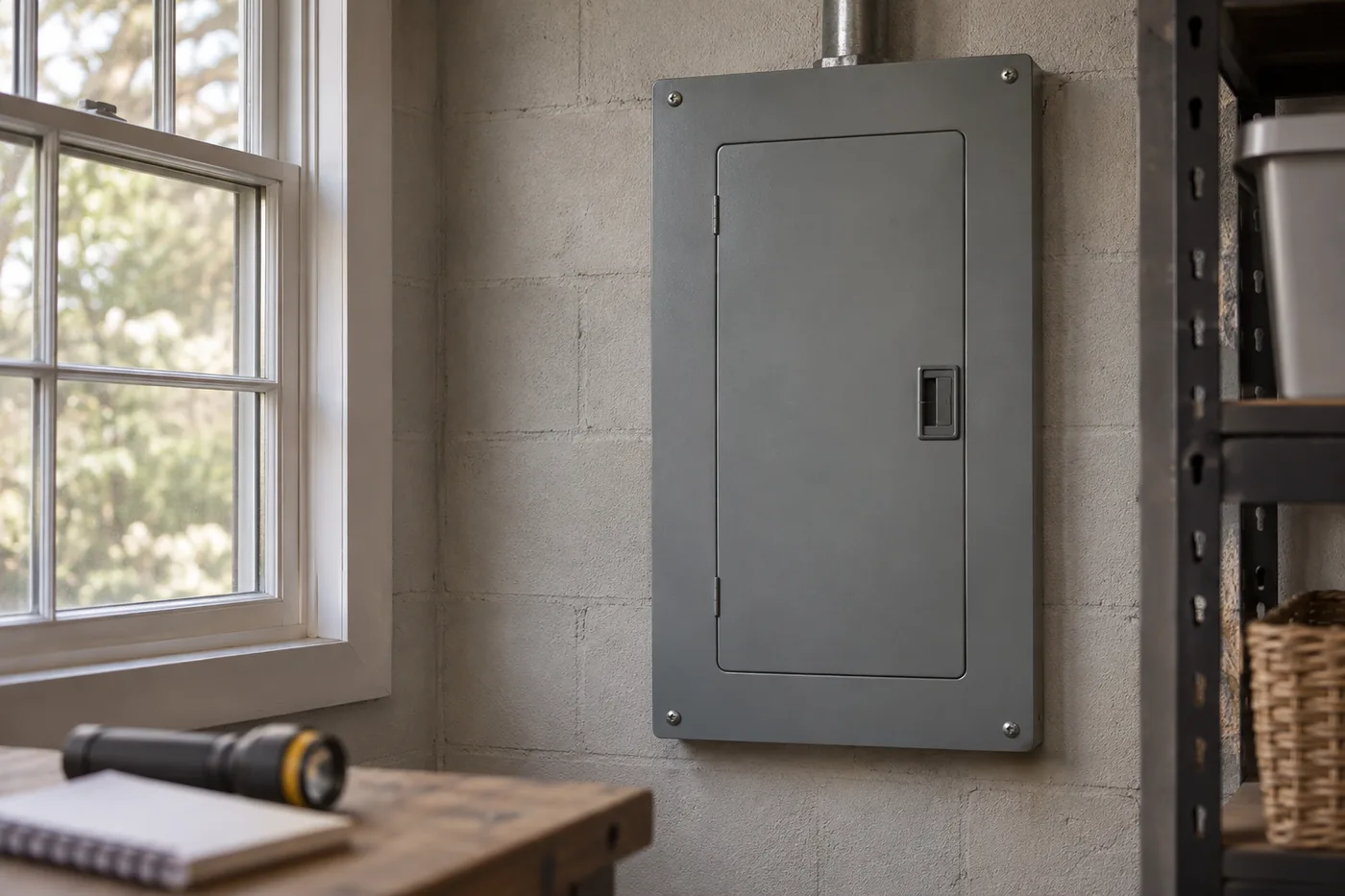 An essential-load list gives the electrician something more useful than a peak-watt claim.
Part 3Read the runtime claim with its fuel supply attached
Champion's longest advertised runs are at 25% load, not at full continuous output. So those figures describe a light-load condition with specified fuel supplies, rather than an overnight guarantee for your refrigerator, furnace, and everything else that might restart.
Swipe sideways to see the full table →
| Published condition | Gasoline | Propane |
|---|---|---|
| Running output | 7,000 W | 6,300 W |
| Starting output | 8,500 W | 8,500 W |
| Supply for runtime claim | Full 5.33-gallon tank | 20-lb tank |
| Maximum advertised runtime | Up to 14 hours at 25% load | Up to 12 hours at 25% load |
| Subfreezing runtime | Not listed by the maker | Not listed by the maker |
Gasoline buys the higher published continuous output and longer advertised interval between fuel stops. But the page doesn't establish an identical absolute test load for both fuels, so the figures aren't a clean fuel-economy comparison. Propane's appeal here is having another fuel option, not a proven winter-runtime advantage.
And what happens when the temperature drops? Champion's product page gives no model-specific subfreezing runtime curve, so I wouldn't turn its propane figure into a cold-night promise. Ask Champion about the intended cylinder and expected temperature, then arrange replenishment instead of multiplying the maximum claim across a long outage.
That replenishment plan includes safe stops. Champion says never refuel a hot or running generator, so the advertised runtime cannot be treated as a schedule that leaves no room for shutdown and the manufacturer's fueling procedure.
 Fuel changes and outdoor checks remain part of the job after the lights come back on.
More fuel on hand doesn't settle the question of how the generator will be operated.
Part 4Buy the setup, not just the machine
Champion includes the starting battery, engine oil, wheel kit, and LPG hose with regulator. That makes the package more complete, but it doesn't include a finished house connection or settle the weather-protection question. I'd get those arrangements and their separate costs clear before ordering.
The US manufacturer page showed no price when checked November 24, 2026. For Amazon.com, Price varies; check Amazon; a current delivered price and local stock were not verified, so compare the exact 201175 package rather than a similar wattage in a search result.
My choice remains this model for a homeowner willing to manage a modest essential-load list, fuel stops, and outdoor access during the storm. But if the yard cannot accommodate safe operation, or nobody can attend to it, this portable generator doesn't solve the household's backup problem.
Sources and method: Champion's US 201175 product page and generator-safety page, plus CPSC's carbon-monoxide guidance, were reviewed on November 24, 2026. The assessment weighs outdoor placement, continuous output on both fuels, and the conditions behind runtime claims. Winter runtime, installation costs, retail stock, and delivered pricing were not independently established.
The garage gets the parked generator, not the running one.
In one sentence
I'd choose the Champion 201175 for planned essential loads with safe outdoor space, not automatic whole-house backup.
Champion Power Equipment 201175 Dual Fuel Inverter Generator
Frequently asked questions
Can the Champion 201175 run a furnace and refrigerator together?
That depends on their actual running and starting demands and the installation. Champion lists 7,000 running watts on gasoline and 6,300 on propane; an electrician must check the selected equipment and connection rather than assume those appliance names establish compatibility.
How long does the 201175 run on a propane tank in winter?
Champion advertises up to 12 hours at 25% load with a 20-lb propane tank. The opened product page does not supply a model-specific subfreezing runtime curve, so ask Champion about the cylinder and expected conditions rather than treating that maximum as a winter guarantee.
Does CO Shield make an open garage safe for generator operation?
No. Champion says CO Shield does not replace safe operation or an indoor CO alarm. CPSC says to use generators outdoors at least 20 feet from homes with exhaust facing away, never inside homes or garages even with doors and windows open.
What must be checked before connecting this generator to house circuits?
Champion requires a transfer switch properly installed by a qualified electrician. Have that electrician verify the selected loads, actual receptacles, inlet, cord, and grounding and neutral arrangement; the product page contains differing wording for one receptacle designation.
Sources
- Champion Power Equipment 201175 Dual Fuel Inverter Generator · 2026-11-24
8,500 starting watts on both fuels; 7,000 gasoline and 6,300 propane running watts; 120/240V output; less than 3% THD. Up to 14 hours with a full 5.33-gallon gasoline tank and up to 12 hours with a 20-lb propane tank, each at 25% load. Includes starting battery, oil, wheel kit, LPG hose and regulator. No price or subfreezing runtime curve displayed; outlet designation differs between feature list and description.
- Champion generator-safety guidance · 2026-11-24
No numerical performance claim taken from this page. Guidance covers qualified-electrician transfer-switch installation, backfeeding, no hot or running refueling, outdoor-only operation, CO Shield limitations, and manufacturer-specific instructions for canopy-like weather protection.
- CPSC carbon-monoxide guidance · 2026-11-24
At least 20 feet from homes with exhaust facing away; never operate inside homes or garages even with doors and windows open. Battery-operated or battery-backup CO alarms on every level and outside sleeping areas.