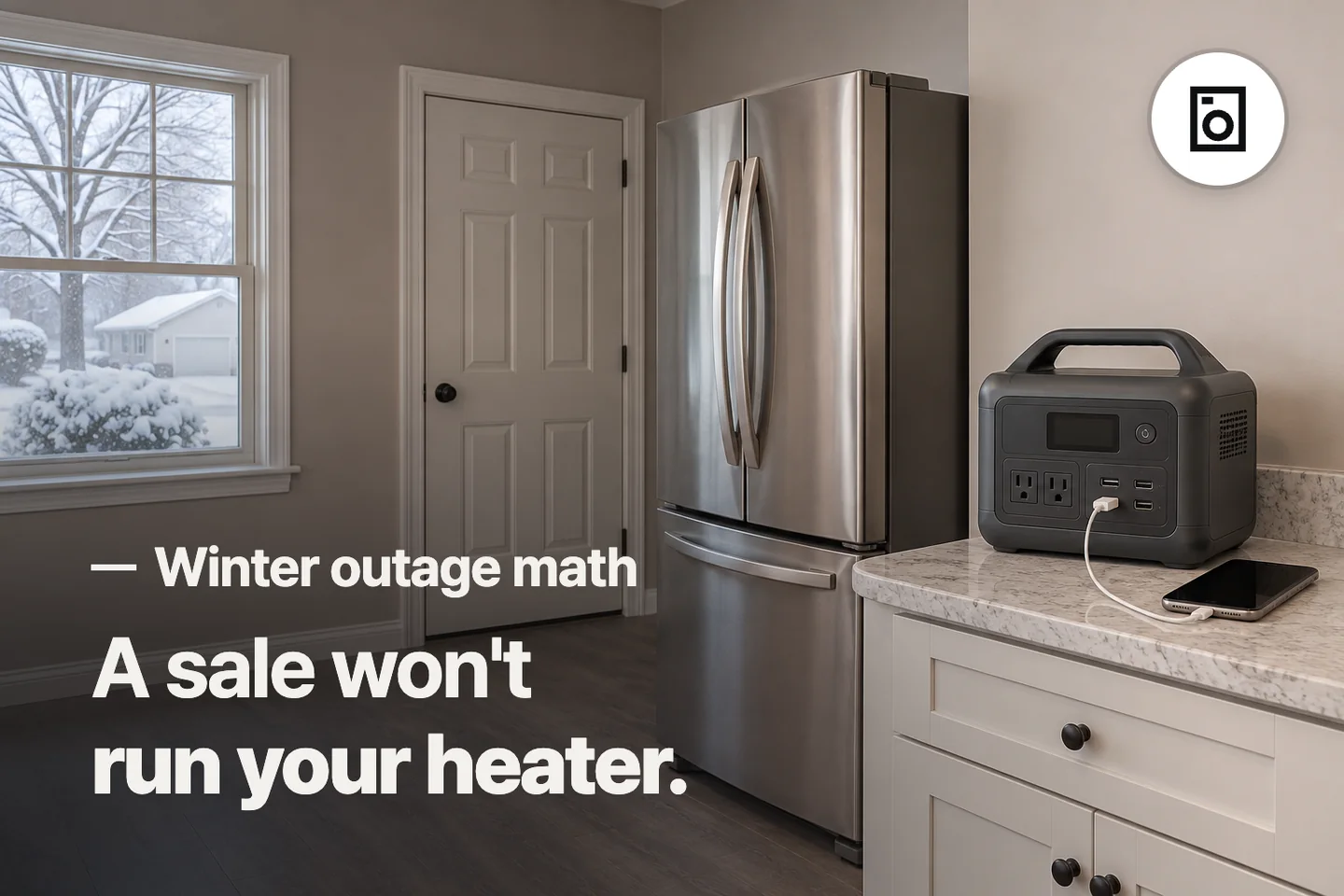
At two in the morning, the last thing a storm-watching homeowner needs is a bluetti solar generator displaying no incoming power beside the garage freezer. In this attached-garage scenario, the battery is cold, the lights are unreliable, and moving every appliance onto backup power suddenly feels urgent.
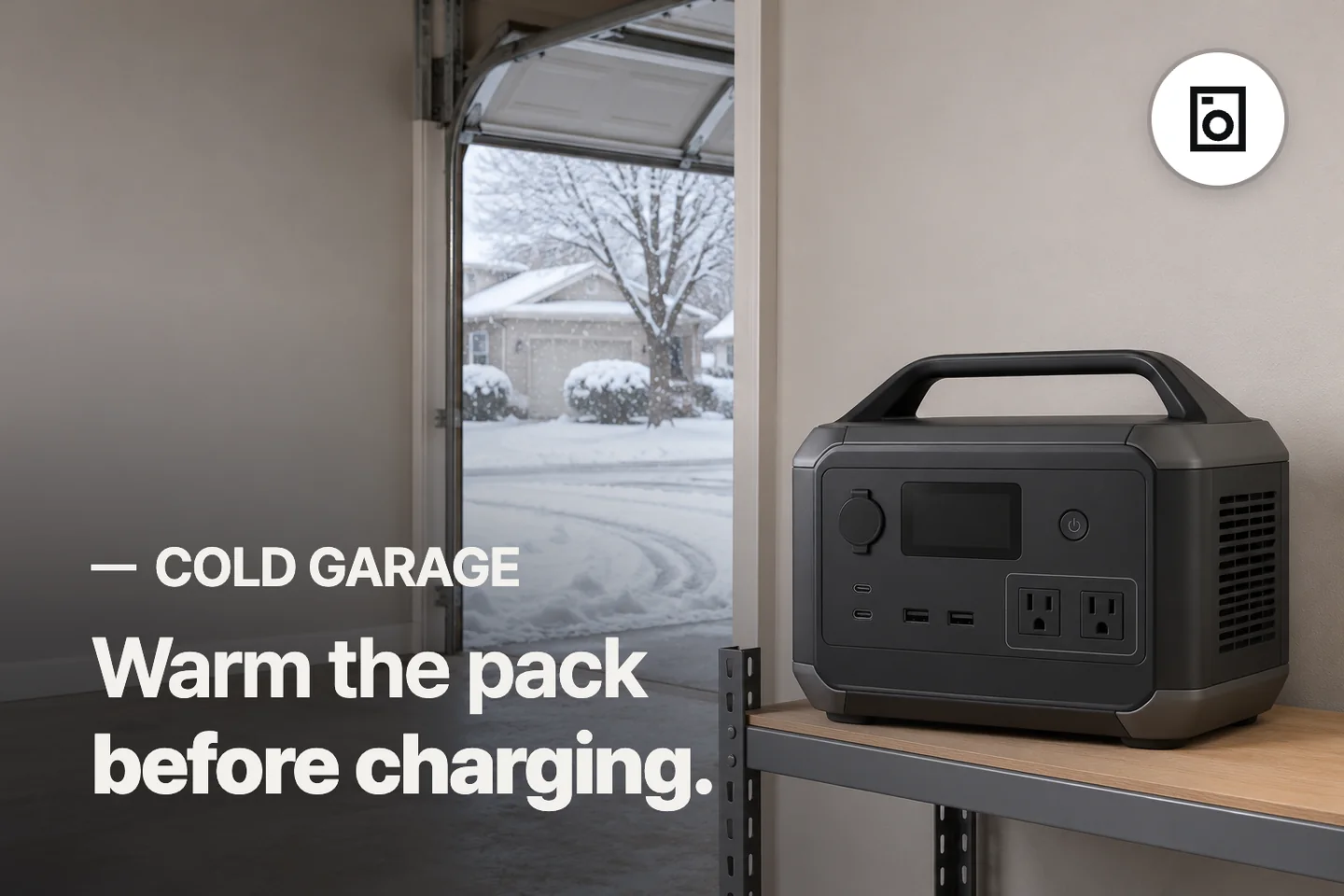
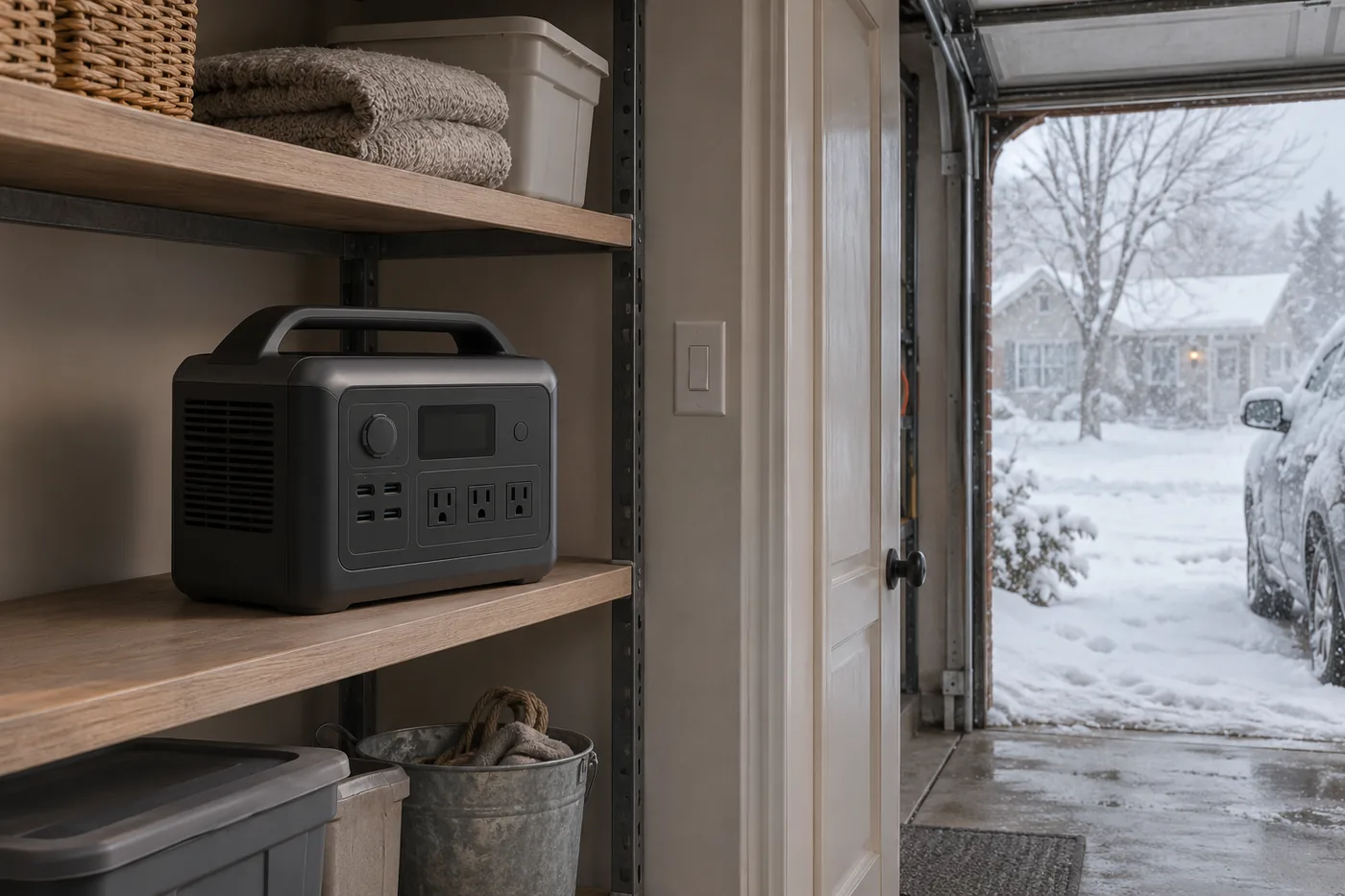 The garage may suit the freezer better than the battery's charging requirements.
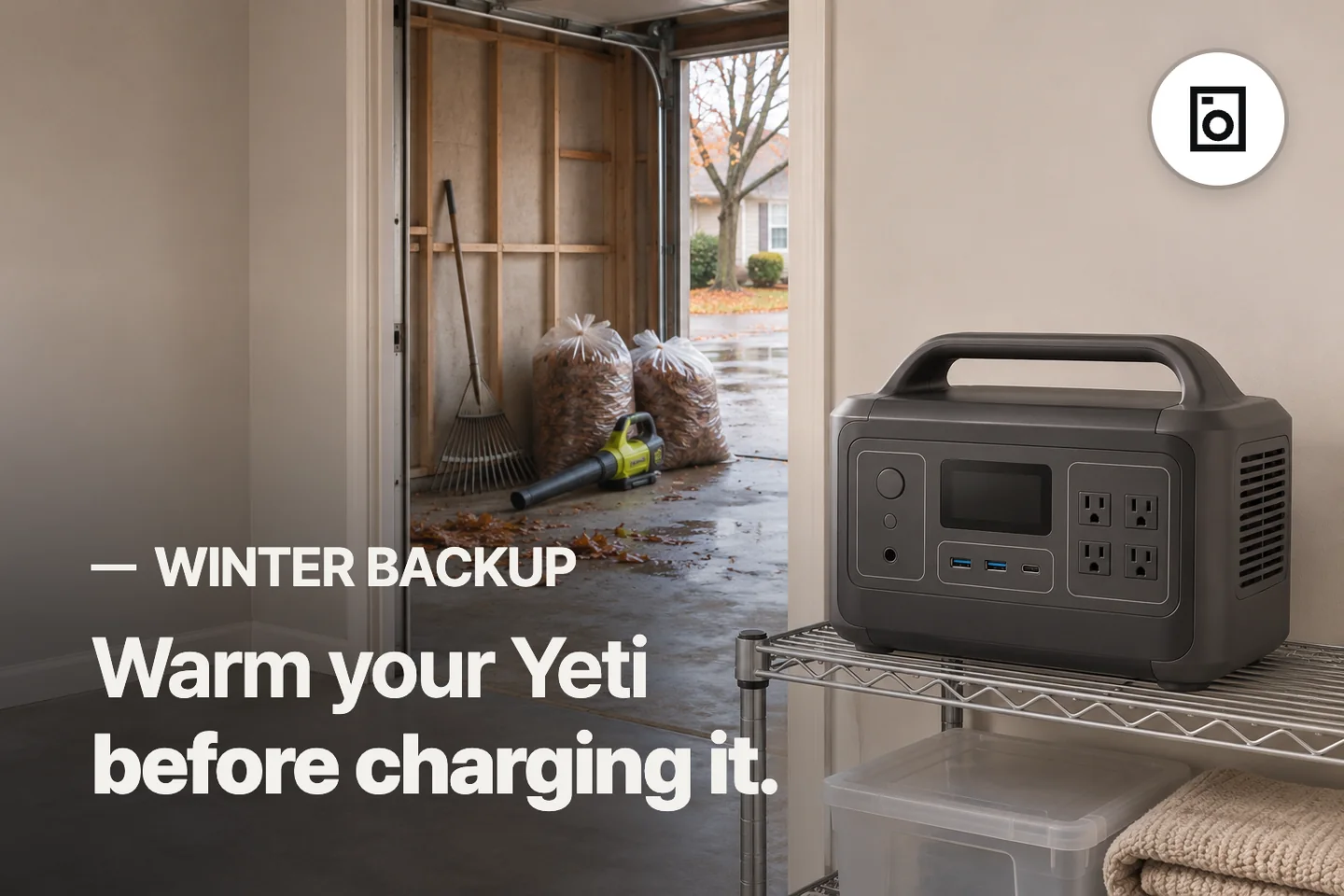
I'd keep the BLUETTI AC180 already on hand and move troubleshooting indoors before buying anything. That means warming it naturally in a dry room, checking charging with appliances disconnected, and leaving the garage heater out of the backup plan.
How we chose
This guide draws on BLUETTI specifications and support information, CPSC safety guidance, and EIA electricity data. The troubleshooting order uses three checks: permitted battery temperature, compatible charging input, and appliance load demand.
Part 1Why a bluetti solar generator can charge differently from how it runs
BLUETTI gives the AC180 separate temperature ranges: 32°F–104°F for charging, and -4°F–104°F for discharging. So an illustrative 20°F garage falls below its charging minimum without falling below its published discharge minimum.
That distinction matters. A cold-related charging stop does not, by itself, explain why an appliance also lost power, because its load, the battery level and any displayed fault still need checking.
The brand name isn't enough to diagnose it. These limits belong to the AC180; another BLUETTI model needs its own instructions, not a charging-temperature number borrowed from this page.
Start by disconnecting the charging source and attached appliances, then turn the unit off. Move it to a dry, normally heated room with the vents unobstructed, because the aim is to restore suitable surroundings rather than force the battery to accept power.
BLUETTI says the AC180 is not waterproof. So moisture on the enclosure or ports, visible damage, or a persistent warning is a reason to stop and contact its support team rather than plug it back in.
Part 2Let the battery warm, not just the handle
A case that feels warmer isn't proof that the cells have warmed through. So give the disconnected unit time to reach suitable conditions naturally; there is no reliable universal waiting time to promise here.
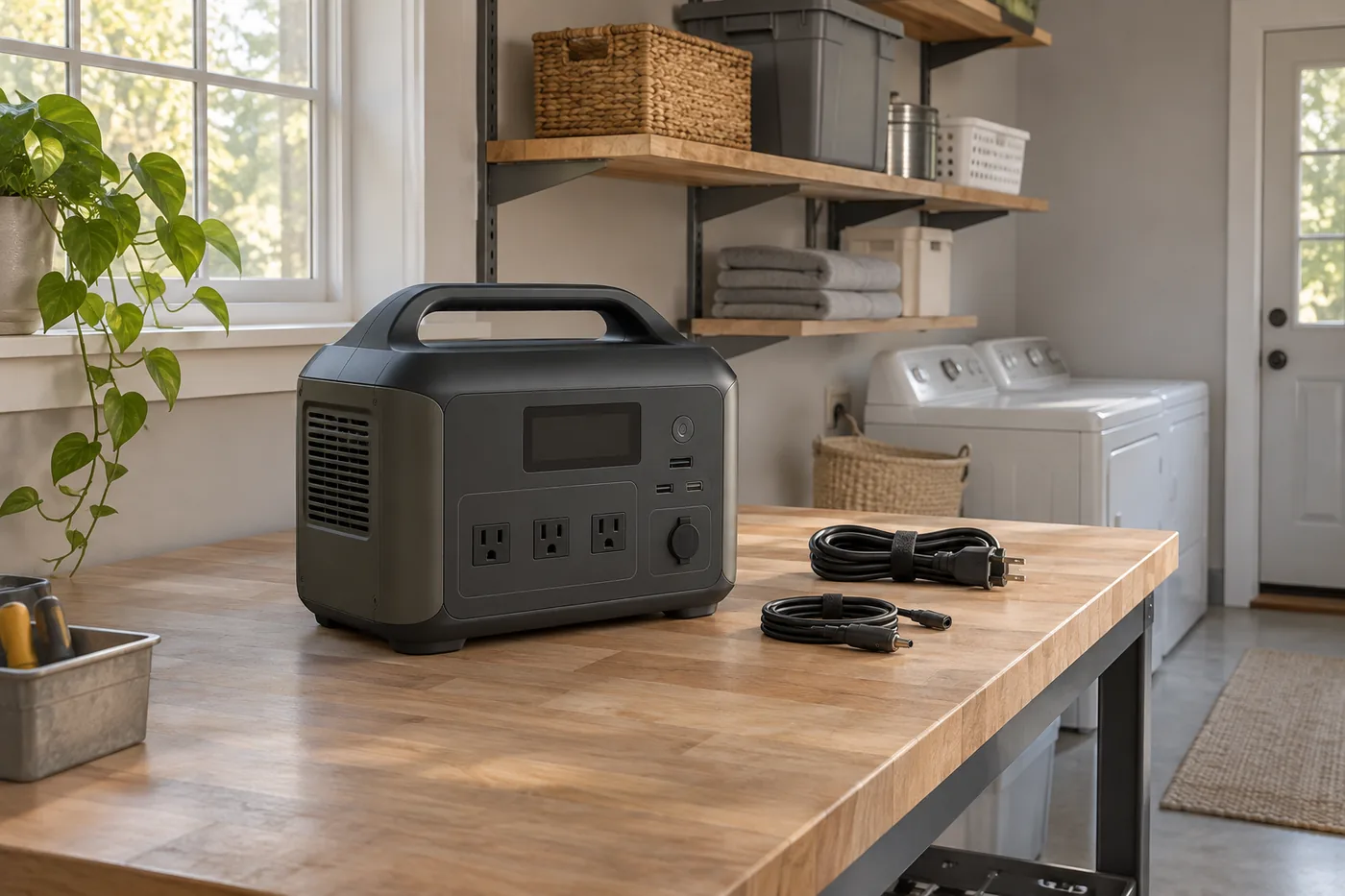 A dry, normally heated room is the place to begin, with charging cables and appliances disconnected.
Keep concentrated heat away from the enclosure. BLUETTI's temperature boundary is not an invitation to point a heater at the case, open it, or bypass its protection, and a cleared warning does not excuse wet ports.
Once the unit is warm, dry and free of warnings, check charging without appliances attached. If utility power is available, use the supplied AC cable and a known-working, suitable wall outlet; this keeps an appliance fault from muddying the input check.
BLUETTI lists Silent charging at 260W, Standard at around 1,000W and Turbo at around 1,440W. So the lower-input mode is the gentler first check on the supply, but it does not lower the permitted charging temperature.
Look for incoming watts, not just a connected cable. If a suitable outlet works but the AC180 still accepts no input, record the battery level, selected mode and exact warning for BLUETTI rather than repeatedly restarting it.
Separate the questions: can the warm, dry battery accept power, and can it supply the intended appliance?
Part 3Keep the solar panel outdoors and the battery dry
A wall outlet during an outage may be perfectly sound and still have no electricity. So when AC power is unavailable, the next input check needs a compatible source described in BLUETTI's instructions, not another attempt at the same dead receptacle.
For solar charging, the panel and battery need different locations. Keep the AC180 within its charging range in a dry location, while the panel gets unobstructed outdoor daylight and a cable route that won't crush connectors under a door.
BLUETTI specifies 12–60V total solar open-circuit voltage and a 500W maximum input for the AC180. That means the complete panel arrangement must fit its electrical limits, including the effect of cold weather on panel voltage; adding modest-looking panel wattages is not enough.
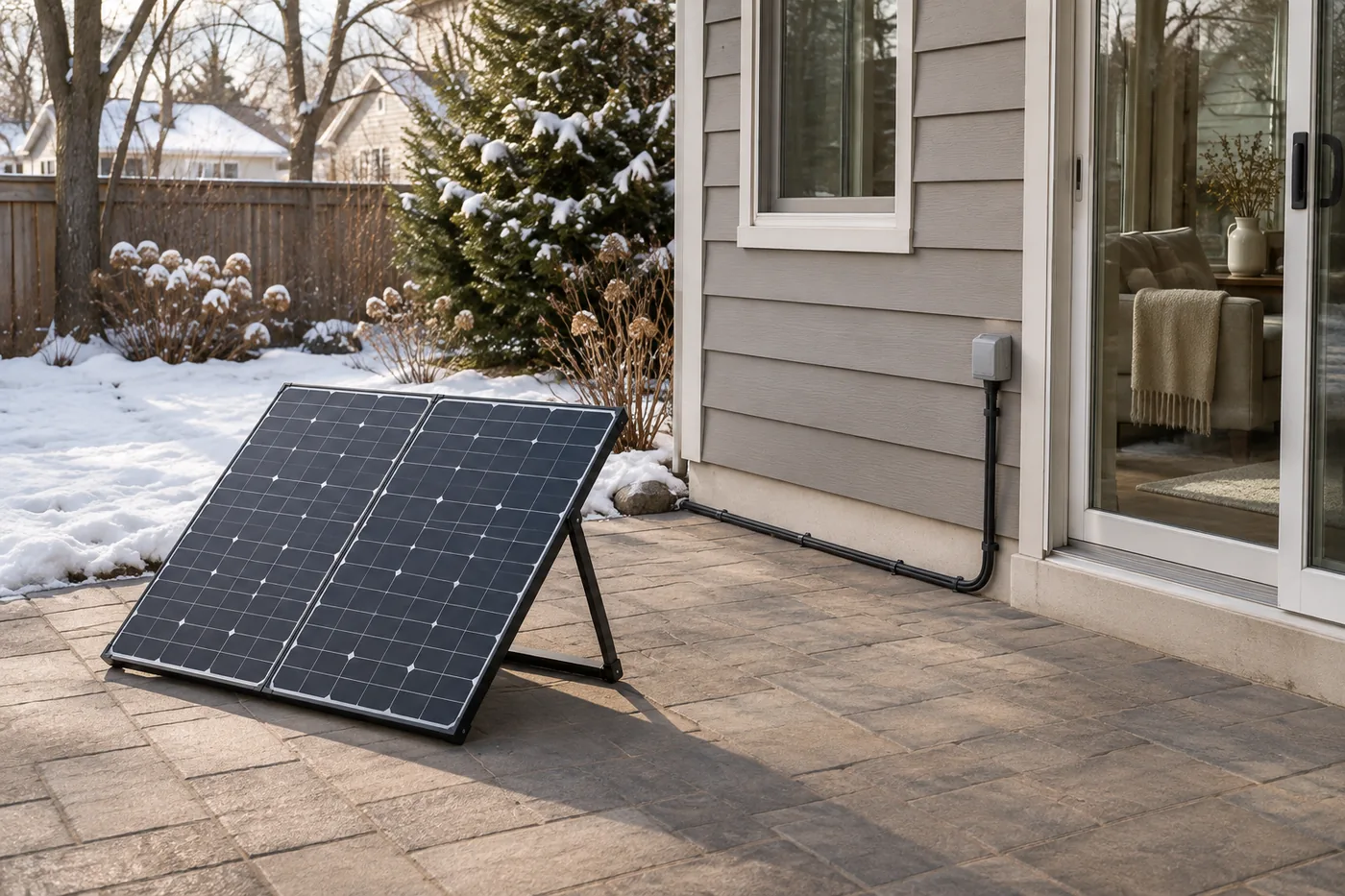 Ground-level daylight avoids the garage roof's shadow without requiring a climb onto icy roofing.
Check snow cover, shade and connections before calling the battery faulty. But the 500W maximum is an input ceiling, not an assurance that a winter panel will replace a household's daily electricity use.
A fuel generator is not an indoor workaround. CPSC says portable fuel-powered generators must operate outdoors, at least 20 feet from the home, with exhaust directed away from buildings; an open attached-garage door does not make garage operation acceptable.
Part 4Leave garage heat off the essential-load list
Would you rather preserve power for a compatible essential appliance or spend it warming an empty garage? I'd choose the appliance, because the AC180's energy capacity and output rating put firm limits on what that battery can cover.
Swipe sideways to see the full table →
| AC180 limit | What it changes at home |
|---|---|
| 1,152Wh capacity | Stored energy must last across all connected loads. |
| 1,800W total AC output at 120V | The connected AC loads share that ceiling; each outlet does not get a separate allowance. |
| 1,152Wh ÷ 1,800W = 0.64 hours | This ideal full-output calculation excludes losses, so it is not a promised runtime. |
The household bill puts that demand in perspective. At EIA's preliminary August 2026 U.S. residential average of 18.16 cents/kWh, an assumed 1,800W load for an hour daily over a 30-day month costs about $9.81 before charging losses: 1.8 × 1 × 30 × $0.1816.
That is an illustrative electricity cost, not your tariff or permission to connect a heater. CPSC advises plugging portable electric heaters directly into wall outlets, never extension cords or power strips, and keeping them at least three feet from combustible materials; I'd leave them off this battery setup.
Reconnect compatible essentials individually only after normal operation returns. But check appliance running demand and motor-starting requirements first: BLUETTI's 2,700W Power Lifting description for heating devices is not a blanket motor-starting allowance for a pump or furnace blower.
A hardwired heater or furnace also needs a properly assessed supply arrangement, not an improvised connection to house wiring. If the bluetti solar generator still shuts down warm, dry and lightly loaded, send BLUETTI the fault message, battery level, input source and appliance details before shopping for a replacement.
Source basis: BLUETTI AC180 specifications and support information, CPSC winter safety guidance, and EIA electricity-price data. EIA data checked November 24, 2026. BLUETTI numerical specifications and CPSC guidance retain their November 19, 2026 check date because the full supporting material could not be reverified on November 24. Calculations are examples, not measured runtime or a local electricity quote.
In one sentence
Bring the AC180 into suitable charging conditions, isolate its input check, and save its stored energy for compatible essentials.
Frequently asked questions
Why won't my bluetti solar generator charge below freezing?
For the AC180 specifically, BLUETTI lists charging at 32°F–104°F. Disconnect input and appliances, switch it off, and let the dry unit warm naturally in suitable surroundings. A persistent warning, moisture or visible damage needs BLUETTI support rather than another charging attempt.
Does a cold garage explain every AC180 output shutdown?
No. BLUETTI lists discharging at -4°F–104°F, a wider range than charging. Check battery level, the displayed fault, total connected demand and motor-starting compatibility as well as temperature.
Can I use a garage heater to warm the battery or run the heater from it?
Let the disconnected battery warm naturally instead of directing heat at its enclosure. Keep portable electric heaters out of this backup setup: CPSC advises direct wall-outlet connections and at least three feet of clearance from combustibles. A hardwired heater needs an electrician's assessment.
Can solar panels stay outside while the AC180 charges indoors?
The battery must remain dry and within its permitted charging range, while a compatible panel needs daylight. BLUETTI specifies 12–60V total solar open-circuit voltage and a 500W input ceiling. Match the complete arrangement and cable to its instructions, allowing for cold-weather panel voltage and safe cable routing.
Sources
- BLUETTI AC180 · 2026-11-19
Retained from the original checked source: 1,152Wh capacity, 120V outlets, 1,800W total AC output, and 2,700W Power Lifting described for heating devices. Reopening on 2026-11-24 returned no usable specifications, so the original verification date is retained. No current selling price is quoted.
- BLUETTI AC180 support FAQs · 2026-11-19
Retained from the original checked FAQ answers: charging 32°F–104°F; discharging -4°F–104°F; solar open-circuit voltage 12–60V, maximum input 500W; Silent charging 260W, Standard around 1,000W, Turbo around 1,440W; not waterproof. The page reopened on 2026-11-24, but answer text was unavailable in the retrieved HTML, so numerical verification retains its original date.
- CPSC winter generator and portable-heater safety · 2026-11-19
Retained original guidance: portable fuel generators outdoors at least 20 feet from the home, never in a garage; portable heaters at least three feet from combustibles; electric heaters directly into wall outlets, not extension cords or power strips. The 2026-11-24 retrieval did not provide usable guidance text, so the original check date remains.
- EIA Table 5.6.A residential electricity prices · 2026-11-24
Retrieved table lists August 2026 U.S. residential electricity at 18.16 cents/kWh, preliminary. Illustrative calculation: 1.8kW × assumed 1 hour/day × assumed 30 days × $0.1816/kWh = $9.8064, rounded to $9.81, excluding charging losses and fixed utility charges.