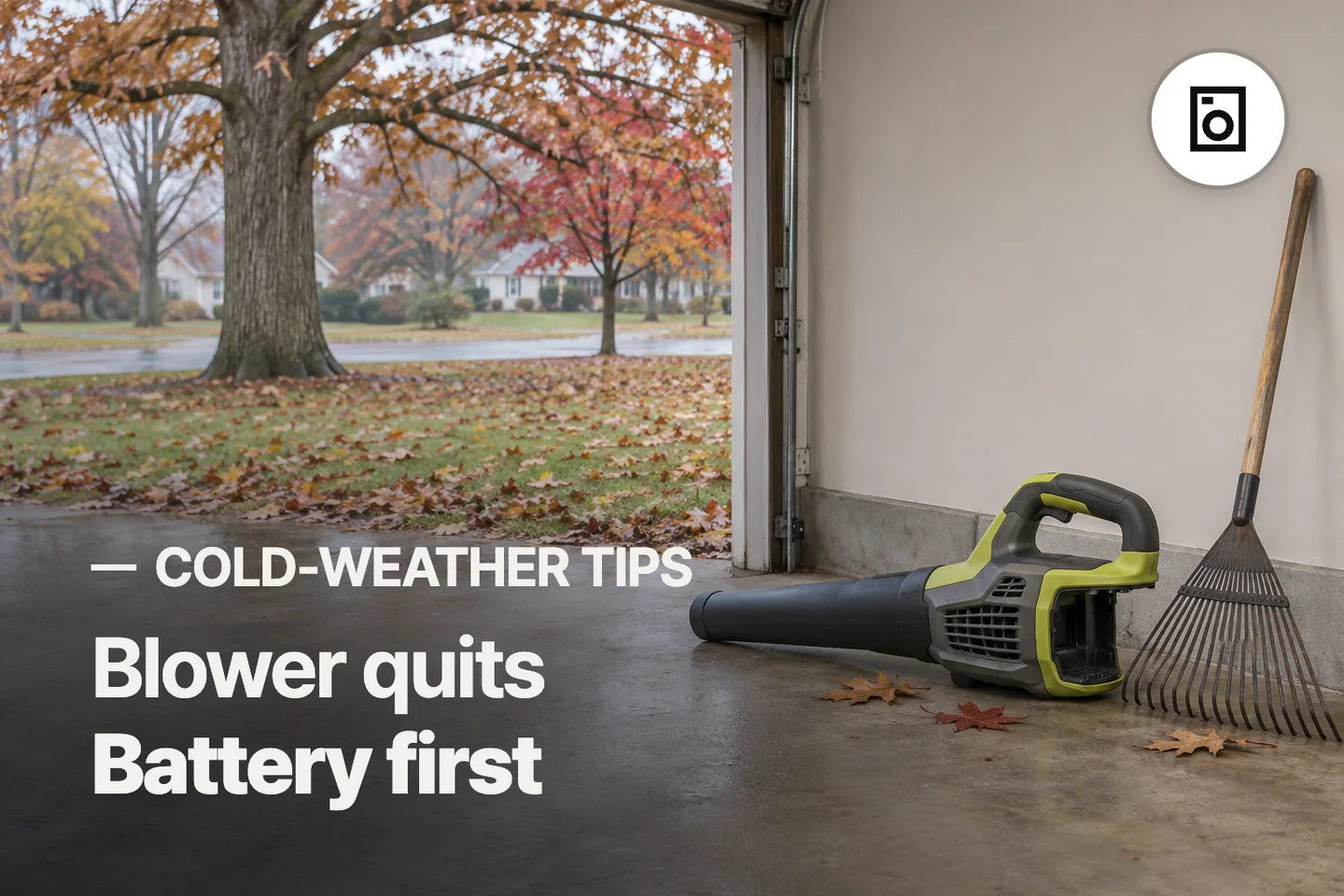
Before sunrise, with the porch light still burning, your cordless blower stops beside a wet heap of oak leaves. The first strip of driveway is barely clear, so another battery suddenly looks like the quickest way out.
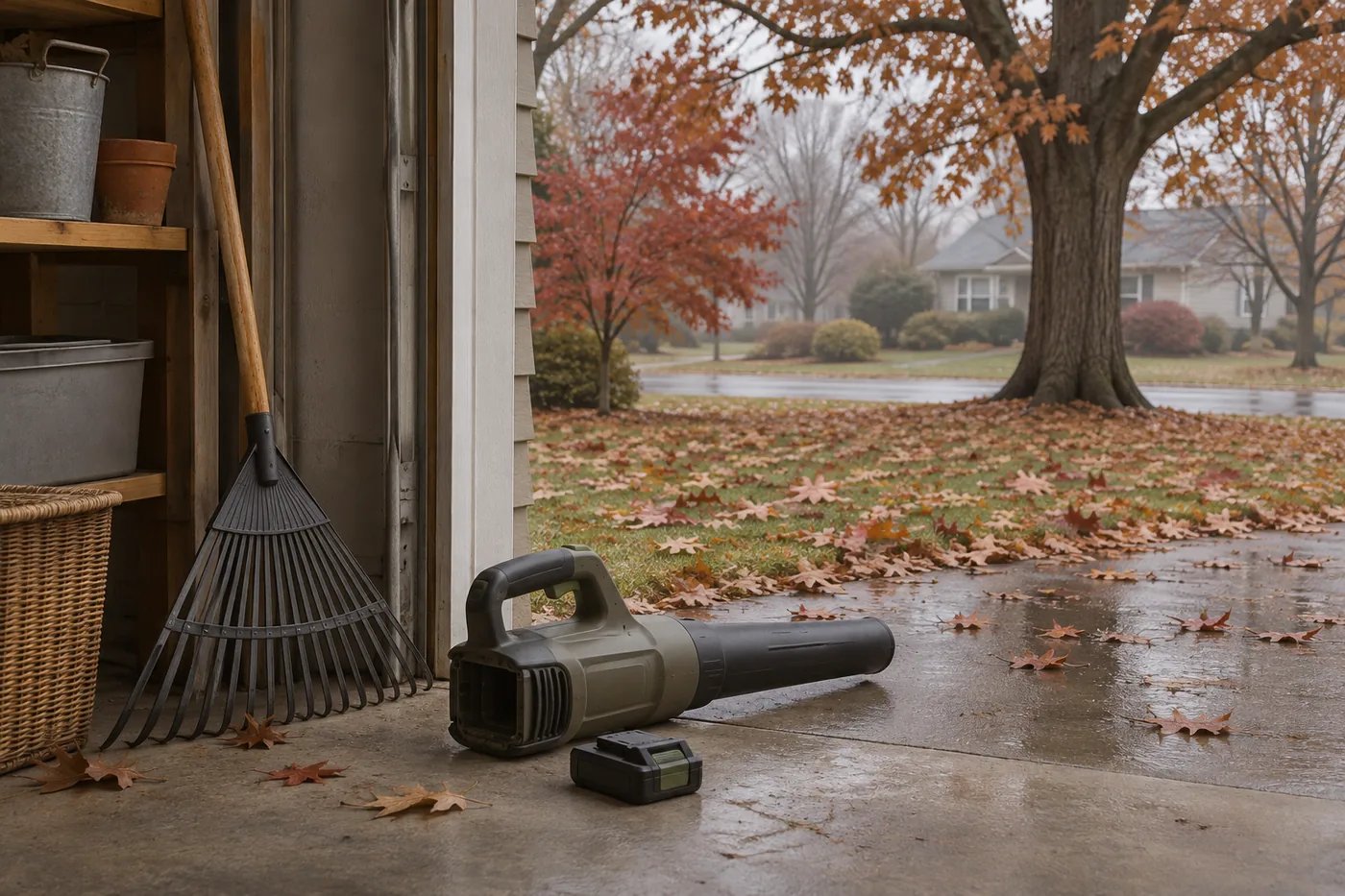 The unfinished strip matters less than whether the motor stopped or the airflow weakened.
I'd keep the existing equipment for now and separate the symptoms before spending. The EGO POWER+ LB6500, supplied in the LB6504 kit, makes a useful documented example because its manuals distinguish cold starts, restricted airflow, and power-hungry boost operation.
How we chose
Reviewed EGO's US blower specifications, previously checked tool and battery manual details, and EPA battery-disposal guidance. The troubleshooting order follows three checks: battery temperature, intake airflow, and speed demand. No replacement product is selected because the symptom needs separating from the workload first.
Part 1Find out what actually stopped
Did the motor quit, or did the leaves quit moving? That distinction changes what happens next: a running motor with weak airflow points toward a different check than a tool that shuts itself off.
Swipe sideways to see the full table →
| What happens | Next check | What it helps separate |
|---|---|---|
| Pack pulses immediately after a cold start | Exact battery's cold-start instructions | Initial cold behavior from a persistent fault |
| Motor runs but airflow fades | Intake inspection with battery removed | Air restriction from leaf-moving difficulty |
| Airflow stays strong but runtime is short | Charge level and boost use | Heavy demand from an unexplained shutdown |
| Shutdown returns after normal charging | Compatible known-good pack, if available | Battery trouble from a tool fault |
EGO's LB6500 instructions put operation at 5°F–104°F, so cold air alone doesn't prove the tool is outside its limits. But operating temperature is not charging temperature, and neither range tells you whether this particular pack has developed a fault.
For the intake check, EGO requires removing the battery before cleaning or changing attachments. Its manual also calls for eye and hearing protection when operating; reconnecting the pack comes after the inspection, not during it.
Part 2Let the battery warm without improvising
EGO's battery instructions specify charging above 41°F and below 104°F. That means a morning cold enough to permit blower operation can still be too cold for charging the pack.
Let an intact, dry pack return naturally to a suitable indoor temperature before charging under its own instructions. Because EGO warns against fire and excessive heat, a heater or hot-water shortcut is not the fix.
EGO also describes a very cold pack pulsing during its first minute and recommends about a minute of light tool operation to warm it. But that guidance addresses an initial cold start, not repeated shutdowns that continue after normal charging and warm-up.
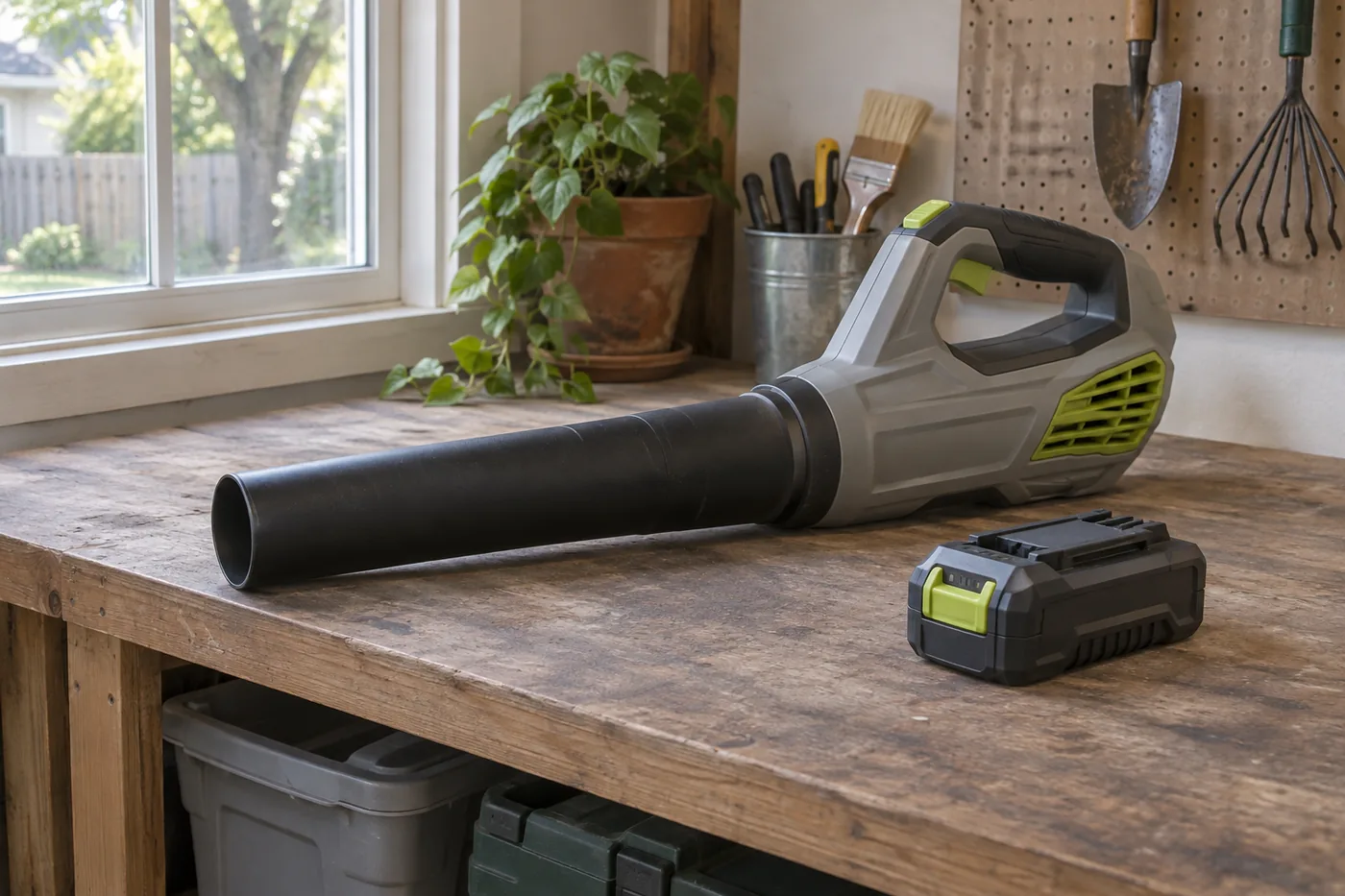 A dry waiting place keeps battery warm-up separate from improvised heating.
If the pack is damaged, EGO's warning against damaged or modified batteries takes priority over another restart. So stop troubleshooting through repeated starts and arrange manufacturer guidance or service instead.
A brief cold-start pulse and a recurring shutdown are different problems; the pack's instructions determine when restarting stops being appropriate.
Part 3Free the leaves before reaching for boost
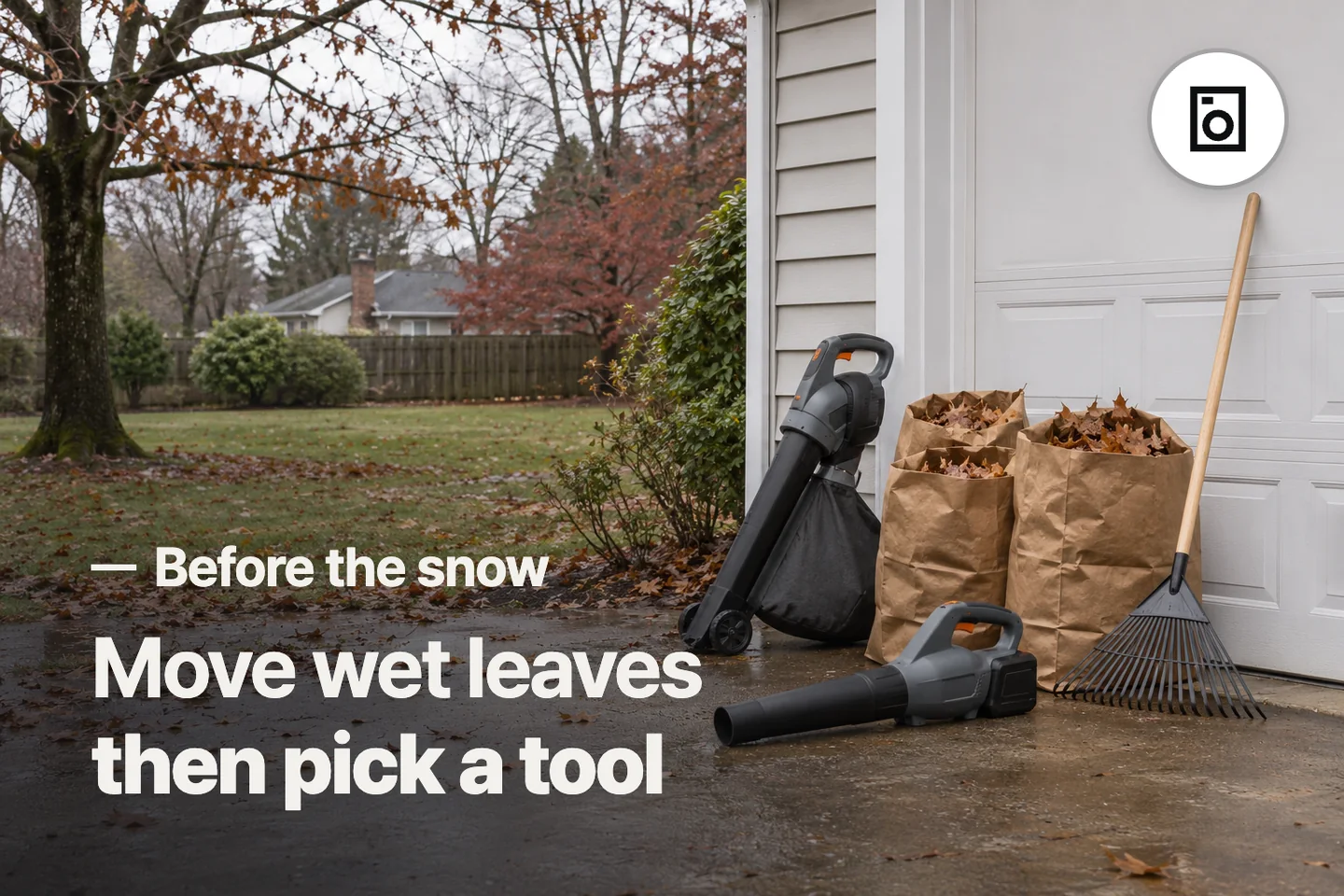
The wet mat needs loosening. EGO recommends a rake or broom before blowing and working a pile's outside edges, so begin with a loose edge rather than directing the stream into the packed center.
For that loosened edge, use only enough speed to keep leaves moving. EGO's product page advertises up to 90 minutes of average runtime with the included 5.0Ah battery, but the LB6500 manual lists approximately 30 minutes at high speed and 15 minutes in boost with that capacity.
Those figures describe different demands, not interchangeable promises. So a cleanup spent holding boost can end much sooner than the headline suggests without establishing that the battery needs replacing.
The nozzle changes the stream, too. EGO describes the tapered attachment as concentrating airflow and the flat attachment as spreading it, which makes attachment choice about where the air goes rather than a promise of extra battery life.
With the battery removed, fit the attachment appropriate to the patch, then resume at a lower setting and increase as needed. Because EGO's boost control returns to the previous speed when released, save boost for the stubborn edge, then release it when ordinary airflow works again.
If the motor keeps running but the stream remains weak, stop and inspect the intake again with the pack removed. EGO identifies blockage as a possible cause; persistent weakness after clearing it calls for service rather than more throttle.
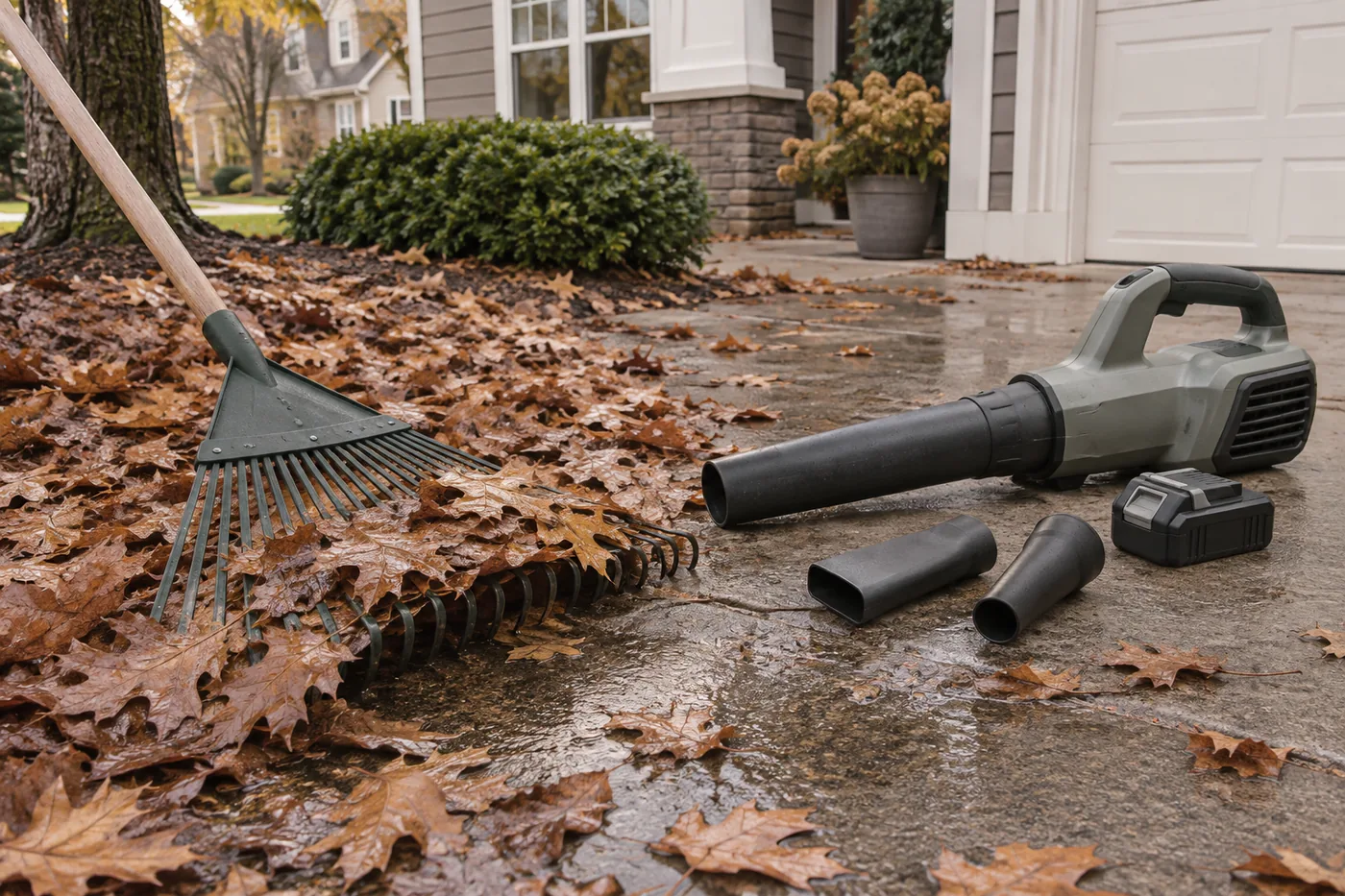 Loosened edges give the air somewhere useful to go.
Part 4Decide whether more equipment would help
Watch the cleared strip, not the sound of the motor. If loosened leaves move steadily at an ordinary setting, finish in sections and collect each pile rather than making the next pass fight the same heap.
If only continuous boost makes progress, another identical handheld tool may leave you with the same workload problem. I'd ask for a cleanup estimate before buying replacement equipment solely because the wet leaves outlast the pack.
A compatible known-good battery can help separate a battery problem from a tool problem, if one is already available. But buying one just to diagnose the fault turns an uncertain repair into an immediate expense.
Extra charging has a household cost, but runtime minutes don't reveal it. Monthly charging cost equals measured outlet kWh per recharge × your electricity rate × monthly recharges; battery capacity alone leaves out charger losses, so it isn't a reliable substitute for wall-outlet energy.
Part 5Put the pack away for the next cleanup
Storage deserves its own check because the tool and battery have different instructions. EGO calls for cleaning the intake and storing the blower indoors, away from children, garden chemicals, and de-icing salts.
For storage longer than 30 days, EGO's battery manual specifies a dry location below 80°F with a 30%–50% charge, plus a full recharge every six months of storage. So follow the exact pack's storage schedule, rather than treating a cold garage shelf as the default for everything.
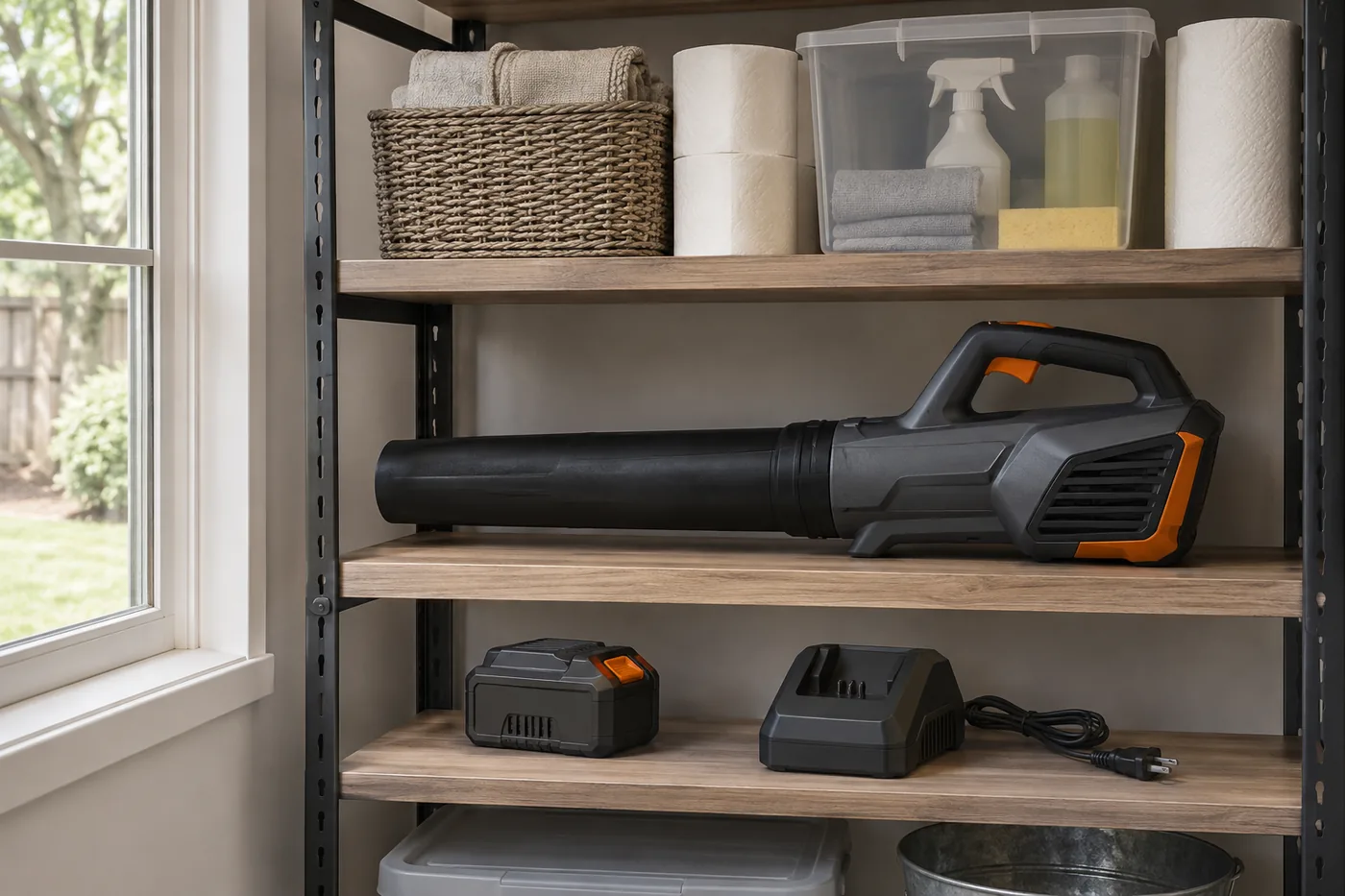 Storage conditions belong to the battery's instructions, not assumptions about the garage.
If the pack is worn out, EPA directs it to separate battery recycling or household hazardous-waste collection, not household trash or curbside recycling. Its handling guidance calls for nonconductive tape over terminals and separate plastic bags; a damaged pack needs specific manufacturer handling advice.
Sources and method: EGO's US product page, previously checked tool and battery manual details, and EPA disposal guidance support this sequence. Checks focus on temperature, airflow, and speed demand; published runtimes are not a promise for wet leaves. Product and EPA pages rechecked November 24, 2026; manual figures retain their November 13, 2026 check date.
In one sentence
Separate a cold battery, restricted airflow, and sustained boost before replacing a blower that quits during wet-leaf cleanup.
Frequently asked questions
Why does a cordless blower lose power in cold weather?
The symptom can come from cold-start behavior, low charge, restricted airflow, sustained boost, or a fault. EGO describes brief cold-pack pulsing, but persistent shutdown after normal charging and warm-up needs further diagnosis rather than repeated restarts.
Can the blower operate when it is too cold to charge its battery?
For this documented example, yes: EGO's LB6500 manual lists operation at 5°F–104°F, while the battery manual specifies charging above 41°F and below 104°F. Those are model-specific instructions, not universal limits for every cordless blower.
Why does the blower stop sooner than the advertised runtime?
EGO advertises up to 90 minutes of average runtime with the included 5.0Ah pack. Its LB6500 manual lists approximately 30 minutes at high speed and 15 minutes in boost with that capacity, so continuous maximum output is not equivalent to the headline runtime.
What helps a cordless blower move wet leaves without constant boost?
EGO recommends loosening debris with a rake or broom and working the outside edges of piles. Its tapered nozzle concentrates airflow, while the flat attachment spreads it; neither attachment guarantees longer runtime or a finished yard.
Sources
- EGO POWER+ LB6504 product specifications · 2026-11-24
Opened and read current US page: up to 90 minutes average runtime with included 56V 5.0Ah battery; 650 CFM turbo and up to 180 MPH with tapered nozzle. Only the runtime and battery capacity are used in the article.
- EGO LB6500 operator's manual · 2026-11-13
PDF URL reopened November 24, but text could not be extracted with available tools; figures retain original article's November 13 verification: 5°F–104°F operation, approximately 30 minutes high-speed and 15 minutes boost runtime with 5.0Ah battery. Original manual notes also support intake cleaning with battery removed, rake preparation, nozzle functions, protective equipment, and storage.
- EGO battery operator's manual covering BA2800T · 2026-11-13
PDF URL reopened November 24, but text could not be extracted with available tools; retain original November 13 verification: charging above 41°F and below 104°F; about a minute of light operation for a very cold pack; storage longer than 30 days below 80°F at 30%–50% charge, with full recharge every six months. Original safety guidance covers damaged packs and excessive heat.
- EPA used lithium-ion battery guidance · 2026-11-24
No numerical claims taken. EPA directs separate battery recycling or household hazardous-waste collection rather than household trash or municipal recycling, and recommends nonconductive terminal tape and separate plastic bags; damaged batteries require manufacturer handling advice.