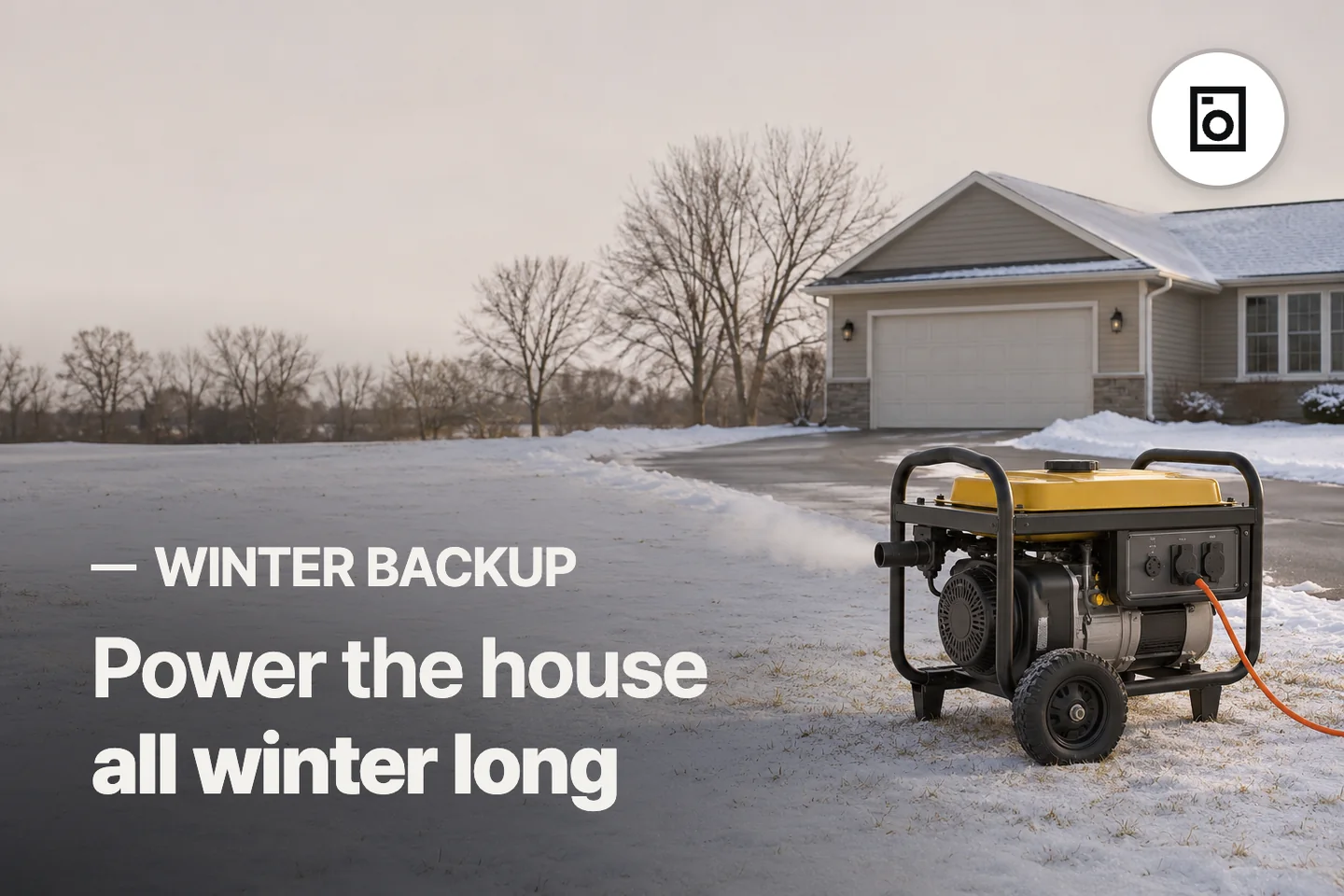
The driveway needs clearing, the basement sump is filling, and the attached garage is getting cold. For a suburban homeowner shopping for a 50 amp generator before a winter outage, the job is keeping the furnace blower, fridge and pump going—not making the garage comfortable first.
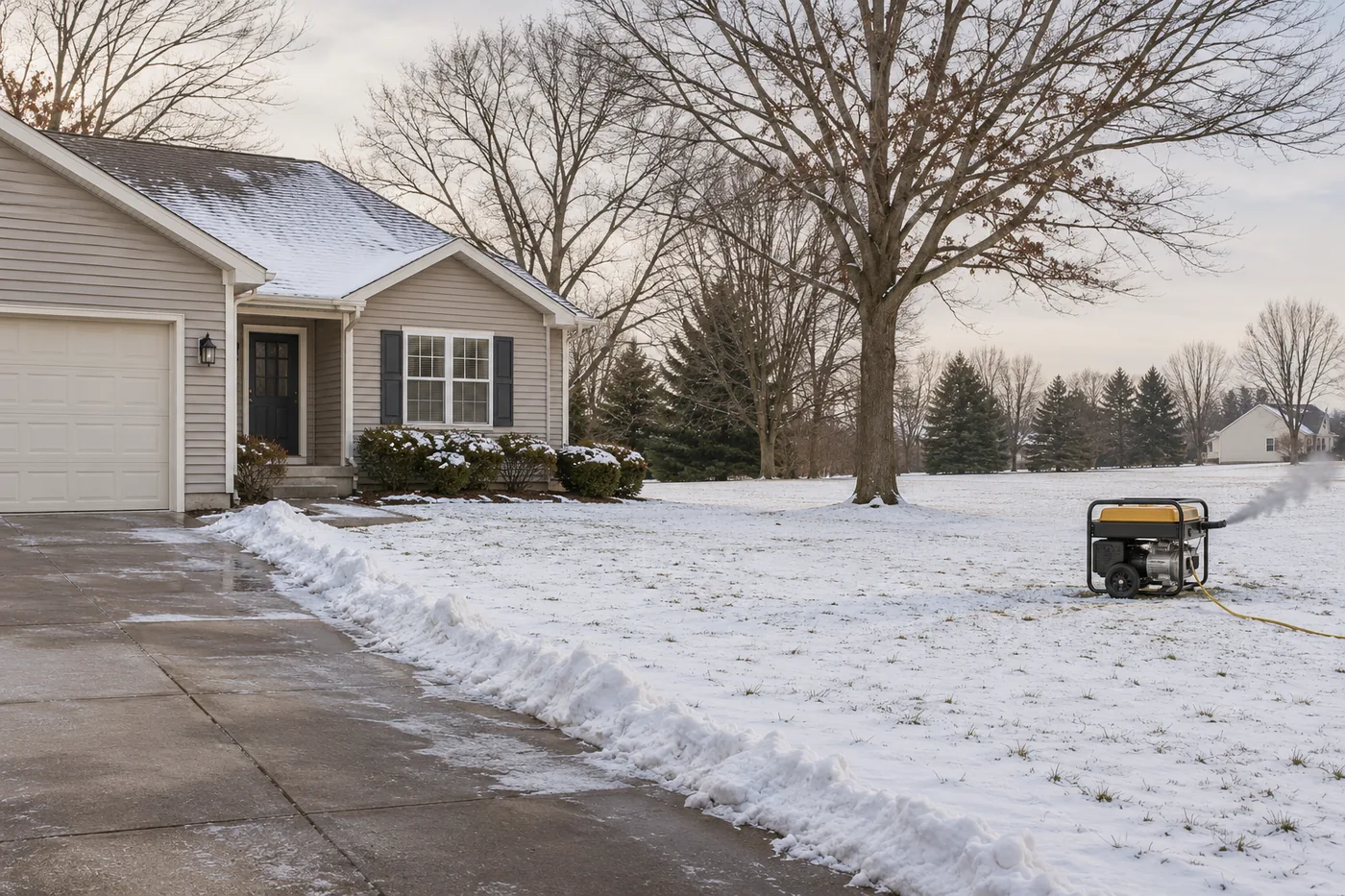 The winter job starts with a usable outdoor setup, not the size of the garage.
I'd choose the Westinghouse WGen11500TFc for a household that wants fuel flexibility and can switch off garage heat when the pump needs to start. But the DuroMax XP13000EH costs less at the cited manufacturer price, while the Westinghouse WGen14500TFc makes more sense when natural-gas output matters most.
How we chose
Manufacturer product specifications and published prices were compared using fuel-specific running output, house-connection limits and winter handling requirements. CPSC guidance supplied the outdoor operating precautions, while Newair's heater specifications provided a concrete example of the load garage heat adds.
Toneandroom picks
Best 50 amp generator for winter outages: Top 3
Stored gasoline or propane, without a natural-gas hookup
DuroMax XP13000EH
US manufacturer displayed sale price $1,299; regular $1,699. Checked November 19, 2026. Listing showed preorder shipping week of November 20, 2026; confirm current stock, tax and delivery.
The lower cited manufacturer price suits a fuel-managed household that does not need natural-gas operation, provided its essential loads fit the published running ratings.
- Gasoline
- 10,500 W
- Propane
- 10,000 W
- Outlet
- 120/240V 14-50R
- You store gasoline or propane
- You want the lower cited price
- No natural-gas operation
- Confirm dispatch and tank size
Flexible fuels with garage heat kept optional
Westinghouse WGen11500TFc
US manufacturer MSRP $1,699, checked November 19, 2026. Not a verified retailer discount or delivered total; confirm current stock, tax and shipping.
The middle option provides gasoline, propane and natural-gas operation for a household willing to adjust its load schedule when fuel changes.
- Gasoline
- 11,500 W
- Propane
- 10,500 W
- Natural gas
- 9,500 W
- You want three fuel options
- Garage heat can be switched off
- Less output on natural gas
- Verify neutral compatibility
More natural-gas capacity with a planned winter moving route
Westinghouse WGen14500TFc
US manufacturer MSRP $3,299, checked November 19, 2026. Not a verified retailer discount or delivered total; confirm current stock, tax and shipping.
Its higher natural-gas running rating adds capacity where that fuel is the plan, without increasing the house inlet's electrical rating.
- Gasoline
- 14,500 W
- Propane
- 13,000 W
- Natural gas
- 11,600 W
- Dry weight
- 348.3 lb
- Natural gas is your fuel plan
- You have a clear moving route
- Heavy before fuel is added
- Inlet limits gasoline output
What we considered
Fuel output
What can it supply on the fuel you will actually use?
The manufacturers publish different running ratings for gasoline, propane and natural gas. The comparison uses those fuel-specific ratings rather than treating starting watts as continuous capacity.
Connection limits
Can the house connection accept the planned load?
An outlet rating does not settle inlet, cord, transfer or neutral compatibility. The larger model's engine output therefore does not become a promise of equal power at the house.
Winter work
Can someone move it, fuel it and keep essential loads first?
Dry weight, stored fuel and a usable outdoor location affect whether the machine is practical during a storm. Garage heating stays behind furnace operation, refrigeration and basement drainage.
Part 1Give a 50 amp generator three jobs to pass
Start with output on your actual fuel. The gasoline headline is no help if you plan to run propane through the outage, because both fuel choice and motor starts change the available budget. Use running watts for ongoing loads and check starting requirements separately.
Next comes the house connection. These models list a 120/240V 14-50R receptacle, but that does not establish what your inlet, cord or transfer equipment can carry. Westinghouse identifies both models as bonded neutral, so an electrician needs to check the transfer arrangement and neutral compatibility as well as circuit loading.
Finally, list the appliances by priority: fuel-burning furnace blower and controls, refrigerator, sump pump, then garage heat. This is not an electric-furnace sizing exercise. Read the actual appliance nameplates rather than using the home's floor area as a shortcut.
The useful number is the power that reaches your essential circuits on the chosen fuel, within the installation's limits.
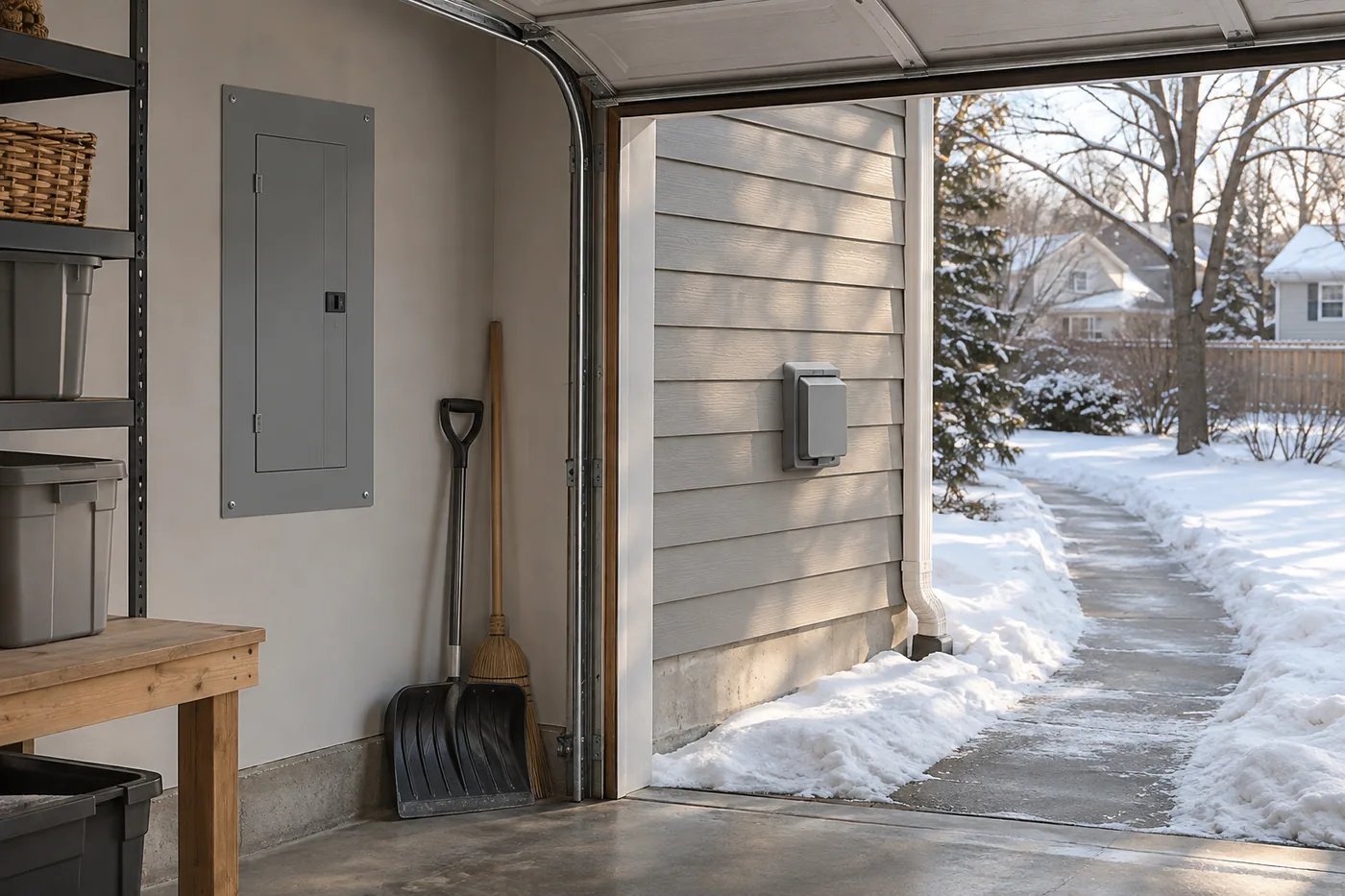 The inlet, transfer equipment and outdoor route all need attention before snow arrives.
Part 2What the three price tags actually cover
The manufacturer figures here were checked November 19, 2026. They cover the generator, not a finished home-backup installation, so tax, delivery, cord, transfer equipment and electrical work need separate quotes. The two Westinghouse prices are MSRP, not verified sale prices.
Swipe sideways to see the full table →
| Manufacturer figures | DuroMax XP13000EH | Westinghouse WGen11500TFc | Westinghouse WGen14500TFc |
|---|---|---|---|
| Gasoline running output | 10,500 W | 11,500 W | 14,500 W |
| Propane running output | 10,000 W | 10,500 W | 13,000 W |
| Natural-gas running output | Not supported | 9,500 W | 11,600 W |
| US manufacturer price, November 19, 2026 | $1,299 sale; $1,699 regular | $1,699 MSRP | $3,299 MSRP |
DuroMax XP13000EH fits the simpler fuel plan. Its gasoline and propane ratings make it the lower-priced option here when a natural-gas connection is not part of the job. But DuroMax recommends a minimum 40 lb propane tank, so a small grill cylinder is not the setup to assume.
The cited listing also showed preorder shipping for the week of November 20, 2026. That date is not proof of today's inventory, so get a current dispatch estimate before relying on this machine for the next storm.
Part 3Choose fuel flexibility or more natural-gas output
Westinghouse WGen11500TFc is my starting point for mixed fuel plans. It lists 11,500 running watts on gasoline, 10,500 on propane and 9,500 on natural gas, so changing fuels means changing the load schedule too. Its remote, electric and recoil starting options do not remove that calculation.
That natural-gas rating is the reason to keep garage heat optional. A household can have adequate capacity for its essentials yet run short when a large heater stays on during a motor start; an electrician should establish the actual combination rather than promising everything at once.
Westinghouse WGen14500TFc earns its place on natural gas. Its 11,600-watt running rating on that fuel exceeds the smaller Westinghouse's 9,500 watts. But its 14,500-watt gasoline rating cannot all travel through one verified 50A, 240V connection: 50 × 240 gives a calculated 12,000-watt ceiling before installation-specific restrictions.
Then there is moving it. Westinghouse lists a 348.3 lb dry weight, which makes a clear route from storage to the operating spot part of the purchase decision. All three manufacturer listings also say they are not CARB compliant, so local purchase and operating requirements need checking.
Part 4Garage heat gets whatever the essentials leave
How much power does a warm garage take away from the house? Newair lists its hardwired G73 heater at 5,000 W and 240V, which gives the question a real load rather than a guess. Subtracting that draw leaves 5,500 W from the DuroMax gasoline rating and 6,500 W from the smaller Westinghouse gasoline rating.
For the larger Westinghouse, subtracting from the connection's calculated 12,000-watt ceiling leaves 7,000 W. On natural gas, the generator-rating balances are 4,500 W for the WGen11500TFc and 6,600 W for the WGen14500TFc. These are arithmetic remainders, not approved operating budgets: motor starts, continuous-load restrictions and loading on each electrical leg still matter.
Newair calls for hardwiring and recommends professional electrical help; its customer-care guidance also advises against unattended heater operation. That makes garage heating a supervised extra, not an overnight promise, with the load schedule arranged to protect furnace and pump starts.
Part 5Make the outdoor setup workable in winter
CPSC says portable generators belong outdoors, at least 20 feet from homes and buildings, with exhaust pointed away from windows, doors and vents. That rules out running one in the attached garage even with the door open. CPSC also calls for working battery-operated or battery-backed CO alarms on every level and outside sleeping areas.
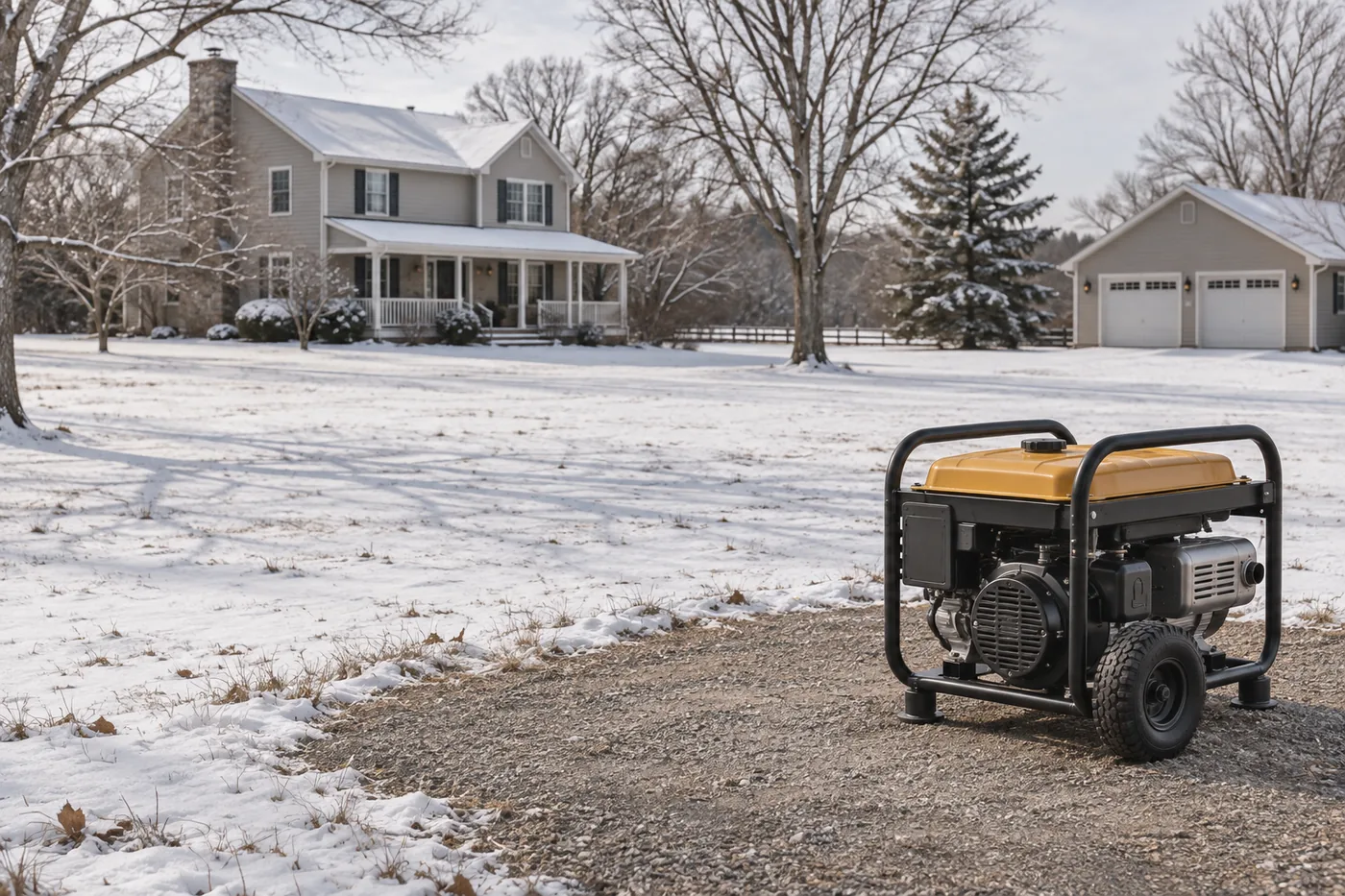 Keep the operating area outdoors and open, with exhaust directed away from building openings.
CPSC advises following the manufacturer's wet-weather, operation and maintenance instructions. So snow protection must not turn into an enclosure around the exhaust, and fuel handling and service still need planning. If nobody can move the generator, manage its fuel and shed loads, discuss an automatic standby installation instead.
Sources and selection: Manufacturer specifications and prices checked November 19, 2026, were compared for fuel-specific running output, connection limits and winter handling. CPSC supplied operating precautions. These are specification-based recommendations, not measured outage performance.
In one sentence
Keep the furnace, fridge and sump pump ahead of garage heat, then match running output to fuel and connection limits.
DuroMax XP13000EH
Check price on AmazonWestinghouse WGen11500TFc
Westinghouse WGen14500TFc
Frequently asked questions
Does a 50 amp generator deliver the same power on every fuel?
No. Westinghouse lists the WGen11500TFc at 11,500 running watts on gasoline, 10,500 on propane and 9,500 on natural gas. The usable household load also depends on inlet, transfer equipment and circuit limits.
Can the larger generator send 14,500 watts through a 50A inlet?
Not through one verified 50A, 240V connection. Multiplying those ratings gives a calculated 12,000-watt ceiling, before installation-specific restrictions; an electrician must determine the actual usable limit.
Can an electric garage heater run alongside the furnace and sump pump?
That depends on the actual appliances and motor starts. Newair's G73 alone is rated at 5,000 W and 240V, so an electrician needs to check the combined load and arrange to shed garage heat when necessary.
Is an open garage door enough ventilation for a generator?
No. CPSC says never to operate a portable generator inside a garage, even with the door open. Operate outdoors at least 20 feet from homes and buildings, with exhaust directed away from windows, doors and vents.
Sources
- DuroMax XP13000EH · 2026-11-19
Retained from the original checked source because the November 24 refresh returned local_rate_limited. $1,299 sale/$1,699 regular; 10,500 gasoline and 10,000 propane running W; 120/240V 14-50R; minimum suggested propane tank 40 lb; preorder shipping week November 20, 2026; not CARB compliant.
- Westinghouse WGen11500TFc · 2026-11-19
Retained original source values; November 24 refresh returned local_rate_limited. MSRP $1,699; gasoline/propane/natural-gas running output 11,500/10,500/9,500 W; 120/240V 14-50R; bonded neutral; remote/electric/recoil starting; not CARB compliant.
- Westinghouse WGen14500TFc · 2026-11-19
Retained original source values; November 24 refresh returned local_rate_limited. MSRP $3,299; gasoline/propane/natural-gas running output 14,500/13,000/11,600 W; 120/240V 50A 14-50R; dry weight 348.3 lb; bonded neutral; not CARB compliant. 12,000 W is calculated as 50A × 240V, not a maker-approved installation allowance.
- Newair G73 heater specifications · 2026-11-19
Retained original source values; November 24 refresh returned local_rate_limited. G73: 5,000 W, 240V, hardwired; maker recommends professional electrical help and customer-care guidance advises against unattended operation. Subtracting 5,000 W from cited ratings yields 5,500/6,500 W gasoline balances, 4,500/6,600 W natural-gas balances, and 7,000 W from the calculated 12,000 W connection ceiling; these are arithmetic only.
- CPSC portable-generator safety guidance · 2026-11-19
Retained original guidance because the November 24 refresh returned Access Denied. Operate outdoors at least 20 feet from homes/buildings, exhaust away from openings; never inside a garage even with doors open; battery-operated or battery-backed CO alarms on every level and outside sleeping areas. Follow manufacturer wet-weather, operation and maintenance instructions.