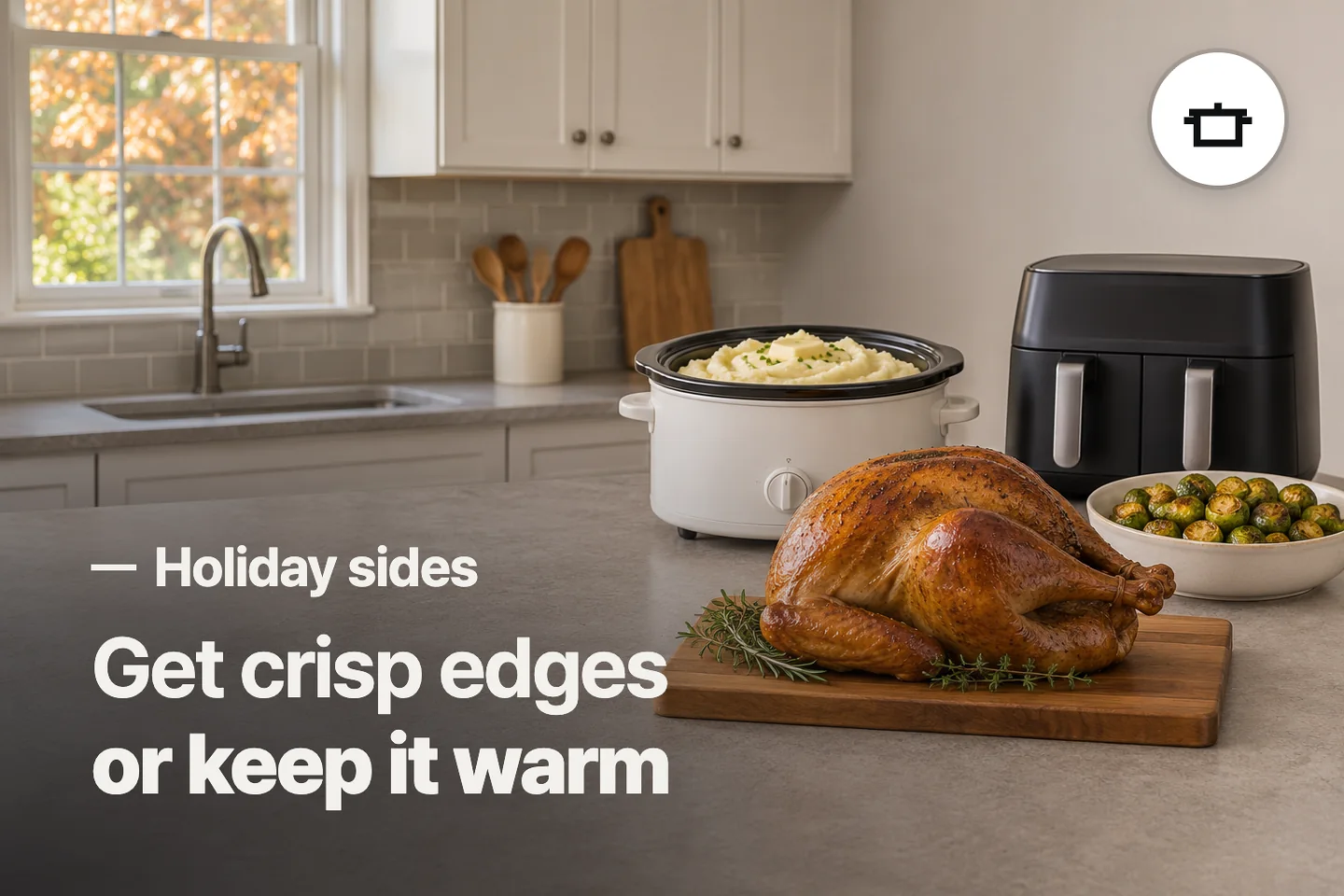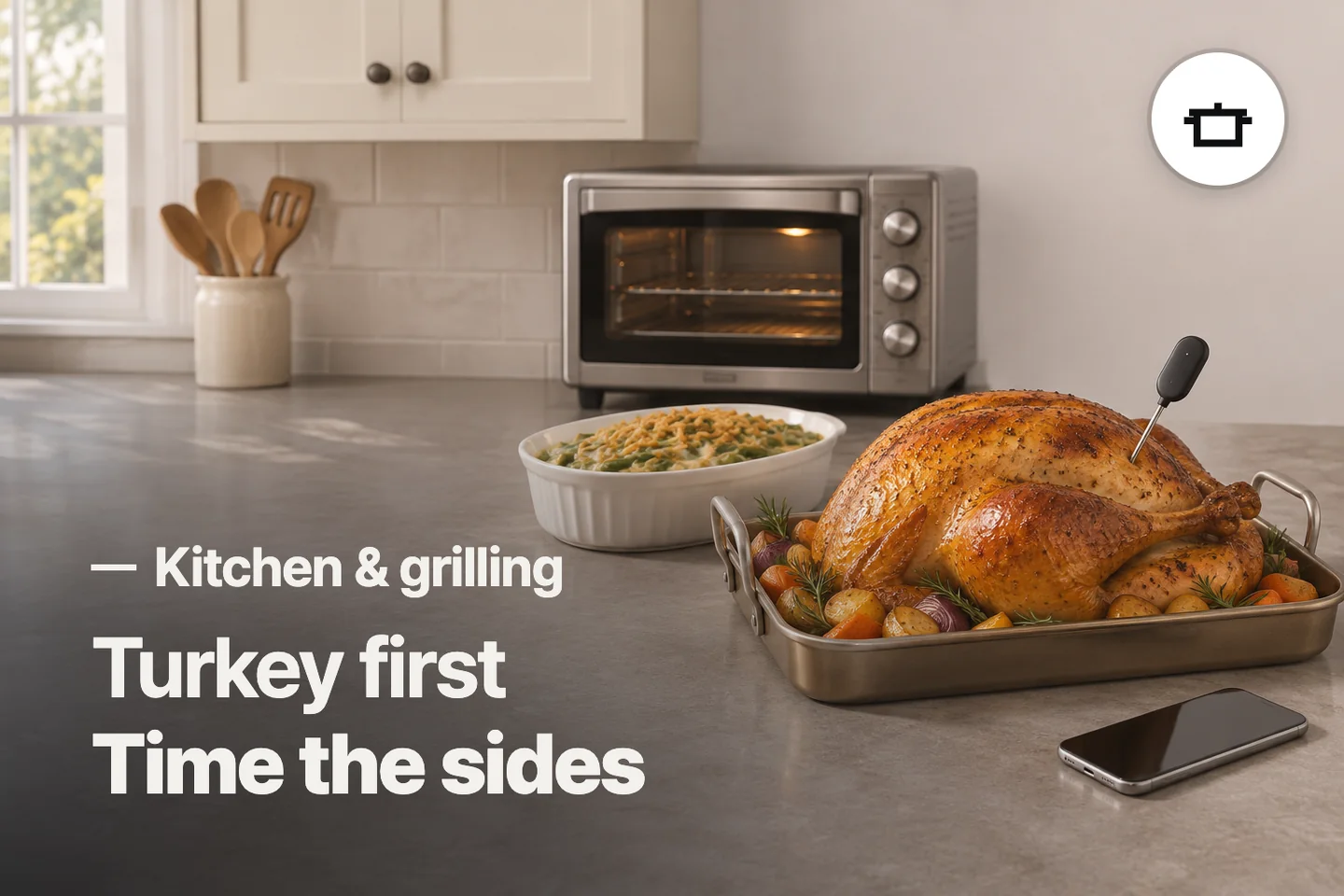
Butter sputters against the roasting pan, the kitchen smells of sage, and the sweet potatoes still need the oven that your Thanksgiving turkey refuses to leave. In a single-oven American kitchen, the useful fix is temperature first, sides second: finish cooking the bird, then give suitable dishes its resting window.
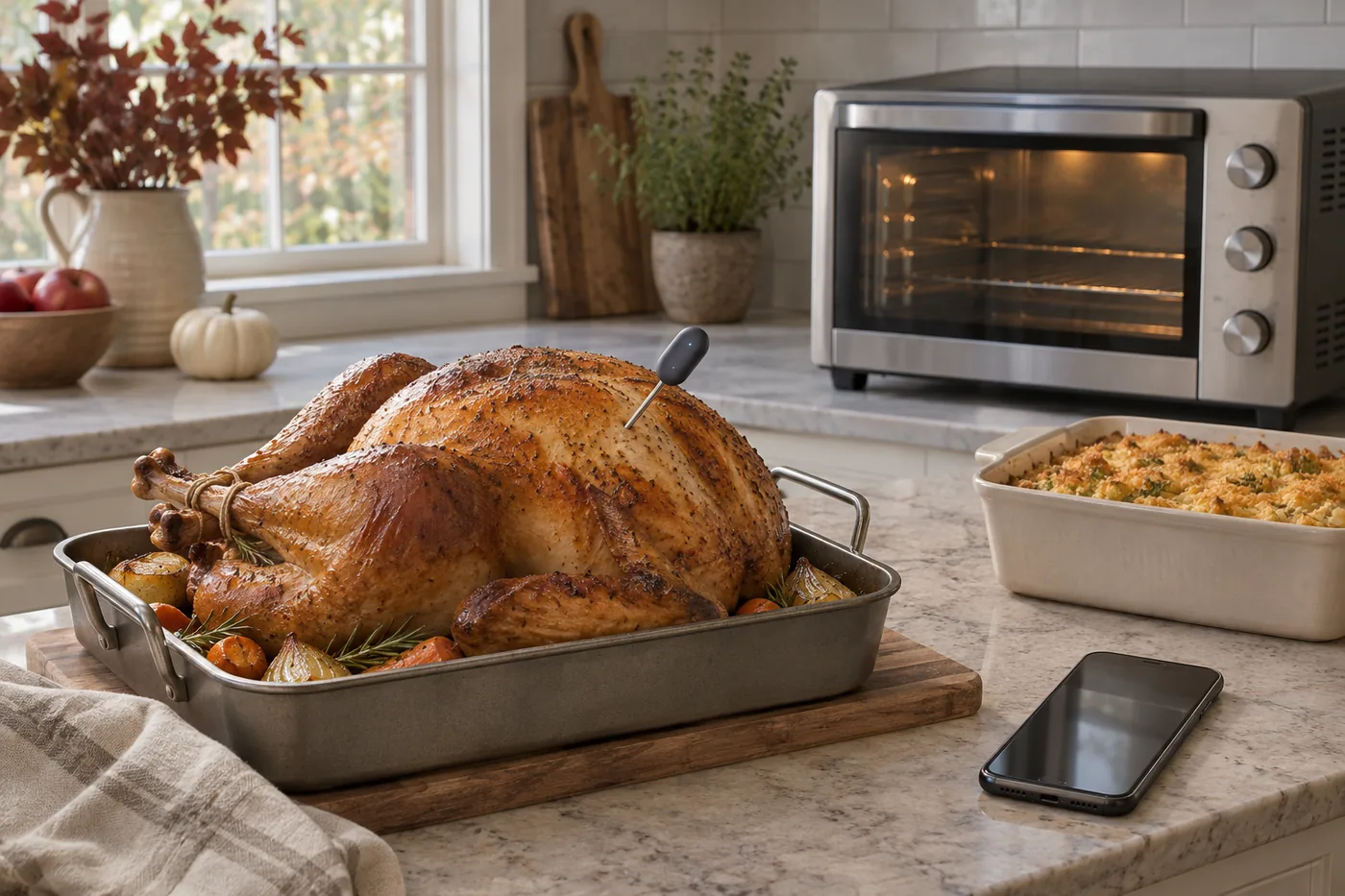 One oven has to accommodate the turkey and the dishes that follow it.
I'd choose MEATER Pro for watching the breast while preparing the rest of dinner, provided its Bluetooth connection works with the oven shut. But an existing leave-in probe may be enough; what changes dinner is placing it properly and checking the other parts of the bird before calling it cooked. The app cannot promise when everyone will sit down.
How we chose
We reviewed MEATER's US specifications and price alongside previously checked USDA roasting advice and MEATER placement instructions. The three criteria were oven-compatible monitoring, correct sensor placement, and a final whole-bird temperature check; this is guidance from published sources, not cooking trials.
Toneandroom picks
Best wireless meat thermometer for turkey timing: Top 1
Monitor an oven-roasted turkey breast while preparing side dishes nearby.
MEATER Pro
MEATER US listed sale price $74.99; original price $99.99, checked 2026-11-24. Not a checkout total or verified Amazon price; check Amazon for current pricing.
An oven-compatible probe for following the breast without repeated door opening, provided Bluetooth works in your kitchen. Keep an existing suitable probe if you already have one.
- Connection
- Bluetooth
- Internal limit
- 221°F
- Ambient limit
- 1000°F
- Charge
- 15 min / 12 hr
- You prep sides near the oven
- You want ongoing breast readings
- No built-in Wi-Fi connection
- Other turkey locations need checks
What we considered
Oven monitoring
Will readings reach the preparation counter with the door shut?
MEATER Pro supports oven cooking over Bluetooth but has no built-in Wi-Fi. That suits nearby kitchen monitoring only when the connection works in the actual setup.
Probe placement
Can the sensing section stay fully inside thick meat?
MEATER's guidance requires insertion past the safety notch and placement away from bone and fat. The tool is useful only where the turkey can accommodate that depth without exposing the internal sensing section.
Final checks
Can you verify the locations the breast probe does not cover?
USDA requires checking the thickest breast and innermost thigh and wing. A separate final check keeps one continuous breast reading from deciding the readiness of the entire bird.
Part 1Find out why the turkey is holding up dinner
The brown skin is persuasive, especially when guests have arrived, but it doesn't tell you what's happening near the bone. USDA's Food Safety and Inspection Service identifies partial freezing, stuffing, uneven oven heat, and restricted circulation around the pan as reasons roasting times vary. So look at the bird's preparation and the crowded oven before deciding the thermometer has misled you.
For its turkey-roasting method, USDA specifies an oven no lower than 325°F and recommends cooking stuffing separately for optimum safety. That makes a separate stuffing dish worth planning for, rather than treating the cavity as a way to save oven space. Keep that dish's cooking requirements on its own schedule.
Which side really needs the oven at the same moment as the turkey? Move a suitable recipe to a countertop appliance if its instructions allow, or reserve its final baking for after the bird comes out. That is a more workable adjustment than changing the turkey's heat every time a casserole needs attention.
A slipping dinner schedule calls for a different plan for the sides, not a different doneness target.
Part 2Give the wireless meat thermometer a useful reading
MEATER lists MEATER Pro as a Bluetooth probe suitable for oven cooking, without built-in Wi-Fi. Its US page showed a $74.99 sale price, alongside an original price of $99.99, on November 24, 2026; those are manufacturer listings, not an Amazon.com quote or a checkout total. Check Amazon for its current price rather than assuming the stores match.
Before roasting, charge the probe and check that readings reach the phone from the counter where you'll prepare the sides, with the oven door closed. MEATER says a 15-minute charge supports 12 hours of cooking, but that battery claim doesn't establish whether the signal will cross your particular kitchen. If the display stops updating, check the connection; a frozen number doesn't mean the turkey has stopped heating.
MEATER's placement guidance calls for the internal sensing section near the center of the thickest meat, away from fat and bone, with insertion just past the safety notch. On the breast, that means choosing an angle that keeps the sensing section inside substantial meat rather than sending it into the cavity. If you cannot cover the required depth, change the insertion angle or location instead of leaving the probe shallow.
The manufacturer's limits also describe different parts of the probe: 221°F internally, 1000°F at the ambient sensor. So the larger figure is not permission to expose the internal sensing section to oven heat. Correct insertion matters even when the oven setting is well below the ambient limit.
Part 3Check the whole bird before freeing the oven
MEATER Pro has five internal sensors, according to MEATER, but they sit along the probe's shaft. That gives information about the meat around that insertion, not separate measurements of the breast, thigh, and wing. More sensors in the breast don't remove the need to check elsewhere.
For whole turkey, USDA specifies 165°F in every required location: the thickest breast and the innermost thigh and wing. As the continuous reading approaches that temperature, use a food thermometer to verify those locations without touching bone; an instant-read thermometer you already own is useful for this job. A below-target spot means more cooking, even if the breast is ready.
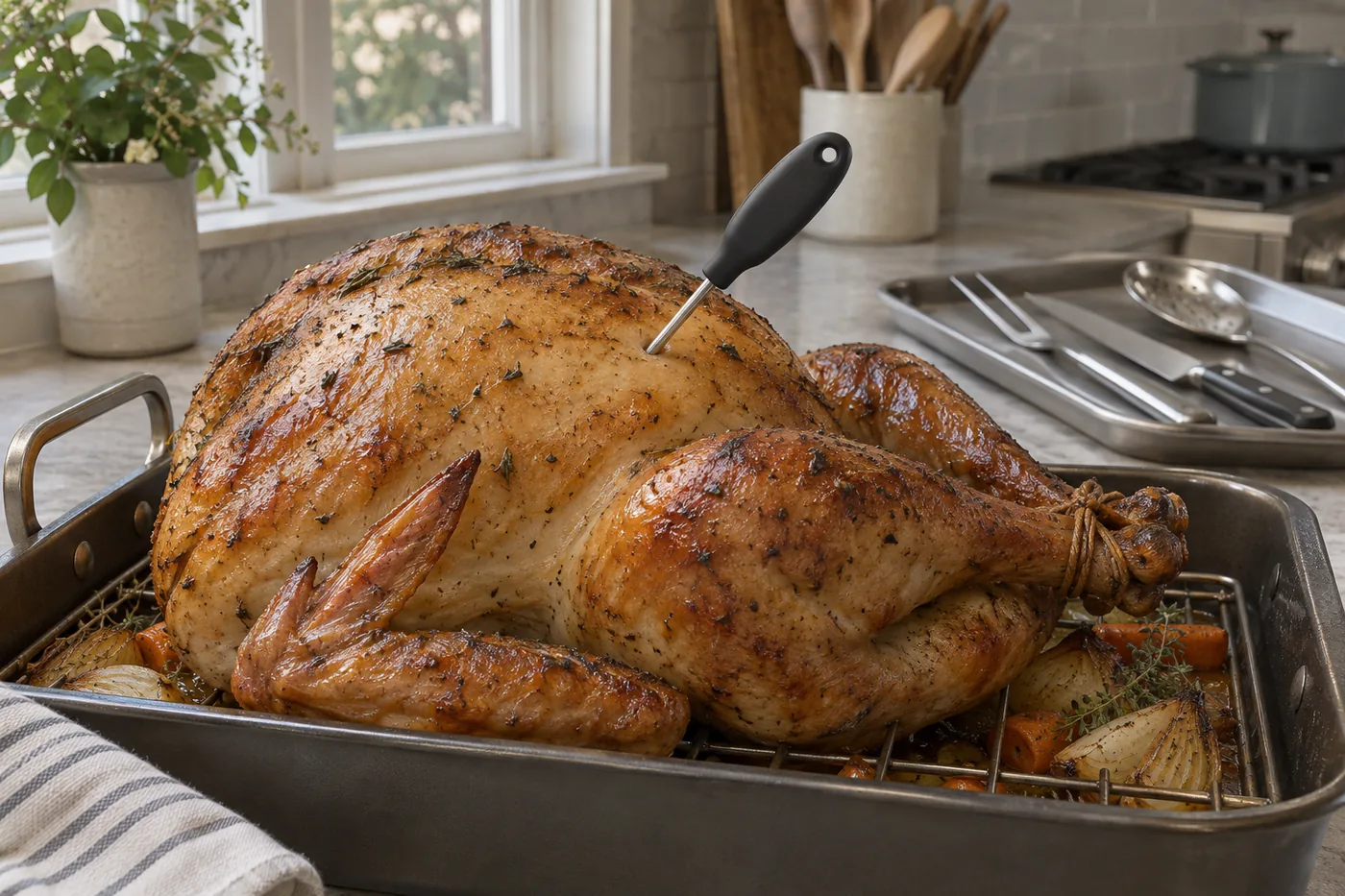 The final check reaches the breast, thigh, and wing rather than relying on the app alone.
Swipe sideways to see the full table →
| What you are checking | What USDA's guidance means here |
|---|---|
| Thickest breast | Verify 165°F; don't rely on skin color. |
| Innermost thigh and wing | Verify 165°F at these locations too. |
| Stuffing inside the bird | Its center must also reach 165°F. |
The app's removal alert is a cue to pay attention, not a substitute for those measurements. This approach does not rely on a lower pull temperature followed by hoped-for carryover heating; it checks USDA's minimum before the bird leaves the oven as finished. If one location is still cool, move the side dish's schedule rather than averaging the temperatures.
Part 4Let the resting turkey make room for the sides
Once the required temperatures are verified, the turkey has no reason to stay in the oven waiting for the potatoes. USDA recommends a 20-minute stand before carving and before removing stuffing, allowing juices to set and making carving easier. That creates useful oven time, but only for a dish whose own remaining cooking time fits.
A nearly finished side and a cold, dense casserole are different scheduling problems. So decide before the turkey goes in which dish can genuinely finish during that stand, including the time its recipe needs for the oven to reach the right setting. If it cannot fit, prepare it by another suitable method or serve it later; don't promise that resting alone will cook it through.
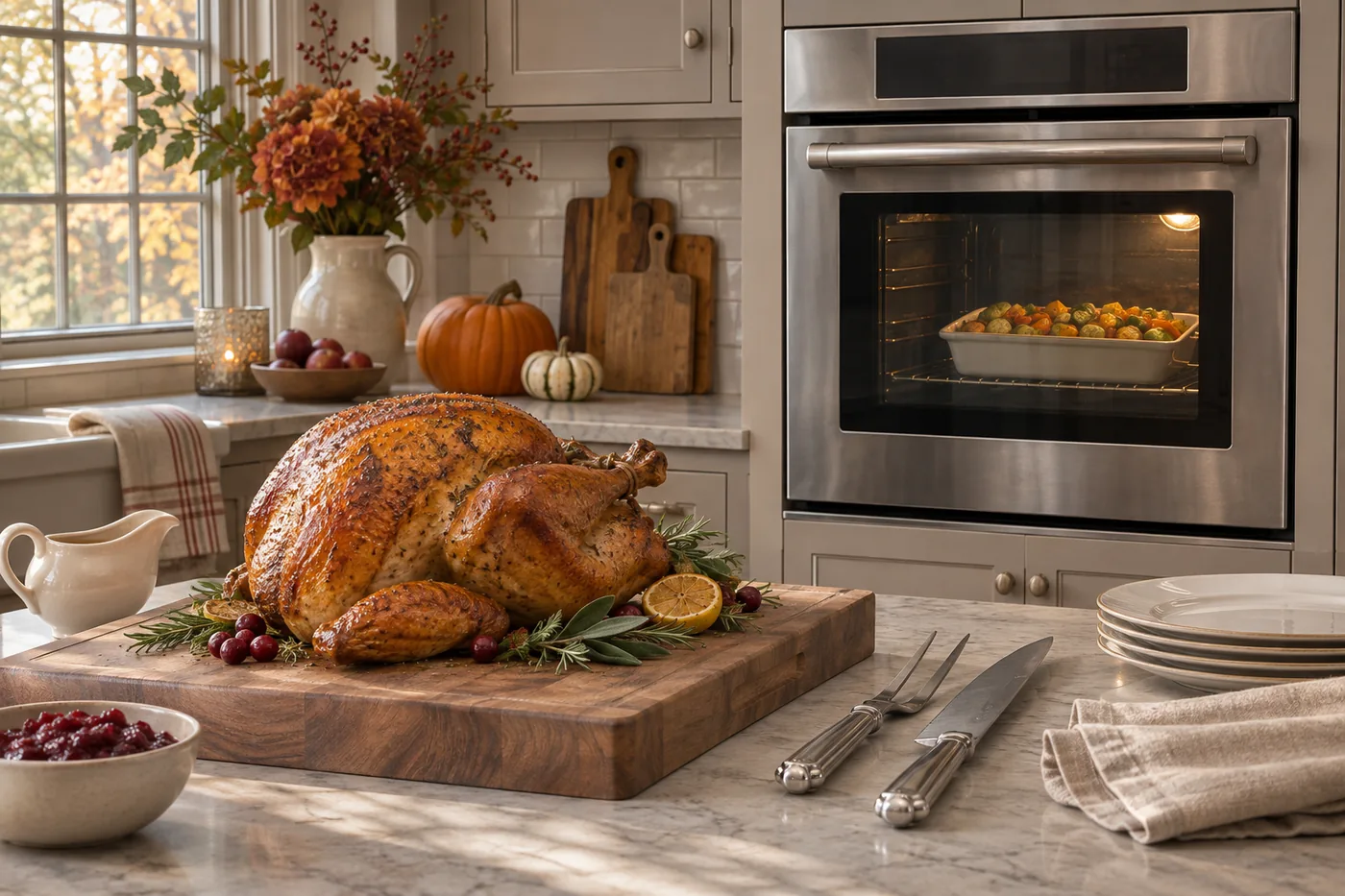 The turkey rests outside the oven while a side finishes according to its own recipe.
Keep the carving board ready and the last dishes simple, because the thermometer has already done its most useful job: telling you when to stop waiting on the bird. Then let the cooked turkey leave the oven. Dinner still needs coordination, but it no longer depends on guessing what is happening beneath the skin.
Method and disclosure: This guide uses MEATER's product specifications and previously checked USDA and MEATER placement guidance, not cooking trials. No tracked purchase link is included. MEATER's price and specifications were rechecked November 24, 2026; USDA and placement details retain their November 13, 2026 source checks because those pages could not be reopened. Amazon pricing was not verified.
In one sentence
Place the probe correctly, verify the whole turkey, then use its resting time for sides that can finish within it.
MEATER Pro
Frequently asked questions
Where does a wireless meat thermometer go in a turkey?
MEATER's placement guidance puts the internal sensing section near the center of the thickest meat, away from bone and fat, inserted just past the safety notch. A breast placement must keep that sensing section inside meat rather than in the cavity; it does not replace final thigh and wing checks.
Can I take the turkey out when the app says it is ready?
Use the alert as a prompt to check. USDA specifies 165°F in the thickest breast and innermost thigh and wing, plus the center of stuffing cooked inside; this method verifies those locations before treating the bird as finished.
How long can sides use the oven while the turkey rests?
USDA recommends a 20-minute stand before carving and removing stuffing. Plan only dishes whose own remaining cooking instructions fit that time, accounting for any oven-temperature adjustment; a cold casserole may need a different plan.
Does MEATER Pro require Wi-Fi to monitor turkey?
MEATER lists the Pro as a Bluetooth model without built-in Wi-Fi. Check that readings reach your preparation area with the oven closed before depending on remote monitoring during dinner preparation.
Sources
- USDA FSIS: Turkey Basics, Safe Cooking · 2026-11-13
Retained from the original source check; reopening was denied on 2026-11-24. Oven at least 325°F; 165°F minimum in thickest breast, innermost thigh and wing, and stuffing center; 20-minute stand before carving and stuffing removal.
- MEATER Pro · 2026-11-24
US listed sale price $74.99 and original price $99.99; five internal sensors and one ambient sensor; 221°F internal and 1000°F ambient limits; 15-minute charge for 12 hours; oven compatibility, Bluetooth, and no built-in Wi-Fi.
- MEATER: Internal Temperature Sensor · 2026-11-13
Retained from the original source check; reopening met an access challenge on 2026-11-24. Describes five internal sensors on Pro probes and insertion just past the safety notch, with sensing near the center of thick meat away from fat and bone. No numerical insertion depth is specified here.