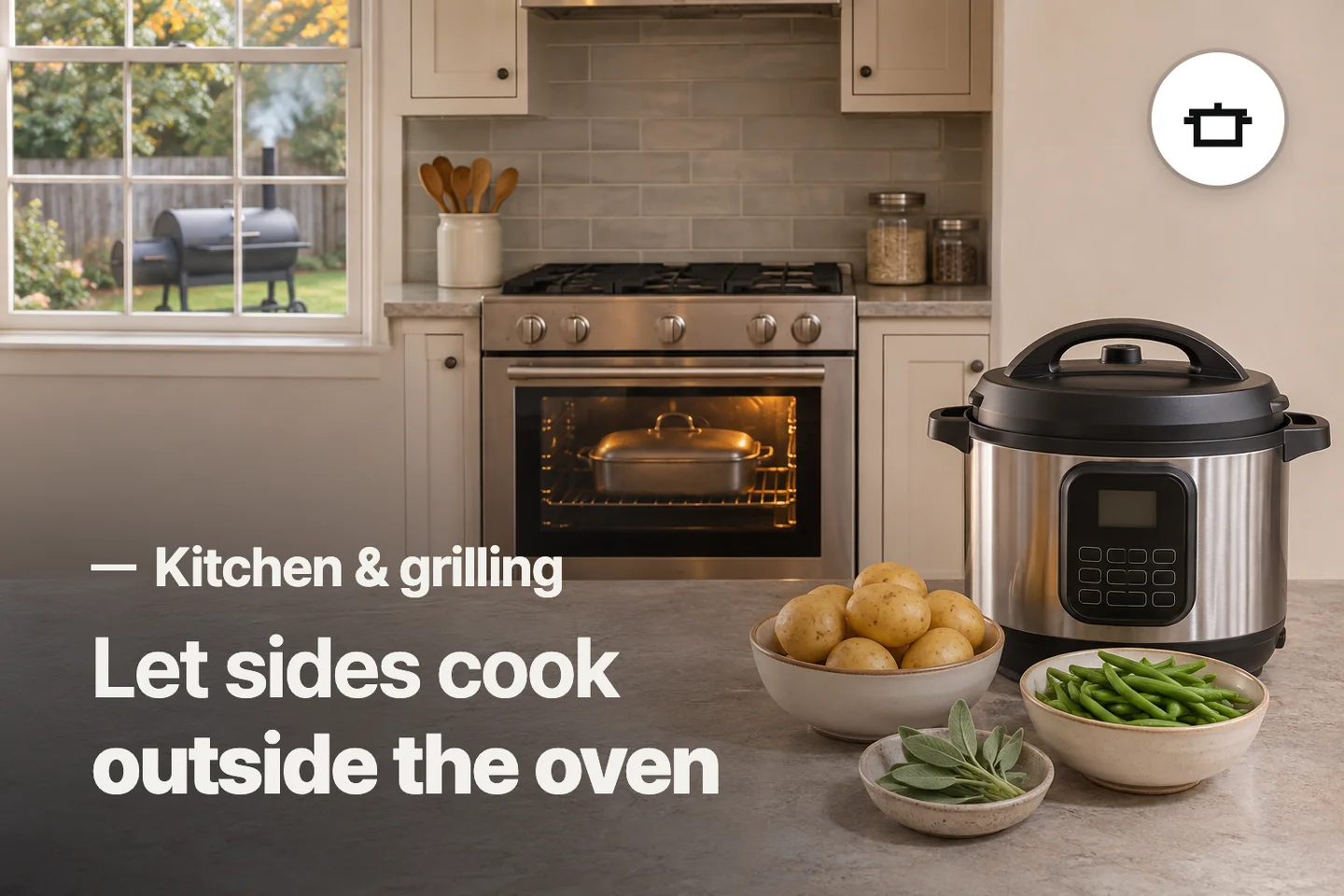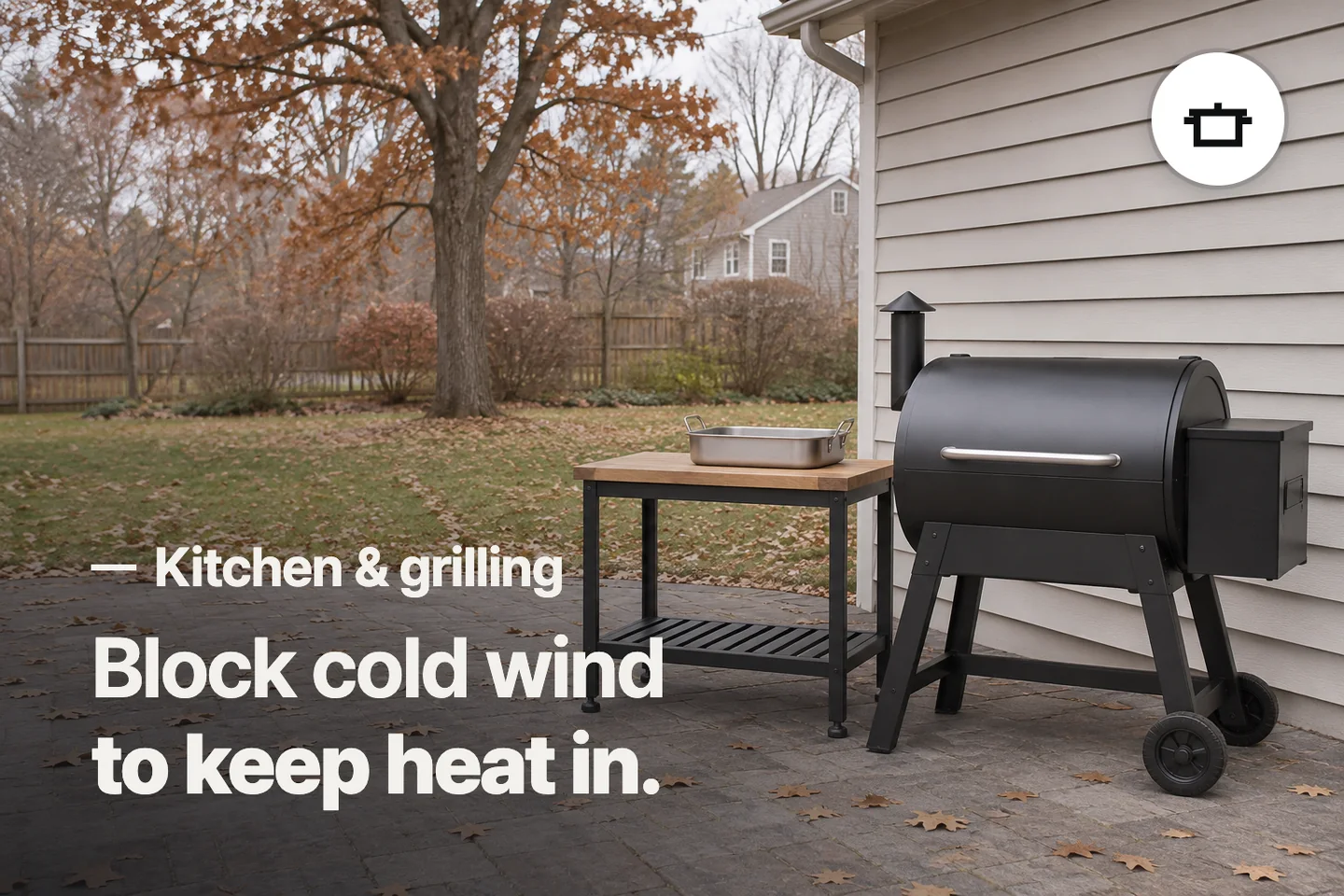
Wood smoke curls past the patio door, and the pan of Thanksgiving vegetables is still waiting beside a cold traeger ironwood 885 while the kitchen oven is occupied by the turkey. That is a frustrating moment to start shopping for insulation, because the more useful first checks are wind exposure, pellet condition, and ash in the firepot.
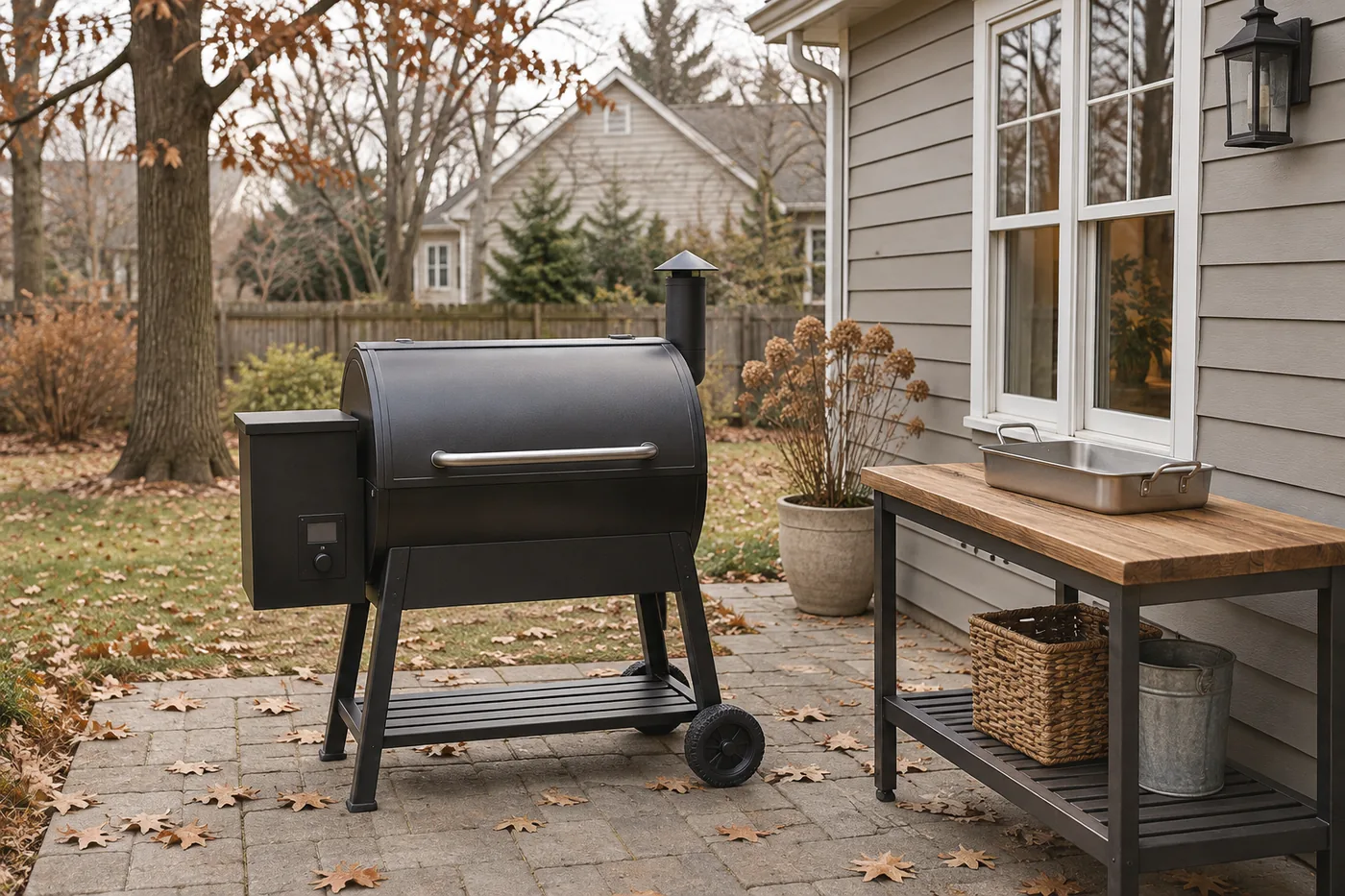 Keep the waiting food indoors while the outdoor cooker gets attention.
I would put placement and fuel ahead of accessories, and add the ThermoWorks Thermapen ONE only if the kitchen lacks a dependable food thermometer. That thermometer checks dinner, not the grill's ability to hold heat, so it belongs at the end of this troubleshooting sequence rather than the beginning.
How we chose
Reviewed Traeger model specifications and support guidance, ThermoWorks specifications and dated pricing, and FDA food-temperature advice. The three criteria were accessory compatibility, fuel and airflow recovery, and independent food-temperature verification; unavailable pages retain their original verification dates.
Toneandroom picks
Best traeger ironwood 885 tool for food checks: Top 1
A dependable instant-read food thermometer is missing from the kitchen
ThermoWorks Thermapen ONE
Historical maker-direct red closeout: $74.00; displayed comparison $115.00, before tax and shipping, checked 2026-11-18. Not refreshed on 2026-11-24. Price varies; check Amazon.
Separately verifies food temperature after heat recovery without treating a food probe as a chamber sensor.
- Operating range
- −4 to 122°F
- Accuracy
- ±0.5°F
- Accuracy range
- −4 to 248°F
- You lack a reliable food thermometer
- You want quick checks of finished food
- Not a leave-in temperature monitor
- Does not repair unstable grill heat
What we considered
Model fit
Is the proposed accessory approved for this exact grill?
Traeger's blanket list does not include this original Ironwood model. A heat-resistant covering is therefore not selected as the remedy.
Fire recovery
Have fuel quality and the airflow path been addressed?
Traeger's guidance connects weather, pellet condition, and cleaning with cooking performance. Those checks come before spending money on parts that may not be faulty.
Food checks
Can the kitchen verify the food temperature independently?
The Thermapen ONE provides a separate instant-read measurement within its stated operating range. It is included only for kitchens without a reliable equivalent, not as a way to repair the grill.
Part 1Give the traeger ironwood 885 room to recover
A temperature dip immediately after loading a cold roasting pan is different from a cooker that never finishes preheating. Traeger's weather guidance describes slower recovery in cold conditions, so let the normal startup and preheat finish with the lid closed before deciding that a part has failed.
Traeger also identifies direct wind into its downdraft exhaust as a possible source of flame trouble. That makes wind direction at the rear exhaust more useful to check than whether the lid feels cold; any change of position belongs before ignition or after shutdown and cooling, with the manual's clearances preserved.
Does the display recover when the lid stays closed, or does it remain low through the preheat? That distinction gives you something useful to tell support, without repeatedly changing the setting and making the behavior harder to follow.
The manufacturer's product page lists a 165–500°F cooking range and double-sidewall insulation for this original model. But that range is a specification, not a promise of instant recovery, and the existing insulation is a reason to investigate the cooking conditions before assuming the barrel needs another covering.
Part 2A blanket needs model approval, not just a heat rating
A welding blanket is an appealing shortcut when the patio is bitterly cold. But Traeger's published insulation-blanket compatibility list does not include the Ironwood 885, so a blanket for another model is not an approved substitute.
Traeger's blanket guidance restricts compatible blankets to outdoor temperatures below 32°F and grill settings no higher than 350°F, and warns that misuse can cause damage or fire. Those restrictions do not establish a safe installation on this cooker; a fabric's heat rating cannot tell you whether it will obstruct the exhaust.
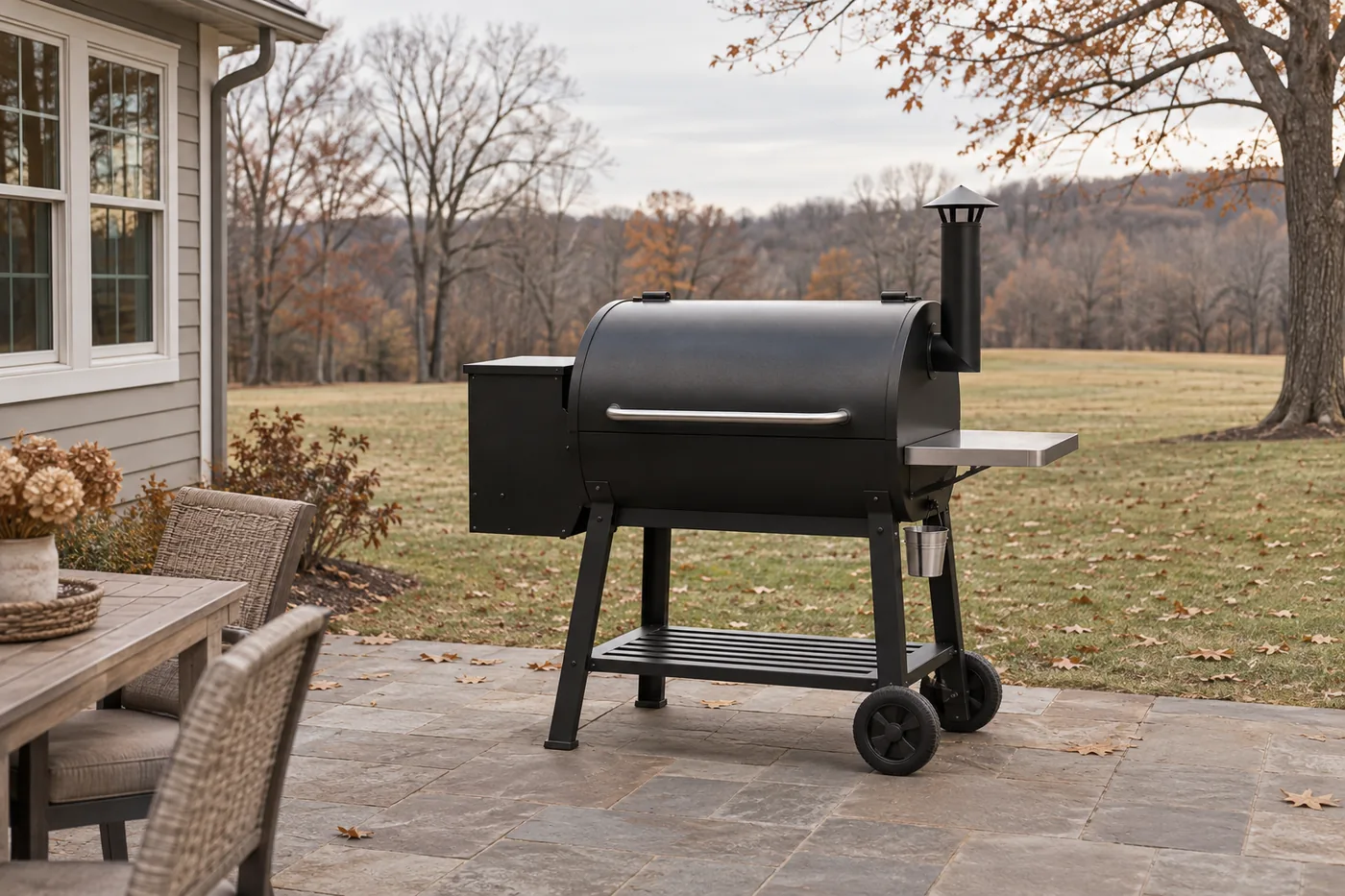 Wind protection must not come at the expense of open exhaust space.
I would leave the blanket out of this holiday plan unless Traeger confirms a suitable accessory for the exact model. That leaves the next useful job where it belongs: checking what is feeding the fire.
Part 3Check the pellets, then clean the cold firepot
Traeger's weather advice calls for fresh, dry pellets, and its troubleshooting guidance links poor fuel condition with low heat. So examine what is already in the hopper before pouring more on top; crumbling, damp material does not improve because a fresh layer covers it.
Traeger describes sound pellets as slightly shiny, with a clean snap. If the existing fuel has deteriorated, follow the maker's hopper and auger instructions to remove it and the loose sawdust, rather than reaching into a powered mechanism.
For cleaning, use the D2 WiFIRE procedure, not instructions for the newer touchscreen Ironwood. Traeger's sequence removes the grates, drip tray, and heat baffle to expose the firepot, with maintenance performed after shutdown, cooling, and disconnection from power.
The crucial word is cold. Traeger requires both the cooker and the ash to be cold before vacuuming, so this is not a quick job to squeeze between ignition attempts while embers might remain.
Swipe sideways to see the full table →
| What you find | What to address before loading food |
|---|---|
| Damp or crumbling pellets | Remove compromised fuel using Traeger's instructions |
| Ash or debris in the firepot | Follow the cold-grill cleaning procedure |
| Grease or debris around exhaust passages | Restore the maker's specified airflow path |
| A large pan crowding the barrel | Leave space around it for circulating heat |
Once everything is correctly reassembled, repeat the normal startup and preheat before returning the dish. But if the flame goes out or an error appears, use Traeger's instructions for that specific error rather than repeatedly restarting an uninspected firepot.
Dry fuel and a clear firepot come before experimenting with replacement parts.
Part 4Keep the food probe separate from the chamber sensor
A wired meat probe answers a different question from the controller's chamber sensor. Traeger explicitly says not to measure barrel temperature with a meat probe, so disagreement between those readings does not establish that the chamber sensor needs replacing.
If the food reading looks implausible, check that the wired probe is fully connected and follow Traeger's ice-bath procedure. That procedure uses ice and water with the ice resting at the bottom, then gentle stirring for 1 minute around a 32°F reference; follow the maker's calibration directions rather than guessing an offset.
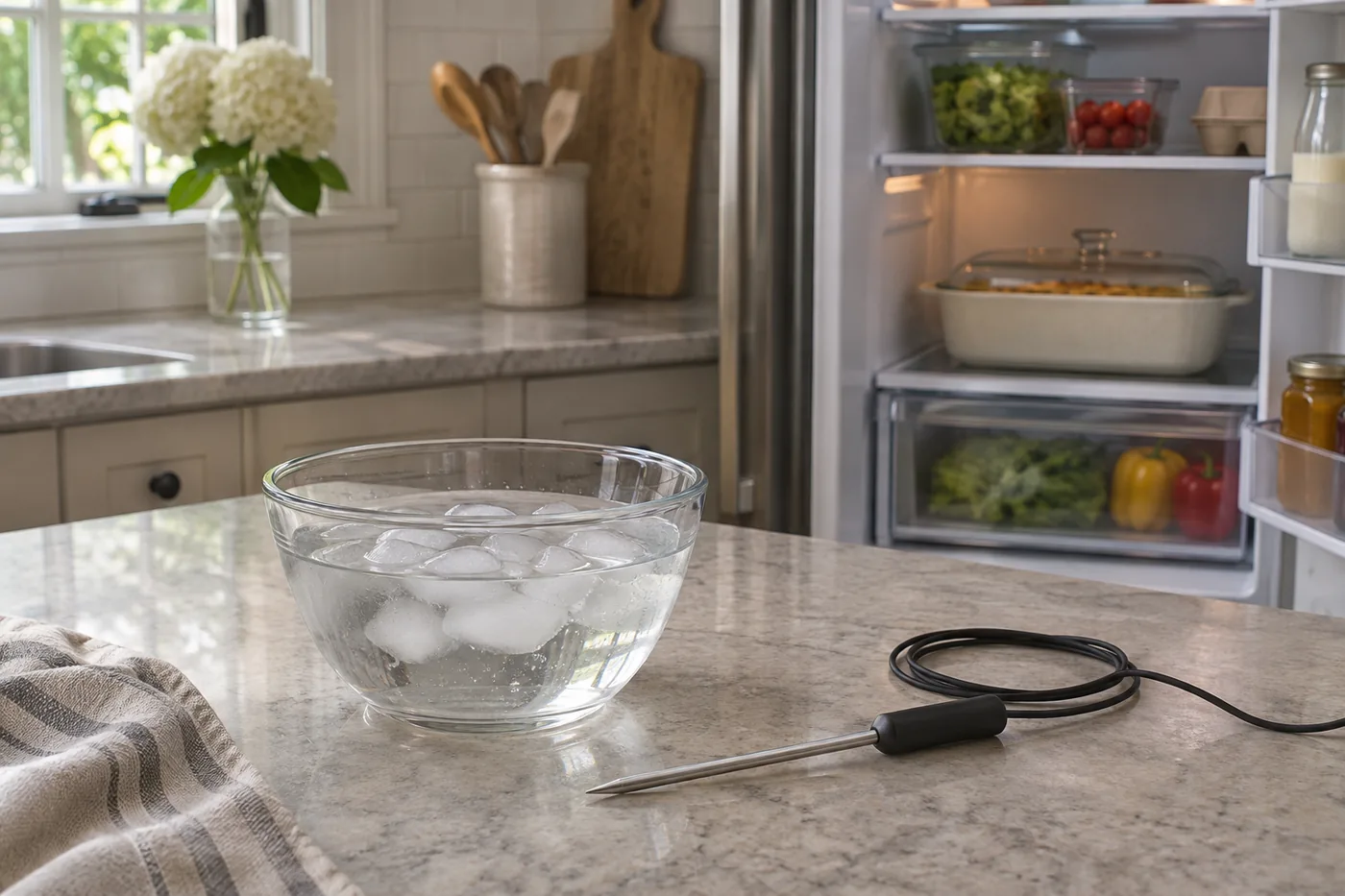 Check the food probe indoors, separately from troubleshooting the grill's heat.
Part 5Buy a food thermometer only if one is missing
The ThermoWorks Thermapen ONE is a spot-check tool, not a leave-in monitor or a repair for unstable combustion. ThermoWorks lists an operating range of −4 to 122°F and accuracy of ±0.5°F from −4 to 248°F, making it suitable for food checks in the cold-patio situation described here, within those operating limits.
The last verified maker-direct listing was $74.00 for the red closeout version, against a displayed $115.00 comparison price, before tax and shipping, checked November 18, 2026. Because that listing could not be refreshed for this rewrite, treat it as a dated reference rather than an available offer; Price varies; check Amazon.
The FDA's food-handling guidance specifies 165°F for poultry and for leftovers and casseroles, measured with a food thermometer. That means checking the turkey breast in its thickest part away from bone, rather than allowing the grill display or the color of the meat to stand in for a food reading.
Keep waiting uncooked dishes refrigerated while the grill is being sorted out. If the traeger ironwood 885 still will not recover after these checks, contact Traeger and move the dish to another suitable appliance or postpone it; keeping the oven free is not worth continuing with unreliable heat.
Method: Traeger model specifications, weather, blanket, cleaning, and probe guidance were reviewed alongside ThermoWorks specifications and FDA food-temperature guidance. Selection focused on model compatibility, restoring fuel and airflow, and verifying food temperature. Rewrite reviewed November 24, 2026; the model page was refreshed that day, while unavailable source pages retain their November 18, 2026 checks. The quoted thermometer price is historical, excludes tax and shipping, and was not reconfirmed.
In one sentence
Check wind, dry pellets, and cold ash before buying accessories for a slow-heating grill.
ThermoWorks Thermapen ONE
Check price on AmazonFrequently asked questions
Can a welding blanket fix cold-weather heat loss on the Ironwood 885?
Traeger's insulation-blanket compatibility list does not include this model. Its below-32°F outdoor and 350°F maximum grill-setting restrictions apply to compatible blankets, not improvised coverings. Confirm an accessory with Traeger rather than substituting a welding blanket.
Why does the temperature drop after a cold roasting pan goes in?
Traeger describes recovery time after loading food or opening the lid, with cold weather potentially extending it. Allow normal preheating and leave circulation space around the pan; persistent low heat needs wind, fuel, and cleaning checks.
Can the wired meat probe diagnose a bad chamber sensor?
No. Traeger says its meat probes are not for barrel-temperature measurement. A questionable food probe needs its own connection and ice-bath checks, not a chamber adjustment based on disagreement between sensors.
Will a wireless thermometer make Thanksgiving cooking more reliable?
It can help monitor food, but it cannot replace dry pellets or clear a blocked firepot. The FDA specifies 165°F for poultry and for leftovers and casseroles; verify food with a suitable thermometer and use another cooking arrangement if the grill cannot recover.
Sources
- Traeger Ironwood 885 · 2026-11-24
Refreshed product page: 165–500°F range, double-sidewall insulation, D2 controller, and downdraft exhaust on the original Ironwood 885.
- Traeger weather guidance · 2026-11-18
Original verified source identifies near-freezing conditions including 30°F, dry fuel, and direct-wind concerns at the downdraft exhaust. Refresh attempted 2026-11-24 but blocked; original verification retained.
- Traeger insulation blankets · 2026-11-18
Original verified limits: below 32°F outdoors and no higher than 350°F grill setting for compatible blankets; Ironwood 885 not listed. Refresh blocked 2026-11-24; original verification retained.
- Traeger pellet grill cleaning · 2026-11-18
Original verified guidance: cleaning every 2–3 cooks or 20–24 cooking hours, with D2 disassembly and cold-grill, cold-ash vacuuming precautions. Refresh blocked 2026-11-24; original verification retained.
- Traeger wired meat probe troubleshooting · 2026-11-18
Original verified procedure: 32°F ice reference, 1 minute of gentle stirring; food probe not for barrel temperature. Refresh blocked 2026-11-24; original verification retained.
- ThermoWorks Thermapen ONE · 2026-11-18
Original verified red closeout $74.00 versus displayed $115.00, before tax and shipping; operating range −4 to 122°F, accuracy ±0.5°F from −4 to 248°F. Refresh rate-limited 2026-11-24; historical price and verification retained.
- FDA safe food handling · 2026-11-18
Original verified minimum internal temperature: 165°F for poultry and for leftovers and casseroles. Refresh returned Not found on 2026-11-24; original verification retained.