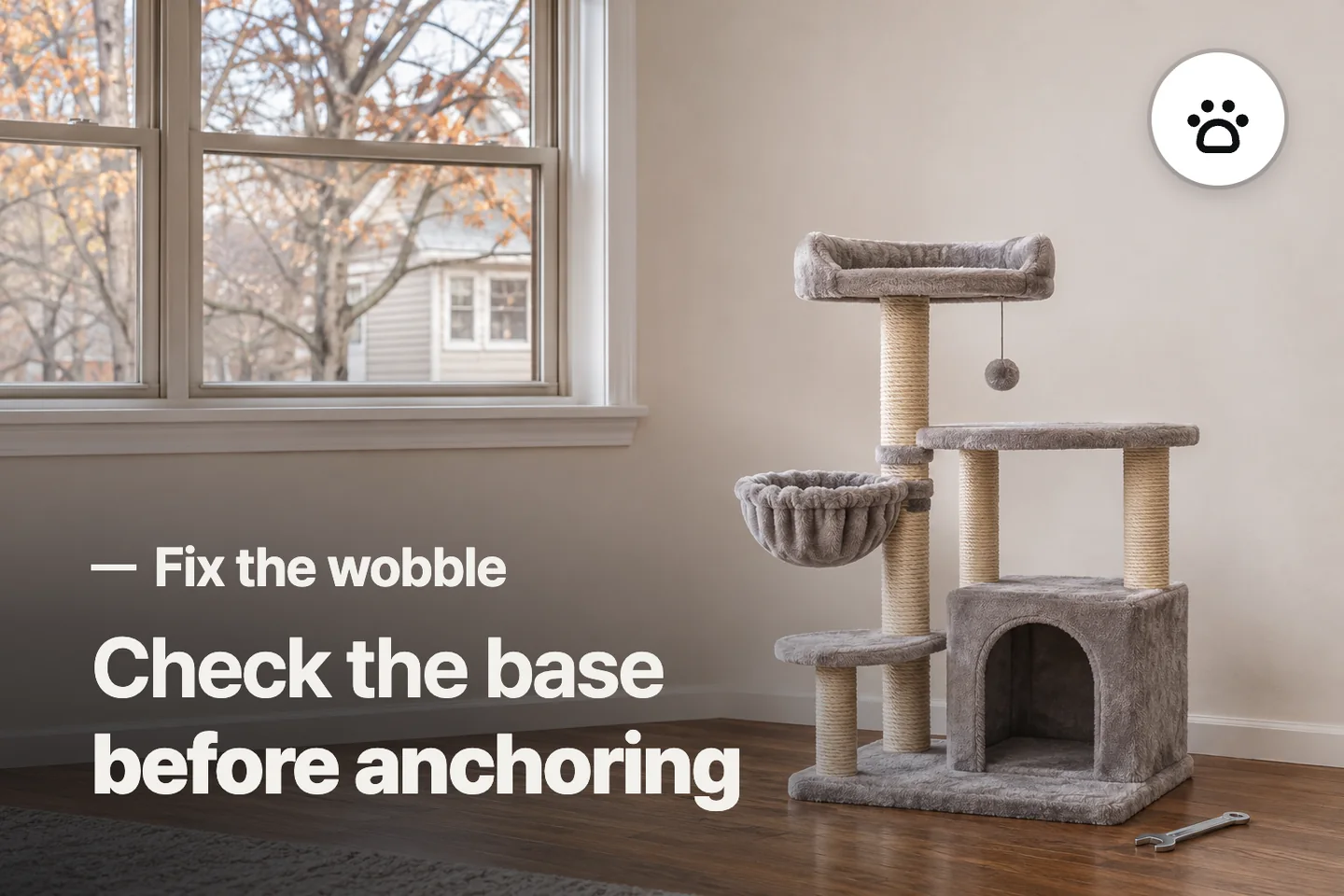
Will a wall strap actually fix the tall cat tree that rocks beside your apartment window? With winter keeping more play indoors, that moving perch needs attention before the cat climbs again. The useful distinction is where the movement starts, not how sturdy the replacement strap looks in the store.
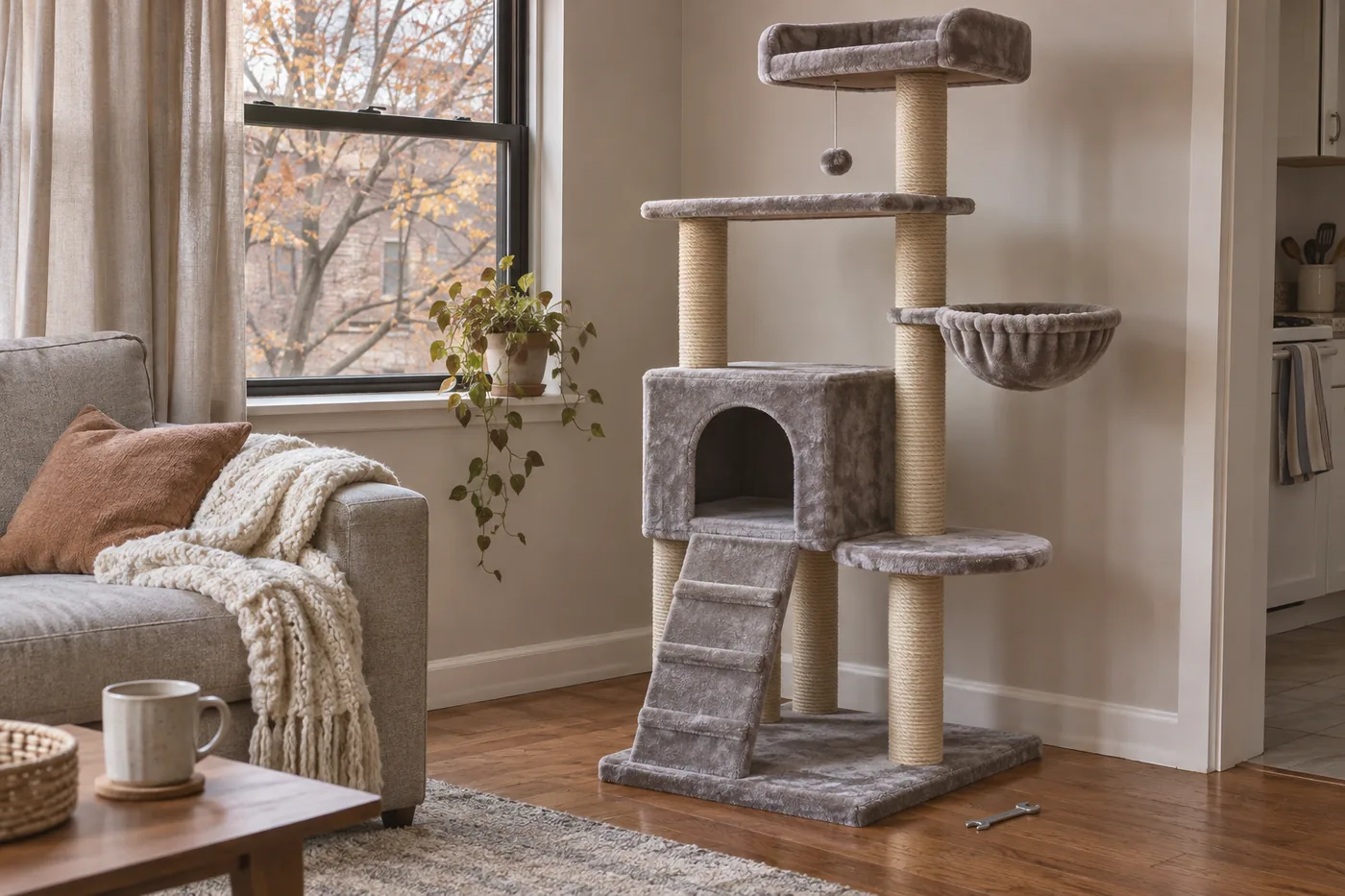 The floor and connections come before the replacement restraint.
For a sound Catry tree that needs a replacement restraint, I'd choose the Catry Anti-Tipping Kit (Two-Pack), CT230848x2, provided its specified wall-stud installation is possible. But I'd resolve floor support and loose connections first. Catry's compatibility claim covers its own trees, not every tower with a similar-looking post.
The check log below separates the starting condition, the adjustment, and the follow-up observation. It does not assign a made-up wear-test score to your furniture. Mau's safety guide says to discontinue use when instability, looseness, or damage appears, so an unstable perch stays out of use while its cause is investigated.
How we chose
Reviewed Mau's current safety guide alongside previously checked Catry kit specifications, pricing, and CPSC furniture-anchoring guidance. The checks prioritize base support, connection condition, and tree-to-wall compatibility; inaccessible sources retain their earlier check dates.
Toneandroom picks
Best tall cat tree restraint for Catry replacements: Top 1
A sound Catry tree needing a replacement restraint and a permitted wall-stud installation
Catry Anti-Tipping Kit (Two-Pack), CT230848x2
Catry two-pack: $7.98 sale, $11.99 regular; shipping calculated at checkout. Last verified 2026-11-18; current price could not be refreshed on 2026-11-24.
Catry documents compatibility with its own trees and specifies the post-to-wall-stud attachment. Choose it only after confirming that the existing tree is sound and the installation is permitted.
- Length
- 24 in
- Width
- 1 in
- Pack
- 2 kits
- Fits Catry trees
- Replacement two-pack
- Requires a wall stud
- Not a joint repair
What we considered
Base support
Does the whole base rest on a suitable surface?
Mau specifies level, stable placement and advises against thick rugs. Check your own model's placement instructions before spending on a restraint.
Sound connections
Can the existing joints hold as the maker intended?
Mau calls for stopping use when looseness or damage appears. A replacement strap belongs after the furniture's assembly and damaged parts have been resolved.
Compatible attachment
Does the restraint fit both the tree and the wall?
Catry lists its kit for Catry trees and specifies a wall stud. Another brand or another wall construction needs maker confirmation rather than an assumed substitution.
Part 1Check A: Where does the tall cat tree move?
Starting condition. Look at the unloaded tree: does its whole base rock, or does a platform shift around a connection? That distinction matters because changing the floor position cannot repair a loose platform. Note the location of the movement rather than asking the cat to reproduce it.
Mau specifies a level, stable surface for its furniture and advises against thick rugs or uneven floors. So check whether the base bridges a rug edge, sits across a flooring transition, or rests unevenly on carpet. A winter rug added beneath an existing tree can change its support even though the furniture itself has not changed.
Adjustment. Compare the placement with your model's instructions, then move the unloaded tree only as those instructions allow. The aim is full support beneath the base, not a corner that conceals movement. Mau prefers corner placement, but its guide still calls for suitable wall securing.
Follow-up. Observe the same base and connections again. If the rocking changes but a post still turns, the placement was only part of the problem; write down the remaining movement before proceeding.
A different location can improve support without repairing a loose connection.
Part 2Check B: Does the joint hold, or is the material failing?
Starting condition. Open the exact model's assembly instructions and compare the installed parts with its parts list. That comparison matters more than finding a larger tool: a misplaced post or missing washer needs the specified assembly corrected, not extra force.
Mau requires original or approved replacement parts for its furniture. So if your own maker's instructions do not explain a loose insert, damaged board, or fastener that will not hold, ask that maker about replacement parts before attempting a repair. A strap is not a replacement joint.
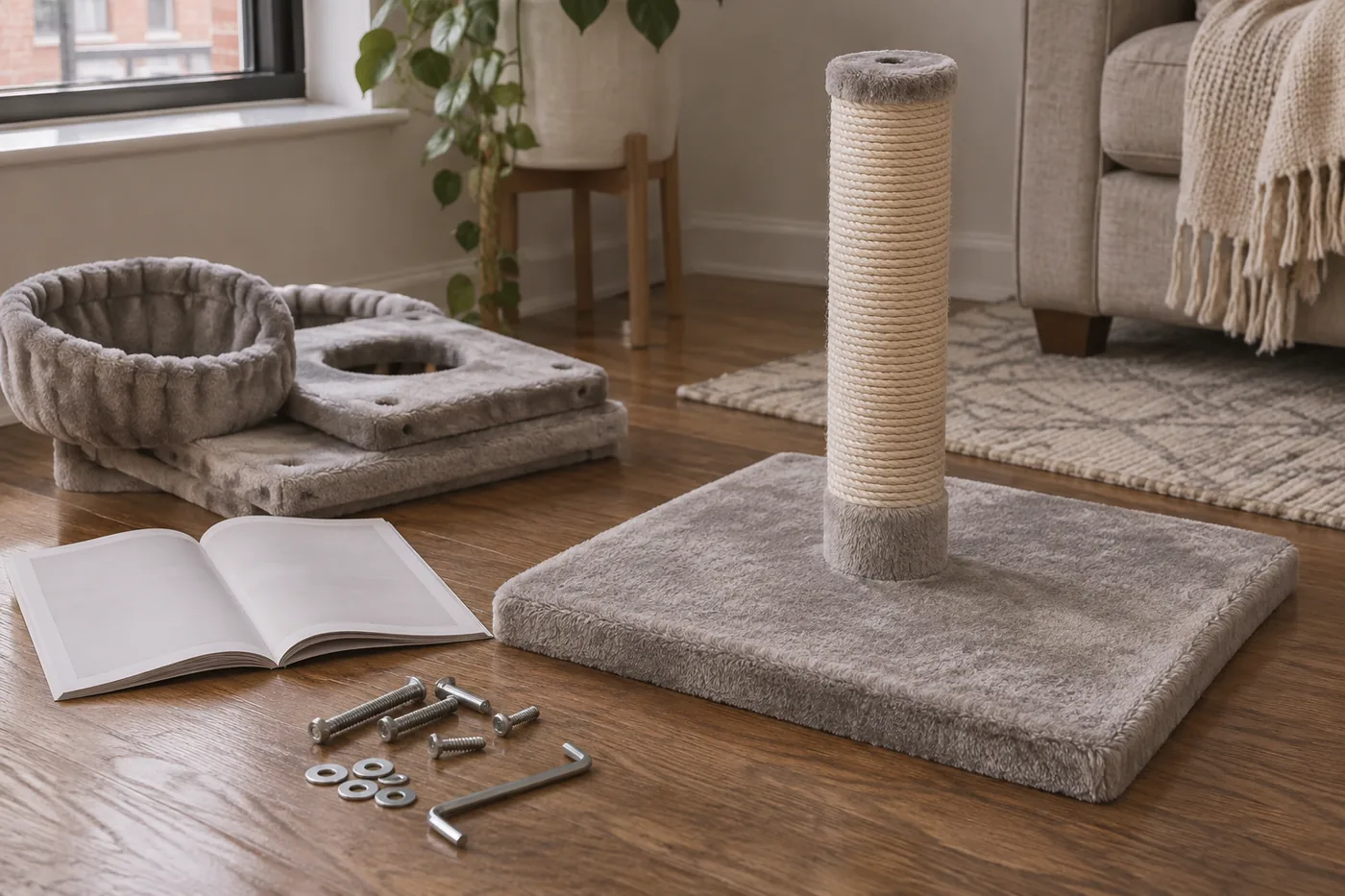 Match the connection to the model instructions before tightening anything.
Adjustment. Follow the maker's sequence and specified tools rather than adding tension at the wall to hide movement below. If a threaded insert pulls out or the surrounding board crumbles, the issue is damaged material; Mau's stop-use guidance applies to that kind of damage on its furniture.
Follow-up. Compare the same connection after the permitted adjustment, recording whether it remains seated or still moves. This observation is not a new weight rating. Mau explains that its limits apply per platform with proper assembly on a level surface, so a large-looking perch is not enough evidence that it fits a heavy cat.
Part 3Check C: Match the kit to the tree and the wall
For the Catry Anti-Tipping Kit (Two-Pack), CT230848x2, the maker's previously checked listing specifies a hook-and-loop connection and attachment to a wall stud. That makes it a specific replacement option for Catry furniture, not a universal fix for a rental's unknown wall. For another brand, obtain its approved attachment point and restraint first.
Catry listed each kit at 24 inches long, 1 inch wide, and 0.5 inch high, with two kits in the package. Those measurements help describe the item; they do not establish a supported cat weight or resistance to a jumping landing.
The maker's last accessible listing showed a $7.98 two-pack sale price, against $11.99 regular, checked November 18, 2026, with shipping calculated at checkout. That page could not be refreshed for November 24, 2026, so treat these as previously checked prices rather than today's offer. Check the seller's current delivered total before ordering.
Swipe sideways to see the full table →
| What you find | What needs resolving |
|---|---|
| Sound Catry tree and a usable stud | Follow the Catry kit's post and wall instructions. |
| Another brand's tree | Confirm its maker's restraint and attachment point. |
| Masonry or uncertain wall construction | Ask the maker and a qualified installer about suitable hardware. |
| Damaged board or loose insert | Resolve the structural problem before adding a restraint. |
Mau recommends securing its products taller than 20 inches and warns against adhesive-only fasteners. But that guidance does not authorize substituting a drywall plug for Catry's specified stud attachment. Wall compatibility is a separate check from tree compatibility.
Part 4Check D: What changes before the perch reopens?
Installation review. CPSC's Anchor It guidance describes connecting and tightening furniture restraints and checking the installed connection with a tug. That is general furniture guidance, not a cat-tree certification; the tree and kit instructions still determine this installation's attachment details.
For a rental, establish permission for the proposed holes before installation. If a baseboard leaves a gap, ask the maker whether the restraint can accommodate that spacing without lifting or pulling the base out of position. More strap tension is not the goal.
Follow-up. Revisit the original observations: base support, seated joints, and the wall connection. If movement remains, keep the perch out of use and contact the tree maker rather than treating a tight-looking strap as proof of a successful repair. Mau's guidance explicitly calls for stopping use when instability remains.
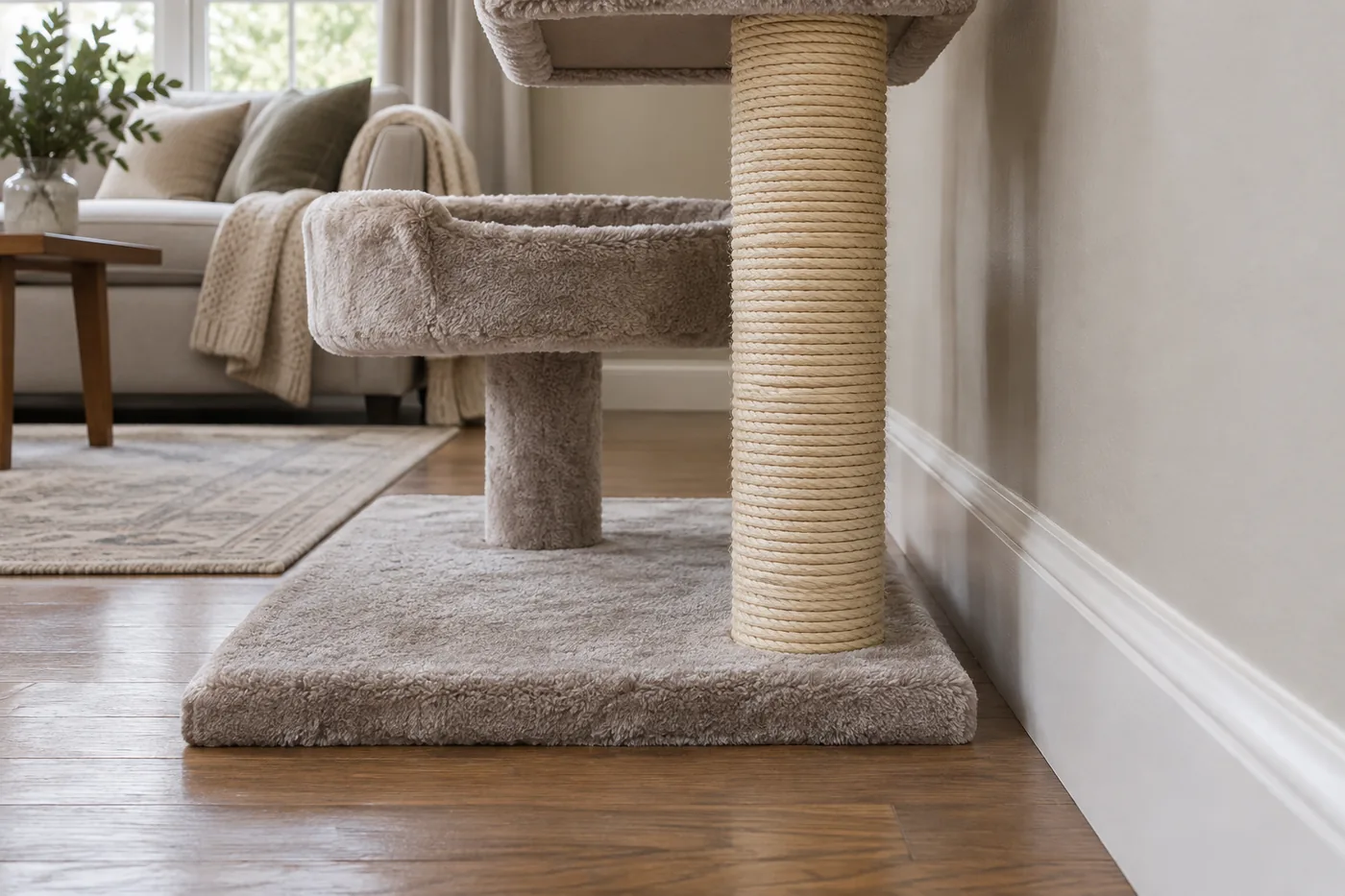 Review the floor contact and wall spacing together after installation.
Mau calls for monthly fastener inspections, more often in multi-pet homes, and regular checks of wall fixings. Follow your own model's maintenance schedule, and return to its placement instructions when moving the tree or changing the rug. The useful result is resolved movement with the specified restraint, not simply a new accessory on the shopping list.
Sources and selection: Manufacturer compatibility, sound connections, and the specified wall attachment guided the kit choice. Mau's safety guide was checked November 24, 2026; Catry specifications and prices and CPSC guidance retain their November 18, 2026 check because those pages could not be refreshed.
In one sentence
Locate the movement and resolve floor support or damaged connections before fitting a compatible restraint.
Catry Anti-Tipping Kit (Two-Pack), CT230848x2
Frequently asked questions
Can a strap fix a tall cat tree with a loose post?
A restraint does not replace a sound connection. Use the exact model's assembly instructions and obtain maker-approved replacement parts if a joint or board is damaged.
Is the Catry kit suitable for every brand of cat tower?
Catry's previously checked listing covers Catry trees. For another brand, ask its maker for the approved restraint and structural attachment point.
Can I use an adhesive anchor in a rental?
The reviewed Catry kit specifies a stud attachment, and Mau warns against adhesive-only fasteners for its furniture. Ask the landlord about permission and the tree maker about suitable alternatives rather than substituting an adhesive mount.
How often should the connections be checked?
Follow your model's maintenance instructions. Mau specifies monthly fastener inspections, more frequently in multi-pet homes, plus regular checks of wall fixings.
Sources
- Catry Anti-Tipping Kit (Two-Pack), CT230848x2 · 2026-11-18
Original verified listing: two kits; each 24 × 1 × 0.5 in; $7.98 sale and $11.99 regular, shipping calculated at checkout. Catry compatibility and stud attachment. Refresh attempted 2026-11-24 returned local_rate_limited; original values and check date retained.
- Mau Product Safety & Securing Guide · 2026-11-24
Recommends wall securing for Mau products taller than 20 inches and monthly fastener inspections, more often in multi-pet homes. Also specifies level placement, approved replacement parts, appropriate load-rated hardware, no adhesive-only fasteners, and stopping use for instability or damage.
- CPSC Anchor It furniture installation guidance · 2026-11-18
General furniture-restraint connection, tightening, and tug-check guidance retained from the original verified source. No numerical cat-tree load rating taken from this source. Refresh attempted 2026-11-24 returned Access Denied; original check date retained.