Get the paint finish from management before you put peel and stick wallpaper beside the sleeper sofa. Your holiday guest nook may need color, but if that dull rental wall has builder-grade flat paint, leave it uncovered. Otherwise, the decorating job can end with paint coming away at move-out.
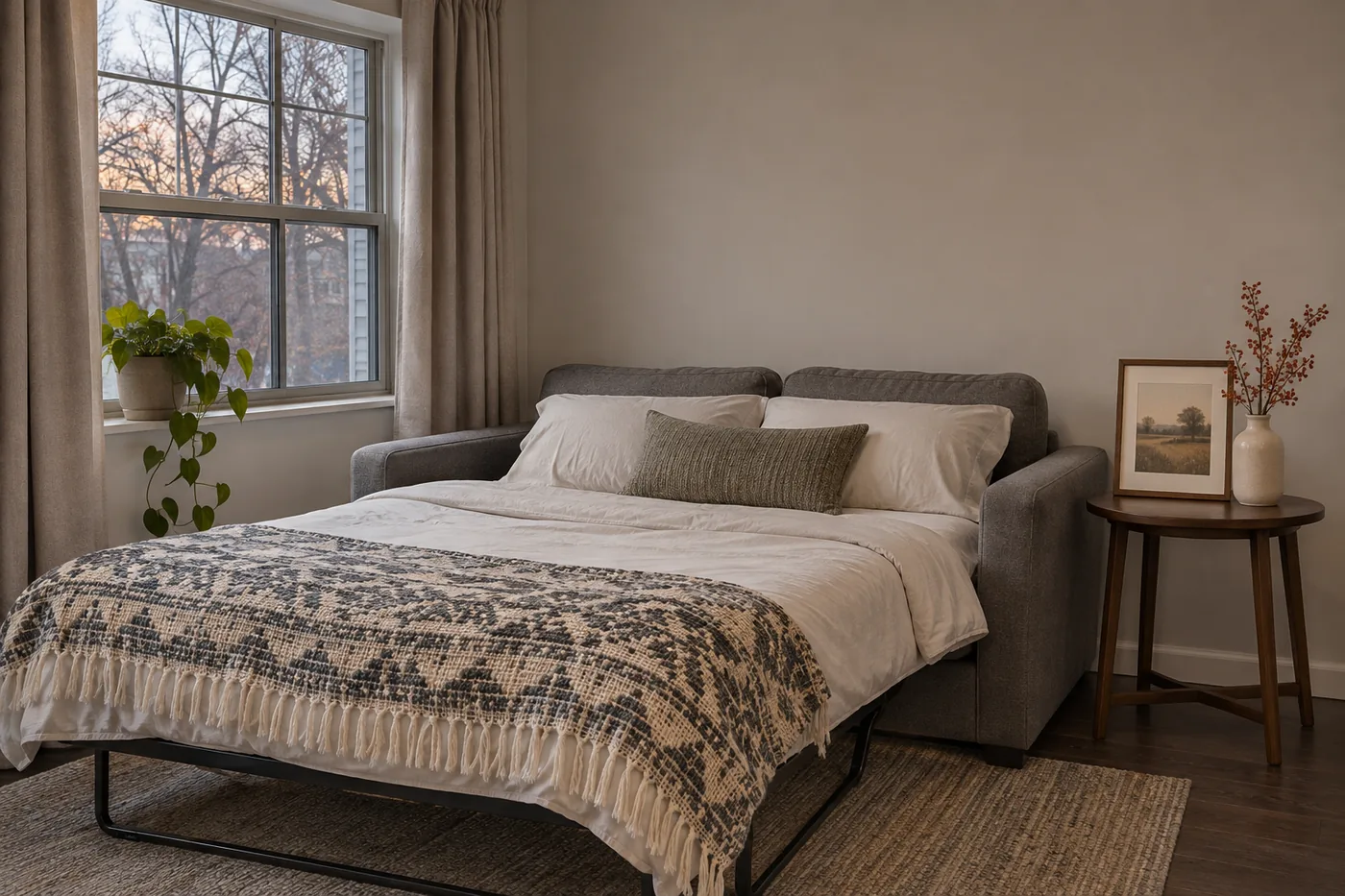 Color on the sofa changes the guest nook without putting adhesive on the wall.
Tempaper's instructions make the stopping point clear: its peel-and-stick paper is not recommended for flat, matte, or low-sheen paint. So there is no wallpaper purchase recommended for the wall as described. You can finish the nook with a patterned throw and a print standing on existing furniture while you find out whether management permits a different finish.
How we chose
Reviewed Tempaper's surface FAQ, sample advice, and installation guide, plus WallPops' installation guidance reached through RoomMates Decor. The checks were paint compatibility, curing and sample removal, and installation and removal technique; the existing flat-painted wall does not qualify for a purchase recommendation.
Part 1Check the finish, not just the wall's texture
Ask management for the paint name, sheen, painting date, and written permission before ordering rolls. That gives you something more useful than a wall that merely looks smooth: a surface you can compare with the wallpaper maker's directions. Photograph existing chips and marks, too, because skipping that record leaves you without a clear before picture.
A smooth wall and flat paint are different things. Smooth describes the surface; flat describes the finish, so a wall can satisfy the first condition and still fail the second. Tempaper's installation page calls for sound, primed, smooth walls painted with satin or semi-gloss; its FAQ also includes eggshell among recommended finishes.
Swipe sideways to see the full table →
| What management confirms | Your next move | What skipping it risks |
|---|---|---|
| Flat, matte, or low-sheen paint | Leave adhesive off this wall | Paint lifting when the paper comes away |
| Unknown finish, chalkiness, or peeling | Have management identify or repair it | Sticking paper to an unstable coating |
| Sound satin or semi-gloss, with permission | Check curing and test the exact paper | Finding incompatibility after covering the nook |
A removable label does not override the maker's surface exclusions.
Part 2Give the sample a removal test
Once the wall is approved and compatible, use a sample of the exact wallpaper you plan to install. Tempaper says to leave its sample in place for a few days, then gently peel from a corner. That instruction is not an overnight clearance, and skipping the peel tells you only whether the adhesive initially held.
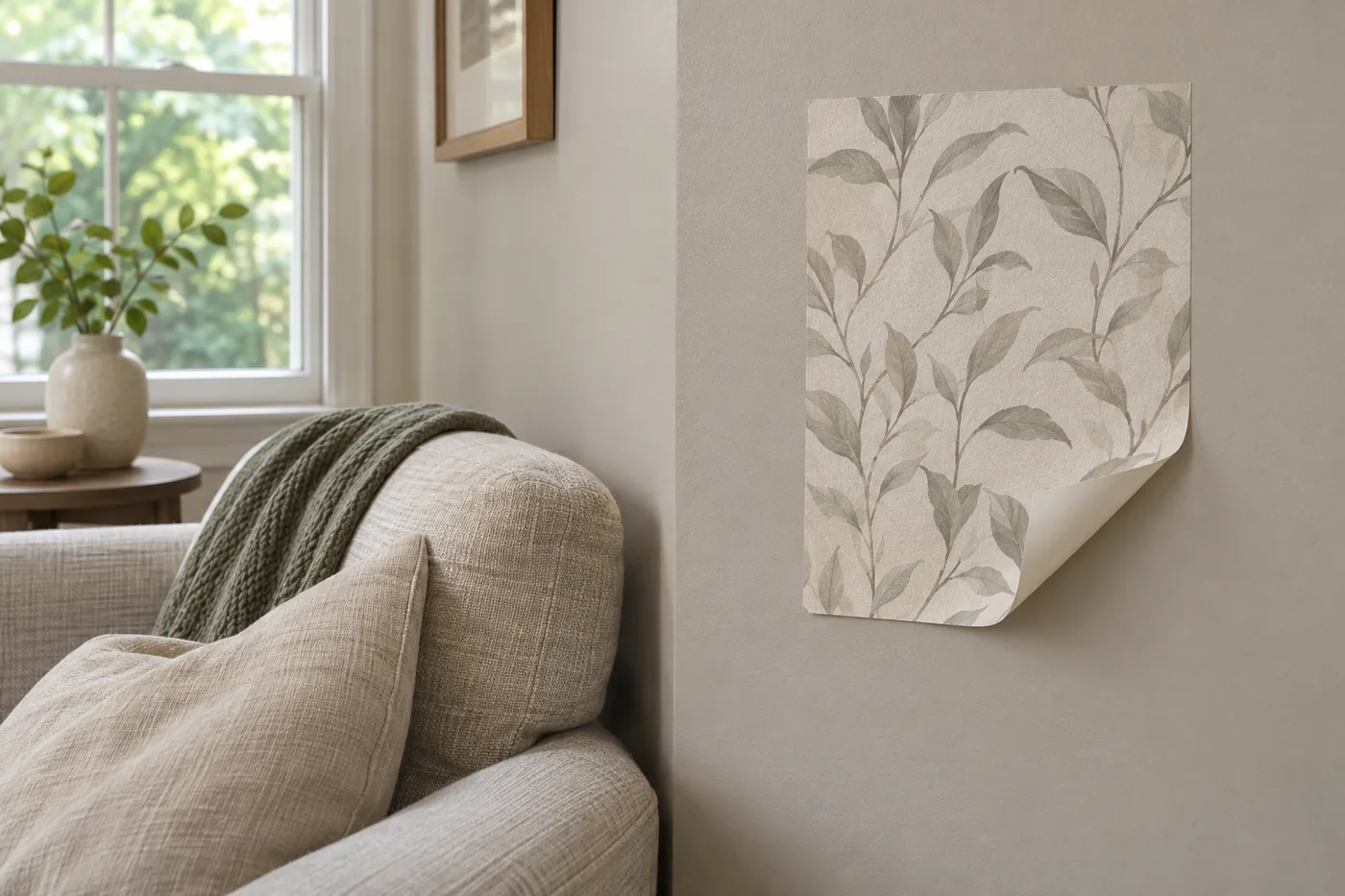 A sample checks adhesion and removal before a larger area is covered.
Look for curling edges, bubbles, discoloration, or paint on the sample's adhesive. If paint comes away, stop the project rather than trying a stronger glue. But even a clean removal only tells you what happened in that spot during that test; it does not promise the same result across the wall after a longer installation.
Fresh paint adds another wait. Tempaper's FAQ recommends at least 30 days after painting, alongside the paint manufacturer's curing specifications, while its installation guide requires full curing according to the paint directions. So meet both requirements before sampling, rather than treating a dry-to-touch wall as ready.
Can't fit that wait before guests arrive? Keep the wall bare for this visit, because changing the decorating deadline does not change the cure requirement.
Part 3Prepare only after the wall passes
Move the sleeper sofa far enough away that you can reach the wall's bottom edge. Then measure the actual wallpaper area, check the selected pattern's repeat, and follow its ordering guidance; apartment floor area will not tell you how much paper a repeating pattern needs. Skipping the pattern check can leave you short when the next panel must match.
For Tempaper's preparation method, the maker specifies a 1:1 isopropyl alcohol and water solution, followed by drying. First check that the paint maker permits that cleaner, because a wallpaper cleaning recipe does not establish compatibility with every coating. If the finish changes during preparation, stop rather than covering it.
Keep outlets and switches outside the accent area where practical. If covers need to come off, Tempaper instructs you to turn off the electrical supply before removing them and restore power only after they are fully replaced. So arrange that work with management if you cannot follow the procedure correctly; leaving live fittings exposed is not a decorating shortcut.
Part 4Keep the first panel straight, not stretched
Gather a level, pencil, tape measure, smoother, straightedge, craft knife, and cutting surface before exposing adhesive. Then draw a vertical guide with the level, because an uneven corner can send the first panel off line. That first alignment carries through the pattern, so correcting it early avoids repeating the same tilt across the nook.
For Tempaper's precut-panel method, allow 2–3 inches of extra material at the bottom and match consecutive panels before cutting. Its guide then calls for peeling back 3–4 ft of backing and smoothing from the center outward, continuing in those increments. Follow the directions supplied with your exact paper rather than borrowing these measurements for another brand.
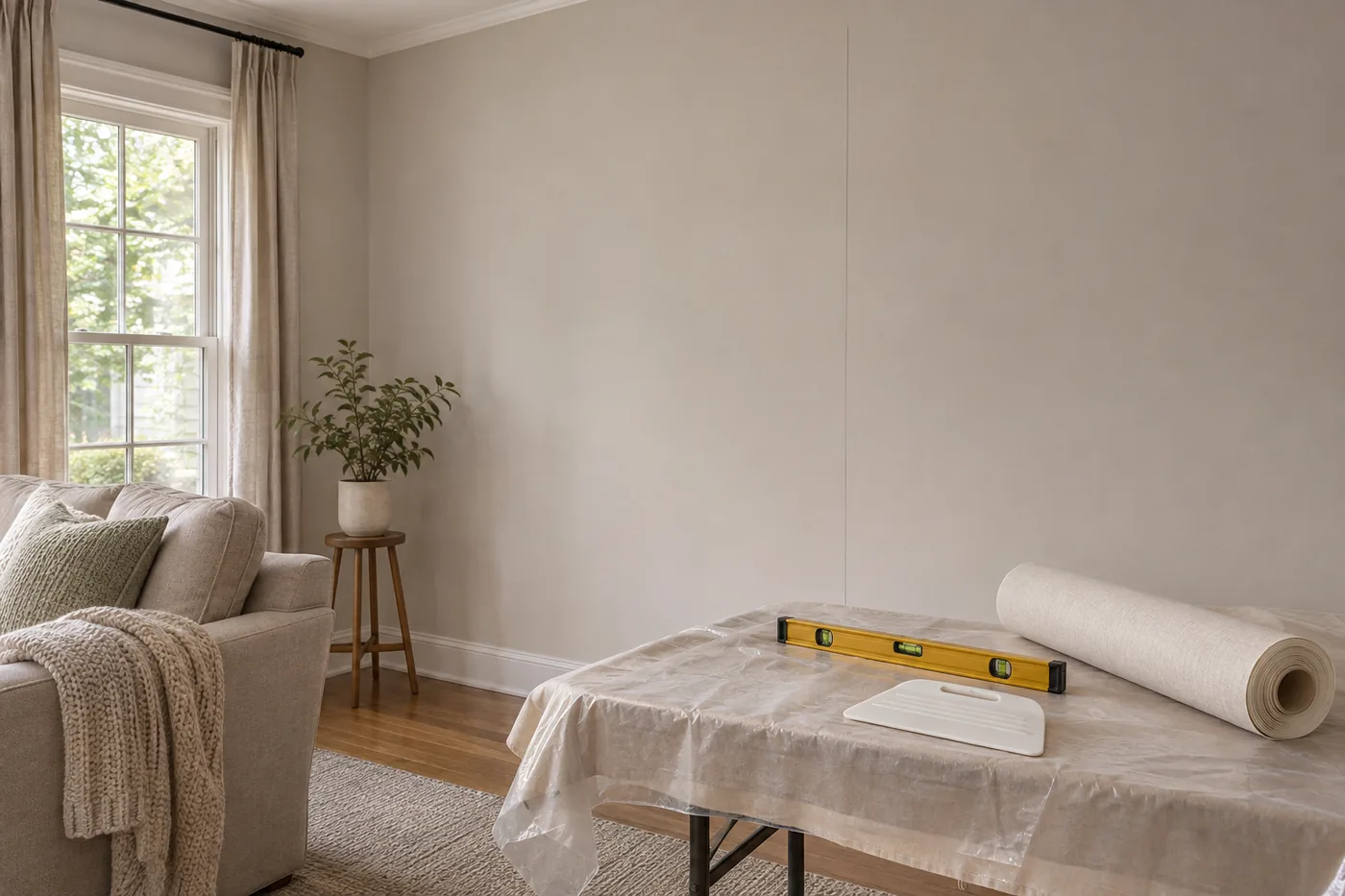 A level guide and a cleared work area help keep alignment separate from furniture placement.
Tempaper warns that pulling the paper can stretch it and prevent the pattern from lining up. So reposition a misaligned section instead of tugging it into place, and protect the underlying paint when trimming. If an edge keeps lifting, stop to check surface compatibility and preparation rather than adding permanent adhesive.
Part 5Plan the way down before moving the sofa back
Leave access to an edge so removal will not require reaching awkwardly over the sofa. Tempaper directs you to start at a corner and peel slowly up or down, parallel to the surface. That is different from pulling outward; if paint begins lifting, stop and discuss the repair with management instead of scraping or adding solvents.
A finished wallpaper surface is not permission to attach a picture hook. The WallPops guidance reached through RoomMates Decor says a Command hook should contact the wall through a cutout in the paper. But that does not approve flat paint or establish a frame's weight limit, so check the exact hanging product's instructions or keep the print on furniture.
When the paper is down, compare the wall with your original photos. That record helps you discuss any change, but neither the photos nor the removable label settles a deposit dispute. For the original flat-painted nook, no adhesive remains the practical answer: the guest space can look finished without making this wall part of the project.
This guide compares Tempaper's FAQ, sample guidance, and installation directions with the WallPops instructions reached through RoomMates Decor. The checks are paint compatibility, curing and sample removal, and controlled installation and removal. Sources checked November 24, 2026.
In one sentence
Leave flat rental paint uncovered, and consider wallpaper only after permission, compatible paint, full curing, and a removal test.
Frequently asked questions
Can peel and stick wallpaper go on flat rental paint?
Tempaper does not recommend flat, matte, or low-sheen paint. Leave adhesive off that wall unless management approves a compatible finish change, and then satisfy the paint and wallpaper instructions before sampling.
How long should paint cure before applying Tempaper?
Tempaper's FAQ recommends at least 30 days after painting and checking the paint specifications. Its installation guide also requires full curing according to the paint directions, so meet both requirements rather than relying on dry-to-touch paint.
Does a successful wallpaper sample mean damage-free removal later?
No. Tempaper recommends leaving a sample for a few days and then gently peeling it away. That can expose an immediate problem but does not establish what will happen across a larger wall or after a longer installation.
Can Command hooks go over removable wallpaper?
The WallPops page reached through RoomMates Decor recommends a cutout so the hook adheres directly to the wall. That does not establish paint compatibility or a weight limit for your picture; follow the exact hook's surface, loaded-weight, and removal instructions, or display the print on furniture.
Sources
- Tempaper FAQ: surface compatibility and paint curing · 2026-11-24
Recommends at least 30 days after painting, alongside paint specifications, and a 1:1 isopropyl alcohol and water preparation solution. Lists flat, matte, and low-sheen paints as not recommended.
- Tempaper installation and removal directions · 2026-11-24
Specifies 1:1 isopropyl alcohol and water, 2–3 inches extra at the bottom for precut panels, and 3–4 ft backing increments. Recommends sound smooth satin or semi-gloss walls; warns against stretching and directs slow removal parallel to the surface.
- Tempaper sample compatibility and removal guidance · 2026-11-24
Recommends leaving an applied sample for a few days, then gently peeling from a corner; no fixed hour count is given. Also specifies a 1:1 isopropyl alcohol and water solution.
- WallPops installation guidance via RoomMates Decor · 2026-11-24
Lists a minimum 4-week cure for its own installation procedure; that number is not substituted for Tempaper's directions. Recommends cutting a hole in the wallpaper so a Command hook contacts the wall directly.