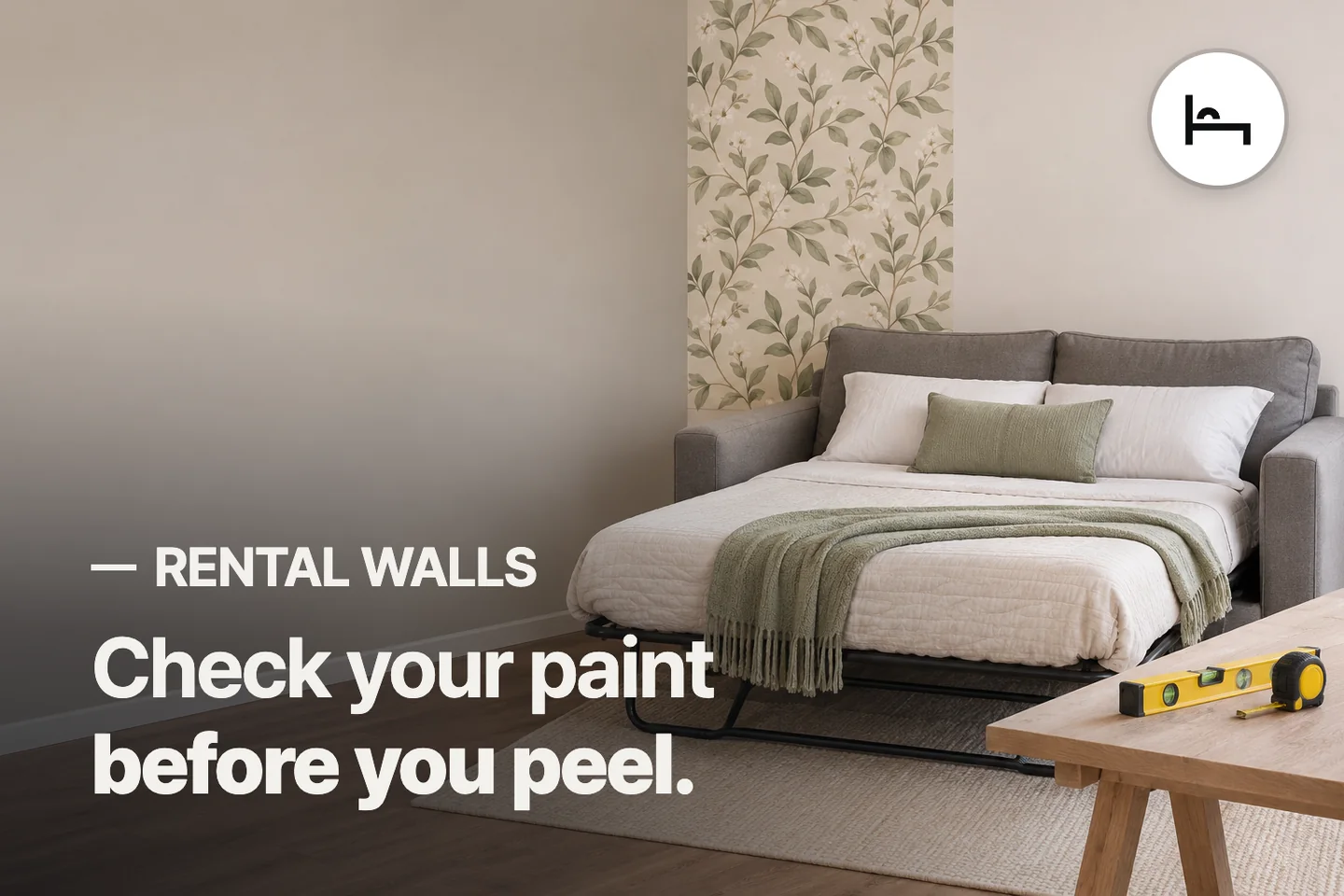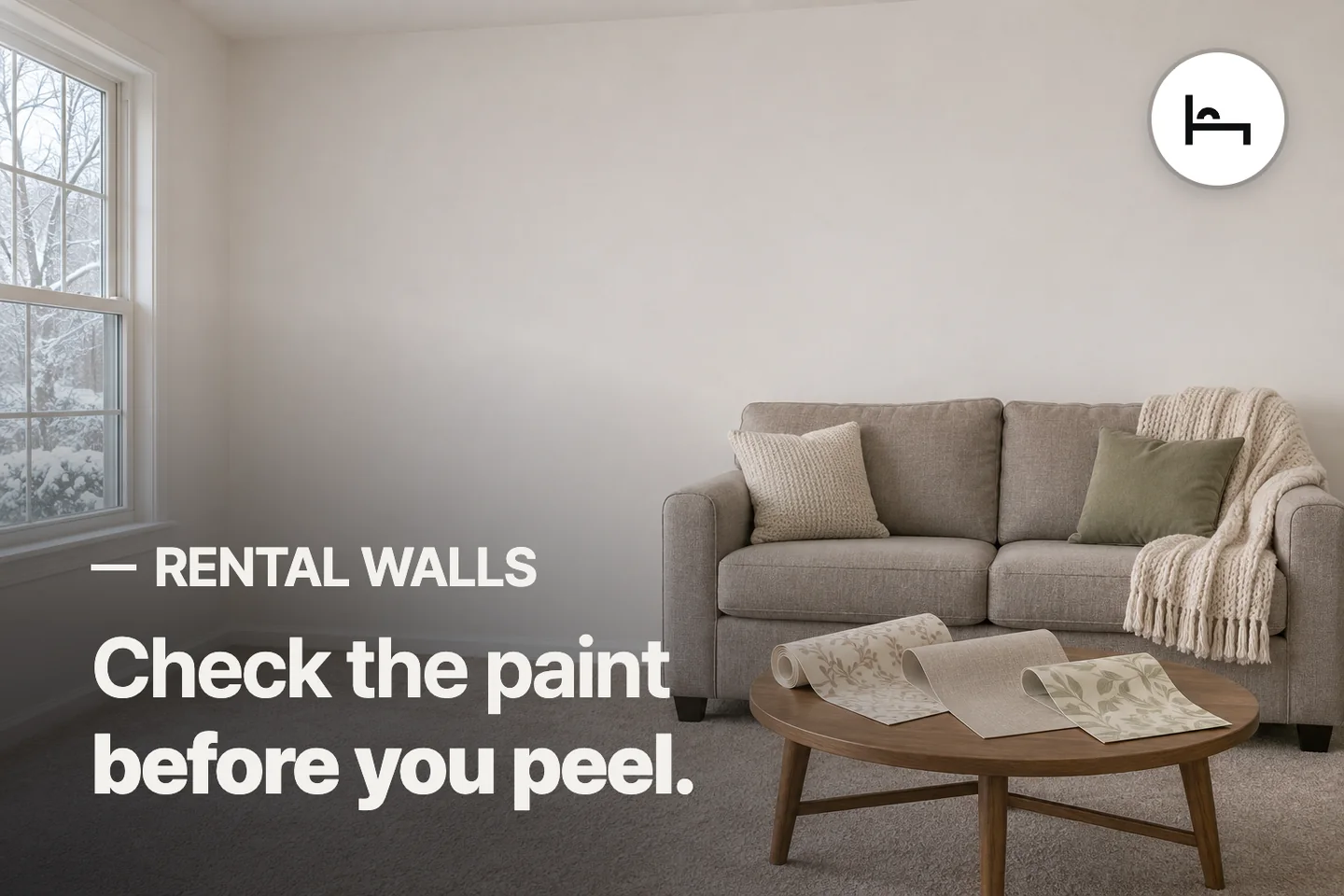
Your apartment's heater is running, holiday guests are coming, and the builder-white wall behind your sofa still looks unfinished. If you're shopping for peel and stick wallpaper for renters, start with that wall's paint—not the pattern—because getting the paper to stick is only part of the job.
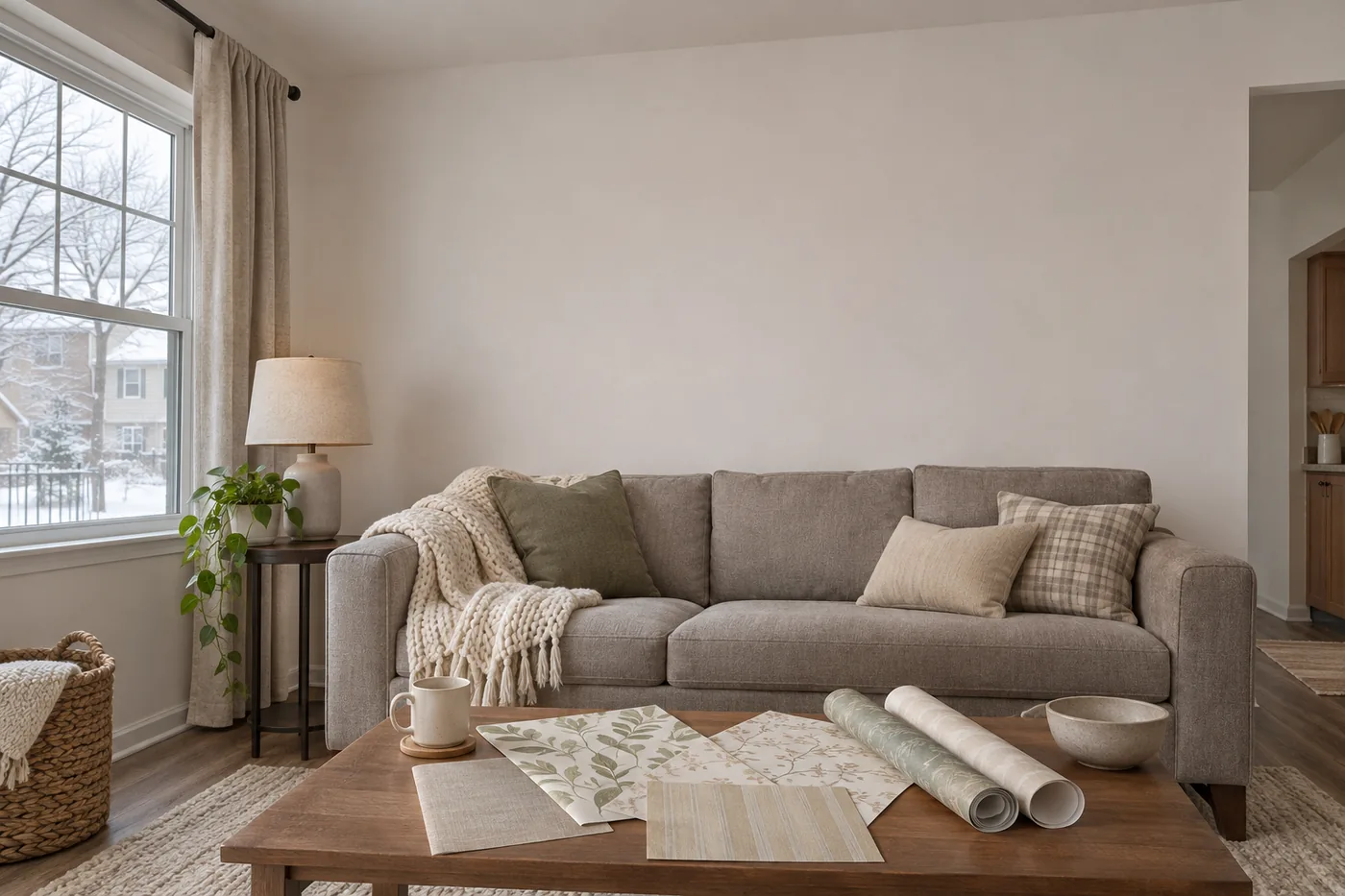 Before the holiday refresh, the wall finish needs an answer.
Leave an unchanged flat-painted wall uncovered for now. Tempaper peel-and-stick wallpaper is not a good match for this starting surface: its installation guide excludes flat, matte, and low-sheen paint, while its FAQ warns that removal can pull those finishes off. That makes permission and paint compatibility the next step, not a bigger wallpaper order.
You can still plan the refresh, but the steps below separate a wall you can proceed with from one you should leave alone. So if management will not approve a suitable finish and its curing time, change the holiday decor instead of gambling on the deposit.
How we chose
Reviewed Tempaper's FAQ and installation guide, other manufacturers' surface and testing instructions, and CPSC portable-heater guidance. The three checks are paint compatibility, heater placement, and removal risk; no wallpaper is selected for the unchanged flat-painted wall.
What we considered
Paint finish
Does the exact wall finish meet the wallpaper maker's instructions?
Flat paint is excluded by Tempaper's installation guidance. Permission to repaint and the required curing period must be resolved before treating the wall as suitable.
Heater placement
Can you keep the work area clear of the portable heater?
CPSC calls for at least three feet between portable heaters and combustible materials. Product-specific heater clearances still apply, and a hot wall is not a substitute for wallpaper preparation.
Removal risk
Can you remove a sample without visible changes?
The sample must be checked for removal damage as well as adhesion. Even a clean sample does not establish a deposit guarantee or override the manufacturer's excluded finishes.
Part 1Step 1: Check the paint before choosing peel and stick wallpaper for renters
Ask management for the paint brand, finish, application date, and written permission for adhesive wallcoverings. That information matters because a physically smooth wall can still have a flat paint finish; smooth and flat-finish are not the same thing. Skipping this check can leave you following instructions for the wrong surface.
Tempaper's installation guide recommends primed, painted surfaces in good condition with satin or semi-gloss finishes. Its FAQ also lists eggshell, so get confirmation for your exact paint and wallpaper rather than assuming every low-shine finish qualifies. If the wall is chalky, flaking, or damp, stop and ask management to address it before decorating.
If repainting is approved, get the finish and eventual restoration requirements in writing. Tempaper recommends waiting at least 30 days after painting, alongside the paint maker's curing instructions; a holiday deadline does not shorten that wait. So a fresh coat today is not permission to wallpaper tomorrow.
A sample can reveal a problem; it cannot override a manufacturer's surface exclusion.
Part 2Step 2: Test removable wallpaper for sticking and peeling
Once the surface meets the chosen maker's instructions, photograph it and request permission for an inconspicuous sample. Then use a sample of the actual material, because a different adhesive tells you little about the wallpaper you intend to hang. Do not use a successful test to reclassify an excluded flat-painted wall.
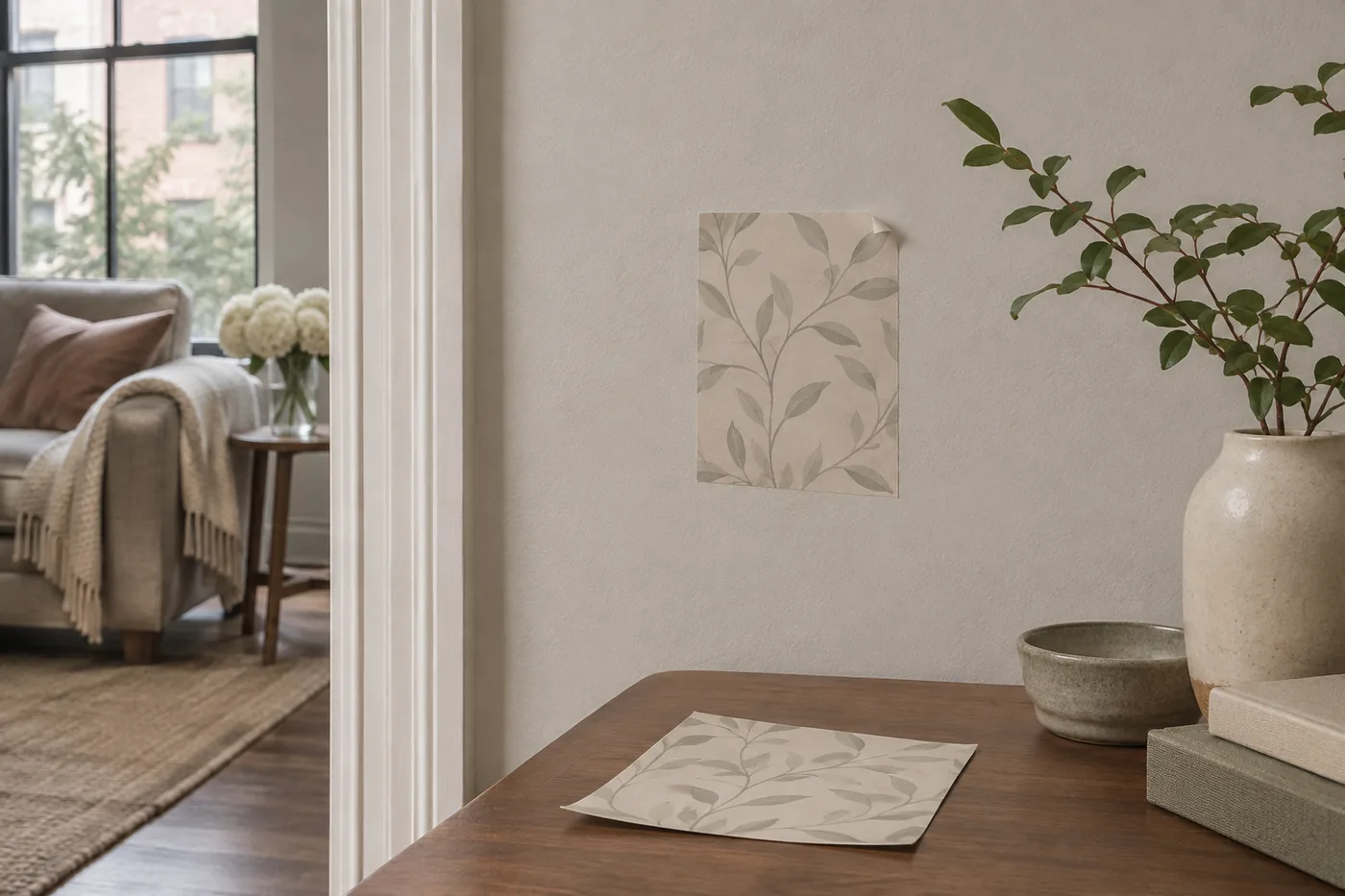 The sample needs to come off as well as stay up.
Prepare the test area exactly as that manufacturer directs, and let it dry before application. Tempaper specifies an isopropyl-alcohol-and-water mixture in a 1:1 ratio; that is its instruction, not a universal recipe for every paint or brand. If the finish transfers or changes during preparation, stop before adding adhesive.
Check the sample for lifting, bubbles, marks, and paint transfer when removed. But a clean short test does not guarantee clean removal after a season, and the Tempaper pages do not supply a universal sample dwell time. Ask the maker for the test duration appropriate to your surface instead of inventing an overnight pass.
Keep instructions brand-specific. Love Vs Design, for example, tells customers with unknown paint to install a panel and wait two weeks, yet also says it does not recommend matte paint. That waiting period belongs to its procedure; it is not a workaround for a known incompatible finish.
Part 3Step 3: Move the space heater before opening the backing
Turn the portable heater off and let it cool before rearranging the work area. Then clear rolls, backing sheets, curtains, and furniture from its operating space; the CPSC says portable heaters belong at least three feet from combustible materials. Follow the heater's own clearances too, rather than treating that distance as permission to crowd a particular model.
The CPSC also says to plug electric space heaters directly into a wall outlet, never an extension cord or power strip, and never leave them on while sleeping. So moving the heater across the room does not justify extending its cord through your wallpaper workspace. Keep the layout workable without that shortcut.
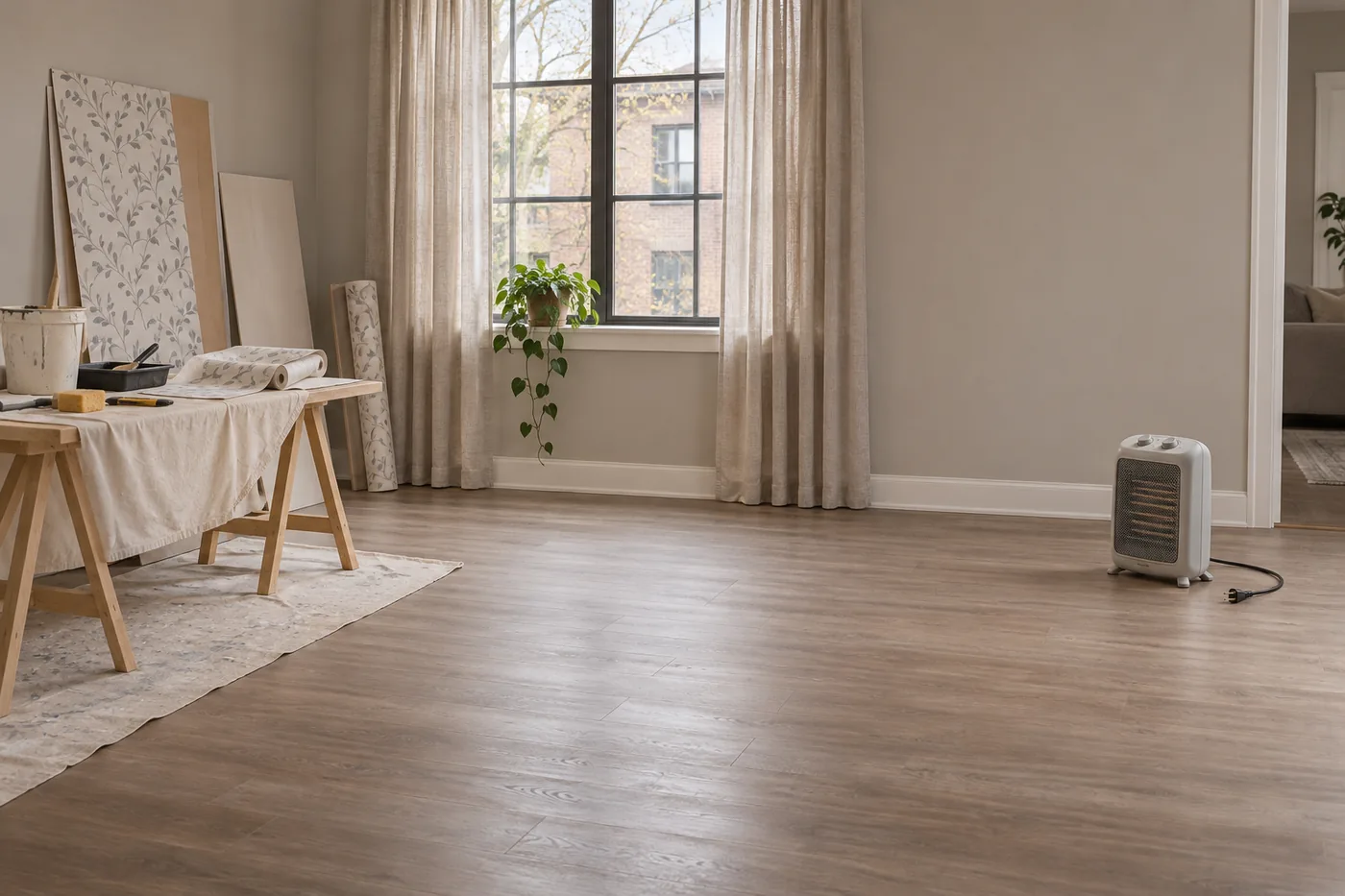 Clear the heater area before unpacking rolls and backing paper.
Do not aim a heater at the wall to speed preparation or make adhesive grab. Tempaper advises avoiding prolonged heat exposure, and Walls Need Love says large temperature swings can cause its peel-and-stick paper to bubble or come away. Those warnings support avoiding hot spots; they do not establish a universal humidity target or wallpaper temperature limit.
A heater clearance is a fire precaution, not a wallpaper adhesion guarantee.
Part 4Step 4: Apply only after the wall passes the checks
If permission, the finish, curing, and the sample all support proceeding, measure the actual wall and match the instructions to the material you bought. Then gather a level, pencil, cutting surface, straightedge, craft knife, and smoother from tools you already have where possible. Buying extra adhesive is not the fix for an incompatible wall.
For Tempaper, mark a vertical plumb line before hanging. Its guide allows 2–3 inches of excess at the bottom and works in 3–4-foot backing sections, smoothing from the center outward. That controlled release keeps you from wrestling the whole sticky panel at once; pulling the paper to force alignment can stretch it and spoil the match.
Align each following panel's pattern before cutting or pressing it down. Tempaper's FAQ specifies a 1/8-inch overlap where temperatures fluctuate, so do not transfer another brand's butt-joint instructions to this material. If a panel repeatedly lifts, pause and contact the maker rather than adding paste or turning the heater toward it.
Part 5Step 5: Make removal part of the holiday plan
Keep the product instructions, permission, and before photos together so move-out does not become a guessing exercise. Tempaper directs you to start at a corner and peel slowly up or down, parallel to the surface. That means folding the material back close to the wall, not yanking it outward.
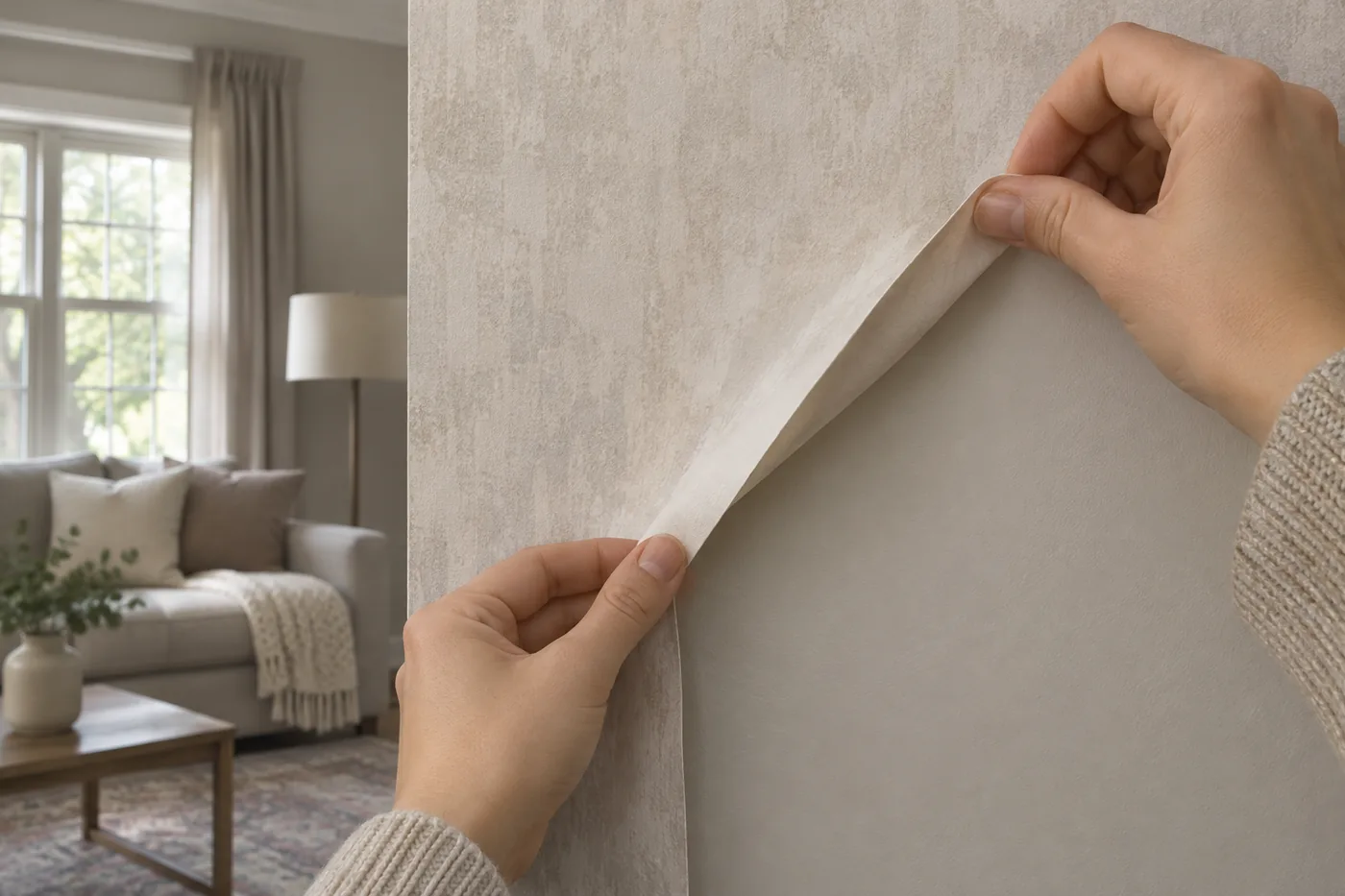 Slow removal leaves time to notice a lifting paint film.
Watch the exposed paint as you go, and stop if it starts separating. Then contact the manufacturer and management before scraping, adding solvents, or attempting an unapproved patch; a forceful removal can turn a small problem into a larger repair. Keep the space heater out of the removal process too.
If the original wall must remain flat-painted, leave it that way and bring the holiday color into cushions or decor on furniture you already own. That is the practical endpoint for peel and stick wallpaper for renters when the surface cannot meet the instructions. No removable label can promise your deposit back.
Sources and method: Manufacturer FAQs and installation guidance were checked for paint compatibility, preparation, and removal, alongside CPSC heater precautions. Prices were not needed for this troubleshooting sequence. Last checked November 28, 2026; lease requirements and deposit outcomes remain specific to your rental.
In one sentence
Do not cover the unchanged flat-painted wall; confirm permission and a compatible finish before buying wallpaper.
Frequently asked questions
Can peel and stick wallpaper go straight onto builder-flat paint?
Not under the Tempaper installation instructions reviewed here: flat, matte, and low-sheen paints are excluded, and its FAQ warns of paint removal. Leave the wall uncovered unless management approves a compatible finish and the maker confirms the application.
Does removable wallpaper guarantee my security deposit?
No. Surface compatibility, paint condition, permission, and the lease still matter. A clean sample removal cannot guarantee the result after a longer installation.
Can a space heater help wallpaper stick faster?
Do not use it to heat the wall or adhesive. Tempaper warns against prolonged heat exposure, and CPSC requires at least three feet from combustible materials for portable heaters; follow the heater's own instructions as well.
How long should I test peel and stick wallpaper for renters?
Use the chosen manufacturer's procedure rather than a universal waiting period. Love Vs Design specifies a panel test lasting two weeks for unknown paint, but does not recommend matte paint; the Tempaper pages reviewed here do not state a universal sample dwell time.
Sources
- Tempaper peel-and-stick wallpaper FAQ · 2026-11-28
At least 30 days after painting; 1:1 isopropyl alcohol and water for preparation; 1/8-inch overlap for temperature fluctuations. Warns that removal from flat, matte, or low-sheen paint can remove paint and advises avoiding prolonged heat.
- Tempaper installation and removal instructions · 2026-11-28
2–3 inches excess at the bottom; work in 3–4-foot backing sections. Excludes flat, matte, and low-sheen finishes; specifies plumb-line alignment, center-out smoothing, and slow removal parallel to the surface.
- Love Vs Design surface and sample FAQ · 2026-11-28
For unknown paint, install a panel and wait two weeks. Does not recommend matte paint; this brand-specific test period is not used as an exception for an excluded finish.
- CPSC winter portable-heater precautions · 2026-11-28
At least three feet from combustible materials. Electric space heaters plug directly into a wall outlet, not extension cords or power strips; never leave portable heaters on while sleeping.
- Walls Need Love installation troubleshooting FAQ · 2026-11-28
No numerical temperature or humidity threshold is given for the cited bubbling warning. The maker links large temperature swings, high humidity, and certain paint finishes to bubbling or lifting; no invented threshold is applied here.