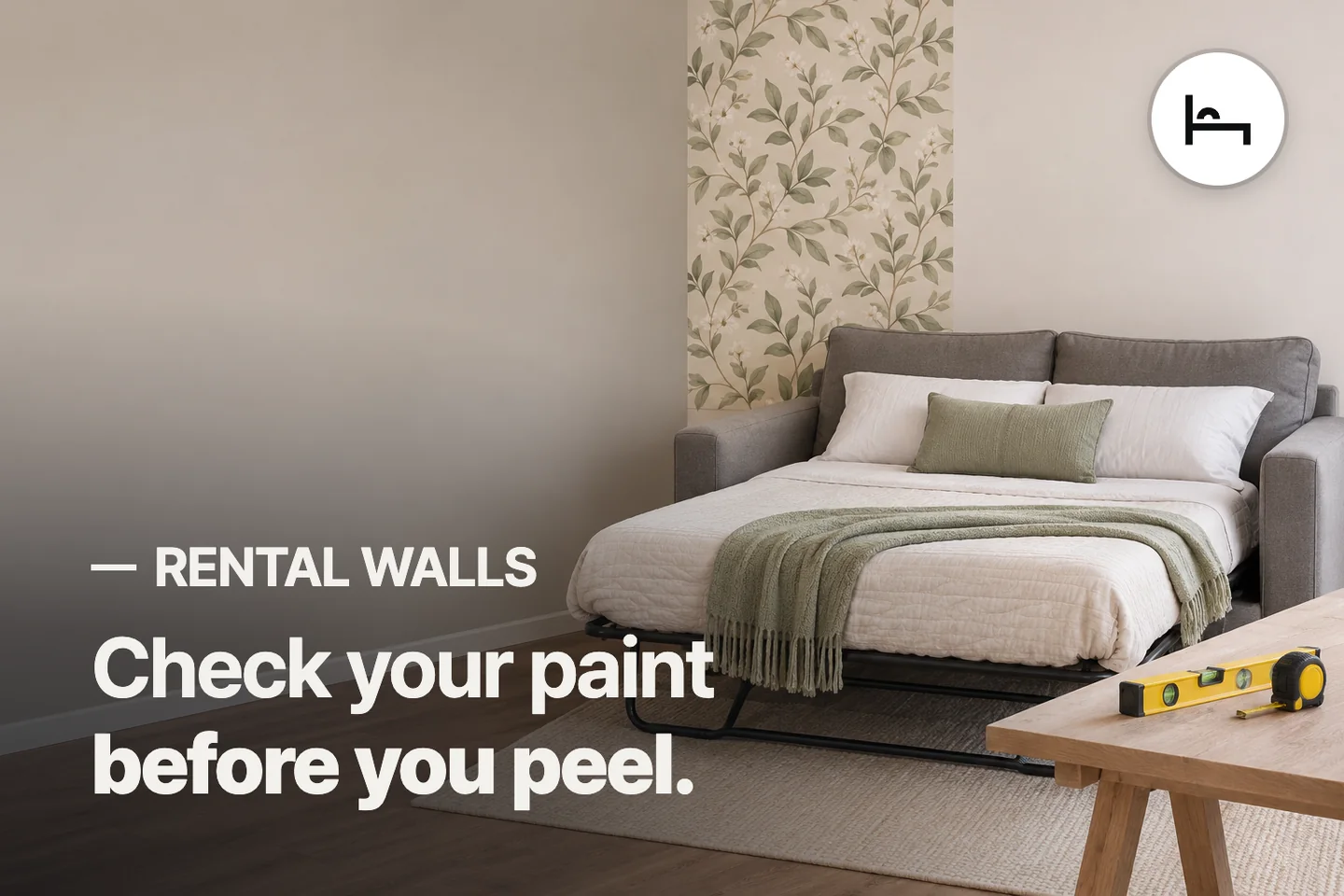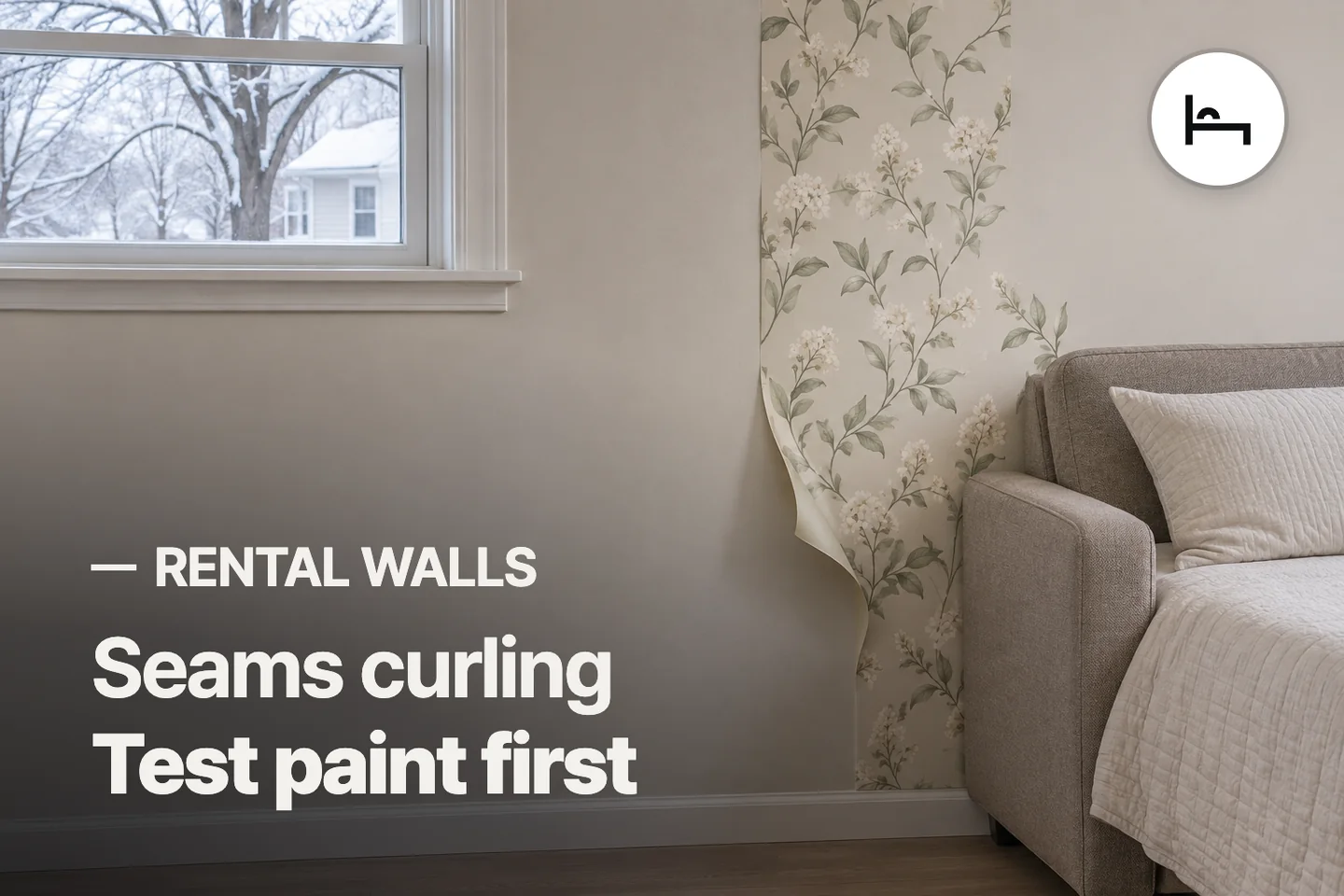
Your holiday guests will be sleeping beside the accent wall in your rental, and a wallpaper edge has curled toward the bed. Before you press it back, look underneath the edge that is already loose. A dry wall and intact paint come before a flatter seam, even with guests on the way.
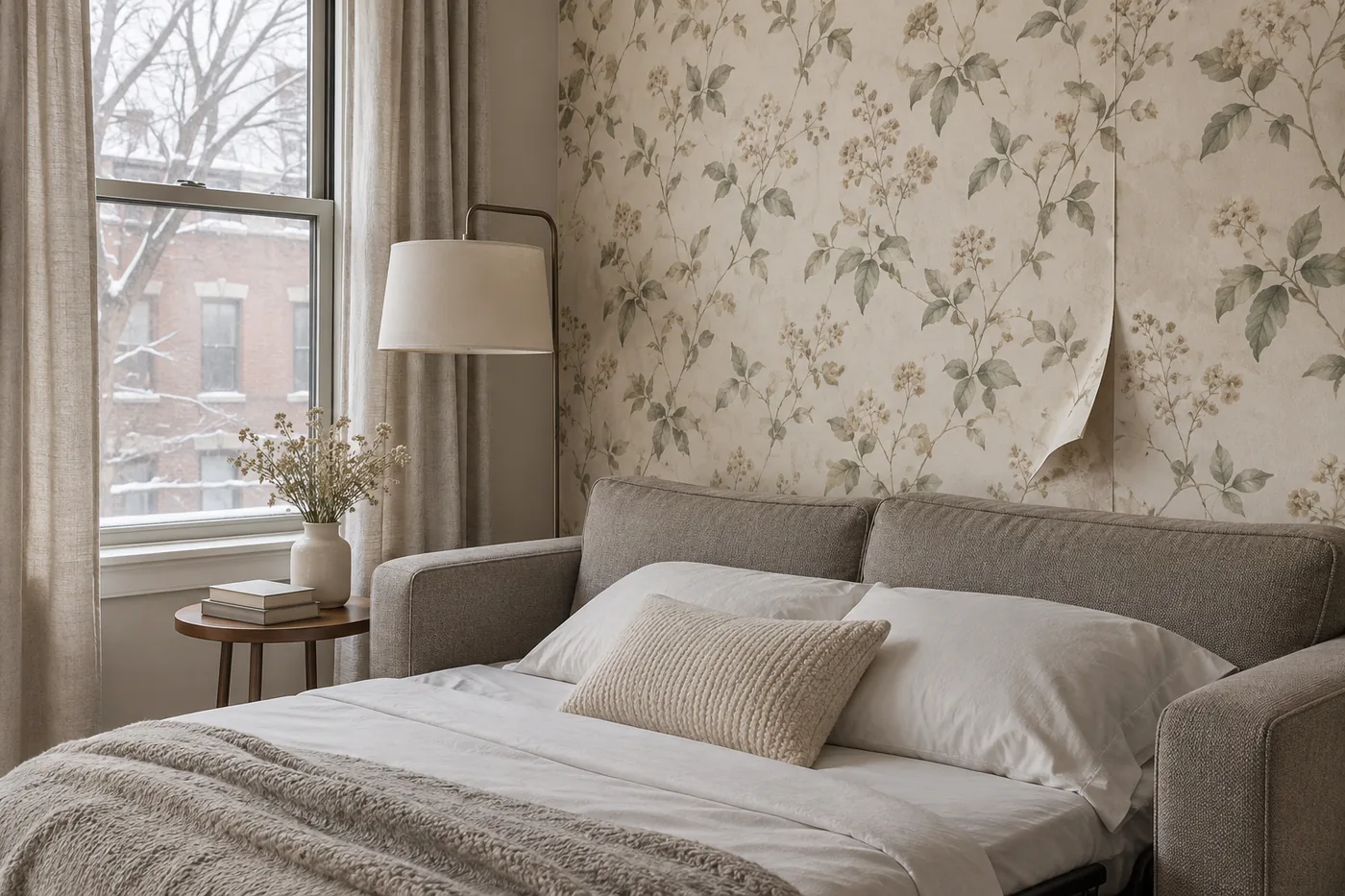 An exposed seam needs a closer look before the guest corner gets decorated.
Start with the instructions for your existing wallpaper, not a shopping cart of stronger adhesives. If yours is Tempaper peel-and-stick wallpaper, its FAQ provides specific paint and preparation guidance; another brand may differ. Your repair should preserve the intended removal method, so no additional repair product is selected here.
How we chose
Reviewed Tempaper's application FAQ and EPA's moisture guidance, plus previously checked Command instructions. The repair sequence uses wall condition, paint compatibility and adhesive condition as its three checks, with brand-specific numbers kept separate rather than treated as universal instructions.
Part 1Check what has actually come loose
Photograph the lifted edge before you touch it, then find the brand and material on your order confirmation or packaging. That distinction matters because Tempaper sells both self-adhesive and unpasted wallcoverings, and its unpasted products require paste. Instructions for pasted wallpaper do not automatically apply to the removable covering in your rental.
Look only beneath the part that has already lifted. If you see paint stuck to the backing, stop there: pressing that paint back against the wall is not the same as restoring adhesion to sound paint. Peeling farther to investigate can also enlarge the repair your landlord needs to approve.
Next, separate a curled edge from an open gap. A lifted edge still has material available to lay down, but a gap between flat panels cannot be closed by pressing harder. Is the paper lifting, or are the panels no longer meeting? That question keeps you from stretching the pattern to hide missing coverage.
Tempaper specifies a 1/8-inch overlap during installation where temperatures fluctuate, to help avoid splitting seams. That is a brand-specific installation instruction, not permission to pull an existing panel sideways. Winter timing alone does not establish why your seam failed.
Match the next step to what separated: adhesive, paint or the panels themselves.
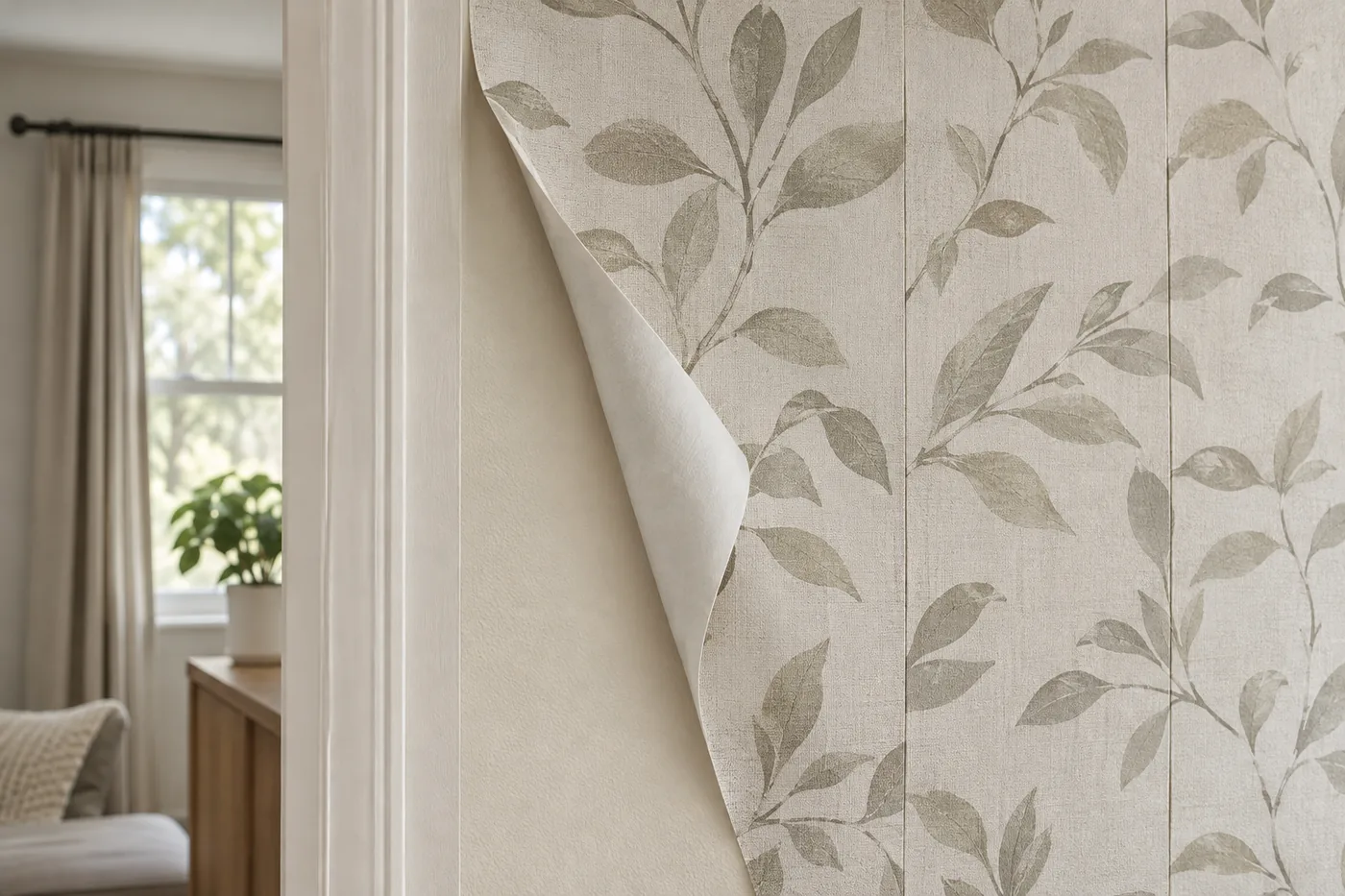 Inspect the already-loose edge without peeling the panel farther back.
Part 2Leave dampness and suspected mold to inspection
Check the exposed wall and nearby window for wet patches, staining or condensation before you smooth anything down. If you find moisture, leave the seam accessible and tell the property manager. EPA specifically advises renters to notify building management immediately about leaks and moisture problems, so a cosmetic repair should not delay that message.
EPA recommends indoor relative humidity below 60%, ideally 30–50%. Those numbers describe moisture-control guidance, not a setting that guarantees wallpaper will stick. If you already have a humidity meter, its room reading adds context; it does not establish that the covered wall is dry.
A musty smell changes the next step, too. EPA explains that mold can be hidden behind wallpaper and that removing affected covering can release spores. If hidden mold is suspected, stop disturbing the edge and ask management about an experienced professional rather than opening a larger patch yourself.
For a wall without those warning signs, ask what paint was used and when it was applied. Tempaper recommends smooth, sound, primed surfaces painted with eggshell, satin or semi-gloss finishes. But it warns that flat, matte and low-sheen paint may come away during removal, so the word removable is not a promise that your particular paint will stay put.
Fresh paint needs its own check. Tempaper recommends waiting at least 30 days after painting before installation and consulting the paint specifications for curing and outgassing. If the wall was recently repainted, ask the maker and manager what to do with the existing panel rather than assuming a dry-feeling finish is ready.
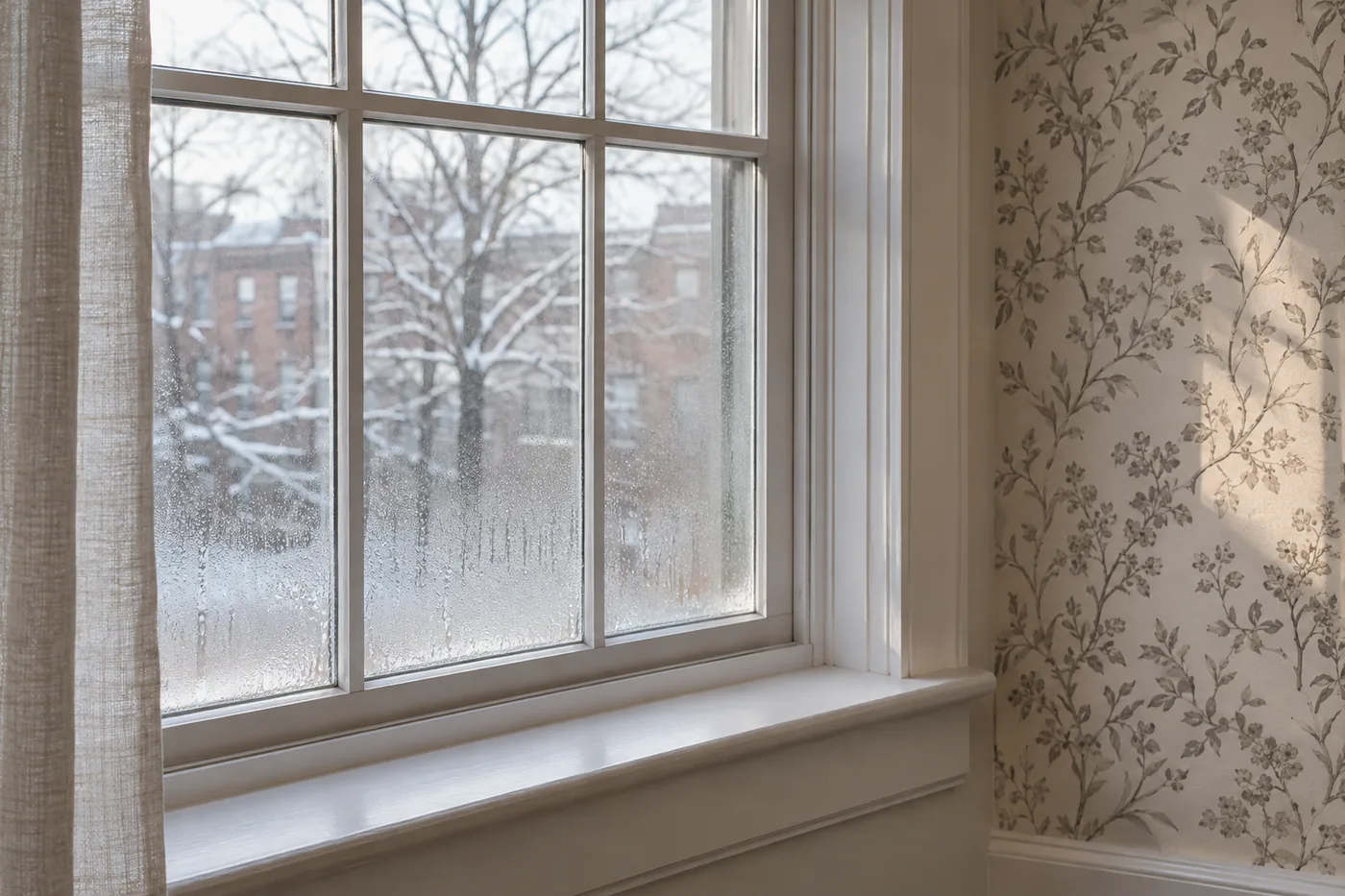 Look around the seam as well as beneath it; room air and wall conditions are different checks.
Part 3Re-seat only a clean edge on sound paint
Proceed only if the wall is dry, the paint is intact and your wallpaper maker permits repositioning. With that confirmed, use its specified smoothing method to return the already-loose edge to its original alignment. If gentle smoothing moves the panel, creases the covering or pulls paint, stop instead of adding force.
Tempaper lists a squeegee among its installation tools. That supports checking the maker's tool guidance, but it does not establish a universal repair pressure for every wallpaper. More pressure is not the next step when the backing is carrying paint or debris.
Keep surface preparation separate from seam repair. Tempaper's installation guidance calls for an isopropyl alcohol and water solution at a 1:1 ratio, followed by drying, and warns that household cleaners can leave residue. That is not an instruction to pour the mixture behind installed wallpaper or rub an unknown painted finish with solvent.
If the exposed repair area needs cleaning, ask the wallpaper and paint makers for a compatible procedure before applying anything. Otherwise, a cleaning attempt can become another paint problem. Leave sanding, repainting and priming to a repair agreed with the property manager.
If the edge lifts again, send the maker your photographs and the product details. Ask whether that panel can be repositioned or whether replacement is needed; do not add permanent glue by default. Seam paste, spray adhesive and mounting tape need explicit approval for the actual removable product, not just a label saying they bond wallpaper.
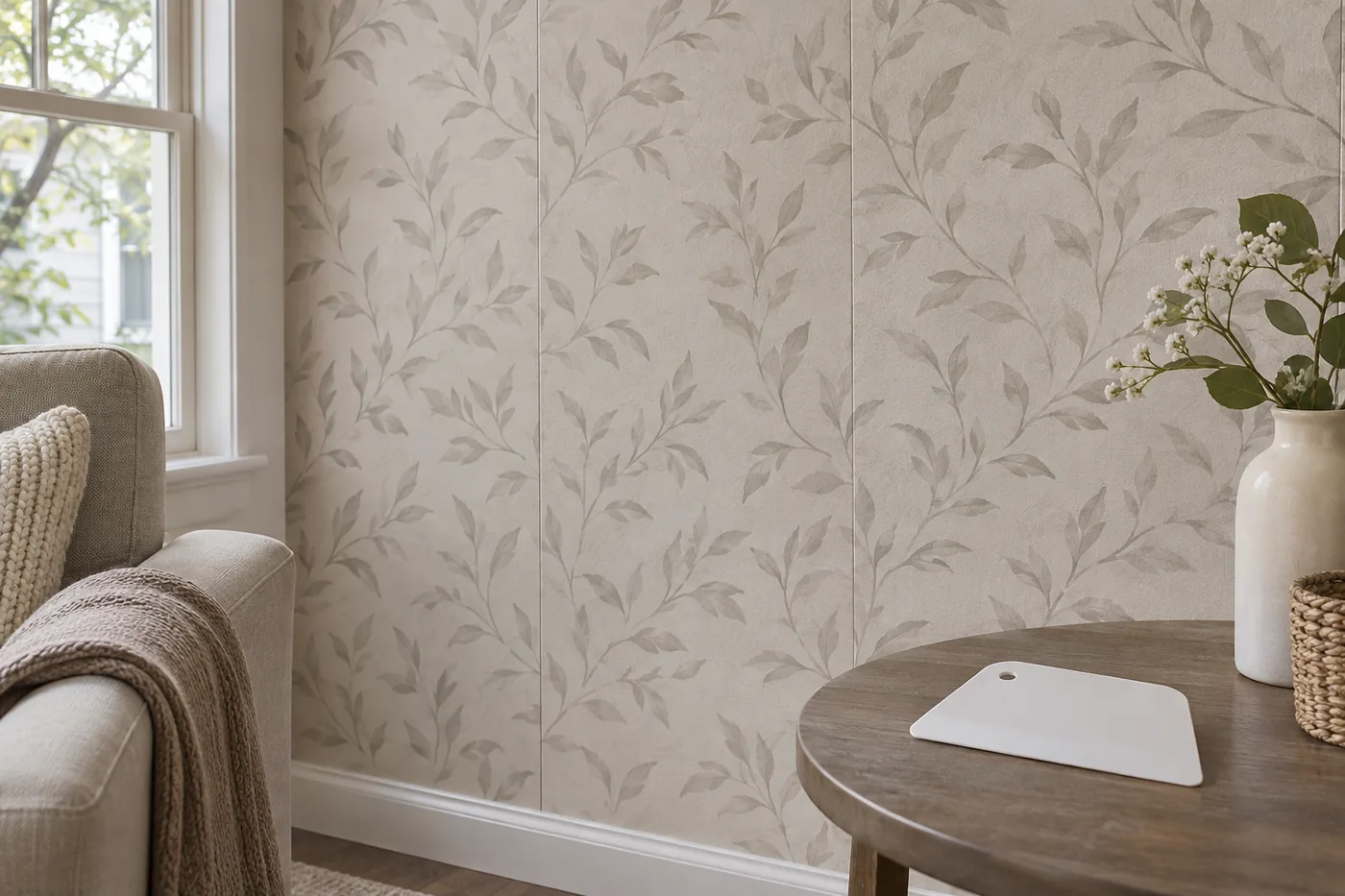 Return a compatible edge to its original position rather than stretching it across a gap.
Part 4Keep the repair visible before guests arrive
Leave Command strips out of the seam repair and off the wallpapered surface. Command's US FAQ states that its products are not recommended for wallpaper, so a hook's weight rating does not approve that surface. Hanging a decoration over the curl also makes it harder to notice whether the edge is still lifting.
Keep the brands' waiting periods separate as well. Command's FAQ gives at least 7 days for fully cured paint on suitable painted walls, while Tempaper recommends at least 30 days before its wallpaper installation. The shorter wait belongs to a different product, not a faster route to fixing your wallcovering.
Before guests arrive, revisit the seam during normal heating use without hiding it behind furniture. If it curls again, keep the photographs and ask the maker or manager about the next repair. A visible edge is less convenient than a finished accent wall, but it leaves the problem available for inspection instead of covering it with another adhesive.
Sources and method: Tempaper's application FAQ, EPA's residential moisture guide and the previously checked Command US FAQ informed this sequence. Checks focus on wall condition, paint compatibility and the original adhesive. Tempaper and EPA were checked November 24, 2026. Command guidance retains its November 16, 2026 check date because the page blocked access on November 24, 2026. Removable wallpaper does not guarantee damage-free removal or a returned deposit.
In one sentence
Check the exposed wall, paint and backing before trying to smooth a curling wallpaper edge.
Frequently asked questions
Can I use extra glue to fix curling peel and stick wallpaper?
Do not assume traditional seam paste or spray adhesive preserves removability. Ask the maker whether it approves that repair for your specific covering; repeated lifting calls for advice about repositioning or replacement, not automatically a stronger bond.
Does winter heating prove that dry air caused the wallpaper to curl?
No. Check for paint transfer, contaminated backing, an open panel gap and moisture separately. Tempaper's 1/8-inch overlap guidance addresses installation where temperatures fluctuate; it does not diagnose an existing seam or authorize stretching a panel.
How long should paint cure before installing Tempaper?
Tempaper recommends at least 30 days after painting and checking the paint maker's curing and outgassing specifications. Command's separate 7-day guidance for its products on suitable painted walls does not replace Tempaper's instructions.
What if the wall behind the wallpaper is damp or smells musty?
Leave the seam accessible and notify building management. EPA advises renters to flag moisture problems immediately and warns that disturbing wallpaper with mold underneath can release spores; suspected hidden mold calls for an experienced professional, not further peeling.
Can Command strips hold down the loose wallpaper edge?
No. Command does not recommend its products for wallpaper. A strip or hook's weight capacity does not make that surface suitable, and mounting strips are not an approved seam repair.
Sources
- Tempaper: product and application FAQ · 2026-11-24
Read on this page: 1/8-inch installation overlap in environments with temperature fluctuations; at least 30 days after painting; 1:1 isopropyl alcohol and water preparation mixture. Also checked recommended paint finishes, paint-removal cautions and the installation tool list.
- Command: US product FAQ · 2026-11-16
Original article's November 16, 2026 source check records at least 7 days for fully cured paint on suitable walls and the warning against wallpaper. Reopened November 24, 2026, but access was blocked; the original figures and check date are retained, not claimed as newly verified.
- EPA: A Brief Guide to Mold, Moisture and Your Home · 2026-11-24
Read on this page: indoor relative humidity below 60%, ideally between 30% and 50%. Also checked instructions for renters to notify management about moisture and the warning that disturbing wallpaper with hidden mold can release spores.