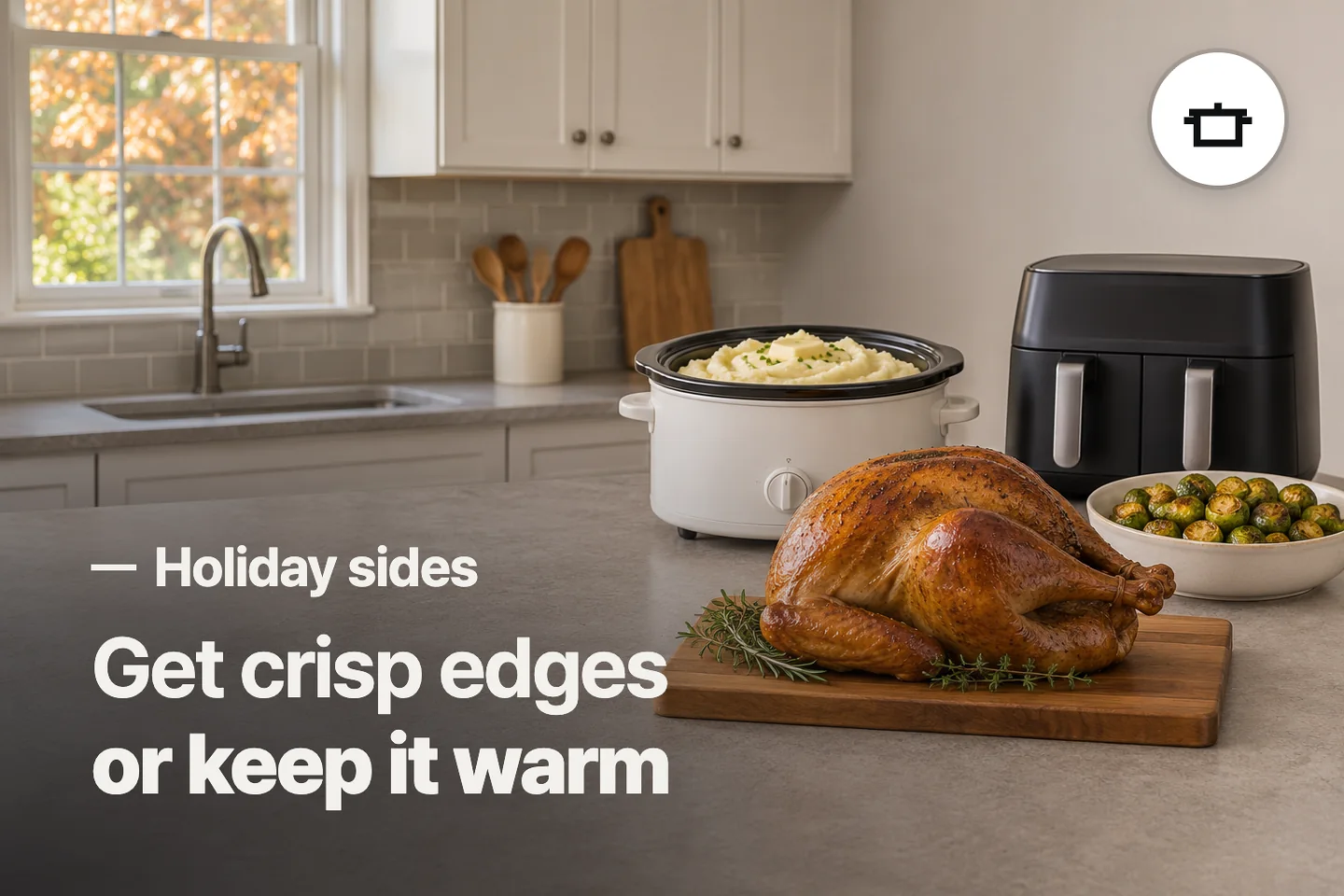
The toasted-cabbage smell arrives before the disappointment: Brussels sprouts with crisp outer leaves, then a spoonful of damp, pale centers from underneath. When the oven is occupied by a Thanksgiving roast, the Ninja air fryer looks like spare cooking space, but a piled basket gives those vegetables very different conditions.
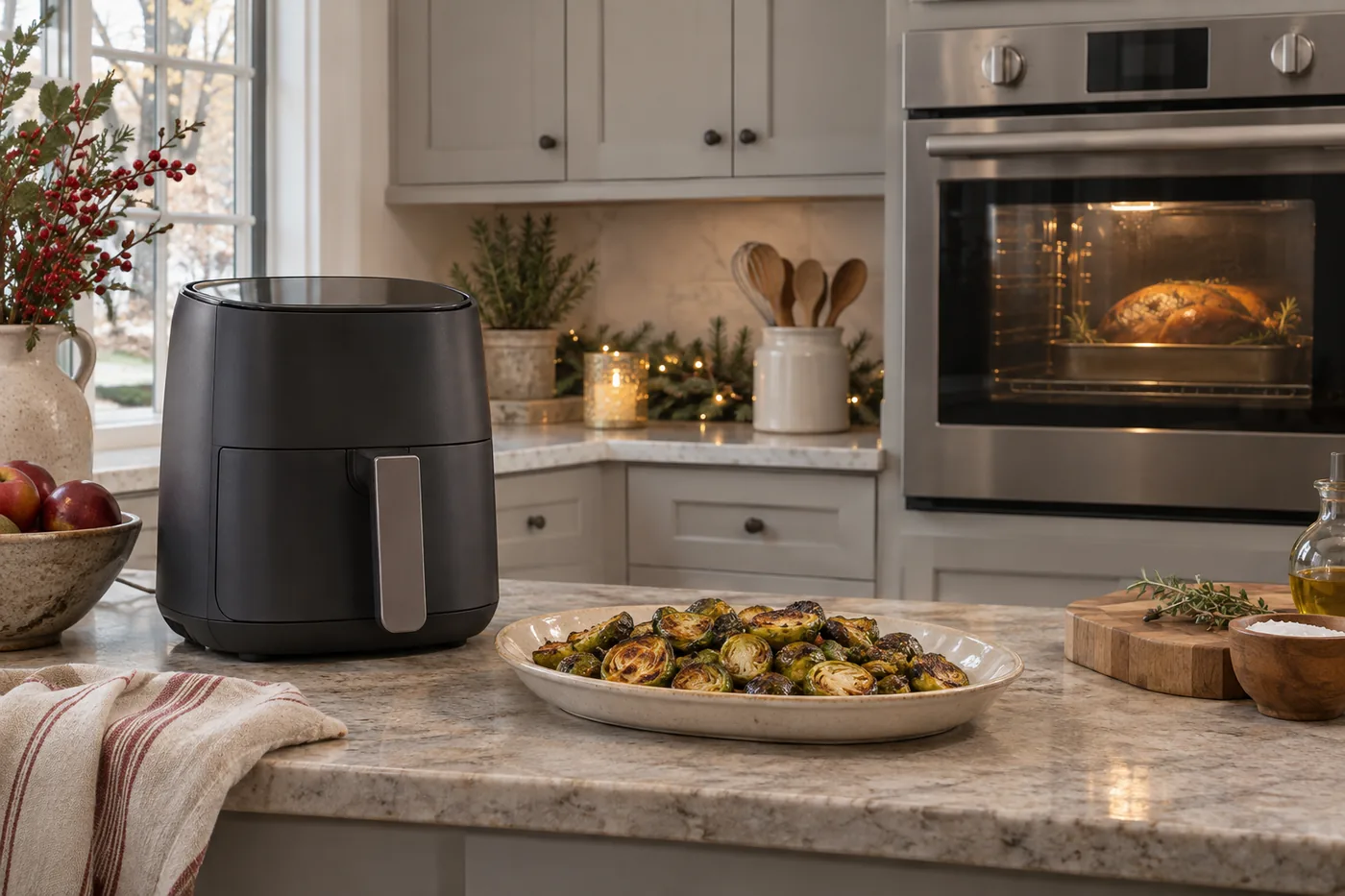 An oven roast and countertop vegetables need separate finishing plans.
For holiday sides, reduce the load before raising the heat; then check preheating and whether turning actually reaches the bottom. The Ninja Air Fryer Max XL AF161 is the model discussed here, not a new purchase recommendation, and the first changes cost nothing.
How we chose
Reviewed the original article's Ninja specifications and operating guidance, MEATER intended-use guidance, and USDA FSIS advice against three checks: airflow, even exposure and safe serving. The original source-check dates are retained where current access was blocked or returned no readable guidance.
Part 1Read the bottom of the basket first
Lift a few vegetables from underneath the browned surface. If those pieces are pale while their neighbors on top are nearly finished, the useful clue is their position, because USDA FSIS warns that overcrowding interferes with air circulation and recommends cooking larger quantities in batches. More heat can darken the exposed leaves without fixing what is happening below.
The AF161 has a manufacturer-listed 5.5-qt basket, but that figure describes capacity rather than a guaranteed load of evenly crisp vegetables. So think of it as room to arrange and turn food, not a fill line for every side dish. Would the bottom pieces still have somewhere to move when you shake the basket?
Check the crisper plate next, because Ninja says it raises food to let air circulate underneath. That makes the plate part of the cooking setup, rather than an optional piece to leave in the drying rack when crispness is the aim. Follow the model's instructions for fitting it.
Pat washed vegetables dry and keep cut pieces reasonably similar, so surface water and uneven preparation do not complicate the airflow problem. A glossy finishing sauce can wait until the stage specified by the recipe; pooling it underneath the food works against the dry edges you want. For a creamy casserole, keep the moist texture and choose a recipe designed for it instead.
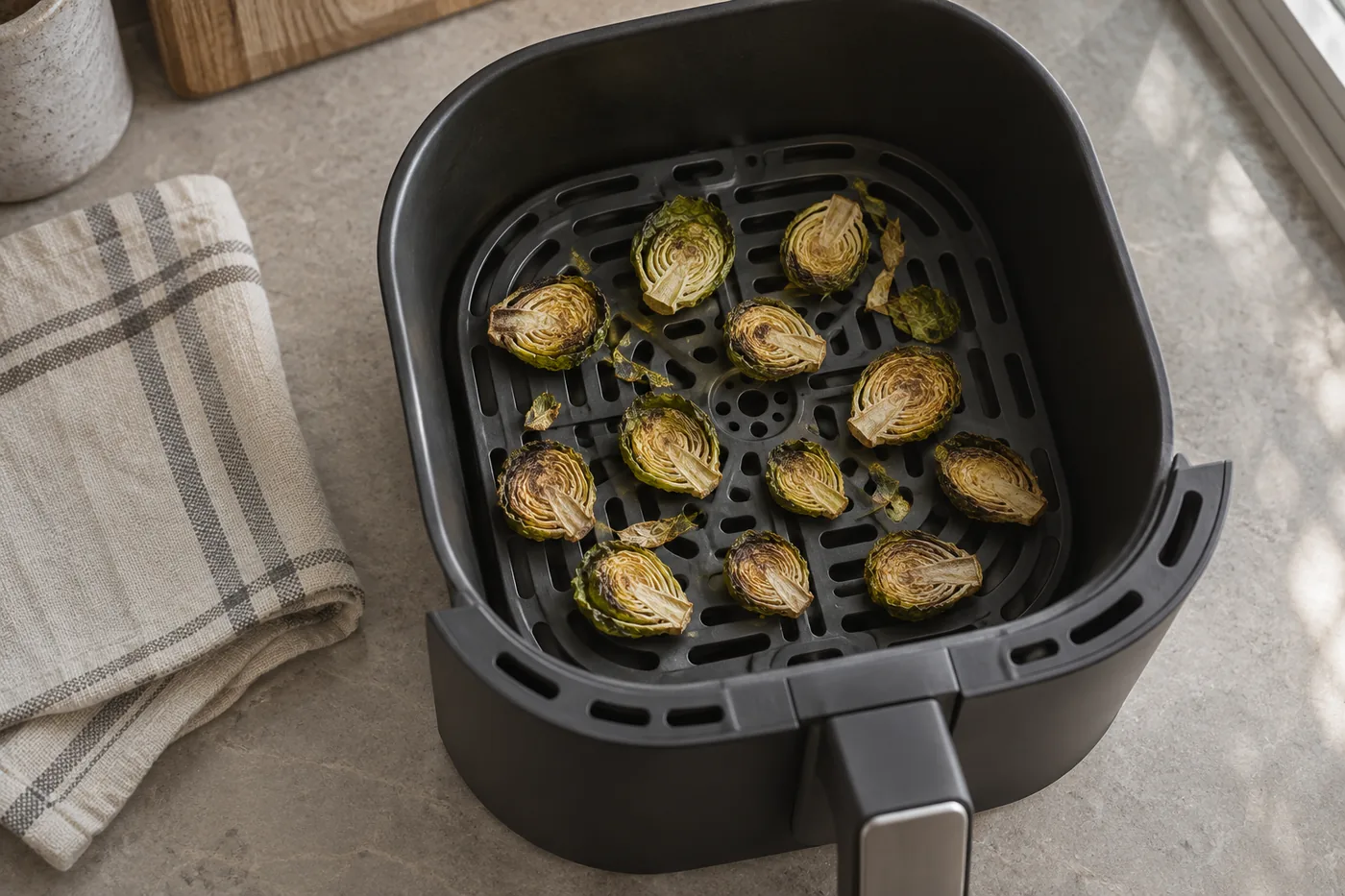 A smaller load leaves room to reach and redistribute the lower pieces.
Part 2Warm the cooker, then turn the food
Ninja's AF160-series FAQ recommends a 3-minute preheat before ingredients go in. So set the function and temperature for the matching recipe, let the cooker warm, and only then start thinking about the food's cooking time. That warm-up is not a substitute for time with vegetables in the basket.
For an oven recipe adapted to this model, Ninja suggests starting 25°F lower than the conventional oven temperature. But that adjustment is not a complete conversion: the food, load and appliance still determine how quickly the vegetables finish. Keep the recipe nearby rather than treating its oven timing as an air-fryer promise.
When the recipe or Ninja chart calls for shaking or rotating, bring the pale pieces up instead of just bouncing the browned layer. Ninja says the timer, heater and fan pause when the basket is removed, so return it after redistributing the food. The point is even exposure, not repeated interruptions with no change in position.
Swipe sideways to see the full table →
| What the vegetables show | What to check | What to change |
|---|---|---|
| Dark leaves above pale centers | Whether the bottom layer moves | Reduce the load and turn from underneath |
| Damp surfaces across the batch | Water, pooled sauce and crisper-plate placement | Dry before cooking and follow the recipe's sauce timing |
| Crisp edges that soften on the table | Deep piles and trapped steam | Finish nearer serving and transfer without crowding |
Ninja also specifies at least 5 inches of clearance from other surfaces and a heat-safe surface for the hot basket. So clear the counter before starting, rather than discovering that the only landing place is beside holiday decorations.
Turning helps when it changes which pieces meet the moving hot air; shaking only the browned surface leaves the same problem underneath.
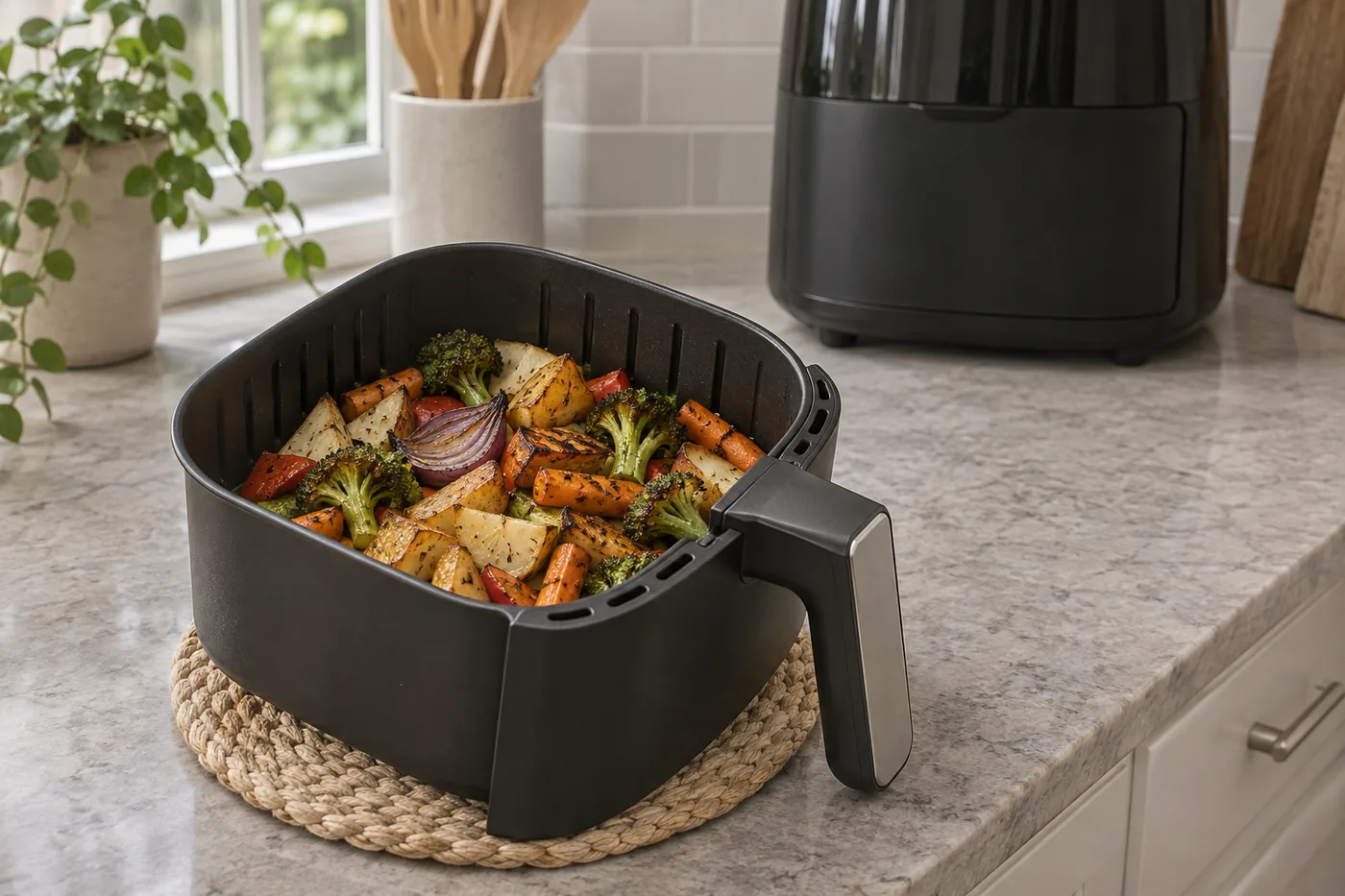 Make room for the hot basket before cooking, then turn food from the bottom.
Part 3Keep the wireless probe in the roast
A meat probe answers a different question from the basket: how the meat is progressing toward its temperature target. MEATER says its probes are designed specifically for meat and does not guarantee results in other foods or drinks. So a probe is not a crispness sensor, and buying one will not create room between crowded sprouts.
If a compatible wireless probe is already part of the meal plan, keep it in a suitably thick roast and follow that model's insertion instructions. MEATER's intended-use guidance also warns that damage outside its intended use can affect warranty coverage. For vegetables, texture still requires checking the food itself; for a safety measurement in a shallow dish, use a suitable thermometer that can reach the center.
The roast's temperature trend can help you decide when to begin the last basketful, because it gives more useful information than a guessed dinner time. But an app estimate is still an estimate, so leave room for the meat to take longer. A roast finishing late should not leave the earliest vegetables sitting unnoticed.
Keep browning separate from safe doneness. USDA FSIS specifies 165°F for poultry and reheated leftovers, and 145°F followed by a 3-minute rest for whole cuts of beef, pork, veal and lamb. Those are targets for the relevant foods, not settings that tell you when raw sprouts are crisp.
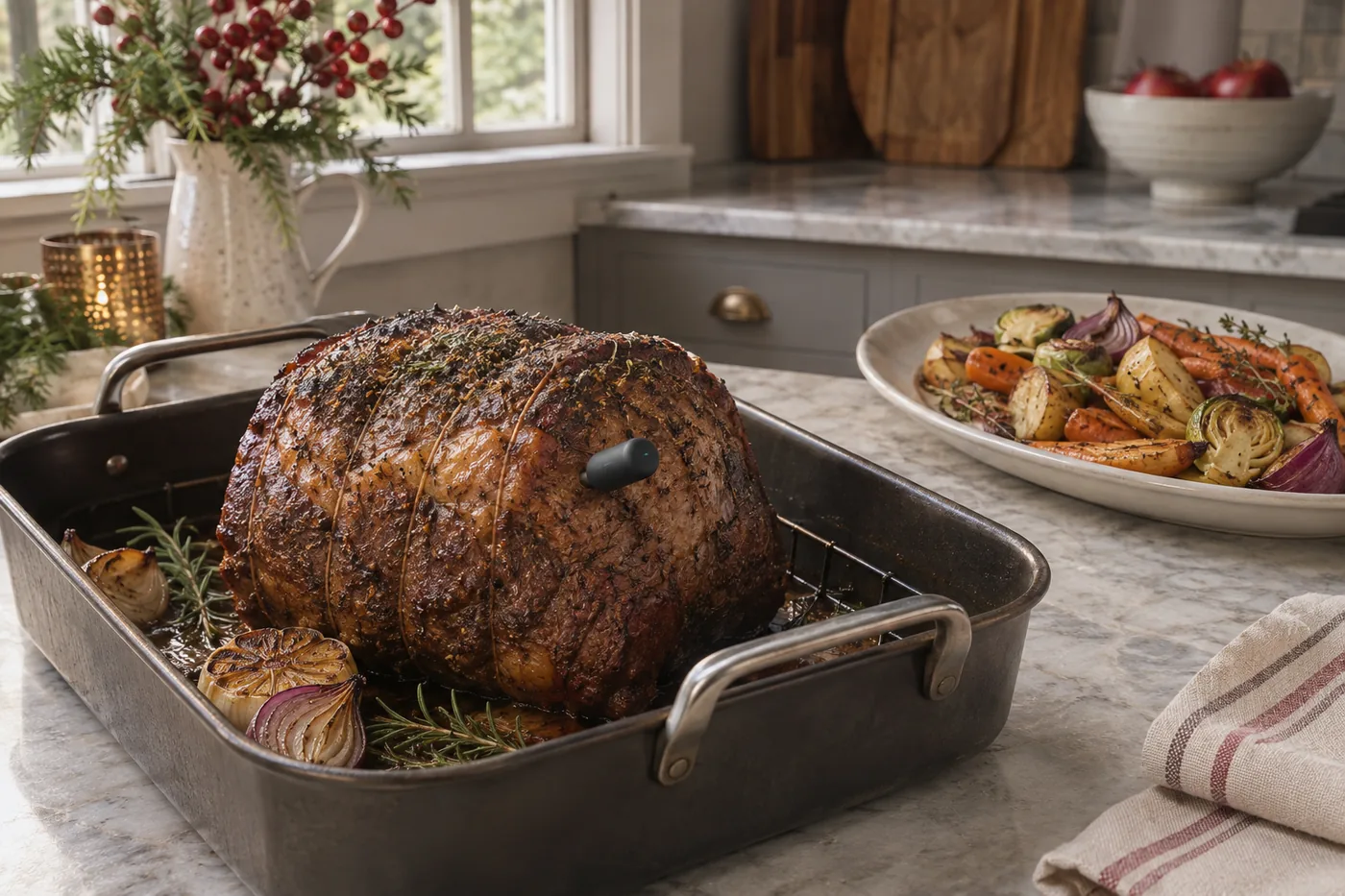 The roast's thermometer and the vegetables' texture checks do different jobs.
Part 4Finish for the table, not the timer
Work backward from serving, including the recipe's cooking time, preheat, turning and transfer. That makes a smaller batch workable instead of a surprise when guests are already seated. Keep the load reasonably consistent between batches, but check the food rather than assuming the next batch will finish identically.
The last step matters as much as the basket: do not trap the finished crisp edges under steam. So avoid turning a shallow spread of vegetables into a deep, covered mound while the roast catches up. Finish the side that softens fastest closest to serving, or bring out successive batches if that fits the meal.
For food that must wait hot, USDA FSIS says it needs to stay at 140°F or warmer. A switched-off fryer or a serving bowl that feels warm does not establish that temperature, so plan suitable hot holding before cooking starts. If that is not available, stagger serving rather than treating the counter as holding equipment.
USDA FSIS also says to refrigerate leftovers within 2 hours, or within 1 hour when the surrounding temperature exceeds 90°F, and discard perishable food left out beyond those limits. That deadline belongs in the cleanup plan, not in a calculation about whether the crust still looks good. The practical fix remains smaller loads, a warmed cooker and deliberate turning, with the final batch ready when people are ready to eat.
Source note: This guidance draws on Ninja's AF161 specifications and AF160-series FAQ, MEATER's intended-use guidance, and USDA FSIS instructions. It prioritizes airflow, turning and serving logistics; no purchase is recommended and no purchase links are included. Source details retain their November 10, 2026 check date because the pages could not be refreshed on November 24, 2026. Use the recipe and instructions for your own model for cooking times.
In one sentence
Give holiday vegetables room to brown, turn the lower pieces and finish the crispest batch near serving.
Frequently asked questions
Why are my Ninja air fryer vegetables brown on top but soggy underneath?
Crowding can keep moving air from reaching buried pieces. USDA FSIS recommends batches rather than overcrowding; use the crisper plate as directed and turn the lower pieces into exposed positions.
How long should I preheat the Ninja AF161 for vegetables?
The AF160-series FAQ recommends a 3-minute preheat before ingredients are added. Follow the recipe's function and temperature, and check the instructions for your own model rather than applying that timing to every Ninja cooker.
Can a MEATER probe tell me when Brussels sprouts are crisp?
No. MEATER designs its probes for meat and does not guarantee results in other foods or drinks. A probe does not measure surface crispness or fix restricted airflow; keep it in an appropriately sized roast according to its instructions.
How can I hold early batches while the roast finishes?
USDA FSIS says hot-held cooked food must remain at 140°F or warmer. Without suitable holding equipment, plan successive batches near serving; refrigerate leftovers within 2 hours, or 1 hour above 90°F, and discard perishable food left out beyond those limits.
Sources
- Ninja Air Fryer Max XL AF161 specifications · 2026-11-10
Retained original verification: AF161 has a 5.5-qt basket and 120-volt US supply. Current page access was blocked on November 24, 2026; capacity does not establish a crisp vegetable batch size.
- Ninja AF160-series operating FAQ · 2026-11-10
Retained original verification: 3-minute preheat, at least 5 inches of clearance and an initial 25°F reduction from conventional oven recipes. Also covers crisper-plate airflow, turning and automatic pause. No readable page text returned on November 24, 2026.
- USDA FSIS: Air Fryers and Food Safety · 2026-11-10
Retained original verification: poultry 165°F; whole beef, pork, veal and lamb cuts 145°F followed by a 3-minute rest; avoid overcrowding. Access denied on November 24, 2026.
- USDA FSIS: Leftovers and Food Safety · 2026-11-10
Retained original verification: hot holding at 140°F or warmer; reheating leftovers to 165°F; refrigerate within 2 hours, shortened to 1 hour above 90°F ambient temperature; discard perishable food held out beyond those limits. Access denied on November 24, 2026.
- MEATER: Food other than meat · 2026-11-10
No numeric cooking targets supplied. Retained original intended-use guidance: designed for meat, results in other foods or drinks not guaranteed, and damage outside intended use may affect warranty coverage. Current page access was blocked on November 24, 2026.