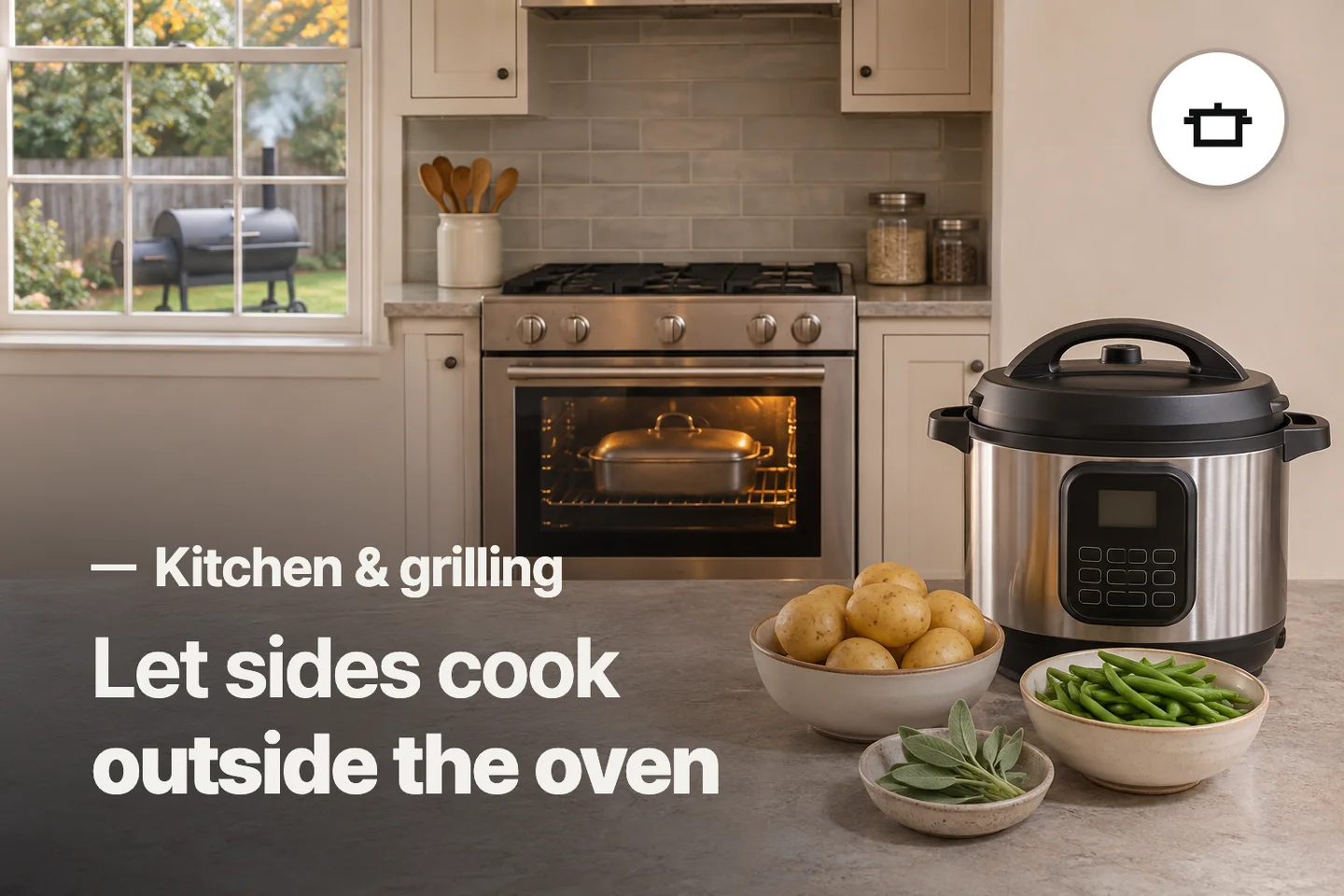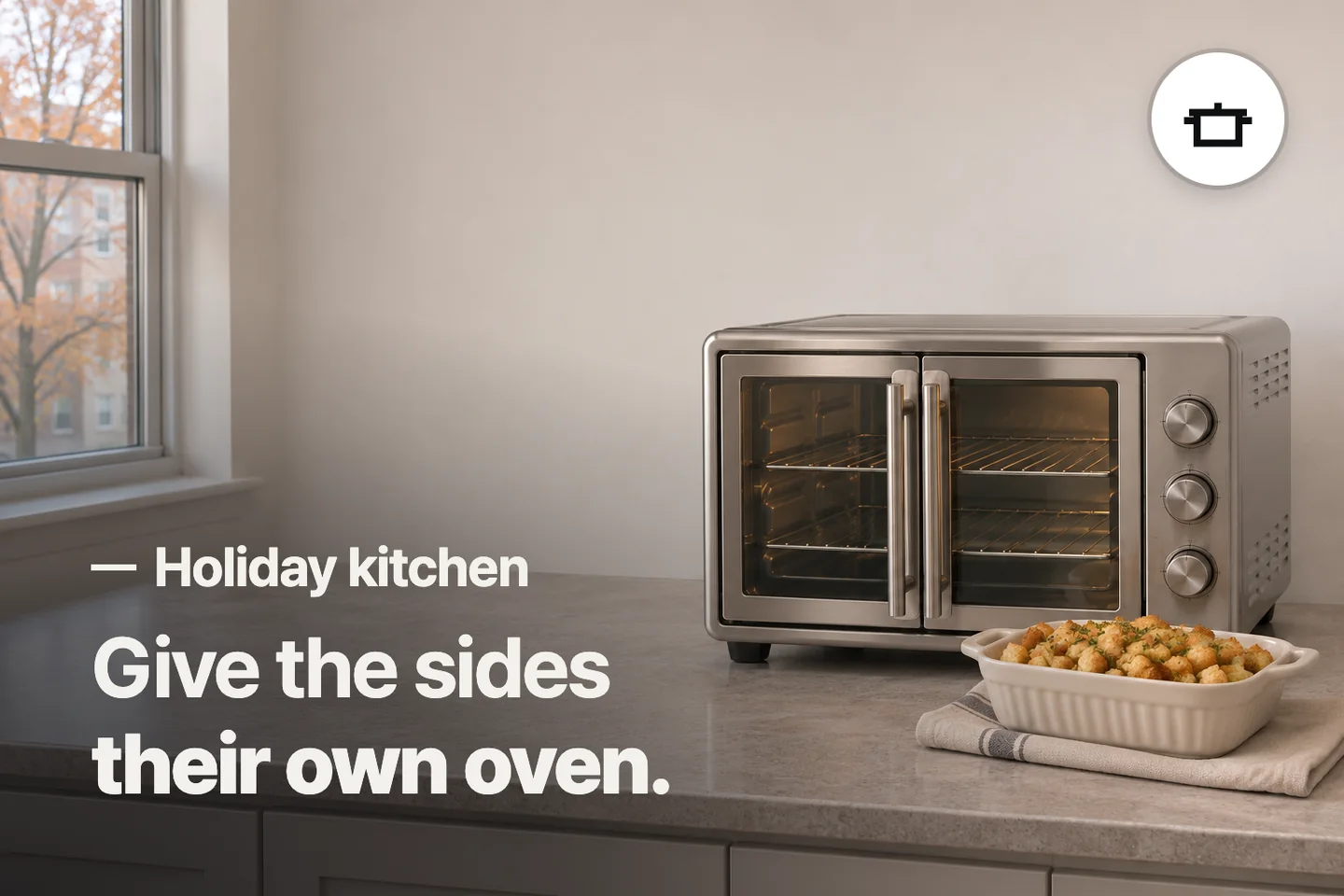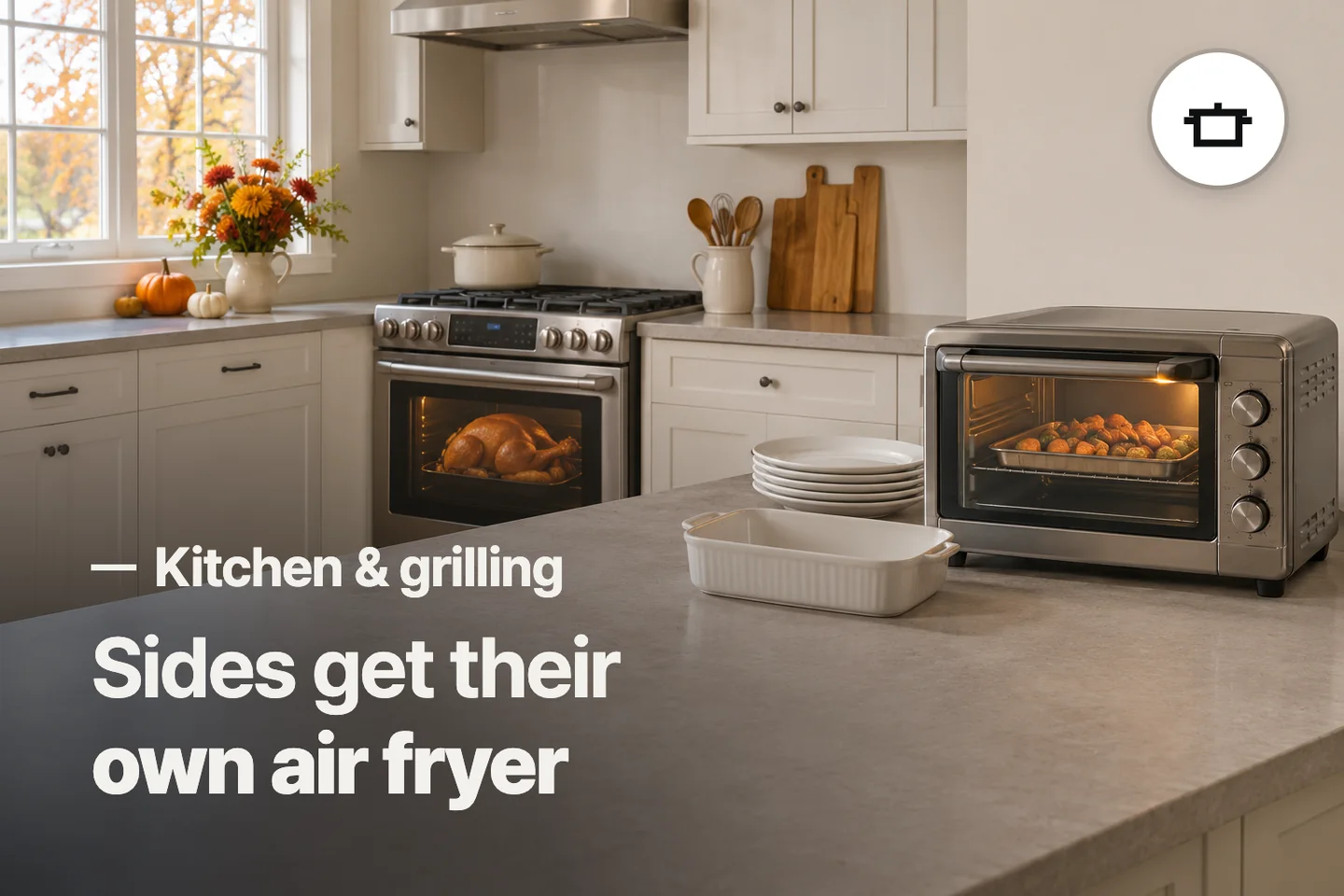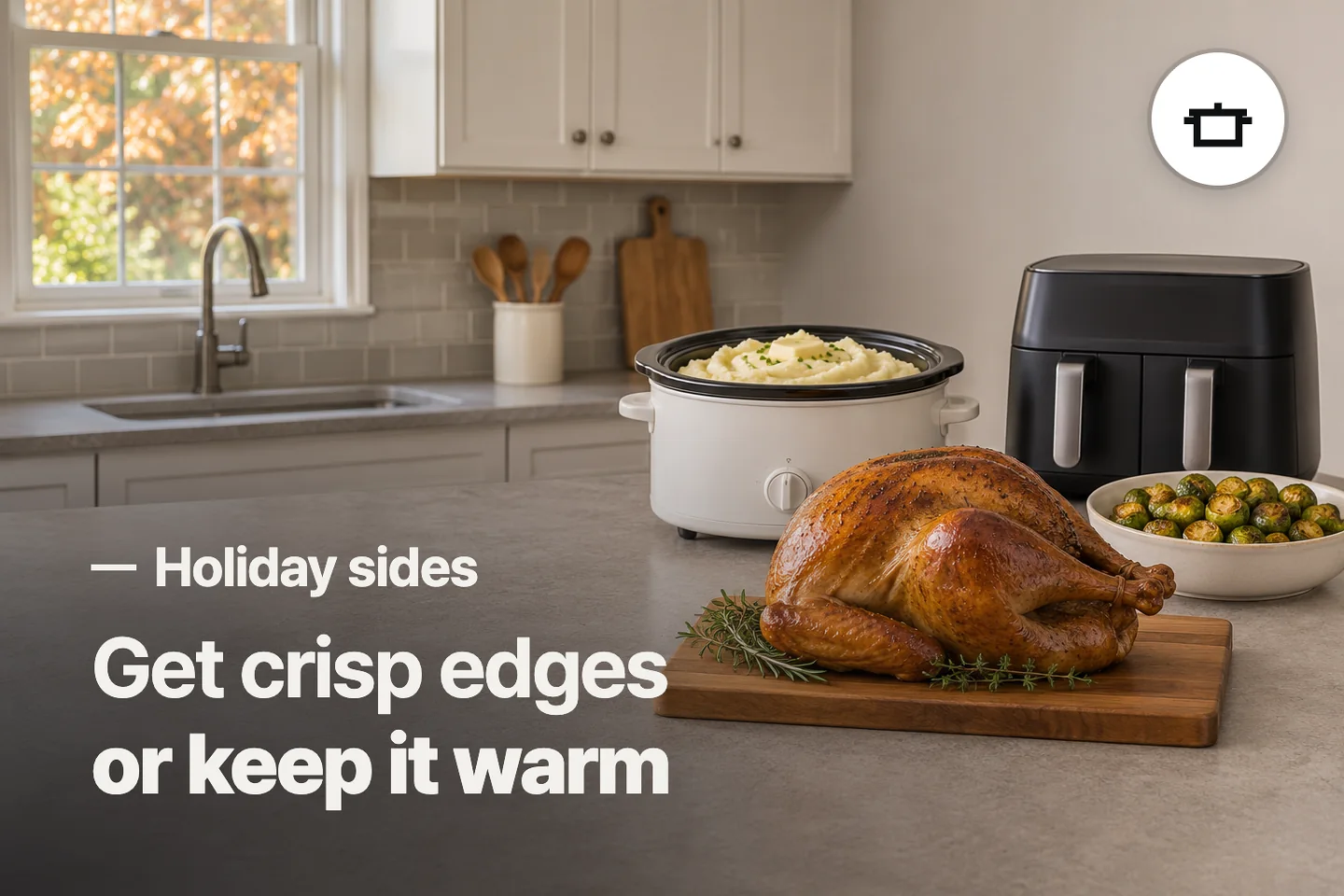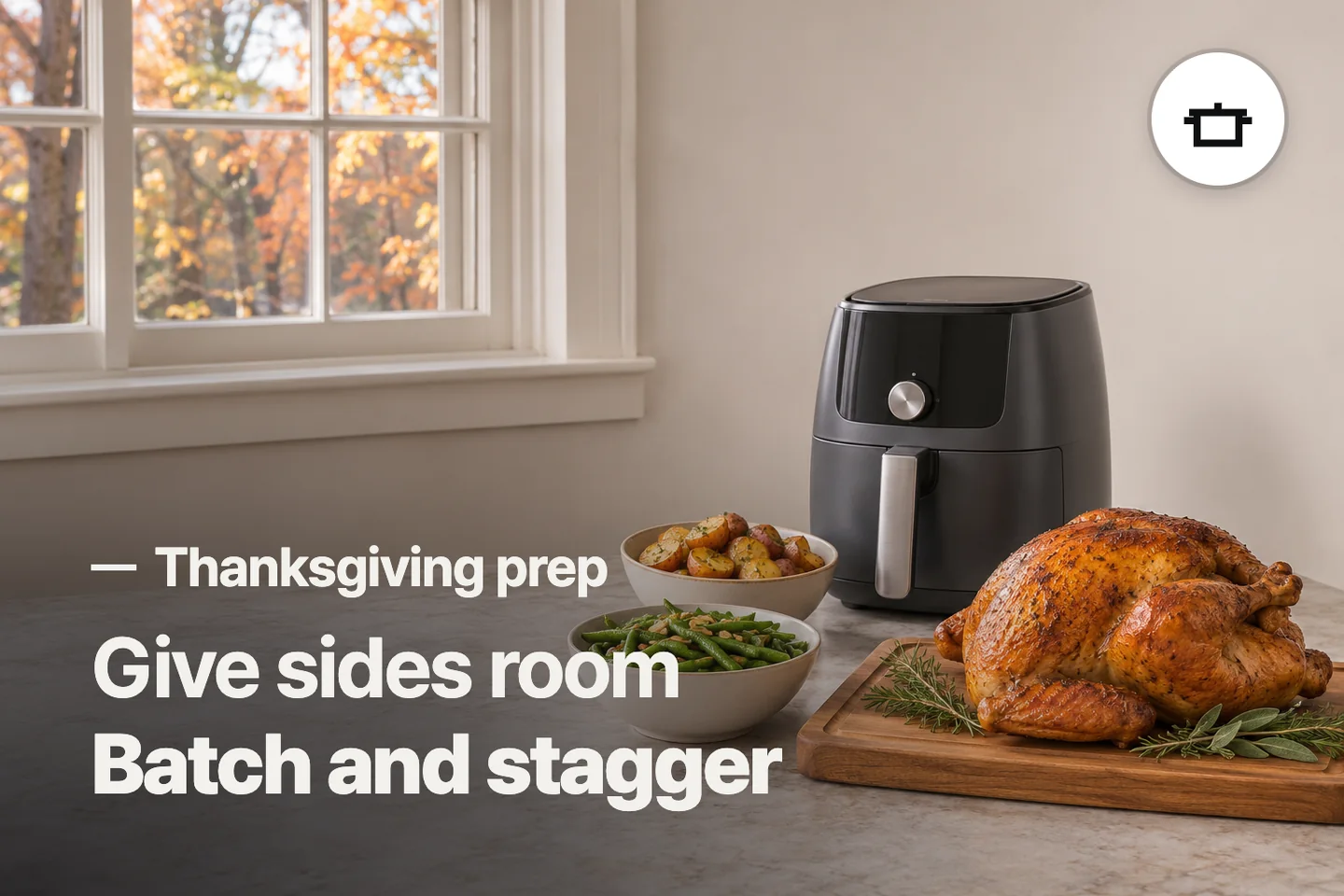
Sage butter smells wonderful until you open the air fryer and find potatoes glistening with moisture beneath a heap of green beans, while the turkey still occupies the oven. That crowded Thanksgiving counter needs a different cooking order, not another scoop in the basket. Start by drying the potatoes and giving each side its own finishing window.
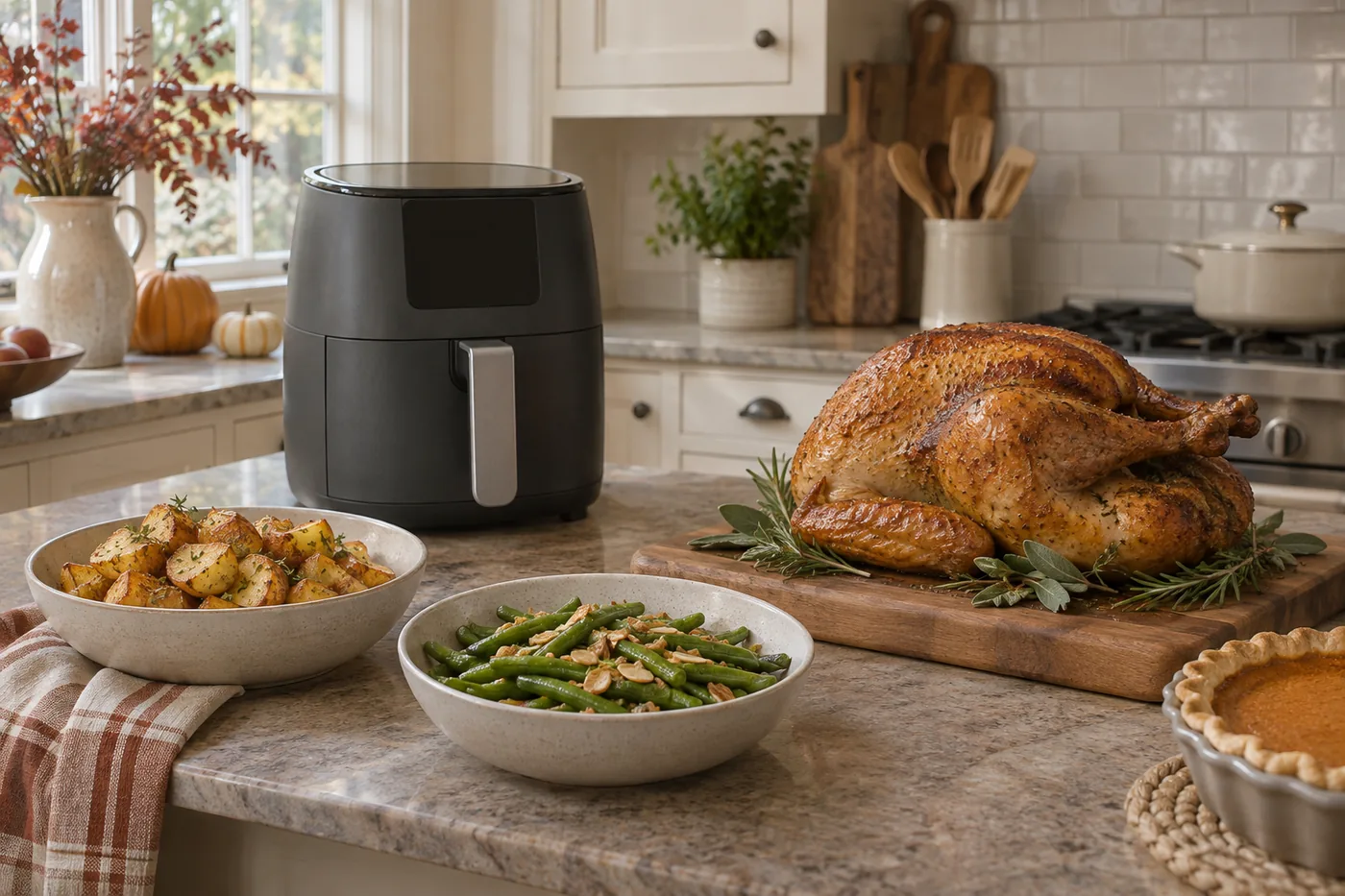 Keep the sides separate before they reach the basket.
The COSORI TurboBlaze 6.0-Quart appears in the manufacturer's stuffing and green bean recipes, which provide useful examples of how differently those dishes cook. But those examples are a planning reference, not a reason to replace your appliance or copy its settings into another model. I'd keep the cooker you own and change what goes into it together.
How we chose
Reviewed COSORI's fries, stuffing, and green bean recipes alongside MEATER's thermometer instructions. The practical checks were surface moisture, space and timing between basket loads, and independent temperature readings for the turkey and stuffing; no appliance purchase is required.
Part 1Check the wet surfaces before the temperature dial
Look at the potatoes first: are they wet from rinsing, buried beneath vegetables, or sitting in liquid that has collected underneath? That tells you more about the next useful step than the color of the uppermost piece, because exposed edges can brown while food below remains damp. More heat cannot create more basket space.
Separate the uncooked ingredients, then use a batch size and arrangement allowed by your appliance's instructions and the recipe for that cut. This gives you room to turn or shake the food rather than merely shifting the top layer. Why keep adding potatoes when the ones underneath cannot move?
COSORI's Extra Crispy French Fries recipe calls for draining and thorough drying after soaking, followed by shaking halfway through cooking and more often when necessary. So drying and movement belong together: drying addresses the water you brought in, while moving the food changes which surfaces face the circulating air. Neither instruction makes a basket filled to the rim a good idea.
Separate food that needs a crisp surface from food that needs a moist center.
Part 2Give potatoes, beans, and stuffing different preparation
For potatoes, match the recipe to the shape before borrowing its timer. COSORI's fries instructions start with ¼-inch batons and a 30-minute cold-water soak, so those details describe fries rather than a universal Thanksgiving roast-potato method. Chunk potatoes need their own recipe, including preparation and doneness checks for that size.
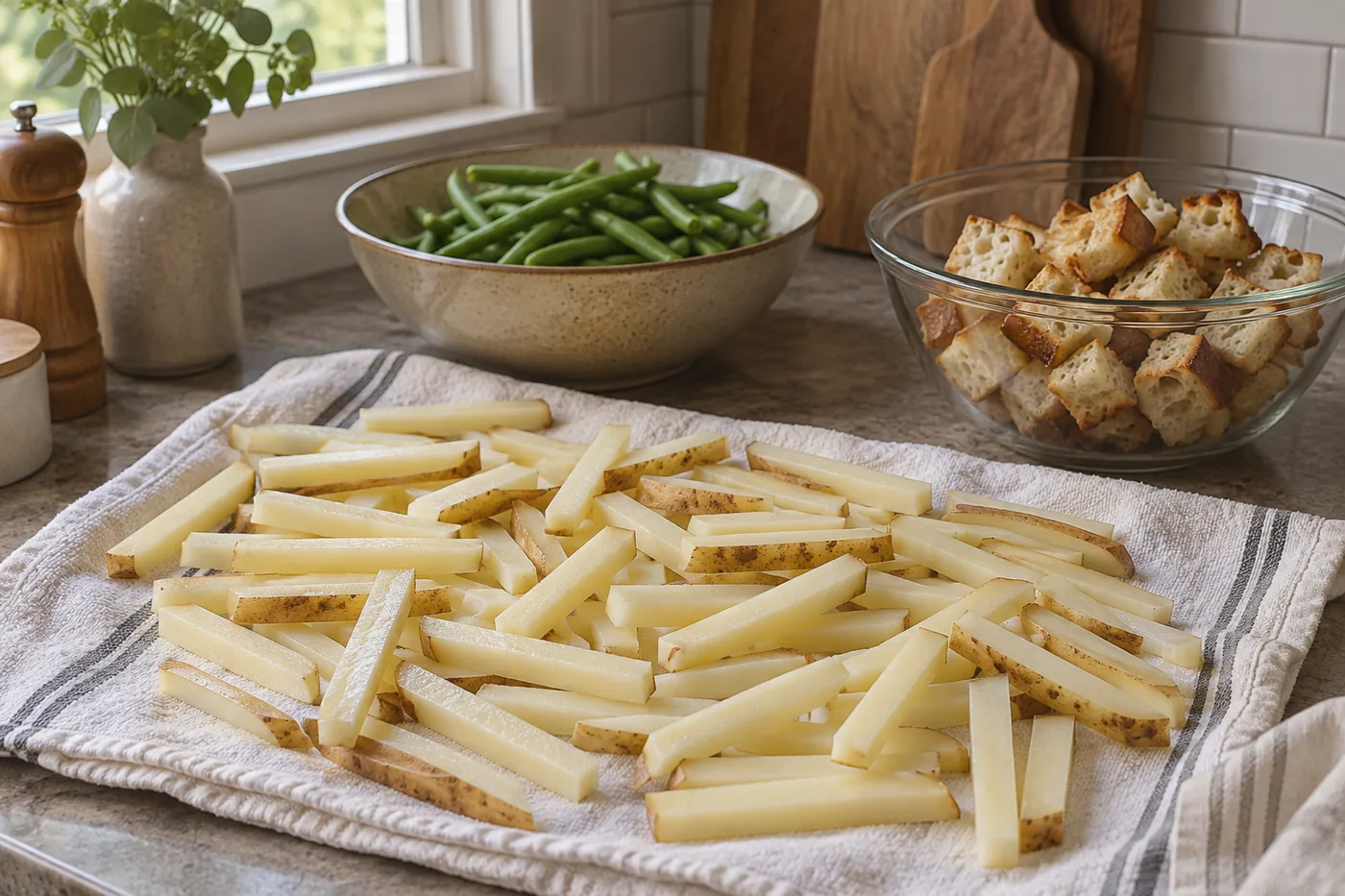 Dry potato surfaces and separate ingredients make the next cooking stage easier to organize.
That fries page also gives conflicting cooking figures: its header says 25 minutes, while the detailed step says 18 minutes after preheating to 380°F. So do not turn either number into a guaranteed finish for larger pieces, especially in another appliance. The useful instructions here are the matching cut, thorough drying, and movement during cooking.
Green beans need a different sort of restraint: save the vinaigrette for the finish. COSORI's recipe cooks the beans before immediately tossing them with the dressing, which keeps the dressed beans out of the potato queue. This is a side to finish near serving, not something to tuck under another batch.
Stuffing needs its bread prepared before the final bake, because a browned top is not the whole dish. COSORI's apple-and-Parmesan version toasts the bread, cooks the aromatics in a sauté pan, then combines the components with the recipe's measured stock and other ingredients. So keep the recipe proportions intact instead of adding broth merely because the surface looks dry.
Swipe sideways to see the full table →
| Dish stage | Opened COSORI recipe instructions | Place in the meal |
|---|---|---|
| Stuffing bread | Single layer, 350°F for 8 minutes | Toast before assembling; this is not the final bake |
| Assembled stuffing | 320°F for 18 minutes | Include the separate stovetop preparation and check the center |
| Green beans | Preheat to 425°F; cook at 425°F for 7 minutes | Allow for preheating, then dress after cooking |
These are recipe-specific settings, with the TurboBlaze identified as the cookware on the stuffing and bean pages. That means a different basket, load, or model still needs its own instructions; the table is not a universal preset chart.
Part 3Put the basket changes into the dinner schedule
Write the sequence as actual jobs: bread toasting, stovetop preparation, stuffing assembly, potato batches, and the beans' final cook. Then add preheating, unloading, and temperature changes, because the headline cooking times leave those jobs out. A finished dish needs somewhere to go before the next one can start.
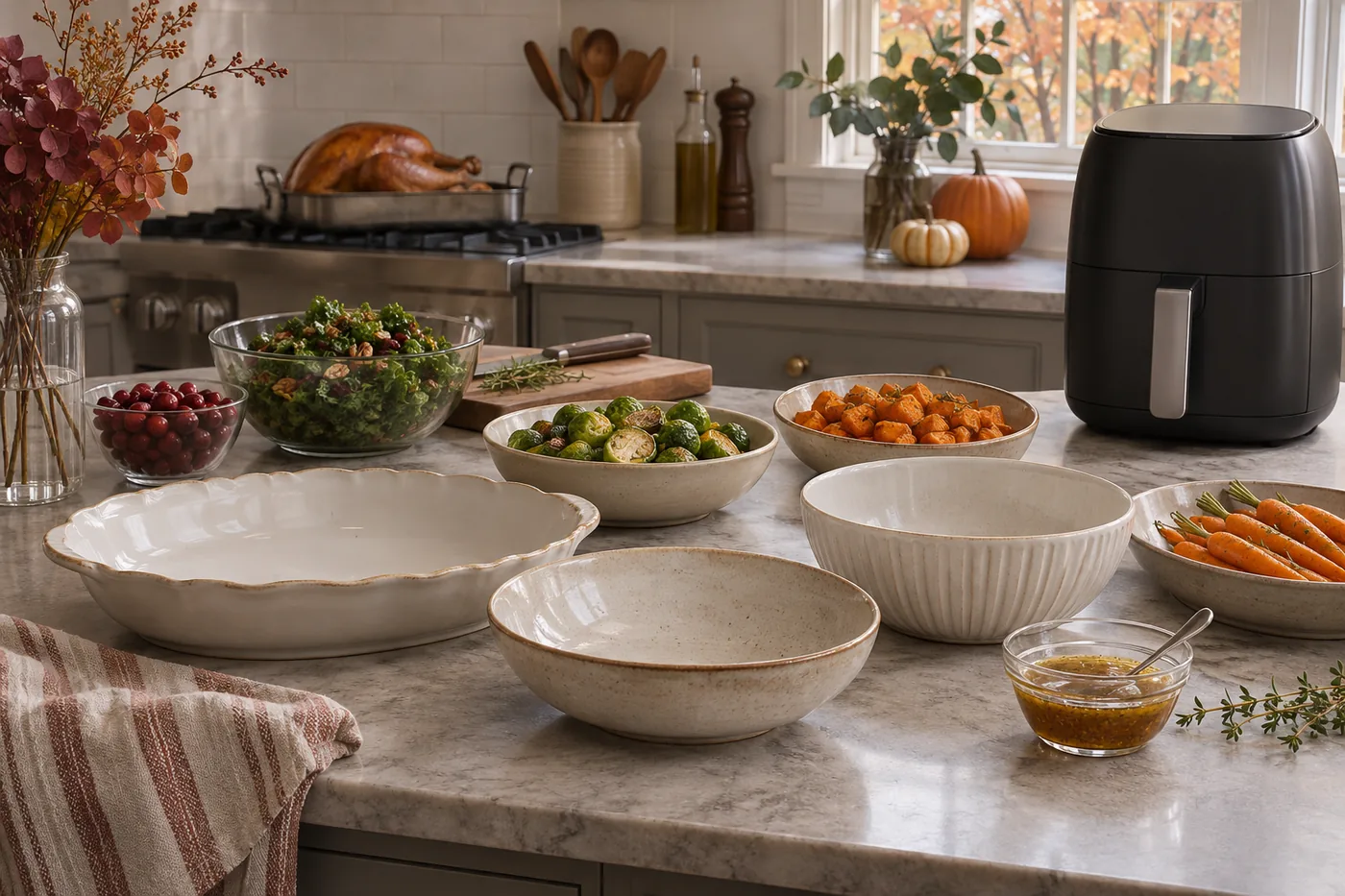 Set out the serving dishes before the final basket change.
Prepare the stuffing components ahead where the recipe allows, and plan its final bake around a realistic serving time. Then work backward from the potatoes' last crisping and the beans' late finish, rather than expecting everything to occupy the same basket. If the sequence depends on a long wait or another batch that plainly will not fit, move a side to the stovetop or simplify the menu.
Keep the bean dressing ready beside its serving bowl, and set out the potato bowl before the final batch begins. This avoids using the basket as a storage space while you find a platter. Do not add a fresh batch to food already cooking and expect the mixed load to share a finish.
Schedule the unloading and preheating, not just the minutes printed above the recipe.
Part 4Let the turkey temperature set the last stretch
A thermometer can tell you how the turkey is progressing while you handle the sides, but a finish estimate is not a doneness reading. MEATER's placement guidance puts its probe in the thickest breast meat, away from bone, with the safety notch inside the meat. So follow the instructions for the exact probe you own, including insertion and heat limits, rather than treating wireless models as interchangeable.
MEATER lists 165°F for the turkey breast and stuffing, and its general thermometer guidance emphasizes checking multiple areas on large cuts. That means the breast reading does not establish the temperature elsewhere in the bird or inside a separate stuffing dish. Check additional turkey locations with a suitable food thermometer, and check the stuffing's center separately rather than relying on its golden surface.
You do not need a new wireless probe to put this plan into practice if your existing food thermometer covers the necessary checks. Instead, let the actual readings guide the final cooking sequence and keep checking until the food reaches the stated temperature. Dinner gets simpler when the sides have room and the turkey is no longer being hurried by their timer.
Method: COSORI recipe instructions and MEATER thermometer guidance informed the preparation, basket sequence, and temperature checks. Recipe settings describe the named preparations, not comparative cooking results. Sources last checked November 24, 2026.
In one sentence
Dry the potatoes, separate the sides, and build a basket schedule around actual turkey temperature.
Frequently asked questions
Why are my air fryer potatoes soggy even when the edges brown?
Wet surfaces and crowding can leave lower pieces damp while exposed edges brown. Dry the potatoes thoroughly, use a load allowed by the matching recipe and appliance instructions, and turn or shake as directed instead of increasing the heat alone.
Can I use the COSORI fries timer for Thanksgiving potato chunks?
The opened fries recipe is for 1⁄4-inch batons soaked for 30 minutes, not larger chunks. Its header and detailed cooking step also disagree on cooking time, so use a recipe matched to your cut and appliance rather than treating either figure as a chunk-potato schedule.
When should I add vinaigrette to air fryer green beans?
COSORI's maple-vinaigrette recipe adds the dressing immediately after cooking. Keep it ready separately, then toss the finished beans rather than leaving dressed beans in the basket while potatoes cook.
Does the turkey's wireless thermometer also check the stuffing?
A probe in the turkey breast does not measure a separate stuffing dish or every part of the bird. MEATER lists 165°F for breast and stuffing; use a suitable food thermometer to check additional turkey locations and the stuffing's center separately.
Sources
- COSORI Apple and Parmesan Stuffing recipe · 2026-11-24
TurboBlaze 6.0-Quart cookware; bread toasted in a single layer at 350°F for 8 minutes, then assembled stuffing cooked at 320°F for 18 minutes. Recipe includes separate sauté-pan preparation.
- COSORI Green Beans With Maple Vinaigrette recipe · 2026-11-24
TurboBlaze 6.0-Quart cookware; preheat to 425°F, then air-fry at 425°F for 7 minutes. Toss with vinaigrette immediately after cooking.
- COSORI Extra Crispy French Fries recipe · 2026-11-24
¼-inch batons, 30-minute cold-water soak, thorough drying, and shaking halfway through. Header lists 25 minutes cooking; detailed step lists 18 minutes after preheating to 380°F. Neither establishes a chunk-potato cooking time.
- MEATER thermometer usage guidance · 2026-11-24
No numeric insertion depth is specified; place the sensor in thick meat past the safety notch, away from fat, bone, and gristle. Guidance advises checking multiple areas on large cuts.
- MEATER turkey probe placement · 2026-11-24
Lists 165°F for breast and stuffing. Places the probe in thick breast meat with the safety notch inside; additional probes may check thigh or wing. Early-pull advice on the page is not used here.