The belly strap is where I'd look first when a relative's service dog arrives for Thanksgiving and its winter coat pulls the vest sideways. In an apartment already making room for a newly adopted companion dog, that shifting panel needs the visiting handler's attention, not another person's quick tug on a buckle.
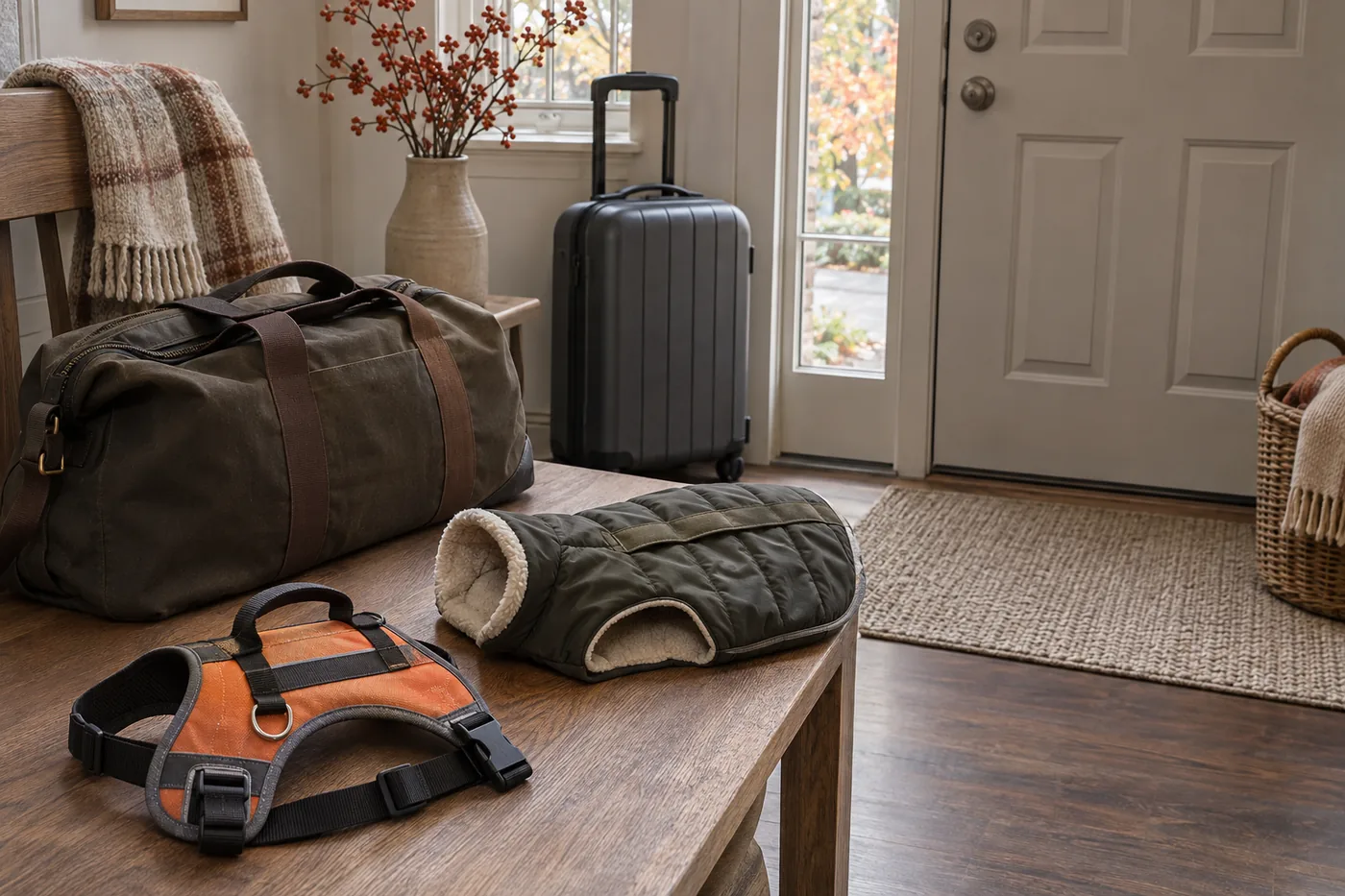 Separate layers make it easier for the handler to inspect straps and closures.
I'd check the existing vest without the coat before buying anything. PetSafe's Easy Walk Harness is a useful example of model-specific fitting instructions, but it is not a replacement recommendation for this dog's working equipment. So the first useful purchase decision here is to leave the shopping cart alone.
How we chose
Reviewed U.S. Department of Justice service-animal guidance and PetSafe's Easy Walk product and fitting pages. The checks prioritize measured fit, equipment purpose, and model-specific fitting and care directions; the walking harness is an example, not a replacement recommendation.
Part 1Start with the dog's size and the gear's job
Ask the handler which piece carries the leash, which identifies the dog, and whether any equipment supports trained assistance tasks. That distinction matters because an identification cape, a walking harness, and task-related equipment do not automatically do the same work. The handler directs any adjustment; a visiting host should not try an unfamiliar handle or change a working setup.
The U.S. Department of Justice says in its ADA FAQ, question 8, that service animals do not need a vest, identification tag, or specific harness. But optional identification is not the same as optional control: the department's public-access guidance generally requires a harness, leash, or tether, with disability- and task-related exceptions that still require effective alternative control. These are public-access rules, not an answer to a tenant's housing-rights question.
Start sizing with the exact item's label and instructions, rather than the dog's breed or the coat's size. PetSafe lists the Easy Walk Harness with four adjustment points, yet those adjustments still operate within a size range. That means an adjustable product is not necessarily the right size for the dog wearing it.
Part 2Find out whether the coat causes the shift
Is the vest still crooked when the coat is off? Have the handler check in a clear indoor space away from the open entrance, keeping the companion dog's gear separate. This makes the existing fit easier to see without changing several things at once.
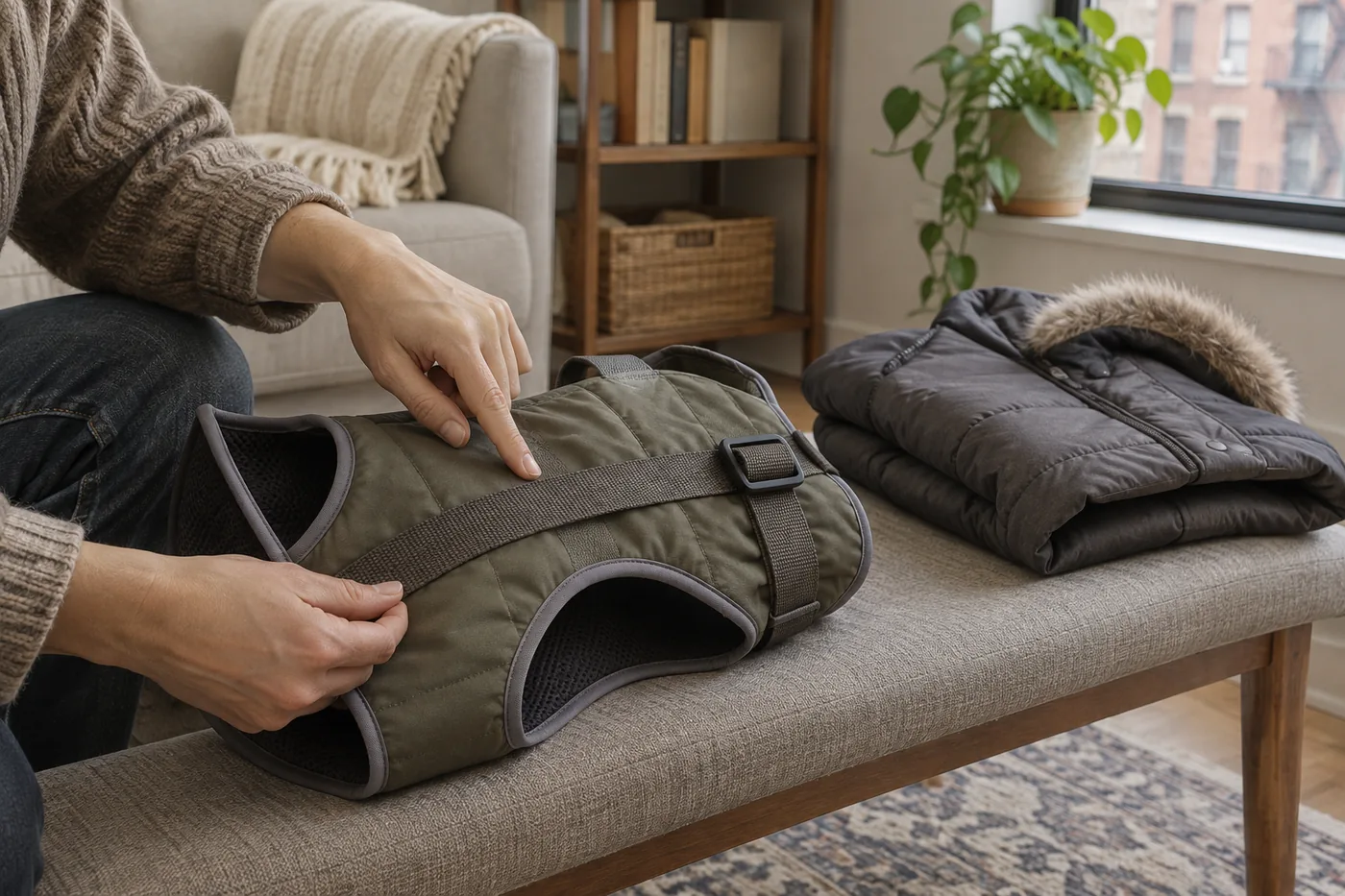 The coat stays off while the handler checks the vest's original position.
Follow each strap underneath the dog as well as across its back. A turned buckle, uneven adjustment, folded edge, or trapped grit can be missed from above, so the visible panel alone does not settle the fit. Change one cause at a time, then return to the maker's instructions.
Swipe sideways to see the full table →
| What changes | What the handler checks next | What that tells you |
|---|---|---|
| The vest shifts with the coat removed | Strap routing, adjustment, and the exact size chart | The underlying fit needs attention before layering |
| The vest stays centered until the coat returns | Closures, overlapping panels, and attachment openings | The coat is changing the arrangement |
| An edge meets the moving front leg | The item's specified position and available adjustment | More tightening may not solve the contact |
PetSafe's Easy Walk fitting article warns that harness rotation can cause rubbing and chafing. That is a reason to watch movement, not permission to tighten every strap until nothing shifts. If there is a sore area or apparent discomfort, stop the fitting attempt and let the handler arrange veterinary advice rather than covering the area again.
For the Easy Walk specifically, PetSafe puts shoulder and belly adjustment before the chest strap. Its connector rings belong above and behind the shoulders, while the side straps stay out of the armpits; the chest strap sits horizontally with its front loop centered. So those instructions describe positions, not merely how tight the harness feels.
PetSafe also specifies 1–2 fingers between strap and body for that model. But that allowance does not establish the correct clearance for a different vest or assistance harness. Use the instructions for the equipment actually in front of the handler.
A fit instruction belongs to its named model, not every piece of dog gear.
Part 3Put the coat back without changing the job
Once the underlying equipment matches its own directions, the handler can assess the winter layer in an arrangement supported by both makers. That means checking where the coat closes and whether its opening lines up with the actual leash attachment. A hole in a coat is not proof of compatibility with every harness.
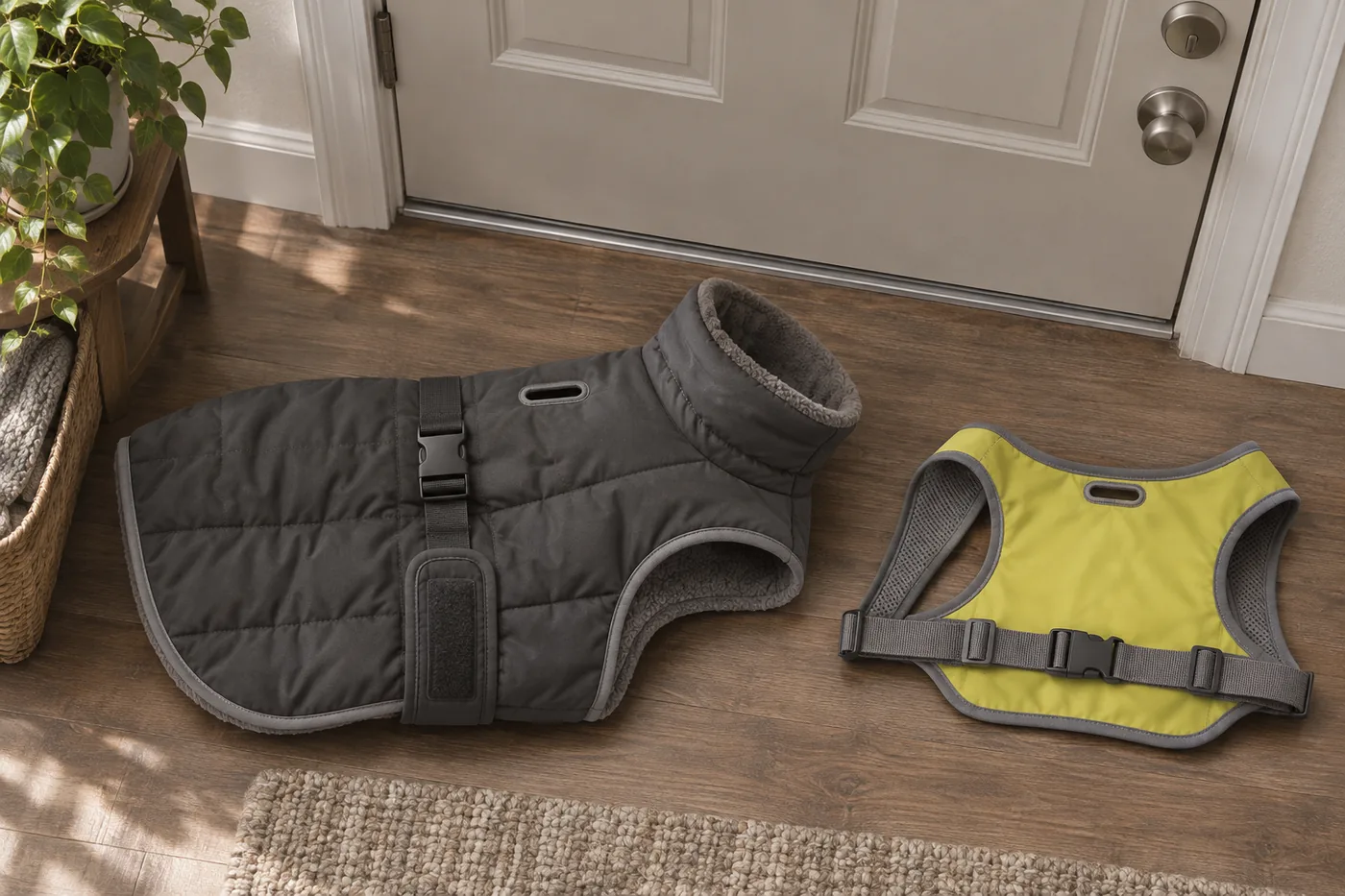 Closures and attachment openings need checking before the layers go back together.
Let the handler observe standing, walking, turning, sitting, and lying down indoors. This shows whether a closure gathers fabric or pushes the vest away from its usual position. The handler should also consider the dog's normal task movements, because a centered panel at rest does not show whether equipment interferes with work.
If the coat changes an otherwise correct fit, remove the coat and reassess that combination. Simply loosening the vest for the visit leaves a different setting behind when the coat comes off. Do not trade the known fit for an uncertain layered fit.
Where the makers do not address the combination, ask them about compatibility before an outing. A different compatible winter layer may solve the problem, but a new vest is not automatically the answer. Until the handler can establish the right arrangement, leave the uncertain combination unused.
Part 4End with the care label, not another tug
Before washing, identify the care directions for the vest and coat separately. Their patches, padding, closures, and straps may have different requirements, so one item's wash instructions should not stand in for the other's. The exact care label comes before convenience.
Follow those directions for removing hair and grit, washing, and drying, then have the handler inspect the contact edges and stitching before reassembly. This also gives the handler a chance to notice damage rather than trying to solve every shift with a buckle adjustment. Keep the visiting dog's equipment apart from the companion dog's supplies throughout.
The useful endpoint is a setup the handler recognizes, with layers that stay positioned through ordinary movement and do not obstruct trained tasks. If that is still missing, the next step is help from the equipment maker, not a hurried replacement order. No new tool is needed for the checks described here.
Sources and selection: U.S. Department of Justice guidance and PetSafe's product and fitting pages were checked on November 24, 2026. The checks focus on the dog's measured fit, each item's purpose, and model-specific fitting and care directions.
In one sentence
Let the handler establish the existing fit without the coat before changing straps or replacing equipment.
Frequently asked questions
Does a service dog need an identification vest?
The U.S. Department of Justice ADA FAQ, question 8, says a vest, ID tag, or specific harness is not required. Its public-access control requirements still apply; optional identification does not remove those requirements.
Should the service dog vest go over or under a winter coat?
There is no single arrangement established by the sources for every combination. Let the handler follow the directions for both items and ask their makers if the attachment opening or closures change the working setup.
Does the Easy Walk Harness finger allowance apply to every vest?
No. PetSafe specifies 1–2 fingers between strap and body for the Easy Walk Harness. Another identification vest or task-related harness needs its own maker's fitting directions.
Should a slipping vest be replaced immediately?
First have the handler check its routing, size, and fit without the winter coat. If the shift only appears with the coat, investigate that combination before replacing otherwise suitable working equipment.
Can the vest and coat be washed together?
Check each item's care label separately before choosing a wash or drying method. This scenario does not identify either item's materials or care requirements, so no shared wash setting is established.
Sources
- U.S. Department of Justice: service-animal FAQ · 2026-11-24
Question 8: no required vest, ID tag, or specific harness. Question 1: individually trained disability-related work or tasks. Question 27: handler control and public-place leash exceptions.
- PetSafe Easy Walk Harness · 2026-11-24
4 adjustment points and chest leash attachment. This is a model-specific example, not a selected replacement; no price is quoted.
- PetSafe: How to Fit the Easy Walk Harness · 2026-11-24
1–2 fingers between strap and body; shoulder and belly adjusted before chest. Rings above and behind shoulders, horizontal chest strap, centered loop, and rotation-related rubbing warning.
- U.S. Department of Justice: service-animal requirements · 2026-11-24
No numerical fit threshold used. Harness, leash, or tether requirements, disability/task exceptions, effective alternative control, and distinction from broader housing-law definitions.