Will dog paw balm fix the licking after tonight’s walk, or are you buying the wrong thing? That is a fair question in the pet aisle when your dog pulls across salted sidewalks before sunrise, crosses another treated parking lot on a car trip, and comes back to your apartment lifting a foot.
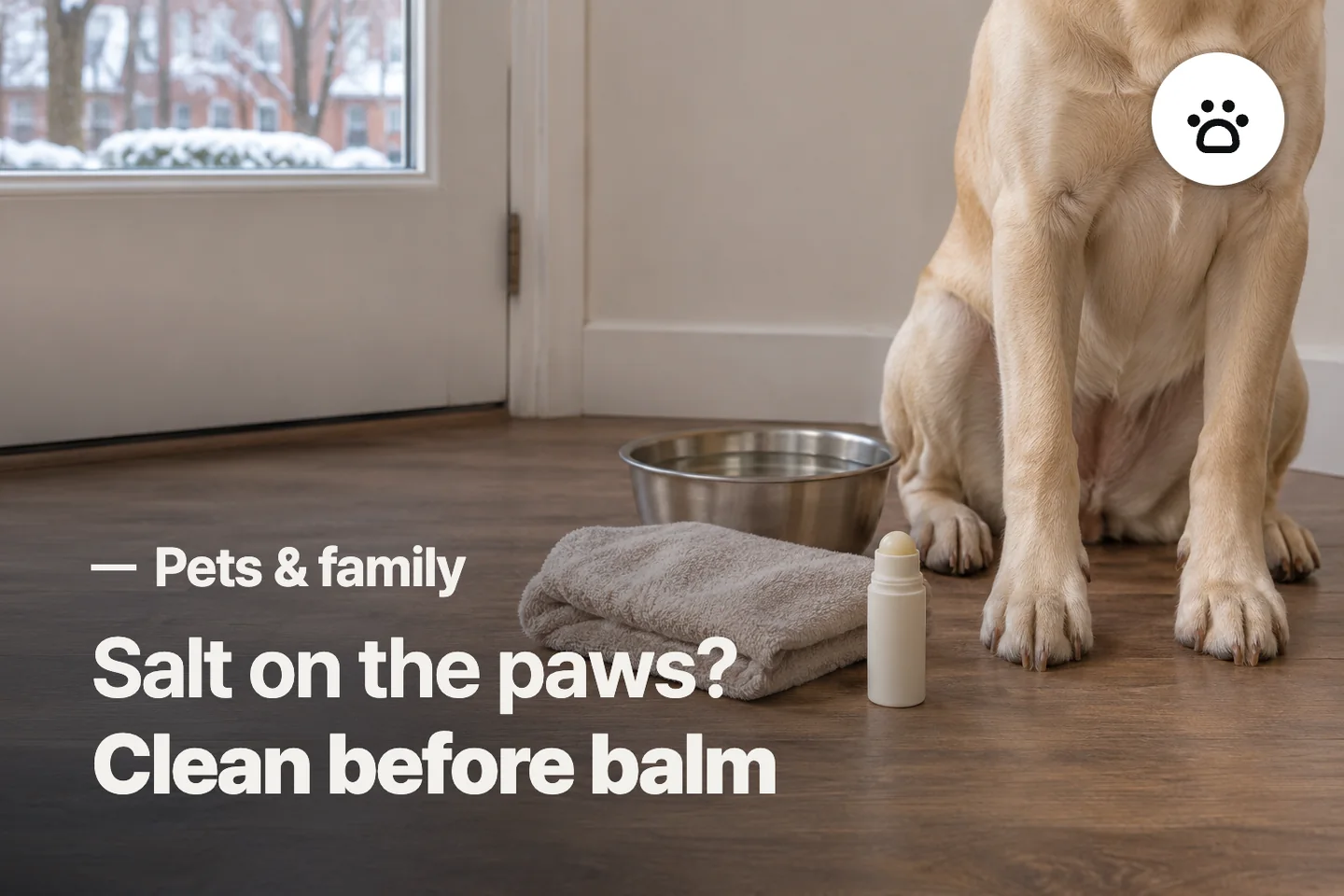
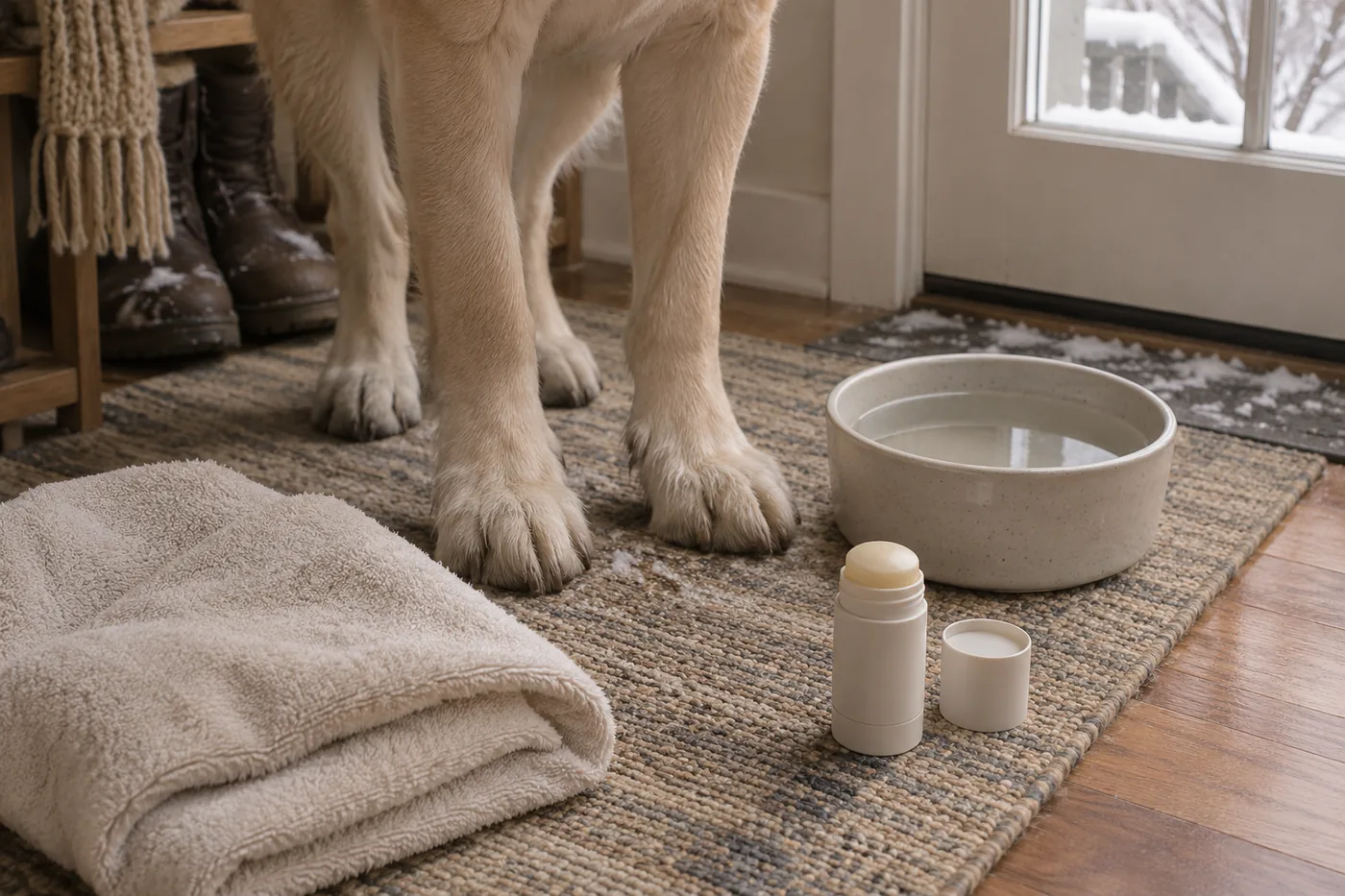 The entryway is where sidewalk residue needs attention, before the dog settles indoors.
My choice would be Muttly Roll-On Paw Balm for optional care of dry, intact pads, not the first response to a sore foot. The useful order is check, wash, dry, then decide whether a protectant belongs in the routine; ASPCA recommends post-walk washing and checking for cracks or redness.
How we chose
Reviewed Muttly’s official formula, applicator, and displayed prices alongside ASPCA winter guidance and VCA foot-pad first aid. The three checks were signs requiring veterinary care, removal of sidewalk residue, and whether a roll-on protectant adds something useful without replacing either step.
Toneandroom picks
Best dog paw balm for an entryway routine: Top 1
Optional roll-on care for suitable dry, intact pads in a winter entryway routine
Muttly Roll-On Paw Balm
Official maker page displays $10.49 alongside $20.49, checked 2026-11-24; no separately identified MSRP. Price varies; check Amazon. Seller stock, shipping, and tax not verified.
A roll-on format is convenient to keep with the leash, once residue removal and assessment of any injury have been addressed. The maker does not establish a measured salt-barrier duration.
- Format
- Roll-on
- Base
- Waxes and oils
- You prefer a roller to a scoop jar
- Your vet supports routine pad care
- Painful cracks need veterinary advice
- No timed salt-barrier result listed
What we considered
Pad condition
Is this routine dryness or a possible injury?
VCA links limping and licking with possible pad injuries. That makes the foot’s condition more important than choosing a moisturizing formula.
Residue removal
Can you wash and dry paws as soon as you get indoors?
ASPCA recommends cleaning feet and the stomach after winter walks. A balm earns no credit for replacing that washing step.
Useful format
Does the applicator suit the care your dog actually needs?
Muttly offers a roller and lists waxes and oils in its formula. That supports choosing it for application convenience, not for a quantified salt-resistance claim.
Part 1Check A: Look before reaching for dog paw balm
Entry check: Look at the pad surface and between the toes in good light. Because VCA Animal Hospitals identifies licking and limping as possible signs of torn, punctured, or burned pads, neither symptom tells you that this is simply dryness.
Look for trapped snow, grit, an open split, bleeding, or a dog reluctant to bear weight. That means the first useful observation is what the foot looks like and how your dog stands, not how quickly a moisturizer disappears into the pad.
Stop point: VCA recommends veterinary attention even for minor pad injuries and specifically calls for a vet when pads are discolored or underlying tissue is exposed. So an injured foot belongs with veterinary advice rather than an extra coating and the usual walk.
For bleeding, VCA advises pressure with a clean towel; bleeding that cannot be stopped within 10–15 minutes is an emergency requiring an emergency veterinary clinic. That is an escalation threshold, not a reason to delay seeking help for a serious injury, and VCA says deeply lodged debris should be left for a veterinarian.
An injured pad needs assessment, not a different texture of balm.
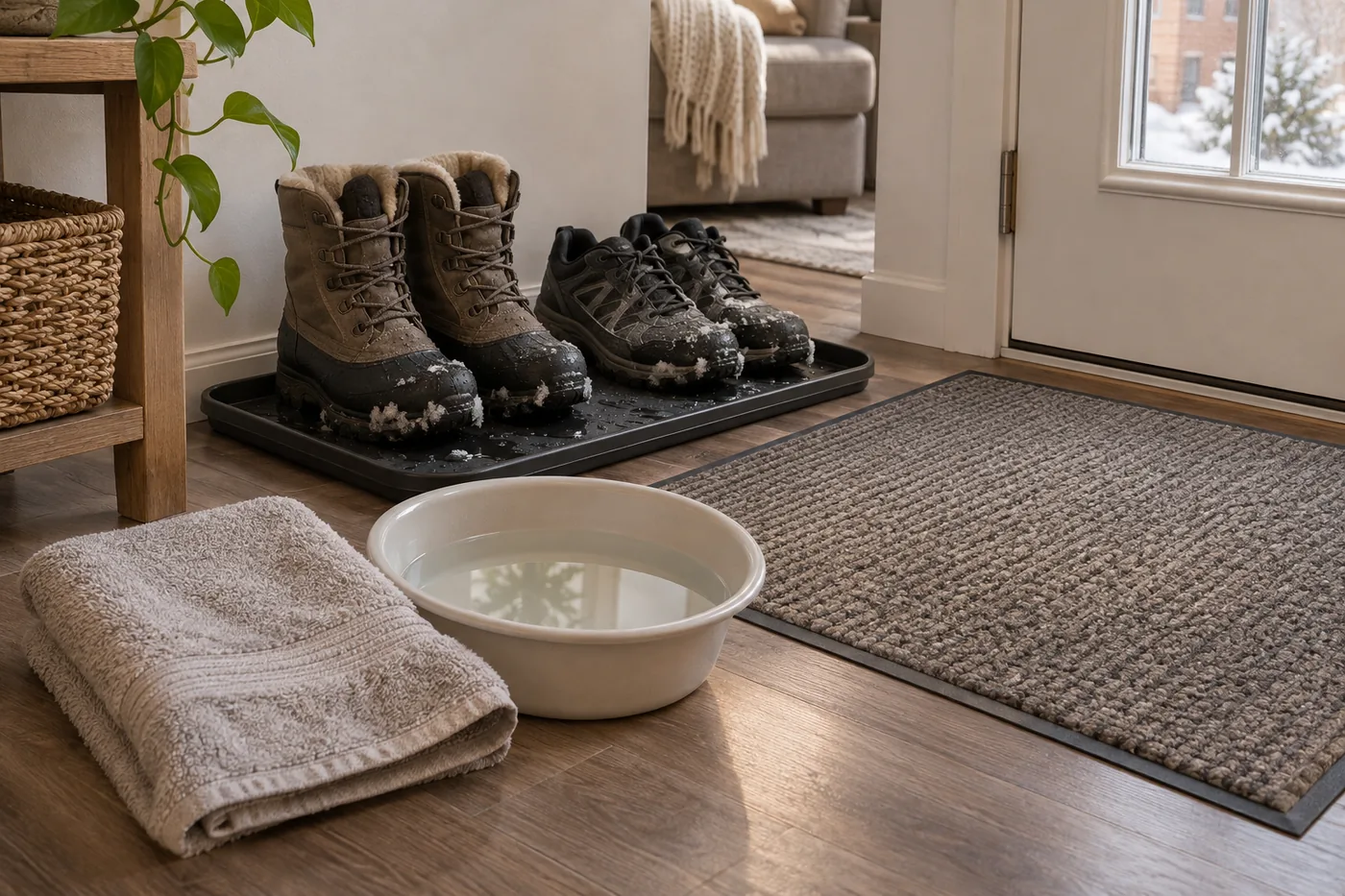 Keep the washing supplies where the leash comes off, rather than across the living room.
Part 2Check B: Remove residue, then look again
Cleaning step: ASPCA recommends washing and drying the feet and stomach after each winter walk to remove ice, salt, and chemicals. So the towel belongs beside the water: wiping the bottoms of the pads alone skips the spaces where snow and grit can collect.
That same setup earns its place after a car outing. Because a trip from the parking space to the building still crosses treated pavement, the useful question is whether the paws carry residue, not whether the outing felt long enough to count as a walk.
For feet that become sore after a winter stroll, VCA describes soaking in room-temperature water. But a known corrosive exposure needs a different response: VCA advises running water for several minutes, mild soap, and thorough rinsing, with gloves for the person helping; suspected burns also need veterinary advice.
After-cleaning check: Compare what remains with what you saw at the door: visible crystals, redness, licking, and walking comfort. This is an observation to make now, not a promise that washing will resolve an injury.
ASPCA warns that ice-melt chemicals can be dangerous when licked from bare paws. So if you suspect ingestion of a potential toxin, contact your veterinarian or ASPCA Poison Control immediately at (888) 426-4435, rather than waiting to see whether a lick-safe balm changes anything.
Part 3Check C: Where the Muttly roller fits
Muttly Roll-On Paw Balm has a roll-on applicator, which is why I would consider it for a doorway routine instead of a jar you scoop from. The maker lists carnauba wax, candelilla wax, white and yellow beeswax, and white and vegetable oils; that describes the formula, not a measured barrier against your building’s ice melt.
On November 24, 2026, Muttly’s official page displayed $10.49 alongside $20.49 and a Buy on Amazon button. But the page does not separately identify an MSRP, and those figures are manufacturer-page displays rather than a verified Amazon checkout total. Price varies; check Amazon, including the seller, shipping, and tax.
Muttly describes the balm as natural, non-toxic, and lick-safe. Those are manufacturer claims about its formula, so they do not make contaminated paws safe to lick or establish that it treats a painful crack.
The useful shopping distinction is between application convenience and demonstrated protection. Because the reviewed maker page supplies no measured salt-barrier duration or Lab-specific application amount, follow the delivered label and ask your veterinarian about suitability instead of calculating a dose or a protected walking time.
Part 4Check D: Change the next outing, not just the product
Exposure check: VCA advises avoiding icy or salt-covered sidewalks and roads. So if the apartment walkway is heavily treated, ask management what it uses and look for a less-treated route rather than expecting the roller to compensate for the same exposure.
ASPCA recommends vet-approved paw protectants before going outside and says booties offer more coverage, including helping keep salt from lodging between toes. That means paw wax for dogs and booties do different jobs; a coating is not the same as covering the foot.
Swipe sideways to see the full table →
| What you notice | Next step supported by the sources | Where balm fits |
|---|---|---|
| Snow or salt after a walk | ASPCA: wash, dry, and check feet | Not a replacement for residue removal |
| Dry, intact pad surface | Discuss a suitable protectant with your vet | Optional routine care |
| Limping, injury, or exposed tissue | VCA: seek veterinary attention | Not an injury treatment |
Next-outing check: Note whether licking, redness, or altered walking remains before heading out again. Because VCA says walking on an injured pad can reopen a wound and delay healing, a smoother-looking surface is not enough to resume the normal route.
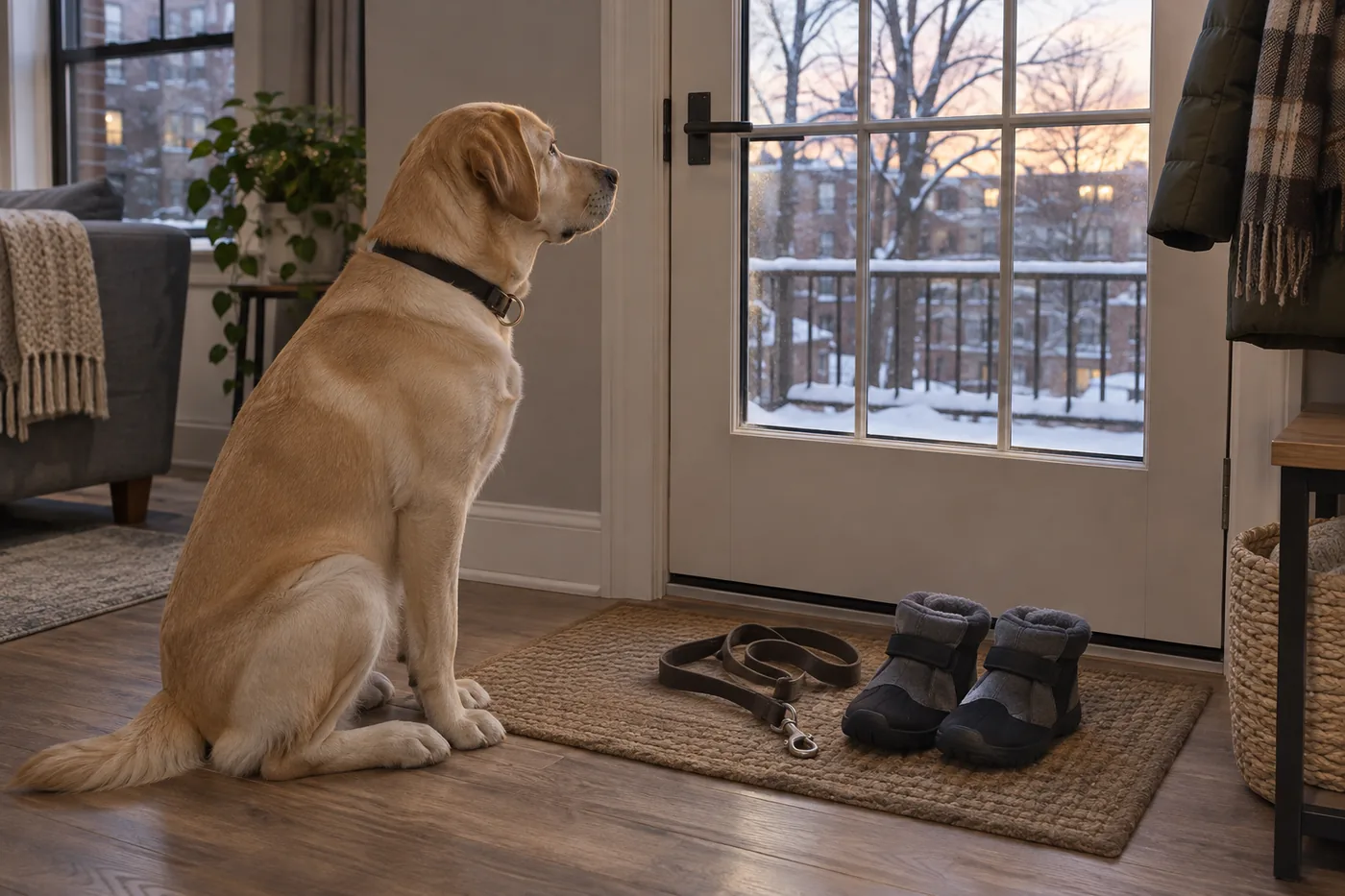 Plan the next route and the protection needed before returning to treated pavement.
A dog paw moisturizer may have a place in winter care, but it cannot answer the question of why a foot hurts. So keep the decision tied to the pad and the route: clean away residue, seek help for injury, and use a suitable protectant only for the job it can actually do.
Sources and selection: Muttly’s official product page, ASPCA winter guidance, and VCA foot-pad first aid informed this routine. The checks were injury signs, residue removal, and the applicator’s limits. Last checked: November 24, 2026; Amazon price and checkout stock were not verified.
In one sentence
Remove sidewalk residue and check for injury before adding a paw protectant.
Muttly Roll-On Paw Balm
Check price on AmazonFrequently asked questions
Is paw wax for dogs a substitute for winter booties?
No. ASPCA says booties provide more coverage and can help keep salt from lodging between toes. A vet-approved protectant and footwear address exposure differently, and neither replaces washing and drying after walks.
Can a dog paw moisturizer fix a painful split?
A painful split needs assessment rather than a cosmetic promise. VCA recommends veterinary attention for pad injuries and notes that walking can reopen a wound and delay healing.
Does natural paw balm for dogs make salted paws safe to lick?
No. Muttly’s natural and lick-safe descriptions concern its formula. ASPCA warns about ice-melt chemicals licked from paws, so removing the residue remains necessary.
How much Muttly balm should go on a Lab’s paws?
A Lab-specific application amount is not provided on the reviewed manufacturer page. Follow the delivered label and your veterinarian’s advice rather than deriving an amount from the dog’s weight.
Sources
- Muttly Roll-On Paw Balm · 2026-11-24
Official page displays $10.49 alongside $20.49 without separately identifying an MSRP. Confirms roll-on format and named waxes and oils; no measured salt-barrier duration or Lab-specific application amount found.
- ASPCA cold-weather safety guidance · 2026-11-24
ASPCA Poison Control number: (888) 426-4435. Supports washing and drying after each walk, inspecting cracks and redness, vet-approved protectants, and booties for more coverage; no numerical walking-time limit used.
- VCA Animal Hospitals foot-pad first aid · 2026-11-24
Bleeding that cannot be stopped within 10–15 minutes is an emergency. Supports veterinary assessment of injuries, room-temperature water for sore pads, corrosive-exposure rinsing, and avoidance of salt-covered routes.