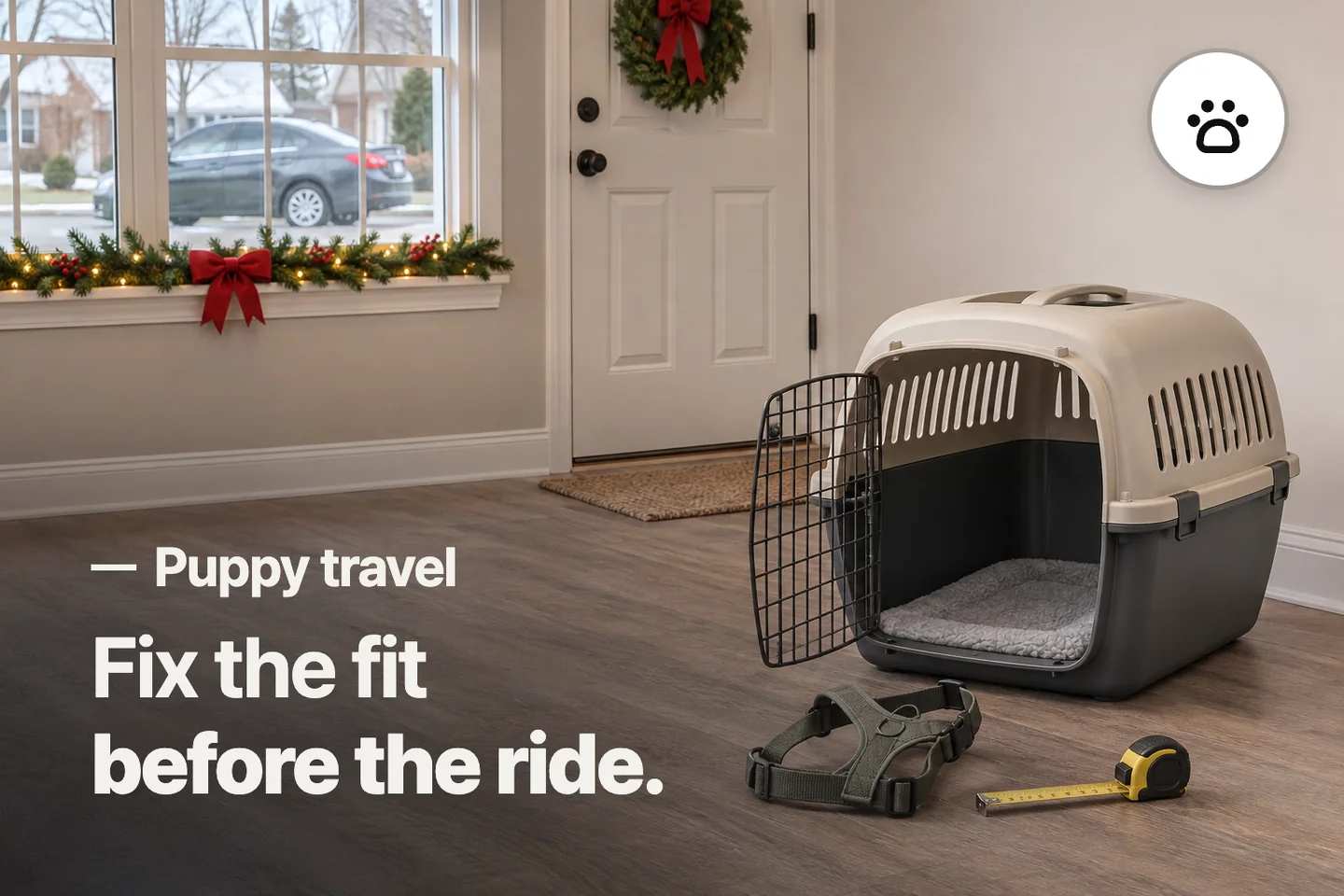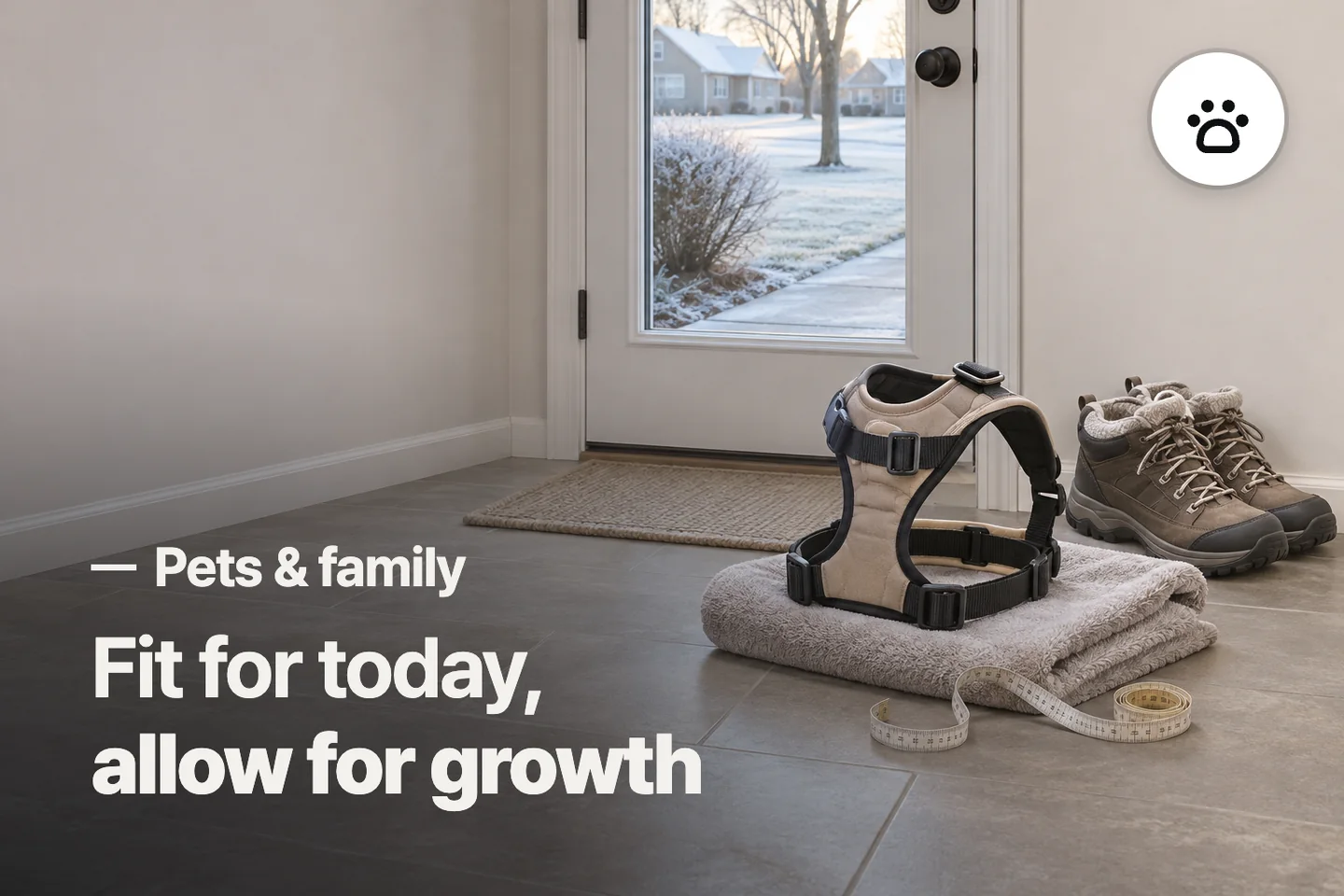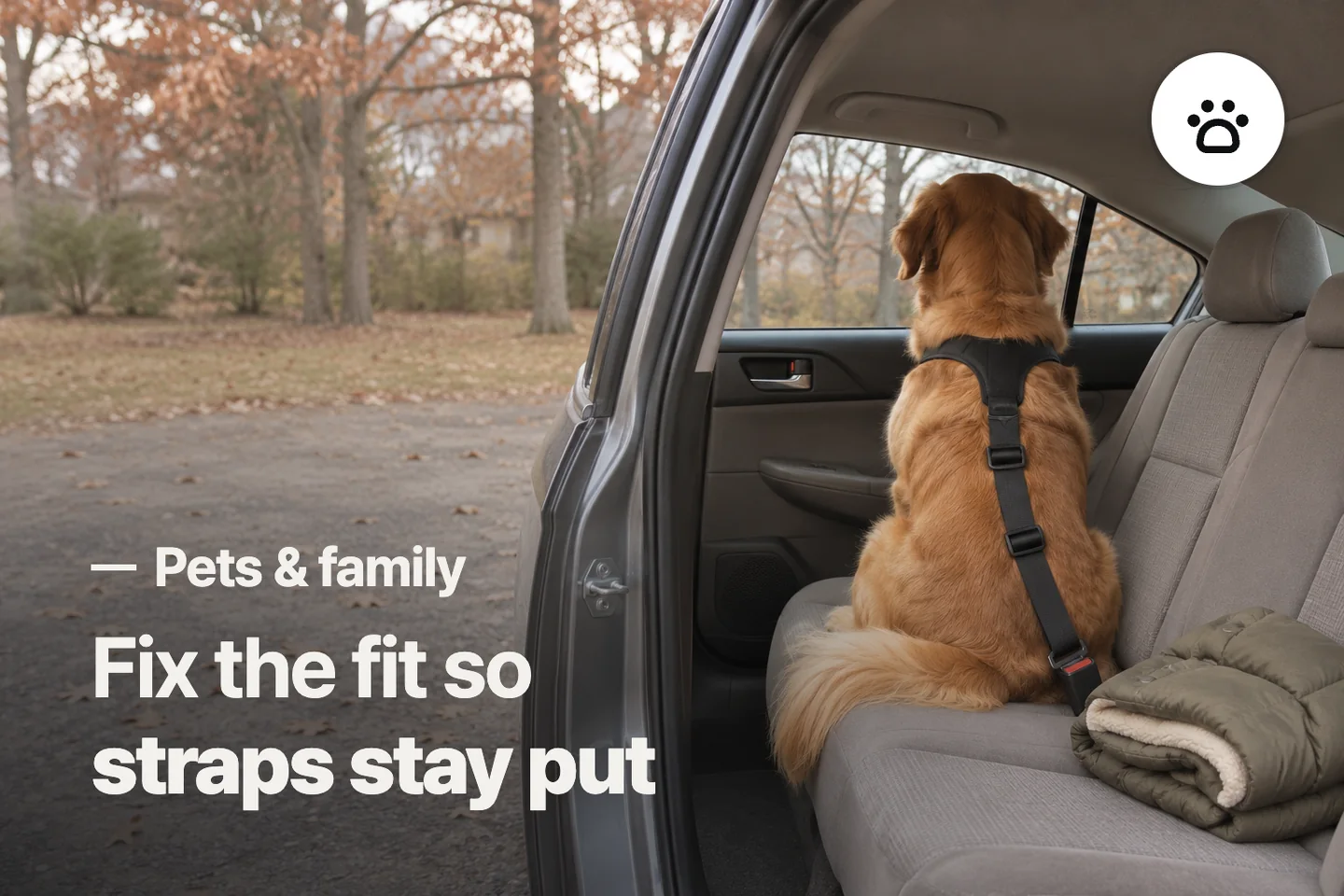
Is a tighter dog car harness really the answer when your dog slides across the back seat? With coats and luggage waiting by the door for a Thanksgiving drive, it is tempting to shorten every strap. But a rotating chest panel, dangling adjustment tails, and a dog losing footing are different problems.
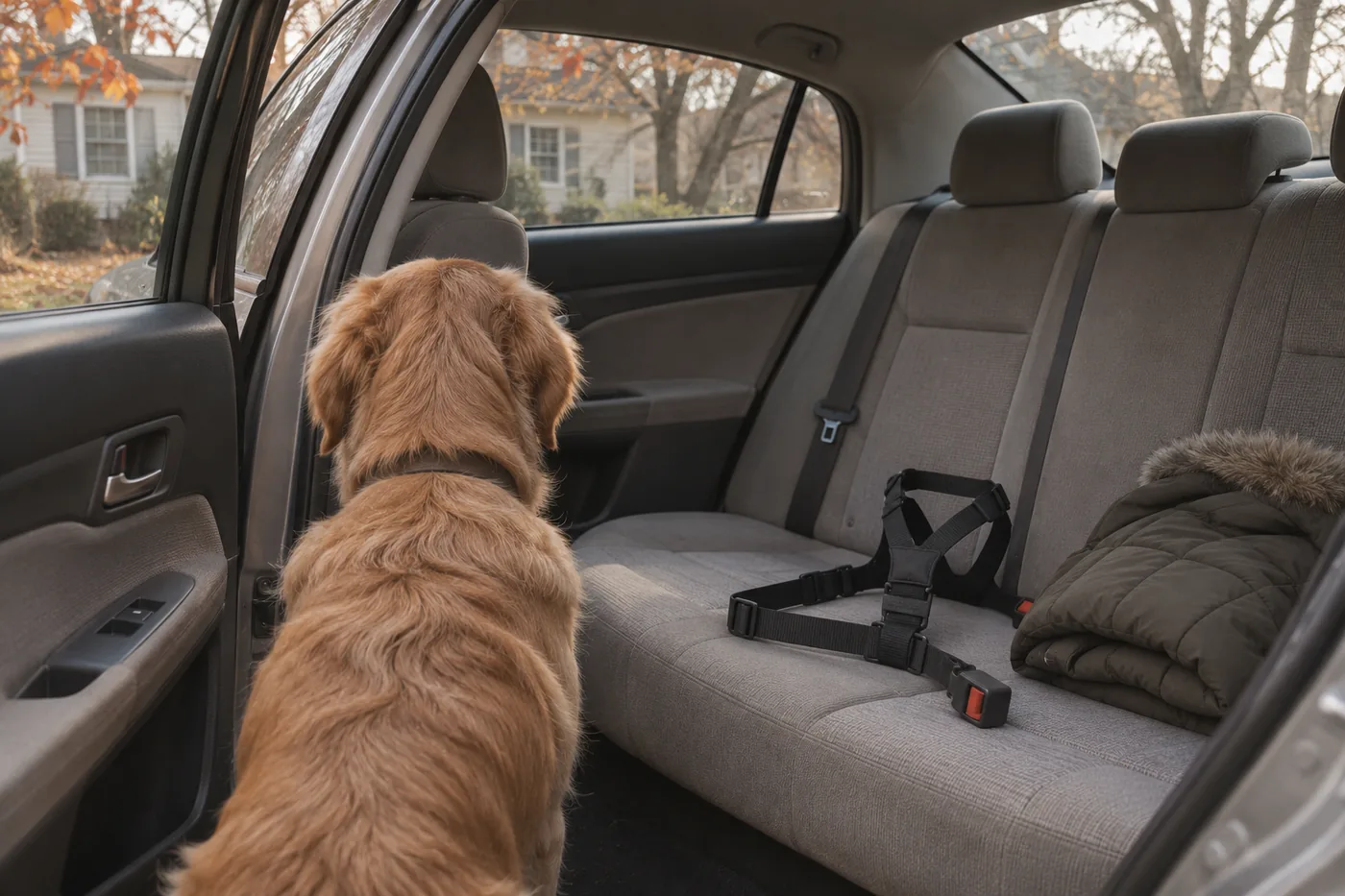 Start in the parked car, before the holiday luggage fills the back seat.
I would keep the Sleepypod Clickit Range on the shortlist only if its rib-cage size and documented belt connection fit your dog and car. Adjust the standing fit first, store the loose tails, then check the vehicle belt path; buying another tether is not the first fix. Sleepypod publishes both a sizing chart and illustrated instructions, so there is something concrete to check.
The log below separates what to note before an adjustment from what to check afterward. These are owner setup checks, not a record of completed road trials.
How we chose
Reviewed Sleepypod's sizing chart and illustrated fitting instructions alongside the Center for Pet Safety certification entry. The three checks are rib-cage fit, loose-webbing storage, and the documented rear-seat belt connection; an older price is dated separately because the sales pages were unavailable.
Toneandroom picks
Best dog car harness for a checked rear-seat fit: Top 1
An existing restraint to adjust, or a replacement only after chest sizing and vehicle compatibility are confirmed
Sleepypod Clickit Range
Sleepypod collection starting price: from $126.49 USD, checked 2026-11-19. Sales pages unavailable on 2026-11-24; current size/version total needs checking.
Its published rib-cage chart and illustrated belt installation make fit and connection checkable before replacing or adding straps.
- Weight
- 18–110 lb
- Regular M
- 24.5–29 in
- Long M
- 26–29.5 in
- Connection
- Vehicle belt
- Your dog's rib cage matches the chart
- Your rear belt supports the instructions
- Coat compatibility needs maker approval
- Confirm belt locking in your car manual
What we considered
Chest fit
Does the measured rib cage match this exact version?
Sleepypod separates Regular and Long rib-cage ranges. A matching weight recommendation is only a starting point, so the size must also work with the maker's standing adjustment.
Loose webbing
Are the hanging straps adjustment tails or belt loops?
Sleepypod provides a way to roll and secure excess adjustment webbing. That addresses dangling tails without confusing them with the loops needed for the vehicle connection.
Belt connection
Can this rear seat follow the documented installation?
Sleepypod specifies direct vehicle-belt routing and a locking procedure. The vehicle manual must support that setup; a generic extension is not a substitute for resolving a mismatch.
Part 1Check A: Size the dog car harness while standing
Before adjustment: Watch what moves when the dog changes position in the parked car. If the chest panel turns sideways, record that separately from the dog sliding while the panel stays centered. That distinction tells you whether to revisit fit or investigate the seat setup with Sleepypod.
Sleepypod lists an 18–110 lb weight recommendation for the Range, but rib-cage measurement determines size. So measure around the rib cage and compare with the exact Regular or Long chart rather than copying the size from a walking harness.
Swipe sideways to see the full table →
| Rib-cage fit | Range Regular | Range Long |
|---|---|---|
| Medium | 24.5–29 in | 26–29.5 in |
| Large | 29.5–33 in | 30–32.5 in |
These are selected entries from Sleepypod's chart, not interchangeable versions. If your measurement falls between the listed ranges, ask Sleepypod about fit before ordering; a weight match does not settle that question.
After adjustment: Sleepypod's instruction sheet places the logo at the chest center and specifies a tight fit with two fingers laid flat under the buckles while the dog stands. But the same sheet says the straps can appear loose when the dog lies down. Do not chase that lying-down looseness by repeatedly tightening the standing fit.
Part 2Check B: Separate loose tails from restraint loops
Before tidying: Identify which webbing is hanging down. The adjustment tails are not the rear loops that receive the car belt, so they need different treatment. Sleepypod's instructions show rolling the excess adjustment webbing and securing it with the supplied hook-and-loop fastener.
Use the maker's illustrated tightening and loosening sequence if the adjuster will not move as expected. That sequence matters because tugging a different strap can leave the fit unchanged while moving loose material somewhere else. Follow the diagram rather than forcing the hardware.
After tidying: Check whether the rolled tails stay out of the dog's paw space and whether the chest panel remains centered when the dog sits. If the panel shifts, go back to the standing adjustment; neat strap ends do not correct the wrong size.
Loose adjustment tails need storage; restraint loops need the maker's belt routing.
Part 3Check C: Trace the rear-seat belt connection
Before buckling: Open Sleepypod's installation diagram alongside the vehicle manual. Sleepypod directs owners to pass the vehicle belt through the loops on the harness back, let the dog lie down, and then buckle. So confirm that the chosen rear seating position allows the documented belt path without twists or a buried buckle.
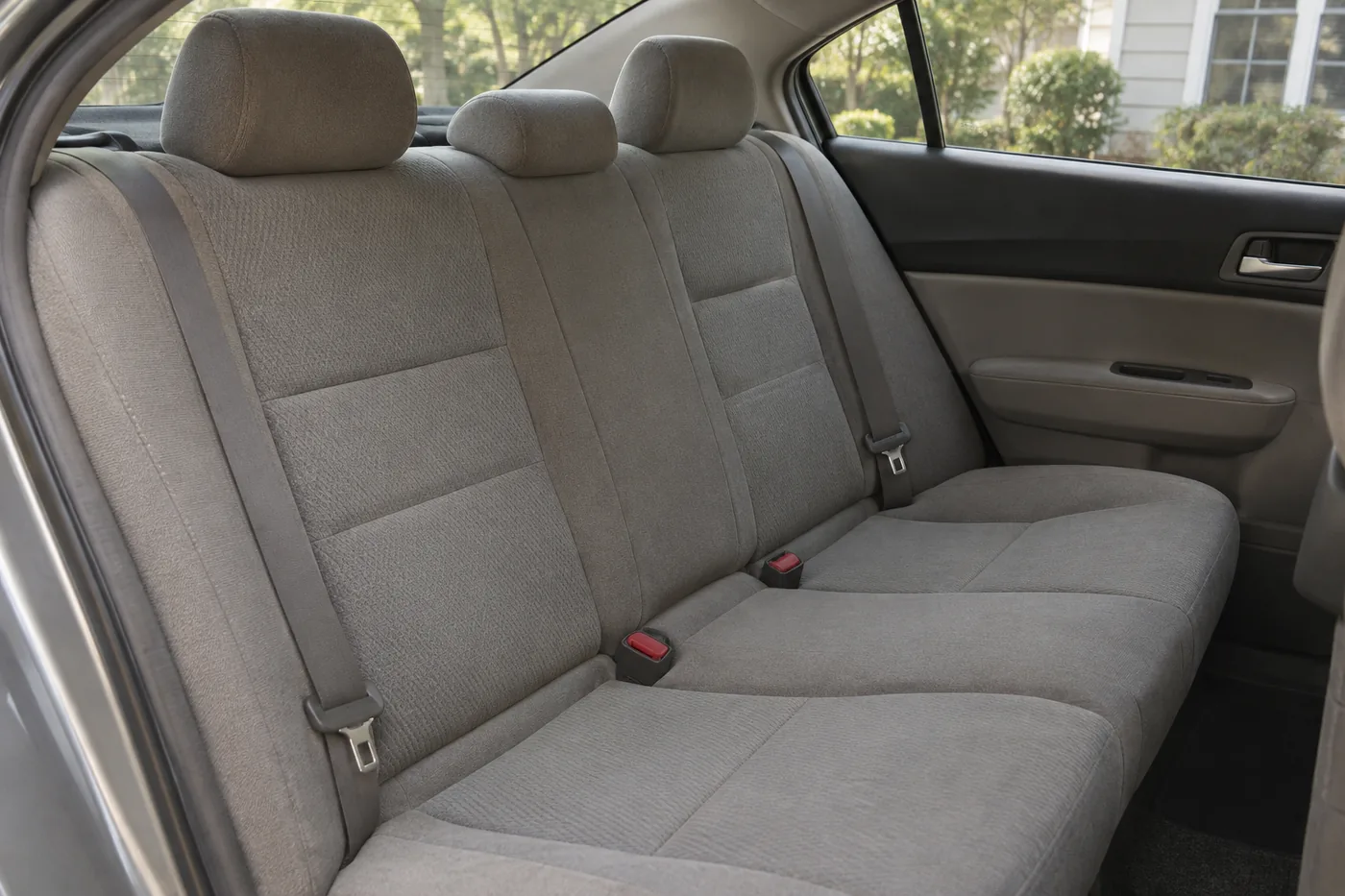 Keep the belt path and buckle visible while checking the rear seat.
Sleepypod next describes pulling the belt out and letting it retract to activate its ratcheting lock. But your vehicle manual needs to confirm how that seating position's belt locks; if the procedure does not match, ask the vehicle maker and Sleepypod before traveling. The Range sheet also references Buckle Shield and S-Clip accessories with separate instructions, not homemade substitutes.
After buckling: Sleepypod says the dog should be able to sit or lie down comfortably. Check those positions while parked, looking for a twisted belt or a paw inside a loop. If the vest moves off center, return to fit rather than shortening everything.
The Center for Pet Safety lists the Clickit Range as passing its certification testing with a 110 lb test dog. But that entry does not establish an improvised setup with a generic buckle-in tether, belt extension, or clothing combination. I would follow the documented connection instead of adding another adjustable strap to solve sliding.
Part 4Check D: Keep the winter coat question separate
Before adding clothing: The reviewed Sleepypod instructions do not establish an approved coat-under-harness arrangement or a coat-thickness allowance. So a measurement taken over a bulky winter coat cannot confirm that the combined setup matches the documented fit.
For the setup described here, fit the harness without the coat underneath and keep the coat for outdoor stops. If your dog needs clothing in the car, ask Sleepypod about the exact garment and arrangement before putting it under the restraint. Then repeat the standing check after any approved clothing change.
Before opening the door: Have the walking leash ready and follow Sleepypod's walking attachment instructions before removing the vehicle belt. Those instructions identify leash connections, but they do not document the belt loops as full-body lifting handles. So if loading is difficult, ask your veterinarian about suitable assistance rather than hoisting the dog by restraint webbing.
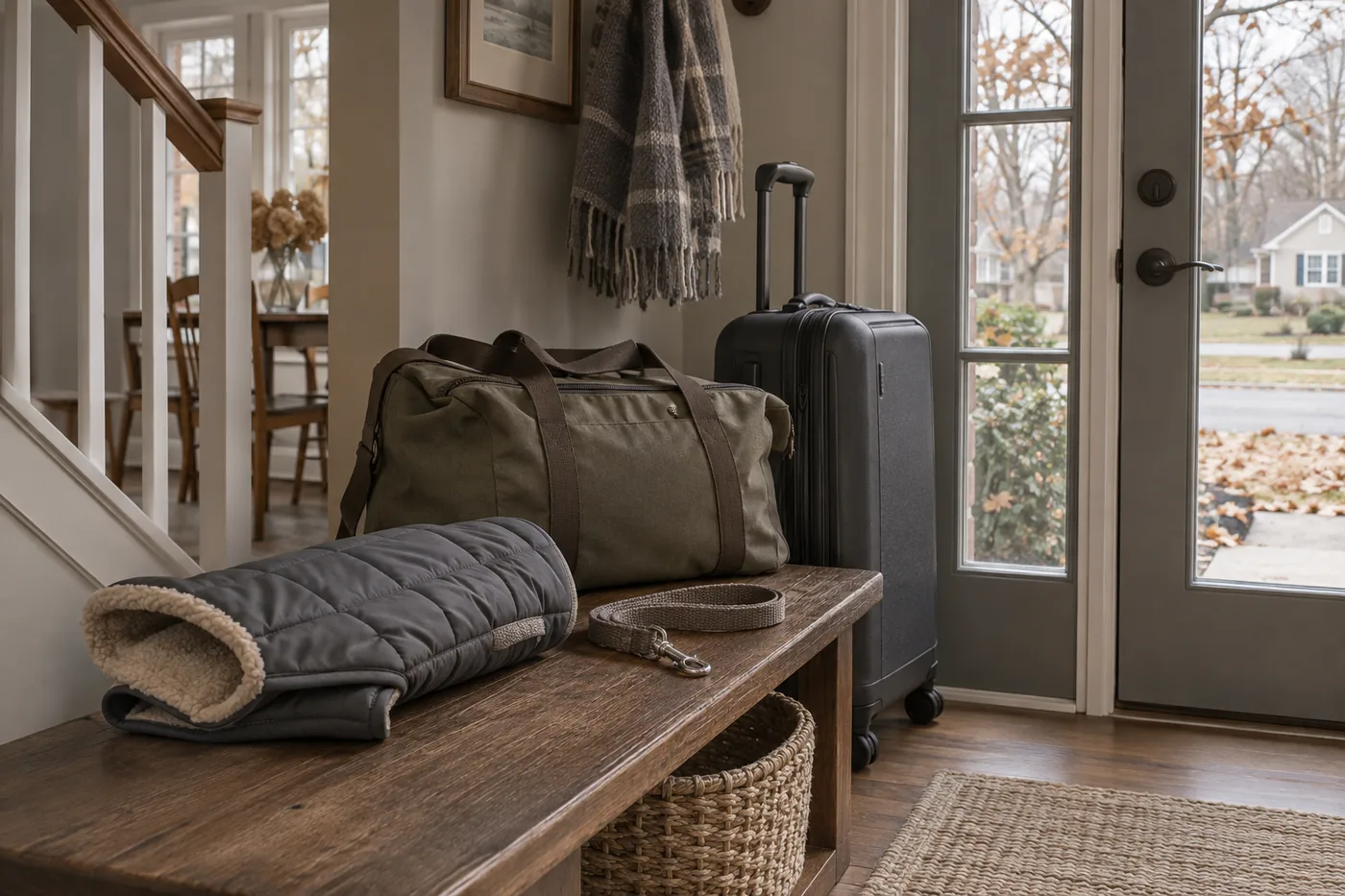 Keep the coat and walking leash ready for the change from car travel to an outdoor stop.
Part 5Check E: Compare notes after a short ride
Before departure: Sleepypod recommends familiarizing the dog with the harness during playtime, then taking short rides before longer trips. So use a familiar local outing to practice the routine, not hard braking as an improvised safety test.
After parking: Compare chest-panel position, stored tails, belt routing, and the dog's ability to settle with your starting notes. If the panel stays centered but sliding continues, more tightening is not the answer; ask Sleepypod about the seat surface and vehicle arrangement. Persistent distress or difficulty settling calls for veterinary advice before the long drive.
If replacement is necessary, the last accessible Sleepypod collection listing showed the Range from $126.49 USD on November 19, 2026. That is an older starting price, not today's selected-size quote: the product and collection pages could not be reopened successfully on November 24, 2026. Check the required version's current total and return terms before ordering.
Method: Sleepypod's sizing chart and illustrated instructions were compared with the Center for Pet Safety certification entry, focusing on chest fit, stored webbing, and the vehicle connection. Sizing and certification were rechecked November 24, 2026; instruction details and the unavailable price listing retain their November 19, 2026 check date.
In one sentence
Check standing chest fit, store adjustment tails, and follow the documented vehicle belt path before adding anything.
Sleepypod Clickit Range
Frequently asked questions
How tight should the harness be when my dog lies down?
Sleepypod sets fit while the dog stands, with two fingers laid flat under the buckles. Its instructions allow the straps to appear loose when lying down, so do not tighten solely to remove that appearance.
Can I replace the car belt with a generic dog seat belt tether?
Sleepypod documents the Range using the vehicle belt through its rear loops. Ask the maker before changing that arrangement; the Center for Pet Safety entry does not establish an improvised tether setup.
Can the Range go over a dog winter coat?
The reviewed Sleepypod instructions do not establish coat compatibility or an allowed thickness. Keep the coat separate for the described installation, or ask Sleepypod to approve the exact garment and arrangement before travel.
Why is my dog still sliding after the harness is adjusted?
A centered harness and a dog losing footing are different observations. If fit and routing follow Sleepypod's instructions, ask the maker about the seat surface and vehicle setup rather than overtightening; persistent distress needs veterinary advice.
Sources
- Sleepypod Clickit Range · 2026-11-19
Original check recorded $126.49 USD and up to 110 lb. Reopen attempt on 2026-11-24 returned local_rate_limited; original check date retained.
- Sleepypod car harness collection · 2026-11-19
Original collection listing showed a starting price of $126.49 USD. Unavailable on the 2026-11-24 reopen attempt; not a current selected-size quote.
- Sleepypod sizing chart · 2026-11-24
Range weight recommendation 18–110 lb; Regular Medium 24.5–29 in and Large 29.5–33 in; Long Medium 26–29.5 in and Large 30–32.5 in.
- Sleepypod Range illustrated instructions · 2026-11-19
Original review specifies two fingers laid flat under buckles while standing, rolled adjustment tails, rear-loop belt routing and locking, and short-ride acclimation. PDF downloaded again 2026-11-24, but text extraction was unavailable; original content-check date retained.
- Center for Pet Safety Clickit Range certification · 2026-11-24
Lists passed testing, a 110 lb test dog, November 2024 testing, and protocol CPS-001-014.01. Does not establish an improvised tether or clothing arrangement.