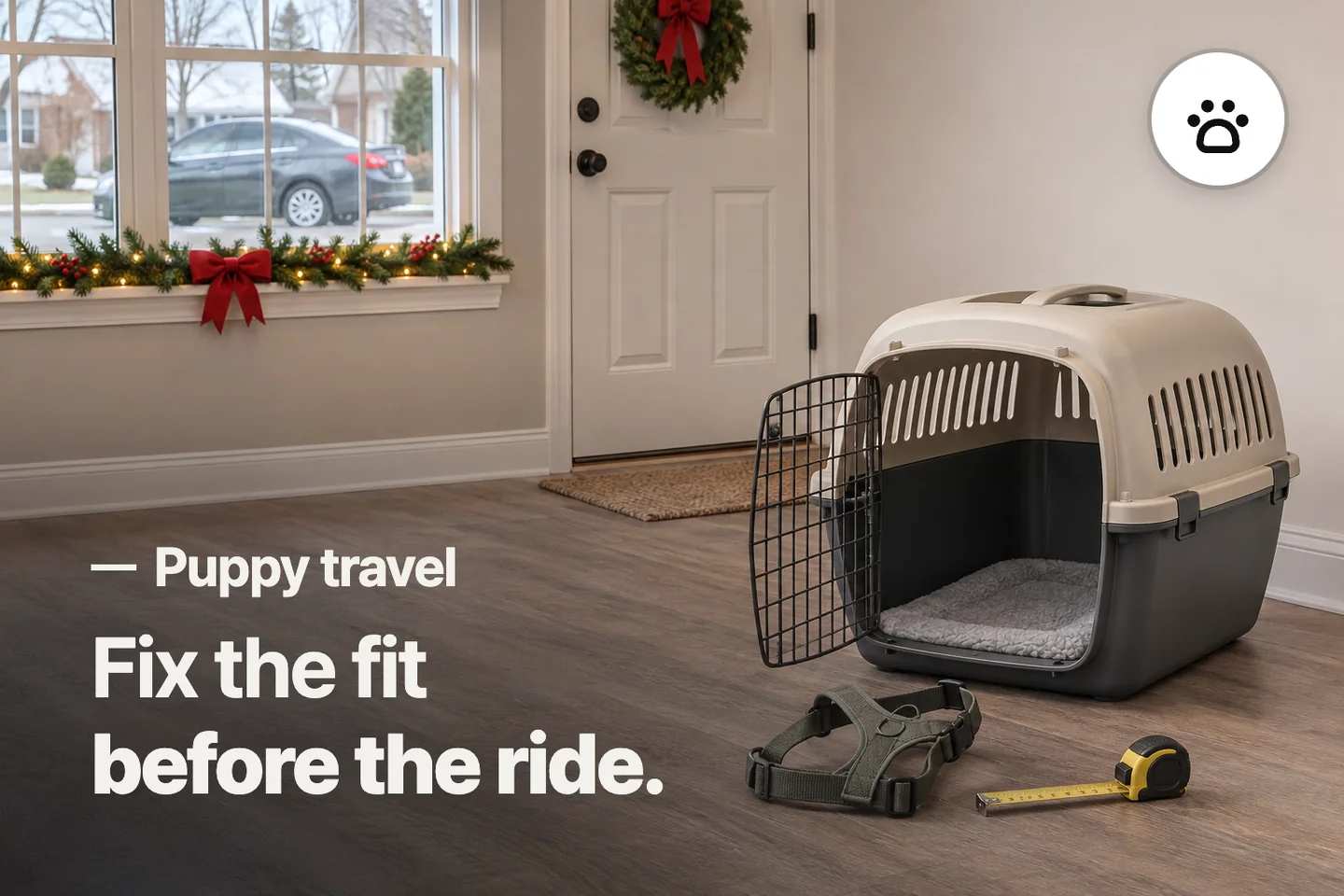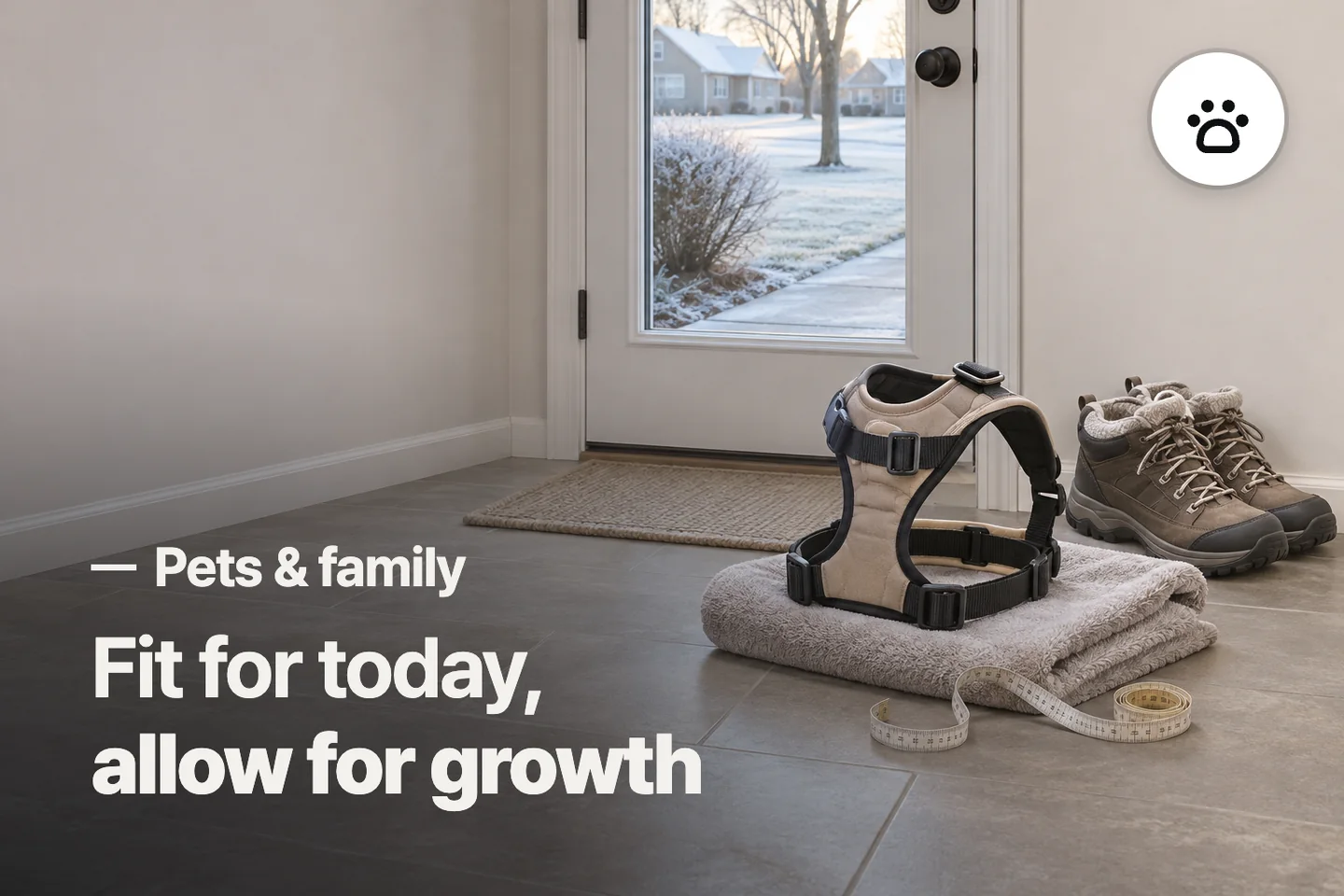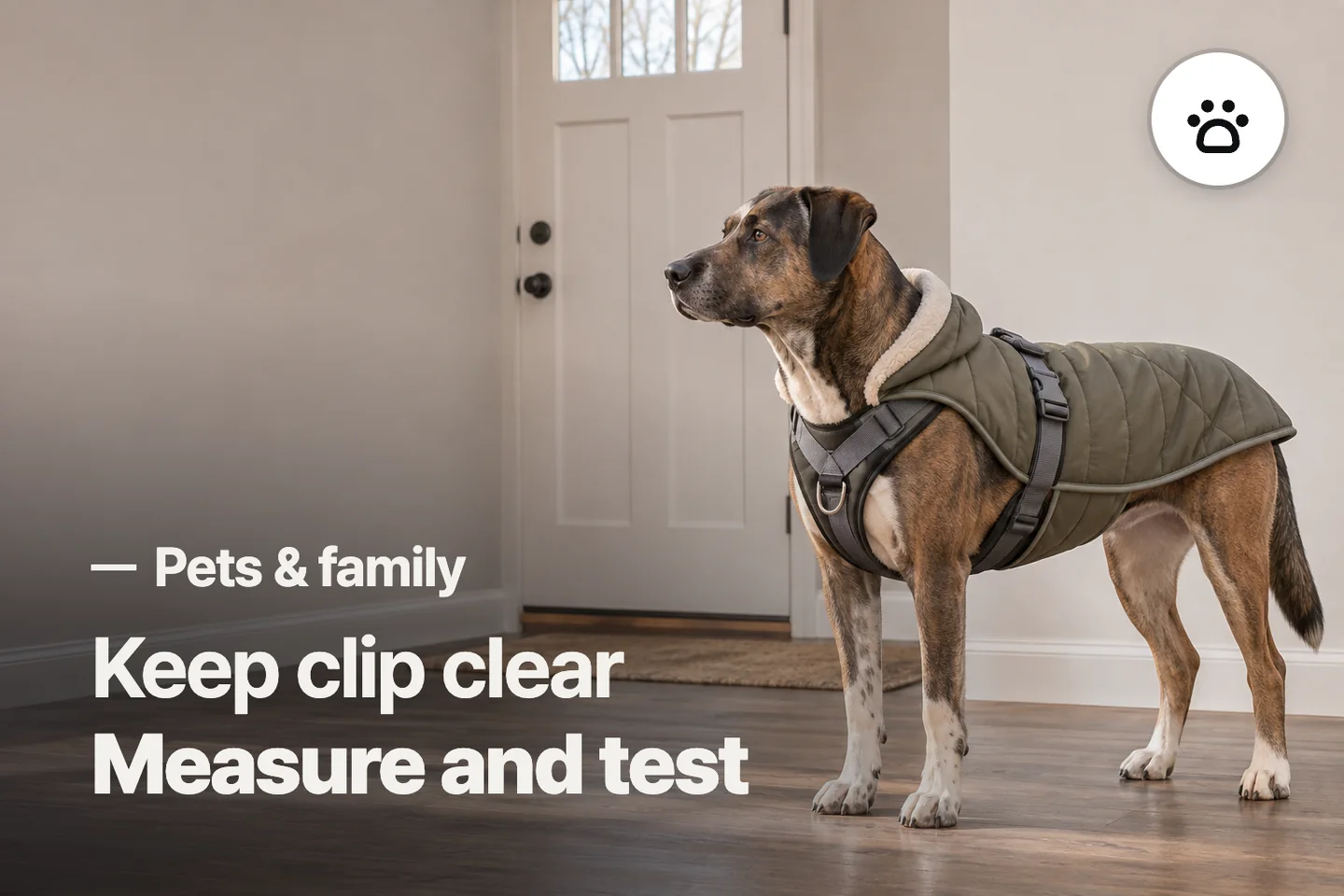
Will the leash still reach the front ring once that coat is fastened? If you're standing in a pet-store aisle while your newly adopted rescue waits at home, start there. A dog winter coat needs to fit the dog and leave the existing walking setup usable; a size letter cannot establish either.
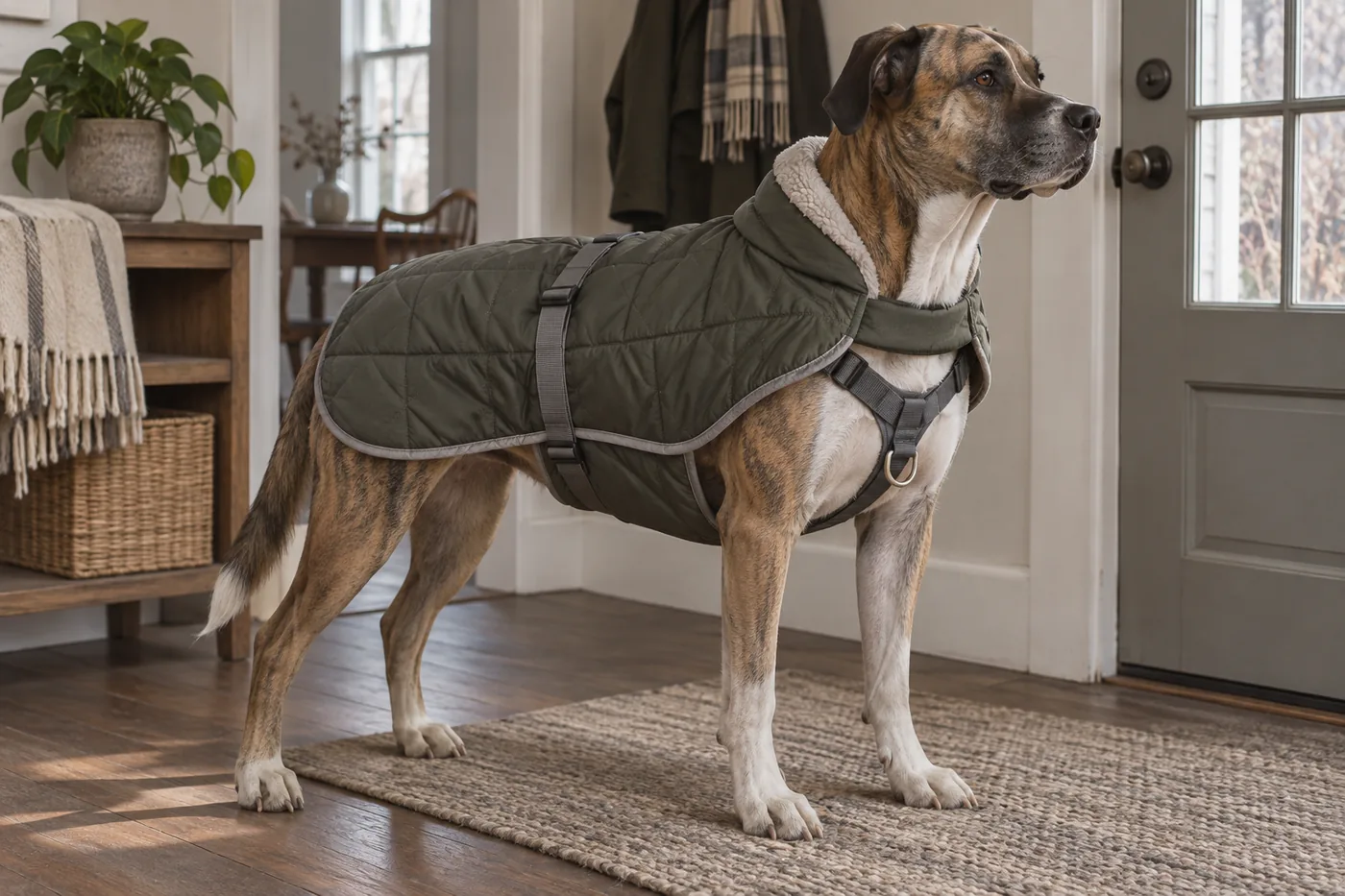 The fit check starts indoors, before the coat joins the walking setup.
I'd keep the correctly fitted harness and resolve the coat opening before buying anything else. PetSafe Easy Walk Harness and Kurgo Loft Dog Jacket illustrate the snag: PetSafe specifies a front-chest attachment, while Kurgo advertises a harness-access zipper without confirming this particular pairing. So neither name is a purchase recommendation here.
How we chose
PetSafe and Kurgo manufacturer descriptions and size charts were reviewed alongside veterinarian-authored PetMD guidance. The fit checks focus on chest measurements, access to the intended leash attachment, and changes during ordinary movement; they do not establish a tested coat-and-harness combination.
What we considered
Chest room
Does the coat chart match the dog's proportions?
Kurgo prioritizes neck and chest fit over back coverage. Bare-body dimensions and measurements over a harness need separate labels so the maker can clarify which its chart expects.
Clip access
Can the leash reach the intended ring?
PetSafe locates the Easy Walk attachment at the front chest. Kurgo's harness-access description does not confirm that exact connection, so the pairing needs manufacturer clarification.
Moving clearance
What changes when the dog turns or sits?
Compare the layered outfit with harness-only notes rather than relying on a standing photograph. A covered clip or displaced harness leaves the fit check unfinished.
Part 1Log A: Record the dog winter coat measurements
Begin with a blank fit log, not a guessed breed or weight bracket. Record neck, widest chest circumference, and back length at the landmarks shown by the coat manufacturer. Then keep a separate entry for the same dog wearing the adjusted harness, so the extra bulk doesn't get mistaken for a bare-body measurement.
The distinction matters because a larger measurement is not an automatic size-up instruction. Ask the coat maker whether its chart assumes a bare dog and whether the model allows an underneath harness. If handling is unfamiliar to your rescue, leave the entry unfinished and return when the dog is comfortable rather than rushing the tape.
Kurgo's Loft chart puts neck and chest fit ahead of back coverage. That means a longer jacket is not necessarily the answer to a deep chest; compare the actual dimensions instead.
Swipe sideways to see the full table →
| Maker's chart entry | Chest measurement | Other published dimensions |
|---|---|---|
| PetSafe Easy Walk, Large | Girth 27–40 in | Chest width 16–21 in; approximate weight 65–95 lb |
| Kurgo Loft, Medium | Chest 26–35 in | Neck 19 in; back 19¾ in |
| Kurgo Loft, Large | Chest 30–39 in | Neck 23 in; back 22½ in |
PetSafe labels its weight ranges approximate. So weight is a cross-check, not the fitting measurement, and chest width still needs its own entry for this harness.
Part 2Log B: Save the harness-only baseline
Start with the harness adjusted according to its manufacturer's instructions and no coat covering it. Note where its straps sit while the dog stands, turns, and sits, then take a front and side photo for comparison. Those pictures give the next log something concrete to refer back to.
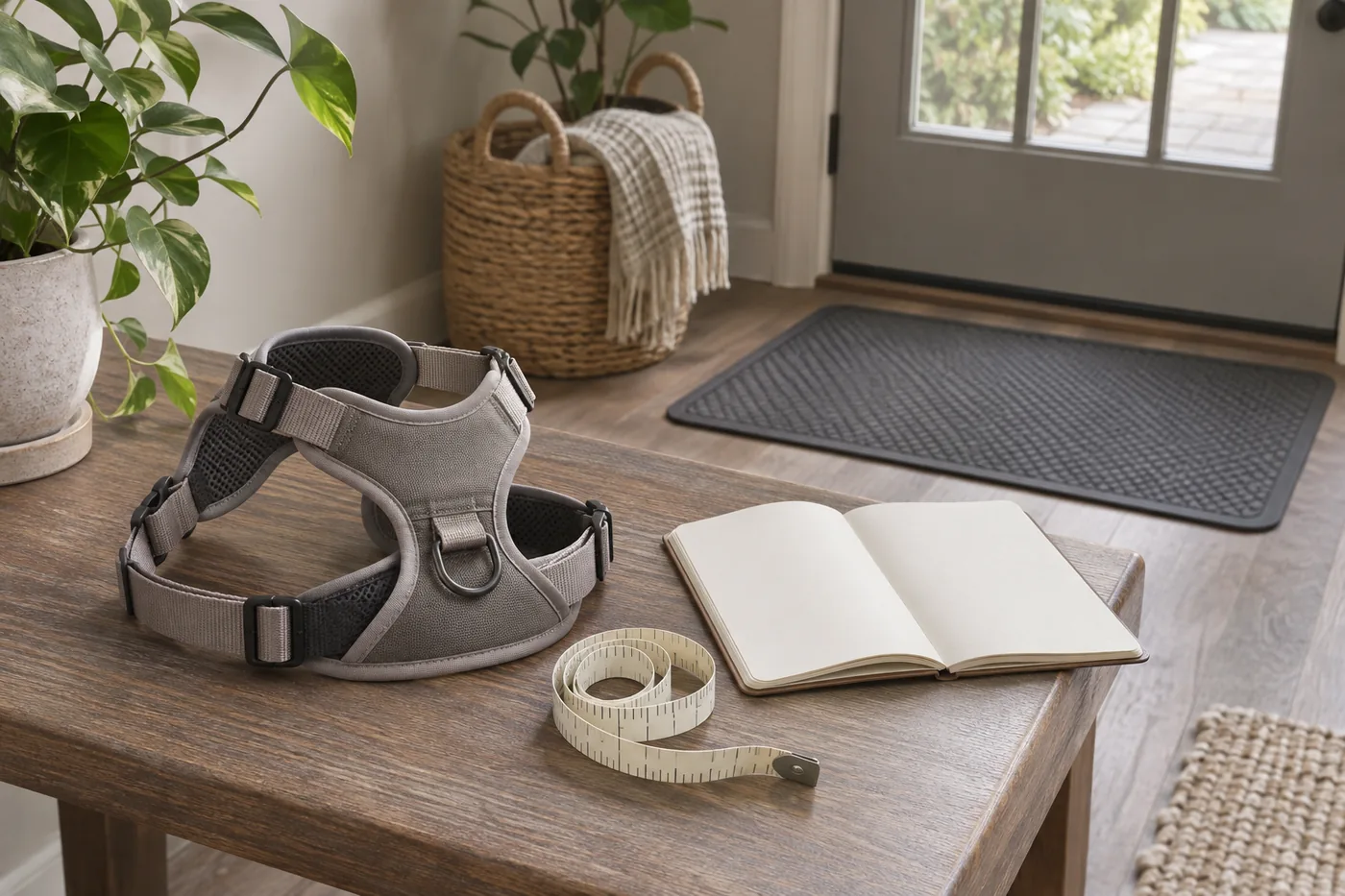 Keep the harness-only notes separate from the layered fit notes.
PetSafe lists four adjustment points on the Easy Walk and describes a martingale loop at the front chest. Because the leash connects there, the coat needs to leave that location usable, not merely offer a hole somewhere along the back. A different ring location is a different walking arrangement.
If the harness already shifts, leave the coat out of the next check. That keeps you from tightening clothing to disguise a harness problem, and gives PetSafe support a clearer description if you need fitting help. Record the unresolved issue rather than marking the baseline complete.
Part 3Log C: Follow the ring, not the zipper
Lay the coat over the fitted harness with its fasteners relaxed. Find the actual ring from outside and check whether the leash clip can reach it directly, without trapping fabric in the clasp or covering the moving loop. This is the attachment check, separate from whether the jacket closes.
Kurgo describes the Loft's two-way zipper as access for a harness or collar. But that wording does not confirm access to the Easy Walk's front-chest ring, so I'd ask Kurgo about the exact arrangement before ordering. A photo showing a back-mounted leash would not settle the front-clip question.
The useful before-and-after entry is simple: ring visible with harness alone; ring reachable with coat fastened; fabric clear when the dog changes position. If the coat buries the connection, leave that entry unresolved rather than treating a partly closed zipper as a solution. Keep the original attachment location while you look for a compatible coat.
A harness-access feature only helps when it reaches the ring your leash actually uses.
Part 4Log D: Compare ordinary movement
With the layered outfit in place and the leash slack, watch the same movements recorded in the baseline. Compare turning, sitting, and lowering the head, because a neat standing photo cannot show what happens as the chest and shoulders move. The log should describe what changed, not just whether the outfit looks tidy.
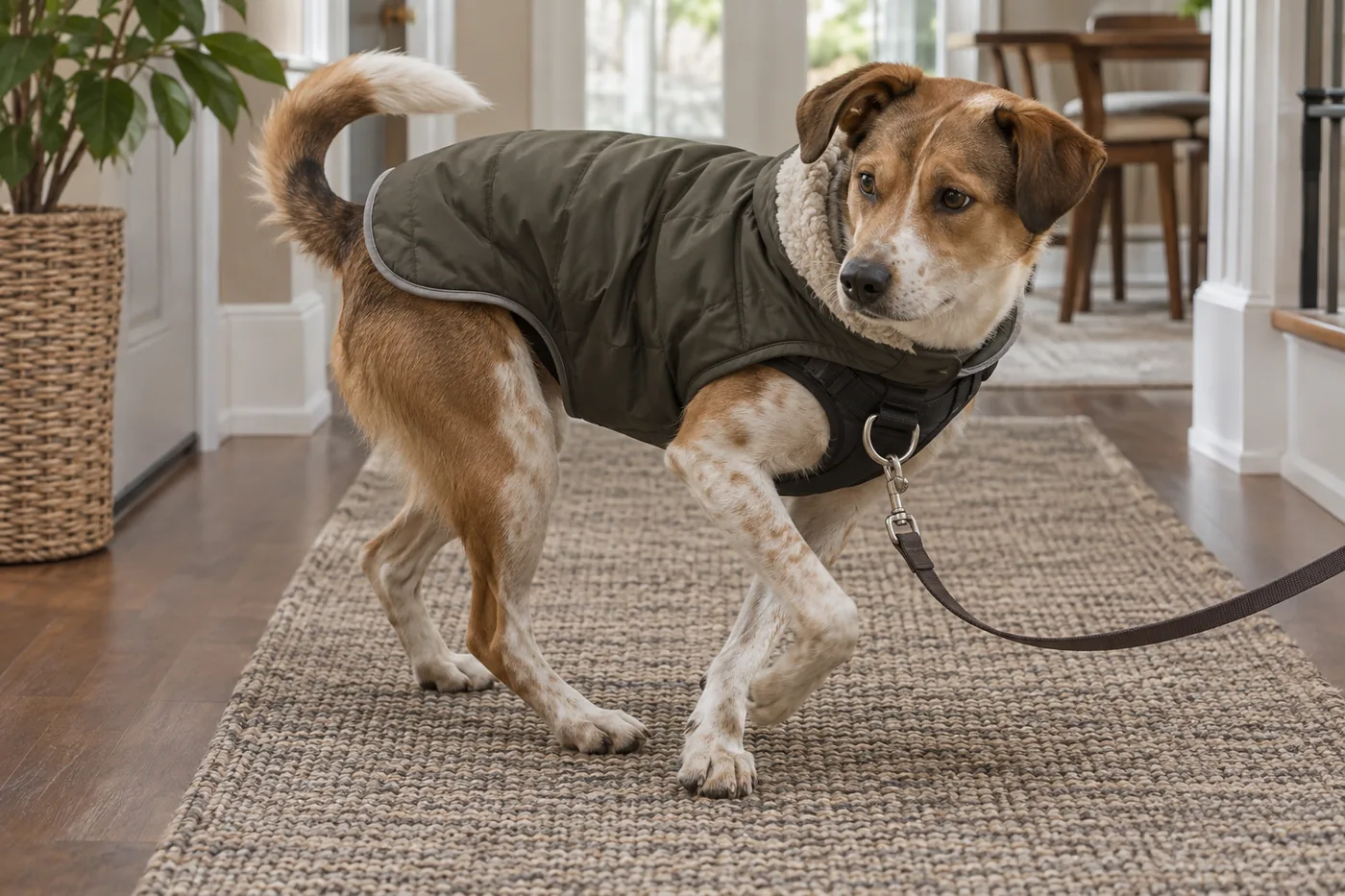 Compare a turn with the harness-only baseline, keeping the leash slack.
Look for a hem riding forward, fabric collecting behind the front legs, or the clip disappearing during a turn. If the coat shifts but the harness stays put, revisit the coat measurements and fastening position; if the harness also rotates without the coat, return to its baseline. Change one item at a time, so the next comparison tells you something.
After removal, note new contact marks, displaced fur, or visible redness where the layers met. If redness persists, stop the fitting session and ask your veterinarian rather than repeatedly tightening straps. The goal is an outfit that preserves the existing fit, not one that needs constant correction.
Part 5Log E: Keep warmth separate from fit
A clear clip does not establish cold protection. Veterinarian Jennifer Coates, writing for PetMD, identifies coat type, age, health, wind, dampness, and activity as factors in cold tolerance. So your rescue's unknown history belongs in a conversation with the veterinarian, not in a weight-based guess about warmth.
PetMD flags below 32°F as a concern for small, thin-coated, very young, old, or sick dogs spending too long outdoors. It also warns that below 20°F, dogs can develop cold-related problems during extended exposure. Those are cautions, not promised safe temperatures or a timetable for this outfit.
PetMD advises going inside when a dog shivers, whines, slows down, seeks warmth, or lifts paws. That means the fit log and the outdoor decision stay separate: settle the harness and coat arrangement indoors, then remain ready to shorten the outing. Passing the fit check does not set the walk length.
Method: Manufacturer descriptions and size charts from PetSafe and Kurgo were compared for measurement coverage, leash access, and movement checks; PetMD supplied veterinary cold-weather guidance. The logs are checks for owners to complete, not recorded wear-test results. No products are selected for purchase, no purchase links are included, and no prices are quoted. Sources checked November 24, 2026.
In one sentence
Measure the dog, record the harness-only fit, and check that the coat leaves the intended leash connection usable through movement.
Frequently asked questions
Can I choose a dog winter coat by weight alone?
No. PetSafe labels its harness weight ranges approximate, and Kurgo's jacket chart prioritizes neck and chest fit. Match measurements to the specific maker's chart instead of treating weight as the size.
Can a front-clip harness sit under a dog coat?
Only when the coat accommodates the harness and leaves its intended leash connection usable without displaced straps or trapped fabric. Ask the makers about the exact pairing and compare movement with a harness-only baseline.
Does the Kurgo Loft zipper confirm Easy Walk compatibility?
No. Kurgo advertises a two-way harness or collar access zipper, while PetSafe specifies a front-chest connection. The opened descriptions do not confirm that those features work together.
Does a well-fitting coat make a cold walk safe?
Fit alone does not establish warmth or a safe duration. PetMD's veterinarian-authored guidance identifies age, health, coat type, wind, dampness, and activity as relevant and advises heading inside when a dog shows signs of being too cold.
Sources
- PetSafe Easy Walk Harness · 2026-11-24
Large chest width 16–21 in, girth 27–40 in, approximate weight 65–95 lb; four adjustment points and front-chest attachment with martingale loop. Page re-opened for this rewrite.
- Kurgo Loft Dog Jacket · 2026-11-24
Medium neck 19 in, chest 26–35 in, back 19¾ in; Large neck 23 in, chest 30–39 in, back 22½ in. Two-way access zipper; maker prioritizes neck and chest over back coverage. Exact front-clip pairing not confirmed.
- PetMD: How Cold Is Too Cold for Dogs? · 2026-11-24
Jennifer Coates, DVM: below 32°F warrants particular concern for small, thin-coated, young, old, or sick dogs outdoors too long; below 20°F brings cold-related risk during extended exposure. Lists shivering, whining, slowing, seeking warmth, and lifting paws as reasons to head inside.