Does a different breed on your rescue dog's DNA results mean the harness in your shopping cart is wrong? If the shelter paperwork says one thing and the ancestry screen says another, keep the purchase on hold. Check the sample first; size the gear from the dog, not the new breed list.
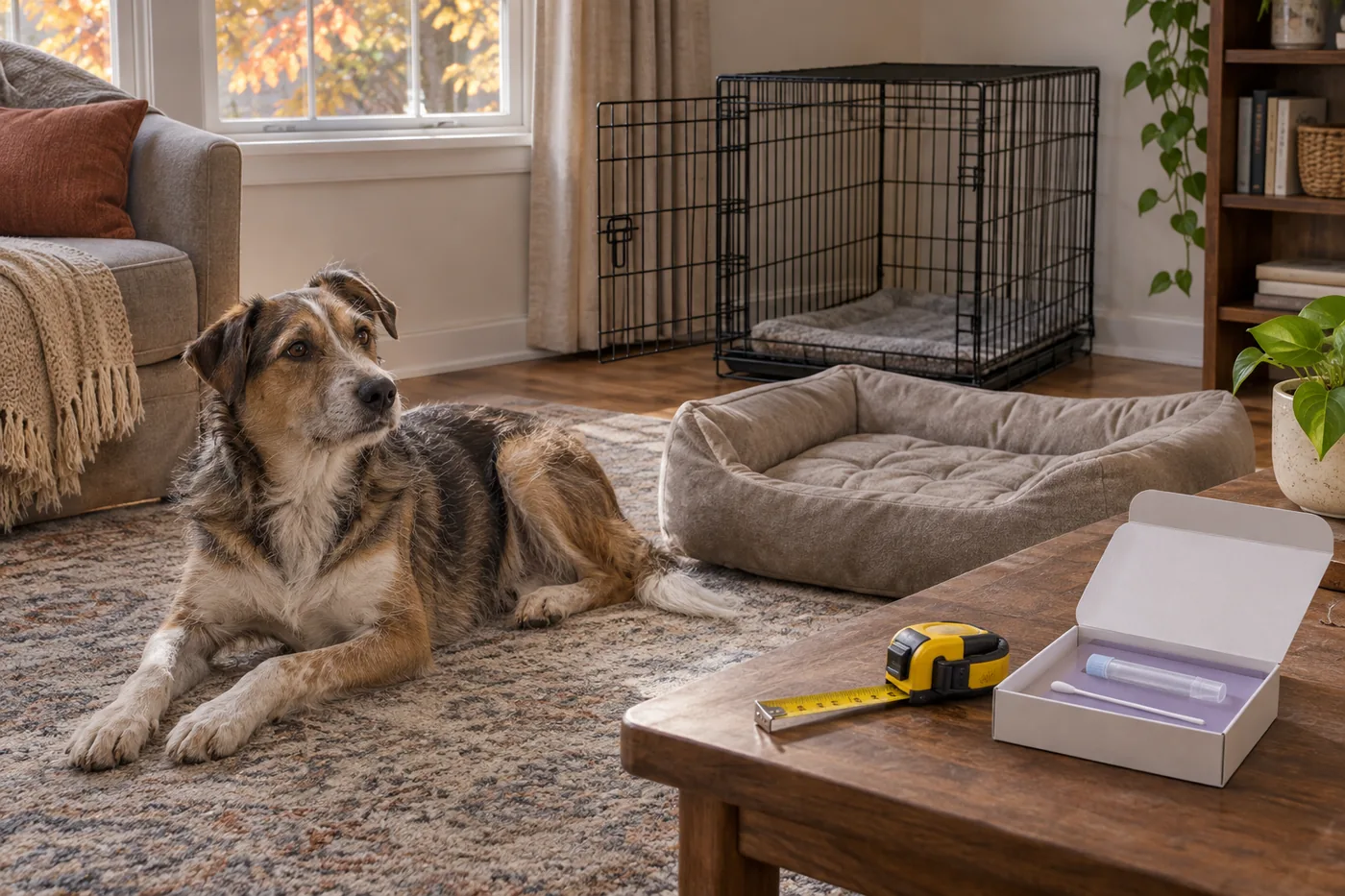 An ancestry update calls for a paperwork check before a shopping trip.
Embark's breed results and Ruffwear's sizing guide answer different questions: ancestry and fit. So I would start with the existing kit account and a measuring tape, not another DNA kit or a replacement harness. The checks below give you a short record to keep, without pretending a breed percentage is a body measurement.
How we chose
Reviewed Embark's swab instructions and explanation of appearance versus ancestry, alongside Ruffwear's measurement guide. The troubleshooting sequence uses three checks: sample identity, ancestry uncertainty, and current equipment fit. No replacement product is selected without a measured need.
Part 1Check A: Match the sample to the dog
Start the log with the dog's account profile, kit identifier, and any activation email or collection notes. Then compare those details with the result you opened, especially if several dogs live in the house. An identity mismatch belongs with support before you spend time explaining the breed breakdown.
If the details do not line up, send the company the conflicting identifiers and ask it to trace the sample. That gives support a specific problem to investigate. Choosing whichever profile photo resembles the ancestry list would only add another guess.
Next, check whether the laboratory completed the analysis or marked the sample inconclusive. Embark's collection page names low DNA concentration as the most common reason for an inconclusive test. But an unexpected breed mix is not, on its own, evidence of that collection problem.
If Embark requests a replacement swab, its instructions say to withhold food for 30 minutes beforehand and swab the cheek pouch and under the tongue for 30–60 seconds, recommending 60 seconds. Then place the swab in the stabilizing liquid, tighten the cap, invert the tube, and shake for 10 seconds. Use the instructions for your exact kit if another company made it; these timings are Embark's.
Close this check when the sample identity is clear, or when support has taken responsibility for investigating the mismatch.
Part 2Check B: Read ancestry without matching a face
Record the assigned breed names separately from anything described as trace, grouped, or uncertain ancestry. That distinction matters because a possible distant contribution is not the same claim as a confidently assigned breed. Keep uncertainty visible rather than rewriting it into a tidy family tree.
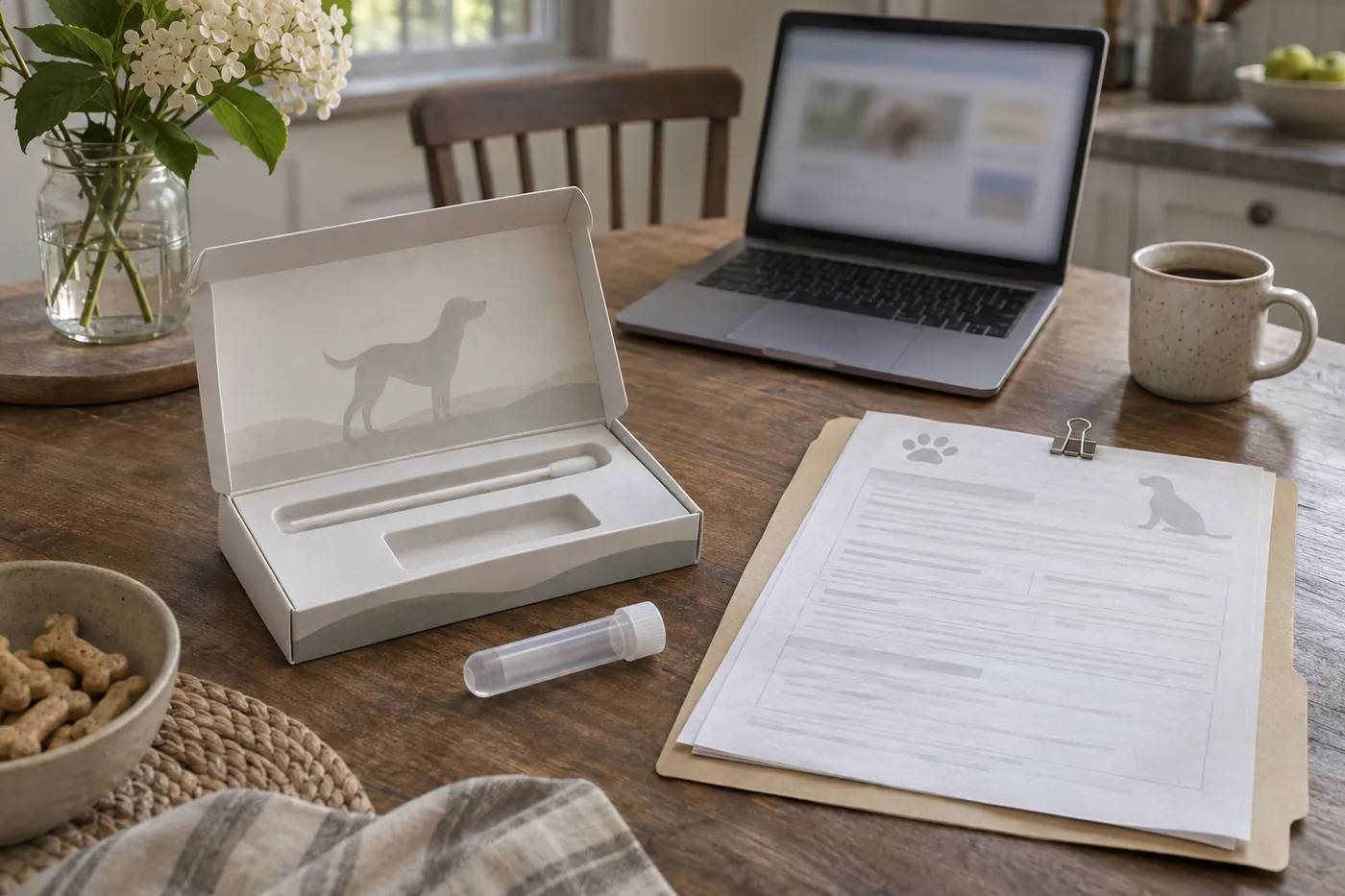 Compare the kit record with the result before interpreting the ancestry.
Embark explains that visible traits can be shared across breeds, and says less than 1% of canine genes influence visible traits. So a familiar coat pattern or ear shape can look convincing without settling the ancestry question. That does not make a completed result unquestionable; it makes appearance alone a weak reason to dismiss it.
The same Embark explanation describes “Supermutt” as small segments of mixed ancestry that cannot be assigned to a specific breed with high confidence. This is uncertain ancestry, not a size category. Keep that label intact rather than dividing its percentage among breeds you think the dog resembles.
If something still seems inconsistent, save the exact wording and ask support about that assignment. Then include the kit identifier, what the shelter paperwork says, and the point you want explained. A question about uncertainty is more useful than a request to change the result until it matches a photograph.
Part 3Check C: Measure the equipment problem
Move to a fresh log entry: what fits now, and what does not? That keeps the ancestry discussion from becoming an automatic replacement list. A changed breed label does not change today's measurements.
Swipe sideways to see the full table →
| Equipment | Record at home | Compare with the exact product |
|---|---|---|
| Crate | Body length, standing height, and room to stand, turn, and settle | Usable interior space and the maker's fitting directions |
| Bed | Space occupied in the dog's usual sleeping position | Sleeping surface inside bolsters, not just the outside footprint |
| Harness | Chest girth around the widest rib-cage area behind the front legs | Model-specific size chart, adjustment range, and fitting directions |
For the crate, note any movement the existing space restricts rather than selecting a size from a breed illustration. Then compare your measurements with the maker's instructions and usable interior dimensions. If the listing gives only outside dimensions, ask for the inside measurements before ordering.
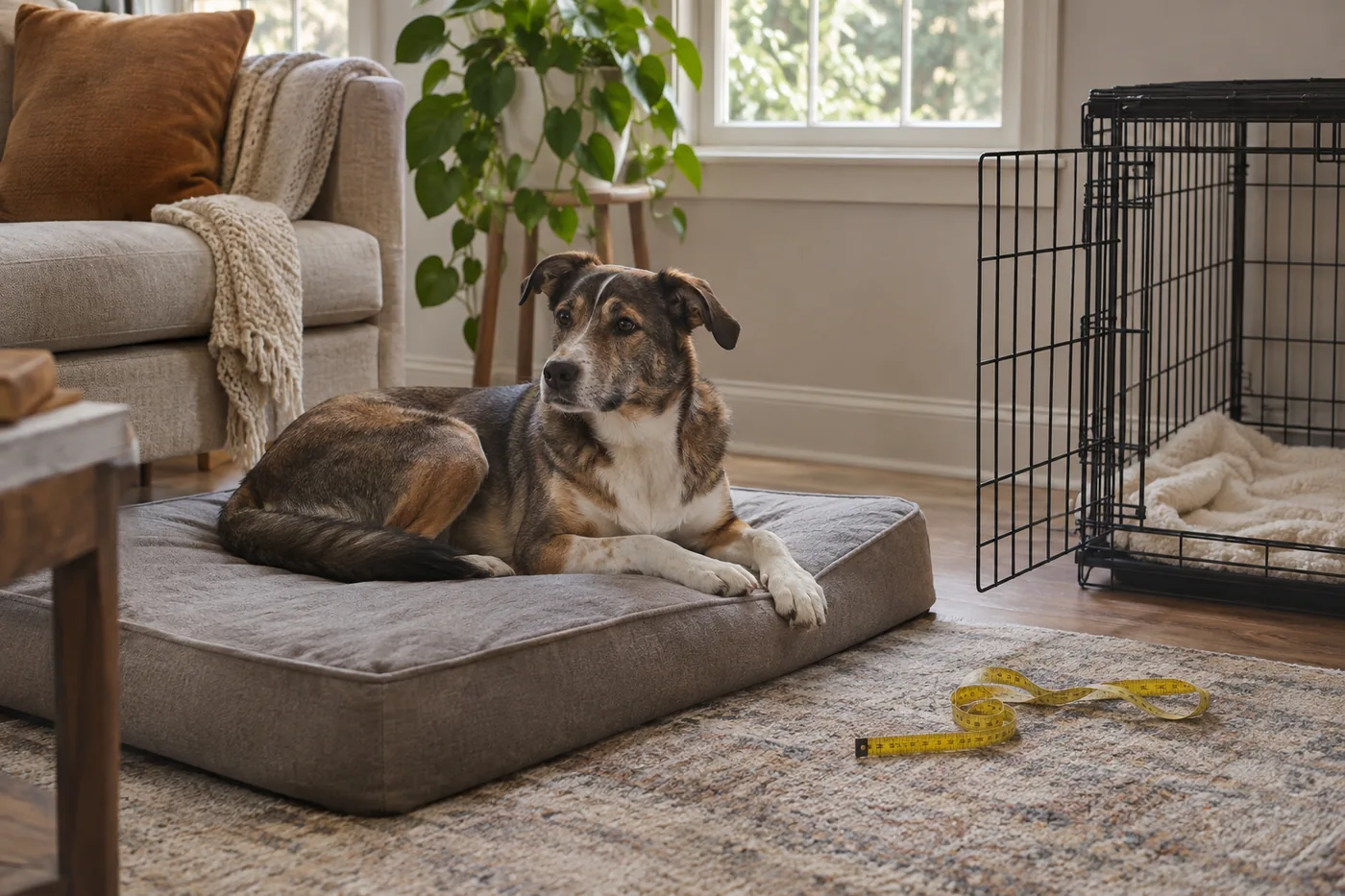 Check the space the dog actually occupies, not the breed printed on a label.
For the bed, record the resting position you are trying to accommodate: curled, stretched, or leaning against a bolster. That tells you which part of the bed needs room. The usable sleeping surface matters because raised edges can occupy space inside a generous-looking outer footprint.
For a harness, Ruffwear directs owners to measure the widest chest area behind the front legs, using a tailor's tape or string measured afterward. Its general chart gives Small as 22–27 inches and Medium as 27–32 inches. Those ranges belong to Ruffwear's chart, so check the exact model rather than treating them as universal pet-store sizes.
If your measurement lands at a chart boundary, take that number and the model name to the maker's fitting guidance or support. This is a fitting question, not a reason to pick whichever size sounds right for the largest ancestry percentage. Record the adjustment range alongside the measurement.
Part 4Check D: Close the shopping list
End the log with a specific action beside each unresolved issue. A sample-record conflict goes to the testing company; an unexplained ancestry label gets a question about interpretation. Replacement gear needs a demonstrated fit problem, not just a surprising name on the screen.
A second DNA test can wait until you know what the first company's answer leaves unresolved. That avoids paying for another result when your actual question is whether the account, collection, or ancestry explanation makes sense. Keep equipment that still fits, and investigate the part that does not.
No new product is selected here because the useful next step is checking records and measurements. So leave the cart alone until those notes tell you what, if anything, needs replacing. The result may change how you describe your dog; the tape tells you what fits.
Method and purchase links: This guide draws on Embark's collection and appearance explanations and Ruffwear's sizing instructions, checked November 24, 2026. The checks focus on sample identity, ancestry uncertainty, and measured equipment fit.
In one sentence
Resolve sample and ancestry questions before replacing gear, then choose sizes from current measurements.
Frequently asked questions
Does a dog DNA result mismatch mean the sample failed?
Not necessarily. Compare the kit identifier and account profile, then check whether the result was completed or marked inconclusive. Embark identifies low DNA concentration as the most common cause of inconclusive testing; an unexpected breed list alone does not establish that problem.
What does Supermutt mean in Embark ancestry results?
Embark describes small mixed-ancestry segments that cannot be assigned to a specific breed with high confidence. Keep that uncertainty in your notes rather than treating possible ancestry as a definite family tree.
Can breed percentages determine my dog's harness size?
No. Ruffwear's guide uses chest girth at the widest area behind the front legs. Its general Small range is 22–27 inches and Medium is 27–32 inches, but the exact harness model's chart and fitting instructions take priority.
Do I need a second dog DNA kit or new crate immediately?
Start with the existing testing company's support if sample identity or interpretation is unclear. Check the crate's usable interior and the dog's current fit separately; a different ancestry label is not itself a reason to replace it.
Sources
- Embark cheek-swab collection instructions · 2026-11-24
Collection directions: no food for 30 minutes beforehand; swab for 30–60 seconds, recommending 60 seconds; invert and shake the sealed tube for 10 seconds. Identifies low DNA concentration as the most common cause of inconclusive testing.
- Embark explanation of appearance and ancestry · 2026-11-24
States that less than 1% of canine genes influence visible traits. Explains shared appearance across breeds and defines Supermutt as mixed-ancestry segments that cannot be assigned to a specific breed with high confidence.
- Ruffwear measuring and sizing guide · 2026-11-24
General harness chart lists Small chest girth at 22–27 inches and Medium at 27–32 inches. Directs measuring the widest chest behind the front legs with tailor's tape or string measured afterward.