That bitter whiff as the oven warms is not what you wanted beside the Thanksgiving shopping list. For a host planning Thanksgiving in early November, in a small American apartment or house with guests coming and side dishes competing for space, oven cleaner can seem like the quickest purchase; but the useful first move is finding the range manual. Match the method to the oven, then tackle the grease.
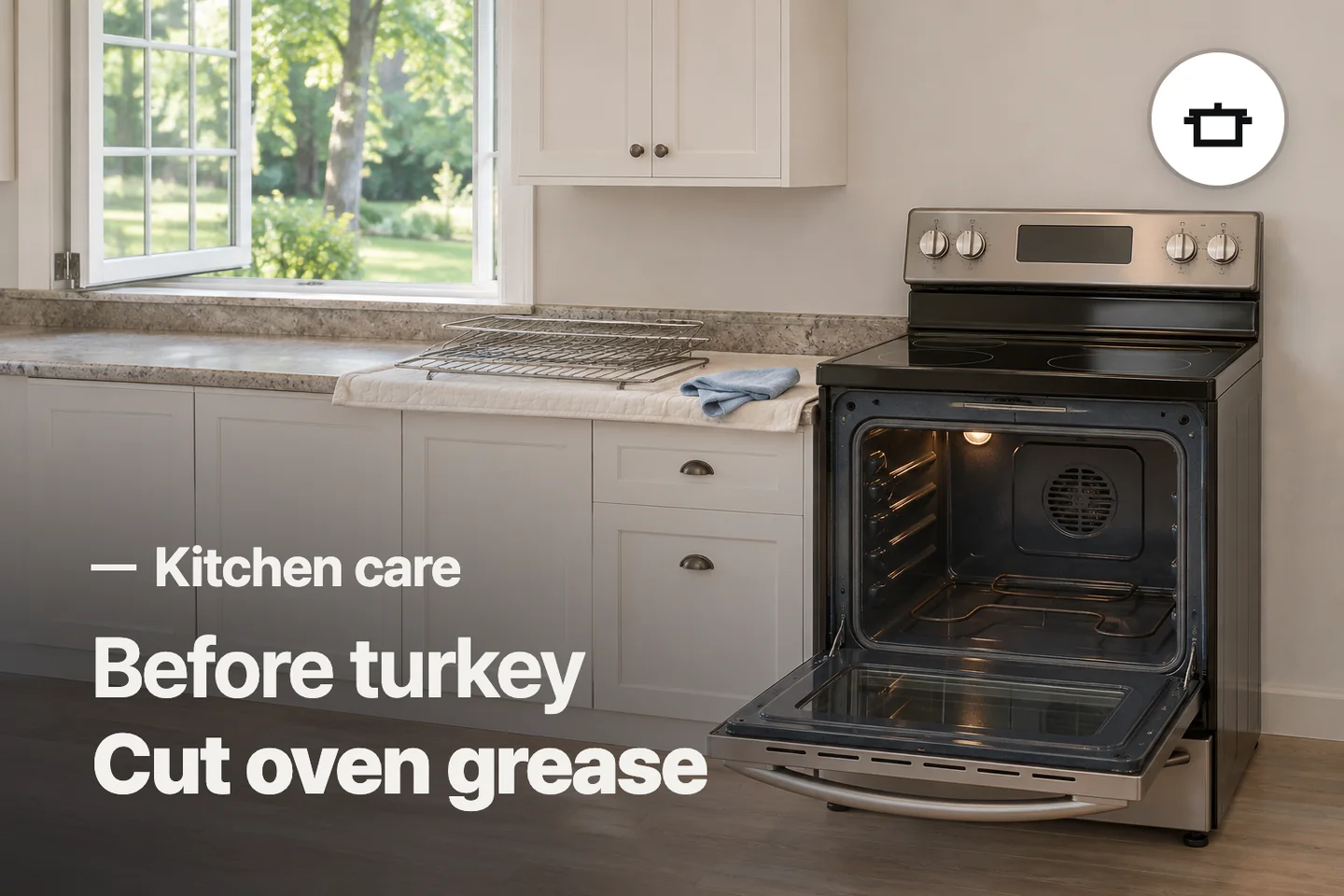
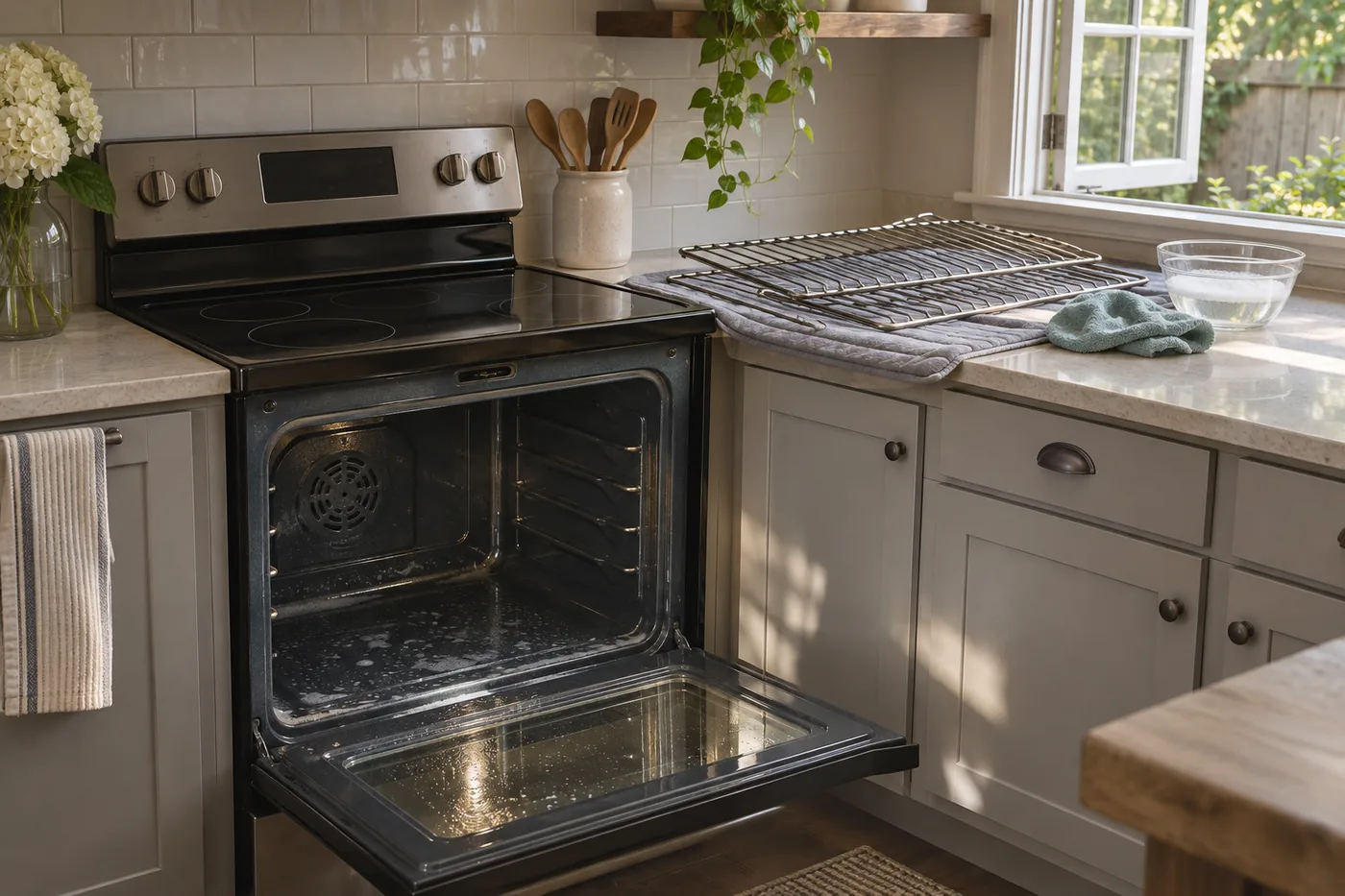 Clear the cooking space before the holiday dishes start arriving.
I'd consider Easy-Off Fume Free Oven Cleaner only for a conventional oven whose instructions explicitly permit it, and whose type is not excluded by the cleaner label. Otherwise, I'd keep the spray off the shopping list and use the appliance-approved method. That leaves the air fryer and slow cooker free to help with dinner, rather than compensate for an unresolved oven problem.
How we chose
Reviewed GE Appliances' cleaning guidance, Easy-Off's official directions and precautions, and U.S. Fire Administration smoke-alarm advice. The three checks were appliance compatibility, treatment and cooling time, and complete residue removal before cooking; the chemical option remains conditional on the exact range manual.
What we considered
Compatibility
Do the range manual and cleaner label both permit this use?
Easy-Off excludes convection, microwave, and continuous-cleaning ovens. GE also prohibits commercial cleaners for its high-heat self-clean category, so a general claim on a can cannot override the appliance's instructions.
Time available
Can cleaning and cooling finish before cooking begins?
Easy-Off separates its two-hour cold-oven deep clean from its 30-second spot treatment. GE's high-heat cycle lasts 11⁄2–3 hours before allowing for the model's cooling and unlocking requirements.
Final wipe
Can you complete the required removal of soil and cleaning residue?
Easy-Off directs wiping with a wet sponge, cloth, or paper towel after treatment. GE says cleaners must be removed before range use, so a completed waiting period alone does not make the oven ready for food.
Part 1Best way to clean an oven: identify the finish
Start with the model number and its care instructions, because a self-clean button, a steam setting, and a manually cleaned cavity mean different things. In a rental, that may mean asking the landlord for the manual before buying anything. An unknown coating is a reason to pause, not a reason to try a stronger bottle.
With the oven off and completely cool, inspect the loose crumbs, greasy pools, and baked-on patches, removing accessories as the manual directs. GE Appliances says mild soap and water can handle light soil in a manual-clean oven. So a little removable mess does not automatically call for a chemical treatment or a heated cleaning cycle.
Swipe sideways to see the full table →
| What the manual identifies | What GE's guidance describes | What that means before dinner |
|---|---|---|
| Manual-clean cavity | Mild soap and water for light soil | Start gently on permitted surfaces |
| High-heat self-clean | About 880°F; 1½–3 hours | Allow additional preparation and cooling time |
| Built-in Steam Clean | About 30 minutes for minor spills | Do not mistake it for a heavy-grease treatment |
Those are alternatives, not a sequence to stack together. GE's general page describes several kinds of range, so the instructions for your exact model come first. A permitted cloth or pad on one cavity does not establish permission to scrub another coating, the door seal, or the heating elements.
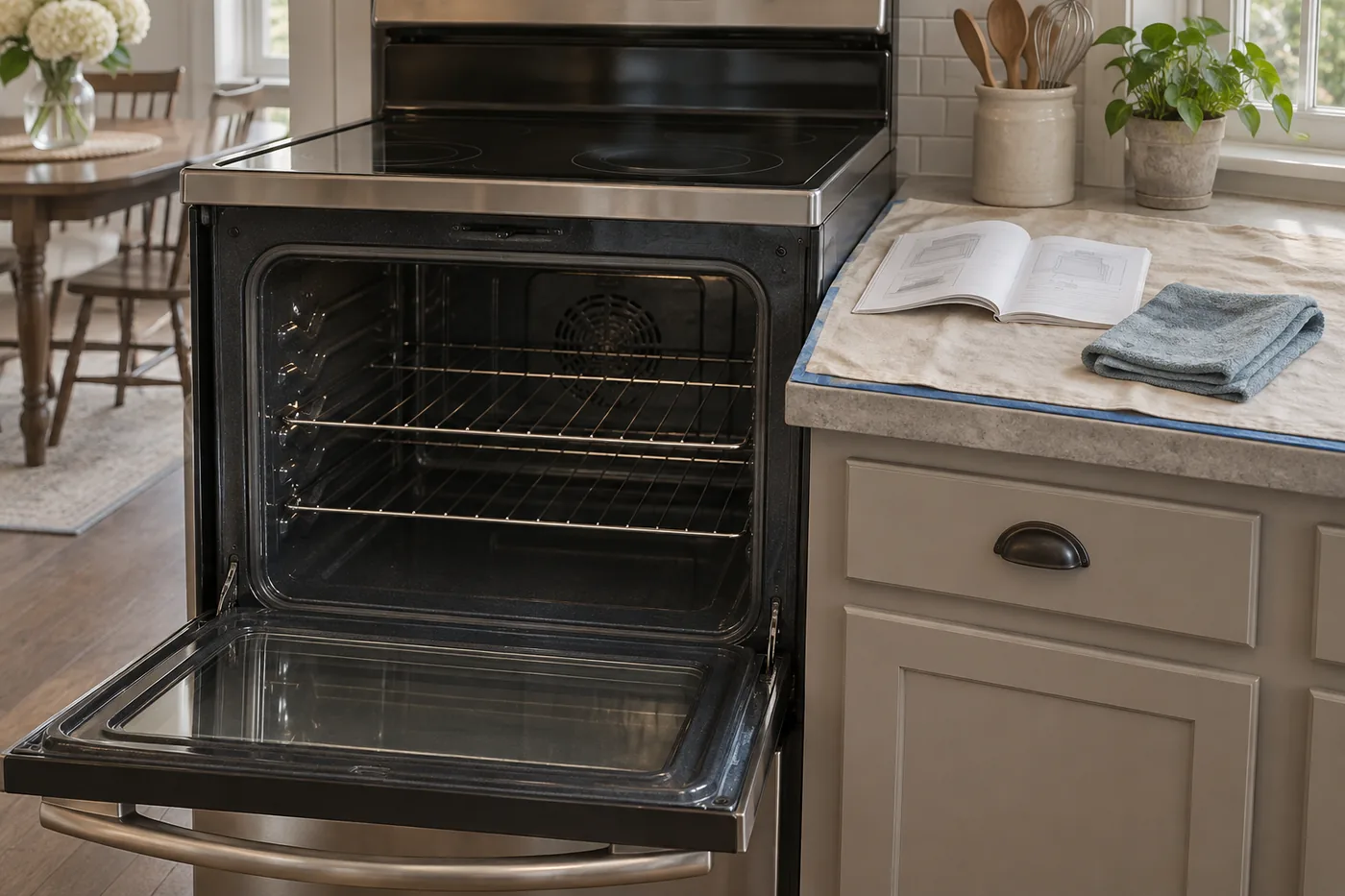 The model's care instructions decide which cleaning path belongs in this kitchen.
Part 2A self clean oven needs its own program
GE Appliances describes high-heat self-cleaning as a dedicated cycle that breaks food soil down into ash at about 880°F. That is not ordinary baking, so turning an empty oven to its highest Bake setting is not an equivalent shortcut. Use the actual cleaning program, with its specified preparation.
GE's published 1½–3 hours covers the cycle, not the whole interval until you can roast dinner. The cooling and door-unlocking stages still belong in the schedule, and rack instructions vary by model. GE says stainless-steel racks must come out, while some self-clean racks can stay; that distinction is worth settling before pressing Start.
The chemical restriction matters just as much as the timing. GE's high-heat guidance says not to use commercial cleaners in or around that self-clean oven, while Easy-Off separately prohibits combining its Fume Free formula with the self-clean cycle. Spray and high heat are not partners.
Steam Clean is different again: GE describes a lower-temperature process for minor spills, followed by wiping away loosened soil and moisture. That makes it a possible route when the model supports it, not permission to invent a steam treatment for an unfamiliar range. Repeatedly baked-on grease may need another method the appliance maker permits.
The cleaning-cycle time is only part of the time you need before cooking.
Part 3Where easy off oven cleaner fits
Easy-Off Fume Free Oven Cleaner comes in a 14.5 oz aerosol on the manufacturer's page, but the size is less important here than the exclusions. Easy-Off says not to use it in microwave, convection, or continuous-cleaning ovens. So even though the same page allows certain self-cleaning applications, both sets of instructions must agree before this bottle belongs beside your range.
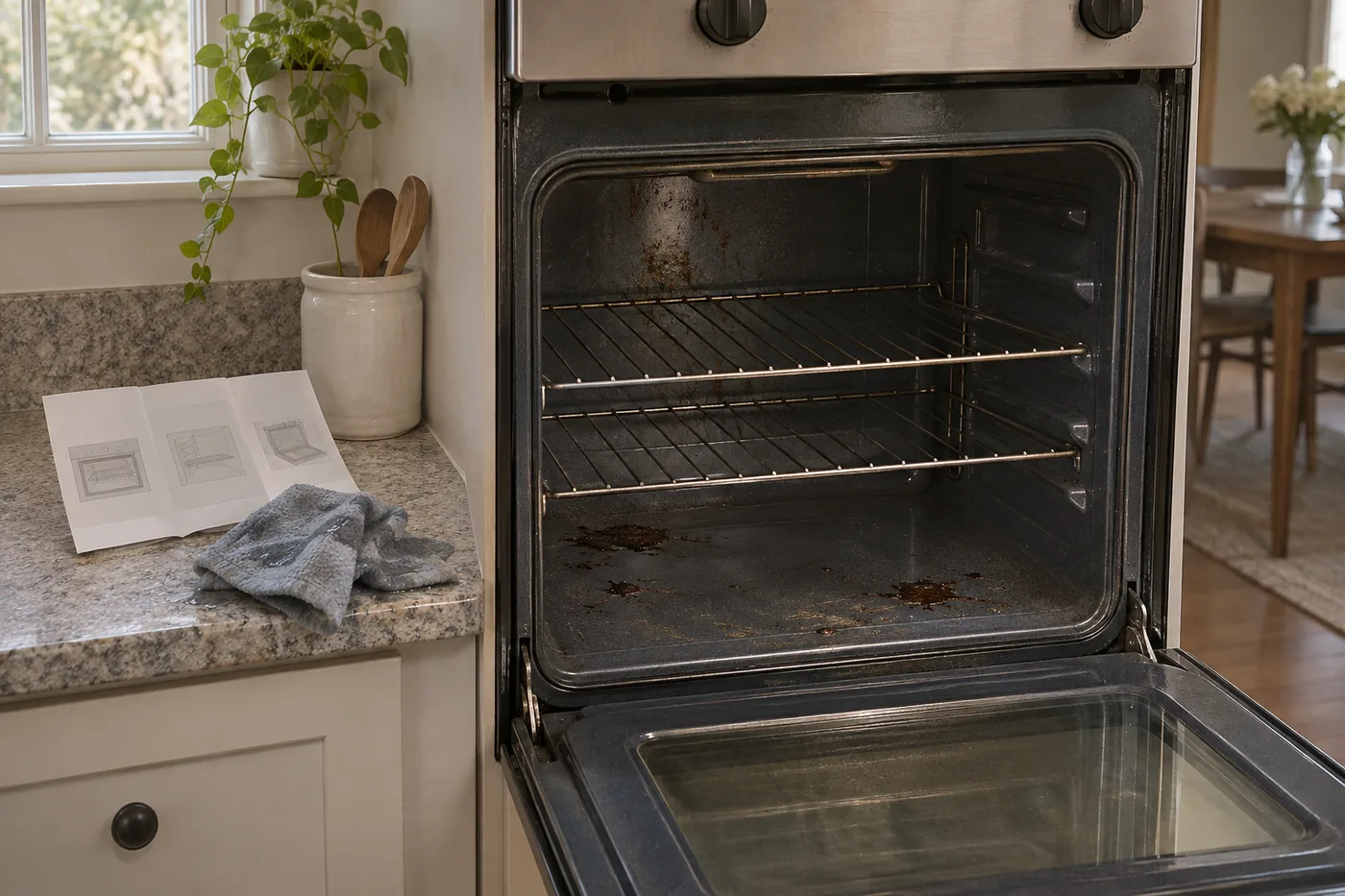 Check the cavity type before choosing a treatment for baked-on grease.
For a permitted cold-oven deep clean, Easy-Off directs spraying from 9–12 inches away, closing the door, waiting two hours, and wiping with a wet sponge, cloth, or paper towel. Its 30-second wait is for spot cleaning instead. That shorter instruction is not a promise that a thick holiday-season buildup will disappear in the same interval.
Easy-Off identifies the product as an eye irritant and says to keep it out of children's reach. It also prohibits spraying pilot lights, electrical connections, switches, heating elements, or thermostats, and excludes aluminum and painted surfaces. So “Fume Free” does not erase the precautions: follow the full label, including handwashing after application and removal, and the appliance's ventilation instructions.
The manufacturer does not quote a selling price on the page checked November 24, 2026, so check the current Amazon listing only after confirming compatibility. There is no useful bargain in a can your oven cannot accept. Nor does buying it remove the final wiping step.
Part 4The best oven cleaner leaves no unfinished job
Before replacing accessories or bringing food back, let the approved process finish and the oven cool as directed. GE says cleaning products must be removed before range use, so finish the specified wiping rather than trying to burn a visible coating away. With a self-clean cycle, that means attending to the remaining ash as the manual directs, including the less visible corners of the cavity.
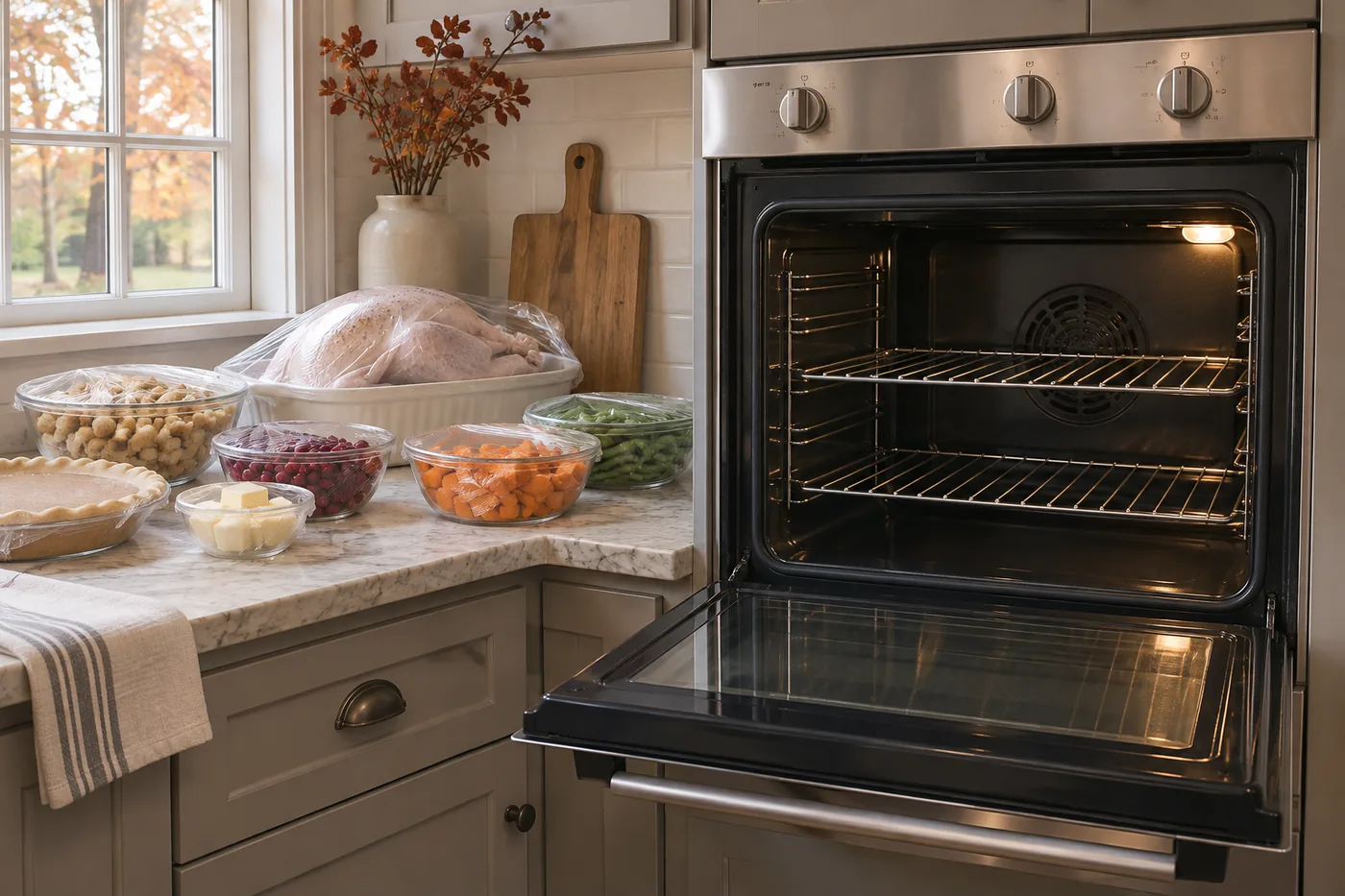 Finish the cleanup before the oven has to share the kitchen with holiday prep.
Keep the alarms working while you prepare the kitchen. For a cooking nuisance alarm, the U.S. Fire Administration advises opening a window or door and using the hush button, never removing the battery. That advice concerns a known nuisance alarm, not permission to dismiss unexplained smoke or a possible fire.
If smoke, an unusual smell, or a control problem remains after the approved cleaning process, stop using the oven and ask the appliance manufacturer for help. That is a better stopping point than another round of heat with the turkey waiting. Finish the cleaning before holiday cooking starts, including any unresolved problem.
Sources and selection: GE Appliances' range-cleaning guidance, Easy-Off's product directions and precautions, and U.S. Fire Administration smoke-alarm guidance were reviewed for appliance compatibility, treatment time, and residue removal. Last checked November 24, 2026; seller prices and availability can change.
In one sentence
Choose the oven's permitted cleaning method before choosing a spray.
Frequently asked questions
What is the best way to clean an oven before Thanksgiving?
Identify the exact model and follow its care instructions. GE describes mild soap and water for light soil in manual-clean ovens, with different instructions for high-heat and steam-clean models. Leave time for the approved process, cooling, and removal of soil or residue before cooking.
Can easy off oven cleaner go in a convection oven?
The reviewed Easy-Off Fume Free directions explicitly exclude convection ovens, along with microwave and continuous-cleaning ovens. Do not assume another formula has the same directions; check the exact product label and appliance manual.
Can I spray cleaner before a self clean oven cycle?
Easy-Off prohibits combining its Fume Free formula with the self-clean cycle. GE's high-heat self-clean guidance also prohibits commercial cleaners in or around that oven category. Follow the exact appliance manual rather than combining methods.
Is the best oven cleaner always a chemical spray?
No. Light soil in a manual-clean oven may need only the mild method described by GE, while other models have dedicated cleaning programs. A chemical product makes sense only when the oven permits it and the product's exclusions do not rule out the application.
Sources
- GE Appliances: range cleaning options · 2026-11-24
High-heat self-clean about 880°F, cycle 1½–3 hours; built-in Steam Clean about 30 minutes for minor spills. Also used manual-clean soap-and-water guidance, rack restrictions, commercial-cleaner prohibition for high-heat self-clean, and removal of cleaners before use.
- Easy-Off Fume Free Oven Cleaner · 2026-11-24
14.5 oz aerosol; 9–12 in spray distance; two-hour cold-oven deep clean versus 30-second spot clean. Used exact oven and surface exclusions, eye-irritant precautions, and prohibition on combining with self-clean. No selling price listed.
- U.S. Fire Administration: smoke alarms · 2026-11-24
No numerical claim used from this source. Used cooking nuisance-alarm advice: open a window or door and use the hush button; never remove the battery.